Summary
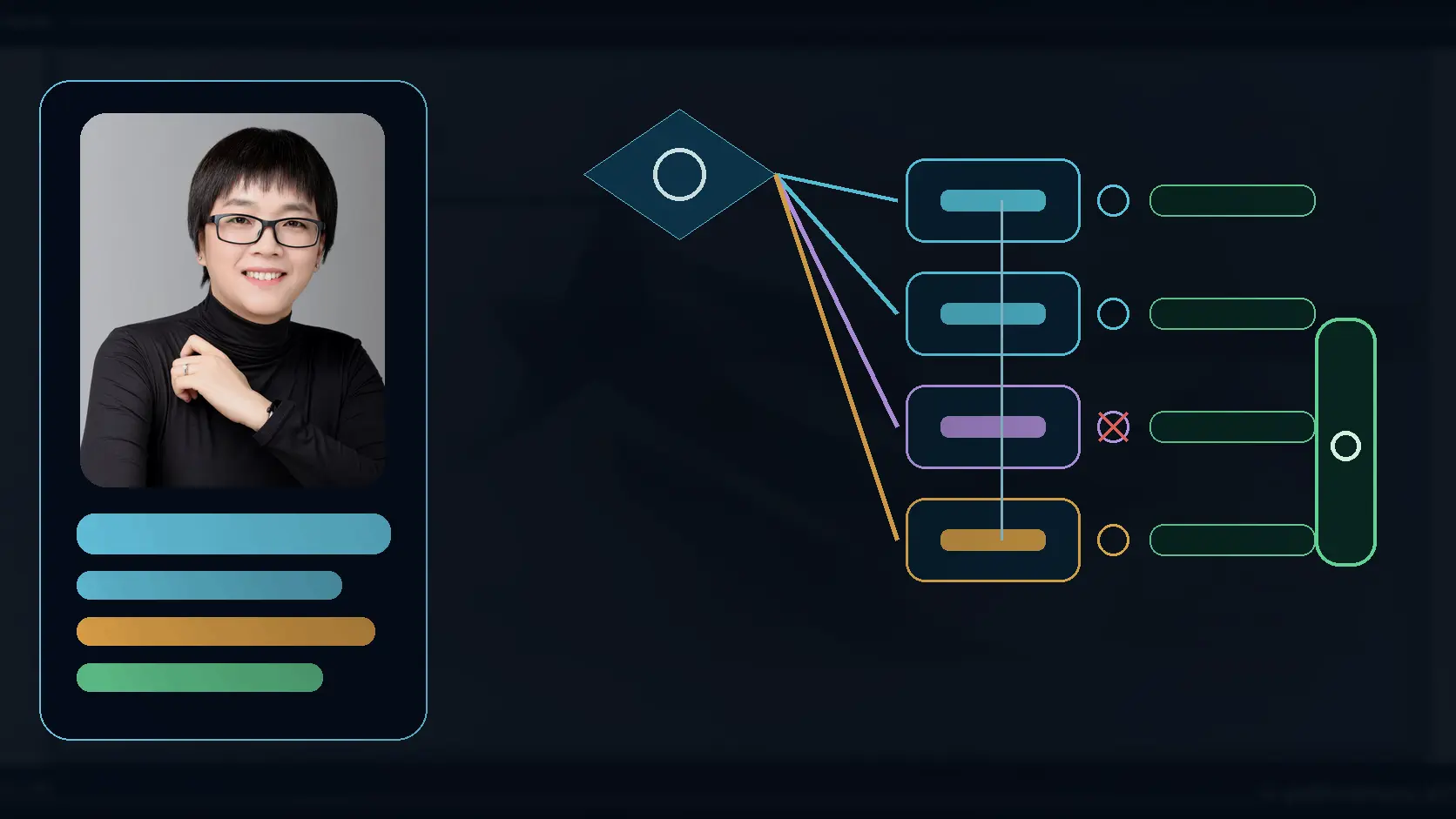
- Shuping Peng and co-authors published RFC 9050, which lets a PCE act as a central controller by sending label-forwarding instructions to every router on a static LSP.
- The controller reserves or negotiates label space, sends Download and Cleanup CCIs through PCEP, and receives PCRpt state reports. Each hop must program a forwarding entry and reserve the required resources.
- A controller's intended end-to-end path is not a working LSP until every required hop has the correct instruction and the controller has reconciled the resulting state.
The PCE is programming a path, not emailing a diagram
The original PCE architecture computes a path for a client. RFC 9050 goes farther: the PCE chooses the path and tells each router along it what label-forwarding action to install. In basic PCECC mode, the LSP is an explicit chain of instructions rather than end-to-end signaling that lets every router derive its own state.
This changes the failure unit. A successful path computation can still leave no usable LSP. A PCInitiate can reach the headend while another router has not installed its label. A report can disclose an instruction set without proving every desired resource was reserved. The operator needs a hop-by-hop receipt.
The label namespace is part of the authority. The PCE may manage a reserved range on each controlled router, and the PCC must not allocate from that range. RFC 9050 assumes both peers know the exclusive range; RFC 8283 supplies the broader central-controller architecture. A range mismatch turns central allocation into collision.
PCC-owned allocation is also allowed. Then the PCE requests labels from the device and must reconcile returned values before completing the path. “Controller allocated” and “router allocated” are valid models with different custody of the number space.
Every hop has a different success condition
RFC 9050 reuses RFC 8231 stateful PCEP and RFC 8281 initiation. PCInitiate creates or updates the LSP and carries Central Controller Instructions. PCUpd changes state. PCRpt reports the LSP and the set of CCIs received.
The controller therefore sees protocol state, while the router owns executable state. Download CCI should produce a forwarding entry and reservation. Cleanup CCI removes it. Synchronization reports help the PCE compare what it meant to install with what the PCC says it received.
Those reports still need join keys: LSP, PLSP-ID, PCC, hop or destination, label, label range owner, instruction type, generation and result. A report that lists a CCI proves receipt. The forwarding table or hardware counter proves installation.
The RFC does not prescribe an atomic commit across every hop. Some devices may accept a changed instruction while others still hold the old path. Operators need ordered activation, rollback and traffic protection outside the wire format.
Autonomy shrinks; one controller becomes a blast radius
PCECC can remove distributed label computation, but it concentrates policy and failure. The controller must protect credentials, constrain which PCCs it controls, keep topology and label-space inventories current, and recover from malicious or compromised peers. RFC 9050 separates malicious PCE and malicious PCC threats; the operator must log both directions.
An LSP transaction should preserve the intended path, label allocation owner, each hop's CCI, reservation result, report, forwarding observation and cleanup. If the controller loses an acknowledgement, it must distinguish “not installed” from “installed but not reported.” Repeating a download blindly can collide with a later generation.
The RFC publishes no deployment count, convergence benchmark or rollback experiment. A clean controller UI and green PCEP sessions do not supply those facts.
The receipt belongs to the whole path
For each LSP generation, join the controller intent to every hop's programmed label, reserved resources, PCRpt sequence, forwarding-table state, traffic observation and final cleanup. The receipt passes only when all required hops match the same generation.
Peng and her co-authors made every router part of the controller's path. The operator's evidence must stay equally distributed. One accepted instruction proves one device heard the controller; the end-to-end LSP exists only when the whole chain agrees.
Sources: RFC 9050; RFC 8283; RFC 8231; RFC 8281; RFC 5440; RFC 4655.
Member Briefing
Read the full trend briefing
Members read the full briefing with the source notes behind every finding.
Strategic Circle
A daily briefing in your language, built from changes we have verified.
Join for USD 20/monthCancel anytime.
Members also get the full research library, a daily briefing on the networks they follow and the private forum.