Summary
- Massimiliano Pala is a co-author of RFC 10073, which packages ML-DSA and a traditional signature behind one X.509 algorithm.
- Its interoperable private-key form contains the 32-byte ML-DSA seed and the traditional private key. Component keys must be new and cannot be reused in standalone or other composite contexts.
- Separate hardware or software keystores are allowed, but export, backup, recovery, dual control and proof that a component never escaped into another key remain deployment obligations.
One envelope, two custody domains
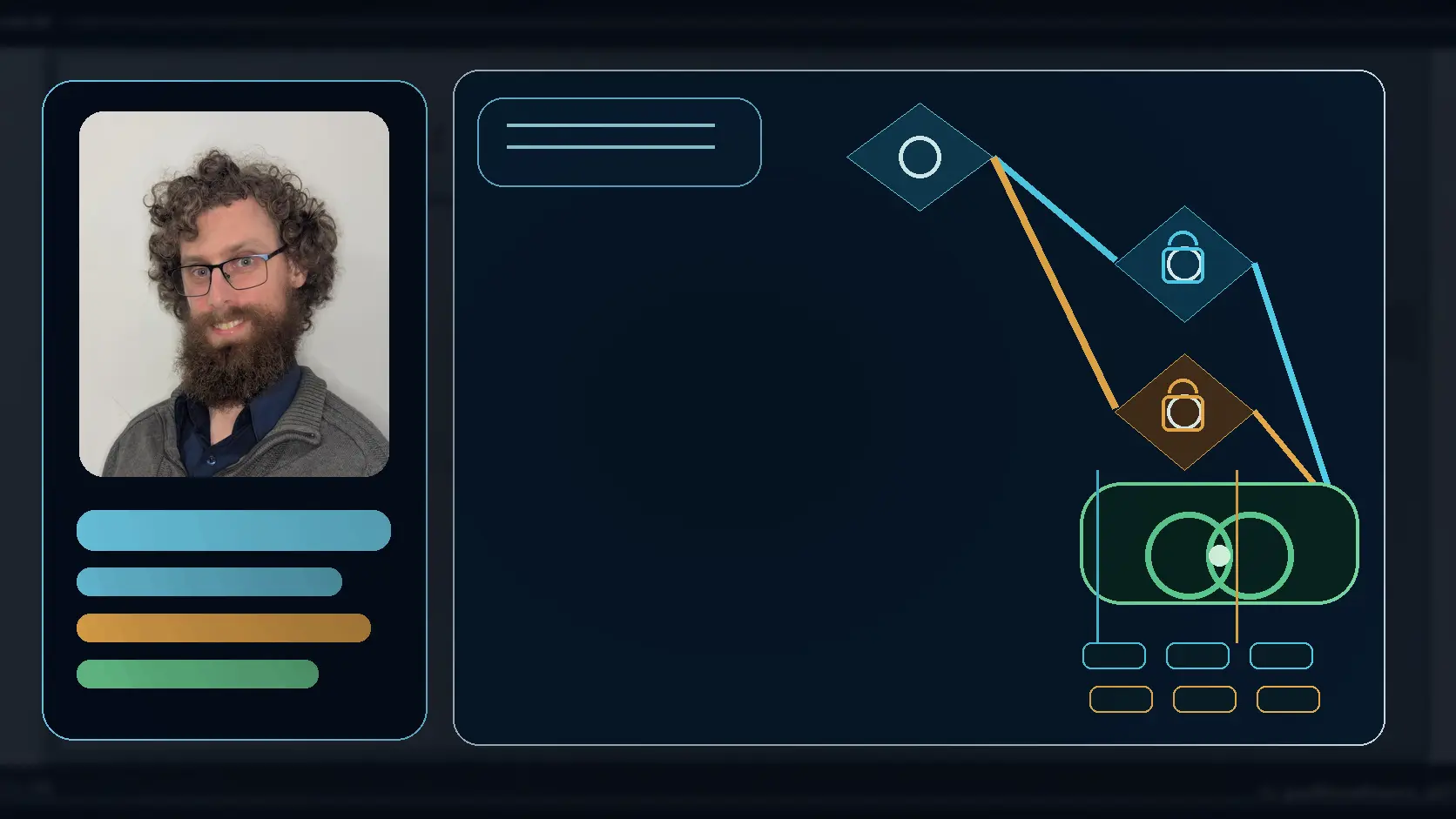
The public composite key is deliberately ordinary: one algorithm OID, one encoded public-key value. The private-key side exposes the seam. The ML-DSA half may travel as a 32-byte seed; the traditional half retains the encoding required by RSA, ECDSA or EdDSA.
RFC 10073 points to RFC 5958's OneAsymmetricKey when private keys must be copied between tools. It sets the composite algorithm identifier, leaves its parameters absent and places the serialized composite private key in the OCTET STRING. RFC 7292, RFC 9810 and RFC 4211 make that envelope relevant to PKCS #12, CMP and CRMF workflows.
That creates a portable file and a misleading social object. The file can contain both halves or describe keys kept elsewhere. The signature verifies from public data; the custody question begins after that check.
Fresh means absent from every other key path
The RFC forbids reusing one component in a standalone key or another composite. Freshness is not a creation timestamp. It is a negative claim across all key stores: this RSA key was not already issued elsewhere, and this ML-DSA seed was not imported into a second composite.
Private-key serialization cannot prove that history. A key inventory can. Record the key identifiers, composite OID, generation event, hardware boundary, public-key hashes, import/export events and every certificate or protocol that has seen each component.
If component keys intentionally live in separate modules, signing becomes a two-module ceremony. Both modules must produce output for the same algorithm and approved context. A backup that preserves only the concatenated public key cannot restore the signer.
Exporting one file recreates the concentration
OneAsymmetricKey exists for interoperability, not as a recommendation to export every private key. Once both components enter one PKCS #12 or backup archive, backup access, password policy, operator accounts and recovery procedure can bypass the two-module boundary that signing once enjoyed.
The reverse is also true. Keeping only separate opaque keys can prevent reconstruction of the interoperable seed-based form. The RFC says that an implementation without seed support cannot construct the specified private-key format. Recovery design must choose which representation survives.
PKCS #12 makes the problem familiar: possession of one archive may carry both custody domains. CMP and CRMF can move key material through enrollment workflows. The protocol formats identify what is inside; they do not establish who approved export or whether the archive crossed another organization's boundary.
The custody receipt lives outside the RFC
RFC 10073 specifies no escrow, HSM ceremony, backup, dual approval or recovery audit. It names no key-export test or implementation. The technical standard supplies formats and prohibitions; institutions supply the evidence that those prohibitions were followed.
A usable custody receipt should bind component keys to devices, public-key hashes, generation and backup events, export approvals, recovery drills, certificate uses, revocation searches and destruction dates. It should identify whether each component is present, absent or represented only by a non-exportable handle in each store.
Pala and his co-authors made two signatures portable as one certificate algorithm. Their private-key boundary says the opposite: portability must not erase the two histories that made the composite trustworthy.
Sources: RFC 10073; RFC 5958; RFC 7292; RFC 9810; RFC 4211; RFC 5280; Massimiliano Pala profile.
Member Briefing
Read the full trend briefing
Members read the full briefing with the source notes behind every finding.
Strategic Circle
A daily briefing in your language, built from changes we have verified.
Join for USD 20/monthCancel anytime.
Members also get the full research library, a daily briefing on the networks they follow and the private forum.