Summary
- Toke Høiland-Jørgensen, Juliusz Chroboczek and Warren Kumari published revision 10 of draft-ietf-intarea-v4-via-v6 on 19 November 2026. It is a Standards Track working-group draft in IESG evaluation, not an RFC.
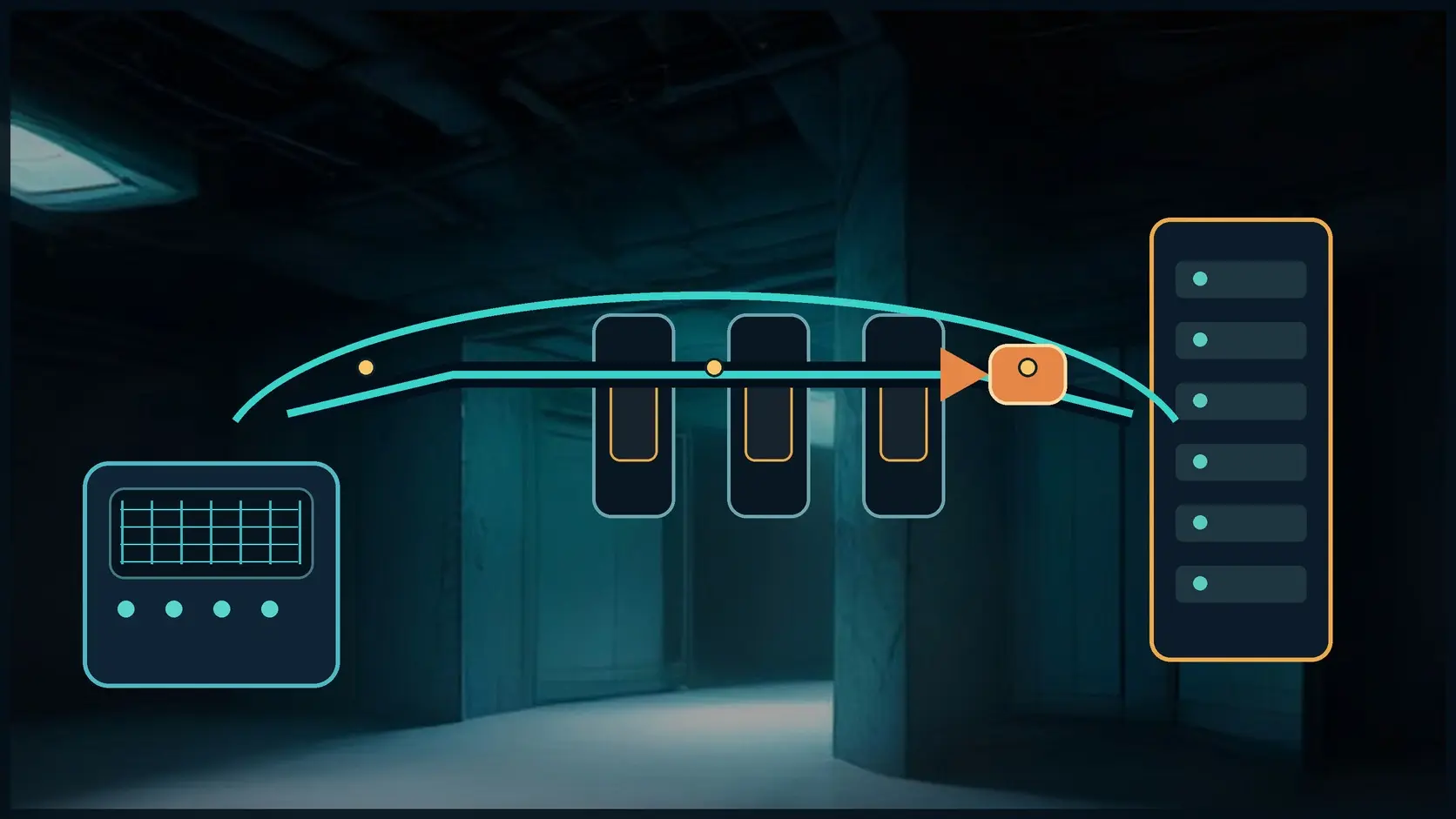
- A v4-via-v6 route maps an IPv4 prefix to an IPv6 next hop. The forwarding plane must use Neighbor Discovery for that route instead of assuming that an IPv4 destination has an IPv4 neighbour.
- Removing IPv4 from the transit core moves evidence into diagnostics. A router with no IPv4 address uses the dummy source 192.0.0.8 for ICMPv4 errors; route displays and YANG must show the real IPv6 next hop, not synthesize an IPv4 address.
Address family is not the same as forwarding family
Traditional next-hop routing keeps matching address families. An IPv4 prefix points to an IPv4 neighbour; an IPv6 prefix points to an IPv6 neighbour. V4-via-v6 breaks that assumption deliberately. The route still says the destination is IPv4. The next hop only says how to reach the adjacent router.
That separation is technically clean. A core built from IPv6 link-local addresses can pass IPv4 packets to routers that never own an IPv4 address. BGP and Babel already have ways to advertise IPv4 routes with IPv6 next hops. Edge hosts can still speak IPv4.
The forwarding plane now has to inspect each selected route. Is the next hop IPv4 or IPv6? ARP or Neighbor Discovery? Recursive resolution may add another route lookup. The route table needs enough structure to answer, and every route-management script needs to understand it.
An error without an IPv4 source
Path MTU discovery often depends on ICMPv4 packet-too-big messages. If a router suppresses the error because it has no IPv4 address, IPv4 traffic can vanish while the IPv6 next hop remains healthy. RFC 1812 normally selects an address from the outgoing interface or another router address.
The draft defines the fallback: when the router has no IPv4 address at all, an outgoing ICMPv4 message uses 192.0.0.8. RFC 7600 reserves that address for dummy IPv4 packet headers. The mechanism keeps diagnostics alive, but it also makes several routers look identical.
Traceroute loses hop identity. A boundary firewall may classify 192.0.0.8 as spoofed and drop the packet. An operator may assign IPv4 addresses even though forwarding does not require them simply to keep the control path legible.
Show the hop that exists
The draft requires routing displays to expose the IPv6 next hop. They must not turn it into an IPv4-looking address to satisfy an old template. A screen that hides the real family derails exactly the troubleshooting v4-via-v6 makes harder.
The YANG rule follows. An IPv4 route entry must be able to carry a next-hop leaf of type IPv6 address. If a standard schema restricts next hops to IPv4, an augmentation or local deviation must make the exception explicit. The operator needs to see the deviation rather than a generic model pretending the route is ordinary.
Monitoring needs a similar receipt. Record the IPv4 destination, IPv6 next hop, interface, resolution protocol, selected route, BFD session and ICMP source. An IPv4 ping failure and a failed IPv6 neighbour prove different things.
Removing addresses changes reachability
An IPv4-only island behind an IPv6-only core may look unreachable to an administrator who assumes both layers stop at the same router. V4-via-v6 can carry the packets through. That is the feature and the security change.
Firewall policy must be explicit. If the island should remain isolated, filtering belongs in the IPv4 forwarding path; the absence of an IPv4 address on intermediate routers is no longer a boundary. Per-interface enablement gives the operator a way to keep that old topology where intended.
The same applies to evidence. A live IPv6 BFD session proves the next hop responds over IPv6. It does not prove that PMTU discovery worked, that the final IPv4 host answered or that a traceroute label identifies the router that generated the message.
Toke Høiland-Jørgensen and his co-authors make IPv4 travel through a network with no IPv4 neighbours. The design leaves addresses out of the core. It leaves attribution, filtering and observability inside the operator’s job.
Sources: Datatracker record; revision 10; RFC 1812; RFC 7600; RFC 8950; RFC 9229; RFC 5881; RFC 8349; RFC 8899; RFC 7404; RFC 4861.
Member Briefing
Read the full trend briefing
Members read the full briefing with the source notes behind every finding.
Strategic Circle
A daily briefing in your language, built from changes we have verified.
Join for USD 20/monthCancel anytime.
Members also get the full research library, a daily briefing on the networks they follow and the private forum.