Summary
- Alan DeKok and Vadim Cargatser define Reverse Change-of-Authorization in revision 08 of draft-ietf-radext-reverse-coa. Their server-to-NAS request travels over the RADIUS/(D)TLS connection that the NAS originally opened.
- The proposal solves a real reachability gap: a server can now change authorization or disconnect a session behind NAT or a firewall without requiring a separate inbound path to the NAS.
- The connection reversal does not combine authentication, capability agreement, realm routing, NAS selection, session matching and service enforcement into one act. Those remain separate control points.
The server knocks through the tunnel the NAS opened
Ordinary RADIUS/TLS gives the client a connection to the server. Requests travel upward; responses come back. RFC 5176 already allowed a server to send CoA-Request or Disconnect-Request packets to a NAS, but that dynamic authorization often needed a separate network path from server to client. NAT could expire that path. A firewall could refuse it. A proxy chain could hide the NAS behind the only route the home server possessed.
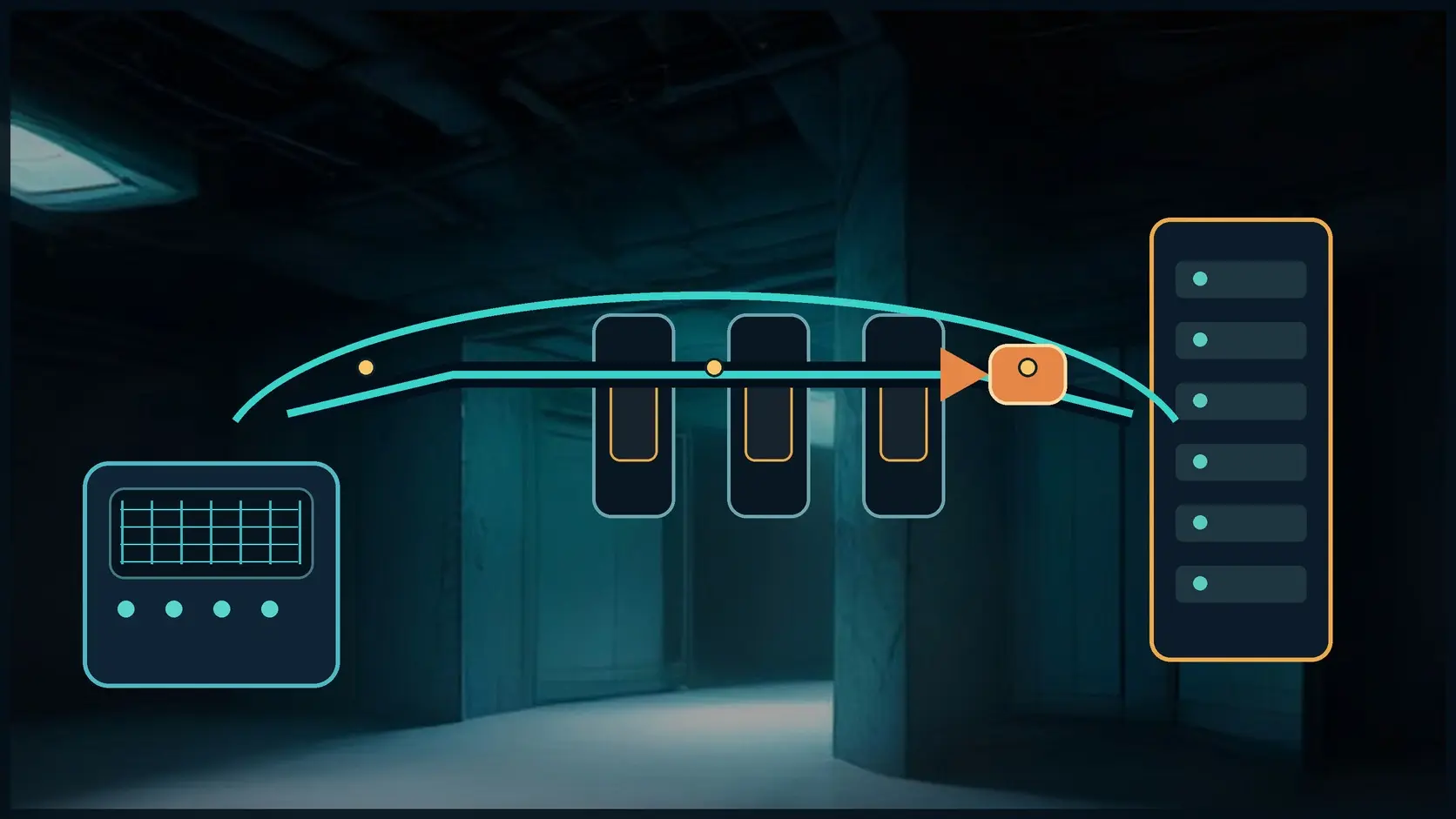
Revision 08 turns the established connection around for one narrow purpose. The server may place a CoA-Request on the RADIUS/(D)TLS connection the NAS initiated, and the NAS may put its ACK or NAK on that same connection. The packet type remains RADIUS dynamic authorization. The transport direction now follows the connection instead of the historical client-request/server-response habit.
That is the appeal. The server no longer has to reach into a private network. It uses a path the NAS is already maintaining outward. NAT and a firewall stop deciding that the only authorized side is also the only reachable side.
The mechanism is limited to TLS and DTLS. The draft says UDP lacks durable connection state; a server cannot know whether the client is still listening, whether the client closed the port or whether an intervening NAT still carries the mapping. RADIUS/TCP is also excluded because related work is deprecating that transport. The apparent reversal is therefore not a universal RADIUS power. It is a property of a persistent secure connection.
Reachability changed; authority did not
A connection that crosses a firewall does not carry an end-to-end grant. The draft requires a configuration flag on both sides. The client enables Reverse CoA for a server. The server enables it for a client. There is no per-connection negotiation in revision 08.
The failure modes are quiet. If the client accepts Reverse CoA but the server never sends it, nothing happens. If the server sends while the client is not configured to accept it, the client silently discards the request. The two administrators may both believe that the channel exists because the ordinary TLS connection is healthy.
Client identity matters when dynamic discovery is used. The draft requires the capability flag to be tied to the authenticated client identity, such as a TLS PSK identity or a certificate property, rather than to one IP address. That avoids turning an address change into a new privilege. It does not eliminate the static agreement: somebody still has to configure which peer may receive the reversed request.
RFC 8559 keeps another boundary visible. In a proxy chain, RADIUS packets are authenticated hop by hop. An intermediate proxy can forge, replay or modify a correctly signed packet, and the next hop accepts it as traffic from the trusted previous hop. TLS can protect a connection without turning the full chain into a single end-to-end authorship proof.
The connection is the route, so the route can expire
Reverse CoA changes the routing table. RFC 8559 finds the next hop by realm. The new draft adds open connections as possible next hops: the server stores which authenticated connection supports Reverse CoA and which realms it can reach. The mapping is many-to-many. One realm can have several connections; one connection can carry several realms.
That makes availability a connection-management fact. The draft says the client SHOULD maintain at least one connection at all times. It recommends the RadSec application watchdog from RFC 3539, using Status-Server from RFC 5997. The timer should start at 15 seconds, rather than the 30-second default, because stateful middleboxes may drop idle state sooner.
The distinction is practical. A healthy TLS handshake proves that a connection was established. A live watchdog proves that both peers still see it now. A configured flag proves that the peer claims to understand reverse CoA. A realm association claims that this connection can route a request. Each is a separate check, and each has a different owner.
Dynamic discovery offers another route through aaa+dynauth. The draft recommends using that method for CoA and Disconnect when the deployment already uses it for access and accounting. Reverse CoA is then a useful fallback, not a mandate that every path must remain permanently reversed.
The final proxy still has to find a door
After the request reaches a visited network, the final proxy uses Operator-NAS-Identifier and/or NAS-Identifier, NAS-IP-Address or NAS-IPv6-Address to choose the local NAS. If no route exists, a Reverse-CoA-capable server returns a NAK with Error-Cause 502, Request Not Routable. An unexpected packet on the wrong connection is silently discarded.
The draft leaves load balancing and failover implementation-defined when several suitable connections exist. It also permits a server to send the CoA over RADIUS/UDP. The reversed TLS path is an additional transport, not a promise that every packet takes it.
What travels back is therefore a chain: an authenticated peer on one hop, a static capability agreement, a live connection, a realm mapping, another proxy route, a NAS selector and then RFC 5176's session-change outcome. A packet can traverse the entire path and still be a NAK. It can be an ACK and still describe a NAS response rather than proof that the user's traffic changed.
The current document remains revision 08. The IESG approved it in August 2025 and Datatracker shows RFC Editor work back in progress on 24 November 2026, but no RFC number exists. Publication has not erased the operational questions that made the mechanism necessary.
Sources: Datatracker record; history; revision 08; RADIUS/(D)TLS revision 18; RFC 5176; RFC 8559; RFC 6614; RFC 7360.
Member Briefing
Read the full trend briefing
Members read the full briefing with the source notes behind every finding.
Strategic Circle
A daily briefing in your language, built from changes we have verified.
Join for USD 20/monthCancel anytime.
Members also get the full research library, a daily briefing on the networks they follow and the private forum.