Summary
- Kaliraj Vairavakkalai, Mohan Nanduri and Avinash Reddy published revision 07 of draft-ietf-idr-multinexthop-attribute on 22 November 2026. It is an active IDR working-group draft, not an RFC.
- MultiNexthop carries one or more next hops and related forwarding instructions in one optional non-transitive BGP attribute, ordered into primary and repair paths.
- The receiver can describe, accept or reject the plan, but it still selects and installs forwarding state under local policy. Route receipt is not proof that a packet used any advertised leg.
One route, several possible doors
Ordinary BGP advertises one next hop for the NLRI in an UPDATE. Related information such as labels, bandwidth, color or metrics may live in separate attributes, communities or NLRI. AddPath can advertise multiple routes, but it does not express the sender’s intended relationship among their next hops.
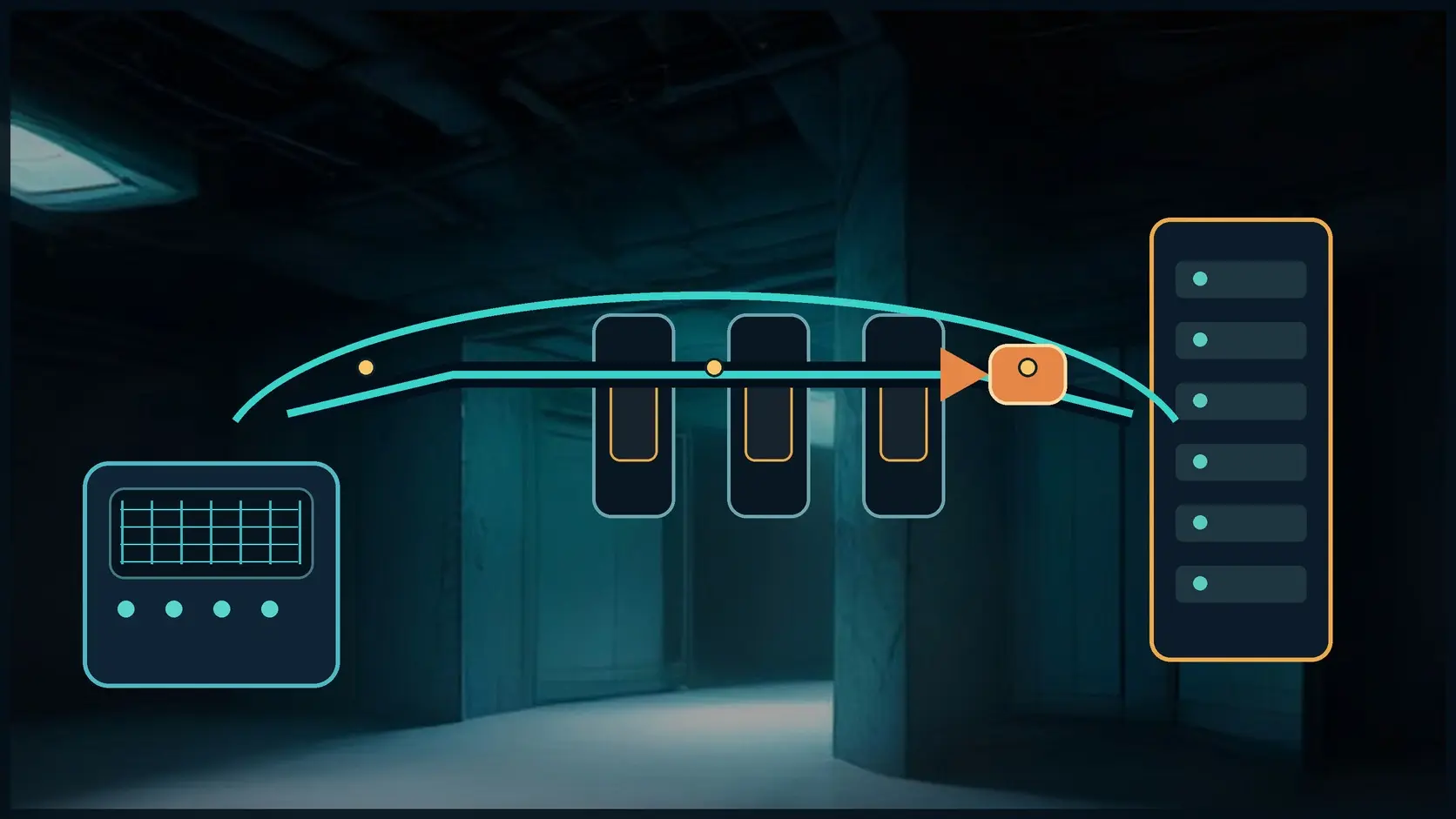
MultiNexthop packages that relationship. An egress can say which legs form the primary path, which are repair paths, and which constraints belong to each leg. The draft supports weighted load balancing, endpoint identity, labels, colors, bandwidth and accumulated metrics. The receiver gets a plan rather than a collection of unrelated route copies.
The structure is deliberately optional and non-transitive. It must be enabled per neighbor and address family. A route reflector or other BGP speaker that does not understand it will not blindly forward it across an unsupported boundary. The cost is an upgrade dependency: PEs cannot rely on MNH through a route reflector that has not adopted it.
The mandatory bit is a risk dial
Every TLV carries an M bit. With zero, an unsupported or invalid part is ignored and the rest of the UPDATE continues. With one, the error rises through the hierarchy and may make the enclosing TLV or route unusable.
That gives an operator a migration mode. A sender can begin with the attribute optional and observe receivers, then make failure mandatory. It also creates a test question: every receiver’s capability and policy can produce a different usable subset from the same UPDATE.
The Advertising Router ID is diagnostic. It does not validate the sender. MultiNexthop’s non-transitive scope prevents accidental escape; it does not prove route authority or trust.
Accepted route is not installed path
The draft contains a primary path and may contain a repair path. Yet a router can reject a nexthop count or forwarding action because its hardware cannot hold it. Local policy decides whether to ignore the failure, retain the route or mark it unusable.
Path selection adds another boundary. For BGP’s IGP-cost comparison, the draft uses the highest cost among the nexthop legs. The route may advertise several legs, but its selection score reflects their combined burden, not a fantasy in which every leg is local and free.
The useful receipt begins after parsing: which legs were accepted, which encapsulation and label were installed, which primary or repair group reached the FIB, which route was selected and which leg carried a packet. A MultiNexthop UPDATE cannot answer the last item.
Repair paths can stop a loop, not prove one
The draft uses multihomed PEs to explain label oscillation and transient forwarding loops. A repair path gives the remote PE an instruction that does not depend on waiting for a new primary label to converge back. The intended result is faster stable forwarding.
An advertised repair leg is still an intent. The receiver has to install it, keep the label context valid and choose it under the local failure policy. A stale or overbroad label from an untrusted link can still direct traffic badly. MPLS context tables and downstream payload checks are deployment decisions outside the attribute.
Kaliraj Vairavakkalai and co-authors give BGP a richer sentence: several next hops, with relationships. The network’s proof remains a chain of smaller records: route received, plan accepted, forwarding entry installed, leg selected, packet observed and service delivered.
Sources: Datatracker record; revision 07; RFC 4271; RFC 7606; RFC 7911; RFC 8277; RFC 7311; RFC 9256.
Member Briefing
Read the full trend briefing
Members read the full briefing with the source notes behind every finding.
Strategic Circle
A daily briefing in your language, built from changes we have verified.
Join for USD 20/monthCancel anytime.
Members also get the full research library, a daily briefing on the networks they follow and the private forum.