
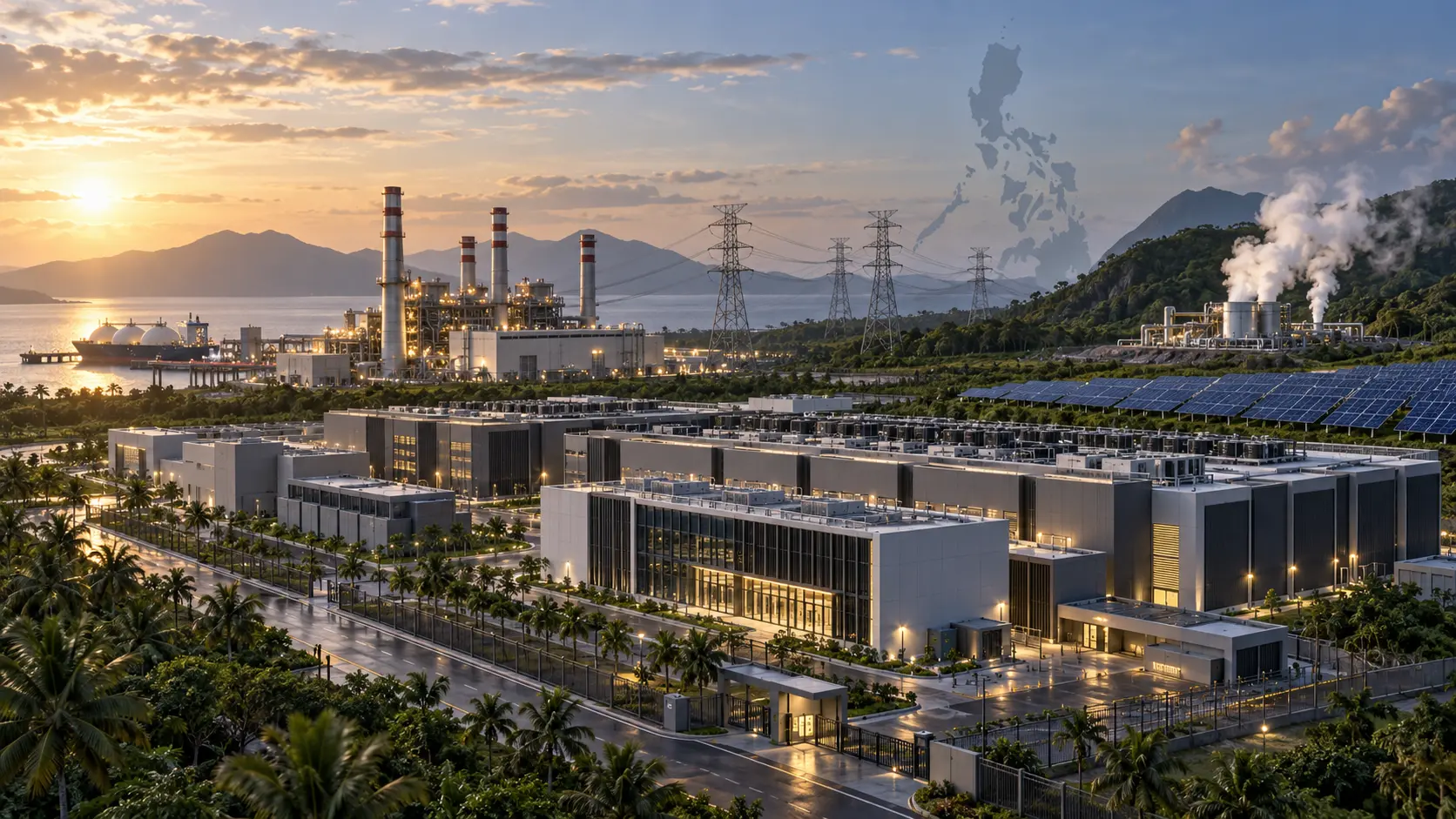
- The Philippines plans to increase AI computing capacity from about 50MW to 1.5GW by 2033, beginning with a 400MW first phase
- The energy department expects gas to support nearer-term demand while targeting renewable sources for 40% of the plan's power requirement
The fact
The Philippines plans to expand its AI computing capacity from about 50MW to 1.5GW by 2033. Energy officials outlined how that growth could be powered on 9 September, a day after the government launched its AI+ Infrastructure Masterplan. Under the roadmap, about 400MW of AI data-centre capacity is targeted for the first phase from 2026 to 2030. A second phase would add roughly 1,100MW by 2033.
For the earlier stages, natural-gas generation is among the options being considered. Officials also want renewable sources, including solar and geothermal power, to provide 40% of the programme's electricity needs, while nuclear power is being considered over the longer term.
Developed with the Asian Development Bank, the masterplan covers computing, connectivity, energy, skills and regulation. Its main AI compute and data project is estimated to require US$14.65 billion in public and private investment. Officials have also identified electricity costs, transmission constraints and limited water-treatment capacity as challenges to the programme.
The assessment
Reaching 1.5GW of AI computing capacity will depend on power infrastructure being built at the same pace. For the first 400MW phase, the immediate issue is whether enough electricity and grid capacity will be available when the data centres are ready. Gas may help meet some of that early demand, which means the power mix at the start of the programme could look different from the one planned for 2033.
The 40% renewable target also needs to be judged carefully. It applies to the wider programme, not automatically to every individual data centre. Developers will still need to show where each site gets its electricity from, how that power is delivered and how the renewable share is calculated.
For BTW readers, the 1.5GW figure should be treated as a long-term target rather than capacity that already has power secured. The first 400MW phase will show whether the plan is moving into delivery. Named sites, power agreements, grid connections and confirmed funding would provide the clearest evidence of progress.
What to watch
Watch for the sites chosen for the first 400MW phase and the power agreements attached to them. Details on new generation, transmission connections and the method used to calculate the planned 40% renewable share will show how the government's energy targets are being translated into individual AI infrastructure projects.
Member Briefing
Deeper Profile Context
Sign in with the right membership level to unlock the full briefing and source notes.
Only for Strategic Circle
Strategic Circle
Open to all readers. Unlock profile briefings after joining and signing in.
Join Strategic CircleOnly for Leadership Alliance
Leadership Alliance
For qualified IP-asset owners and management; sign in to unlock alliance briefings.
Join Leadership Alliance