Summary
- Ofcom will add VDE-TER and VDE-SAT equipment and channels to Ship Radio licences so UK-registered vessels can use VHF data exchange on international voyages from early 2027.
- The regulator has postponed a UK coastal-station VDES framework. Its next consultation awaits international guidance and standards, leaving the ship and shore on different regulatory clocks.
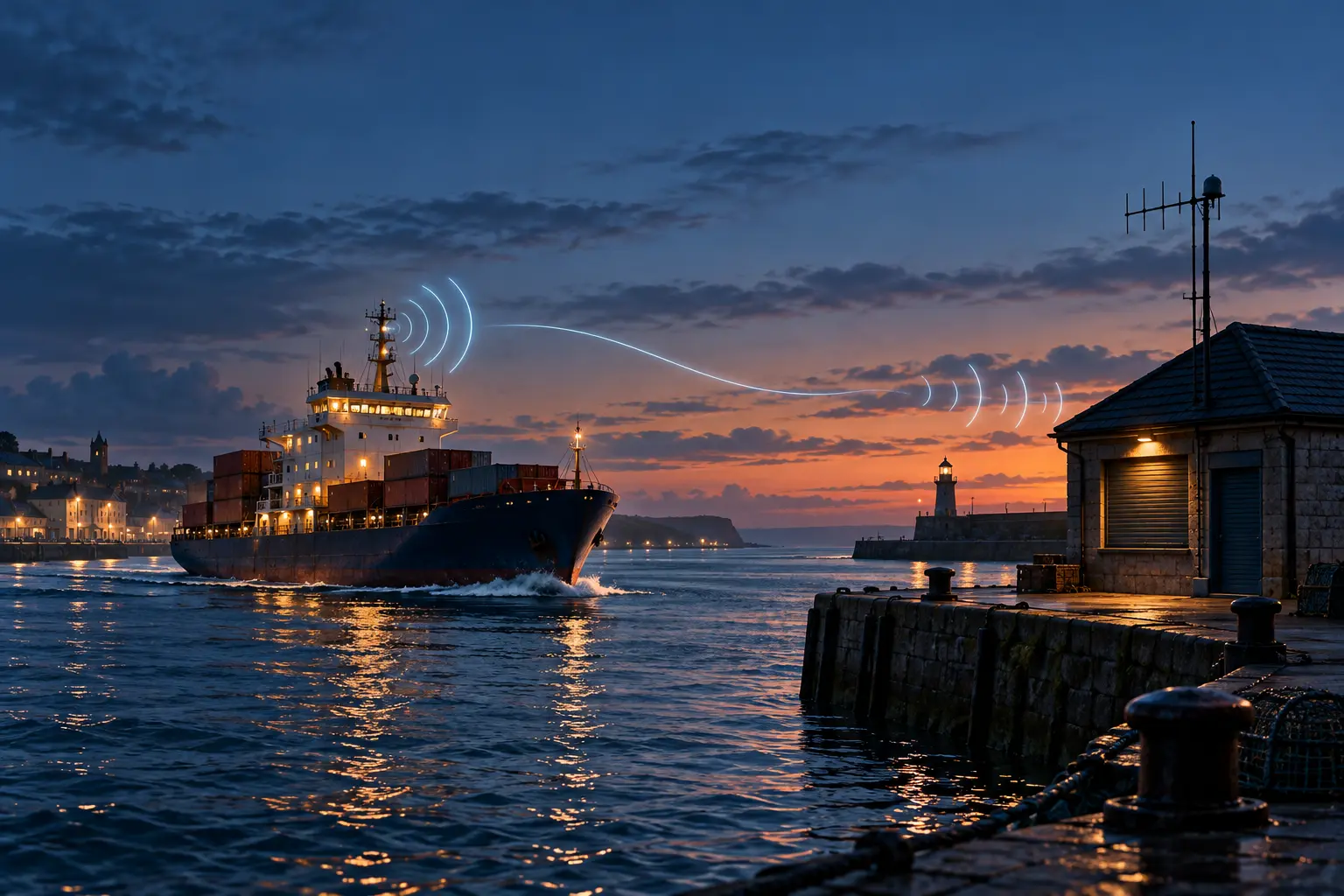
A ship can soon carry the new data kit with Ofcom's blessing. Back at the British quay, the shore station is still waiting for its rulebook. That split runs through Ofcom's 23 October maritime spectrum decision. The regulator will put terrestrial and satellite VHF data exchange, VDE-TER and VDE-SAT, into Ship Radio licence terms and equipment lists in early 2027. UK-flagged vessels travelling internationally gain a clear UK permission to use the equipment.
VDES is a larger toolbox than the familiar AIS position report. Ofcom describes four parts: AIS, application-specific messaging, terrestrial data exchange and satellite data exchange, all under the maritime VHF system. Route exchanges, rescue coordination and traffic awareness are possible uses. An IMO decision from May will let ships carry VDES as an alternative to AIS under SOLAS from 1 January 2028. The international carriage rule and the British radio licence have separate jobs.
The shore side got a different answer. Ofcom received mixed views on how UK coastal stations should use VDES, particularly who would coordinate channels when ports are busy. It chose no formal coastal-station proposal in this decision. A further consultation will follow work on international guidance and standards; Ofcom expects that work no earlier than 2027. A shipboard entry in a licence can be printed now. A working national shore network needs channel assignments, coordination and another public decision.
Ofcom also plans two application-specific messaging channels under AIS licences: 161.95 and 162.00 MHz, each restricted to priority 2 and subject to the statutory licence-variation process. That is a separate lever in the same VHF band. It shows why “digital maritime radio” makes a poor single switch: equipment classes, ship licences, coastal stations and message priorities all have their own keys. The publication docket carries the decision and draft licence documents.
Member Briefing
Deeper Profile Context
Sign in with the right membership level to unlock the full briefing and source notes.
Only for Strategic Circle
Strategic Circle
Open to all readers. Unlock profile briefings after joining and signing in.
Join Strategic CircleOnly for Leadership Alliance
Leadership Alliance
For qualified IP-asset owners and management; sign in to unlock alliance briefings.
Join Leadership Alliance