Summary
- A reader asking for next month's tide faced a choice in NOAA's 1995 plan: dial-up access let them select a date, while the webpage's four-day window began with the day of inquiry.
- Readers wanting the whole annual book would depend on a new supply arrangement. With printing funds short, NOS offered complete pages on a paid CD-ROM and invited private printers to make the books.
The awkward question for NOAA's planned tide webpage was simple: what about next month?
Its four-day forecast would begin on the day of inquiry. That suited a question about the coming days at a reference station. A reader planning further ahead had to use another route. A complete annual volume kept all its dates between two covers; this new window moved with the calendar. Getting the right answer began with choosing the right doorway.
The reason for rearranging those doorways was money. The Moon had no budget problem. The office printing its effects on the sea did.
In a notice published on 7 August 1995, NOAA's National Ocean Service, or NOS, said that funds for printing and distributing tide and tidal-current tables were running short. Starting with the 1996 edition, the agency would stop supplying the books as a standard nautical product. Maintaining the prediction database and generating the annual predictions would remain its work.
The calculations would keep coming on the familiar annual schedule. But the agents who stocked NOAA's nautical publications would need a different supplier for the books. Buyers of the annual edition had a stake in whether private printers took up that work.
Computing had already filled the cupboards
The tide tables had been through several generations of computers before the web arrived. NOAA's technical history dates electronic prediction to 1966, initially using FORTRAN on mainframes. Producing the pages still required a remarkable amount of handling.
Its account of 1973 describes a CDC6600 producing a closet-sized room of punched cards. An IBM360 turned those into another closet-sized collection representing near-master pages. People then sorted the cards into decks for a computer-driven printer. The sea's movements had become numbers, and the numbers had become a storage problem.
By 1990, networked personal computers were driving a PostScript printer. PostScript described a page in a form a suitable printer could reproduce. That existing page-production machinery gave the 1995 change a useful handover point: ready-to-print pages could travel without NOS paying to turn every set into a book.
Three doors, three different supplies
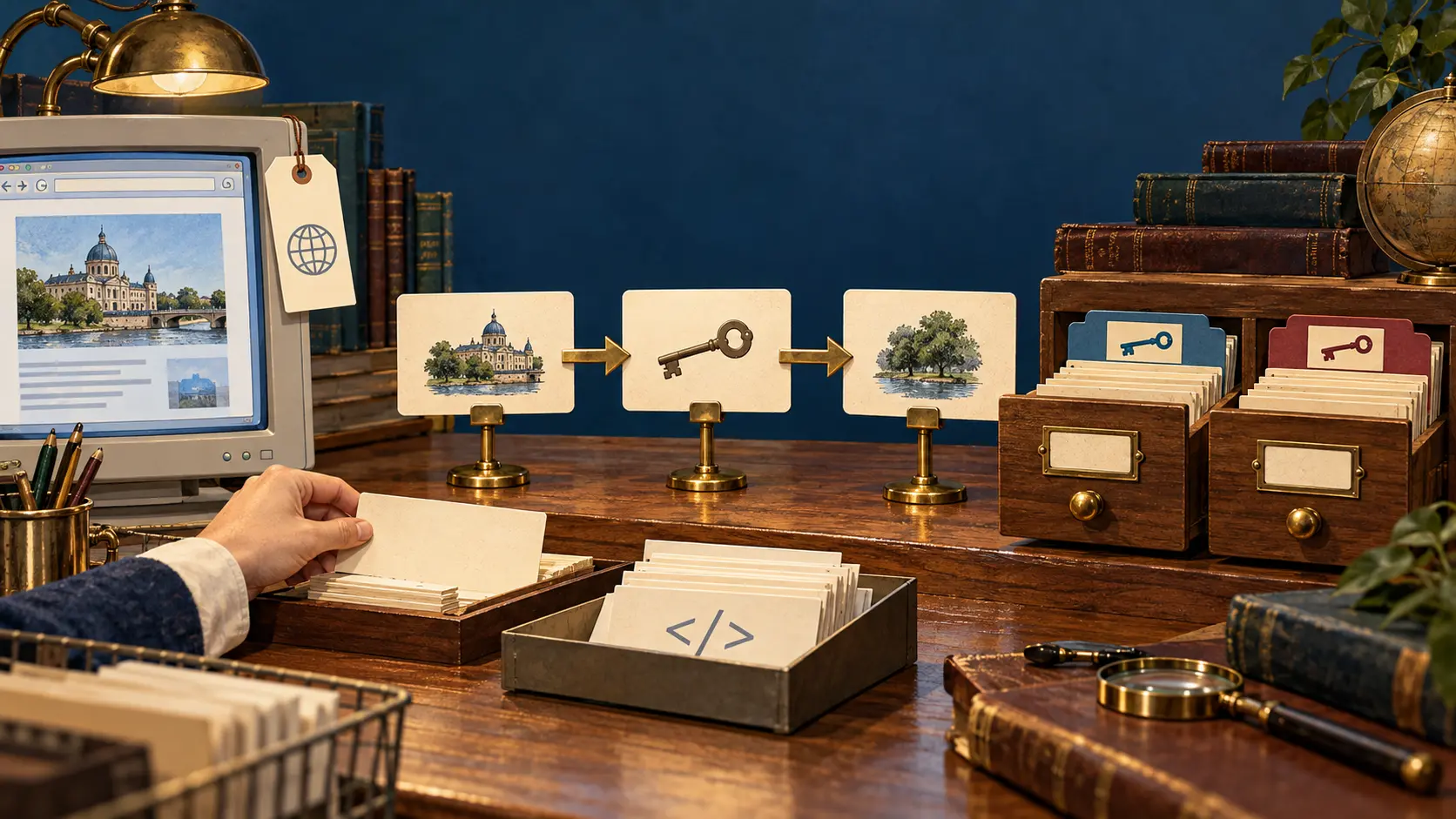
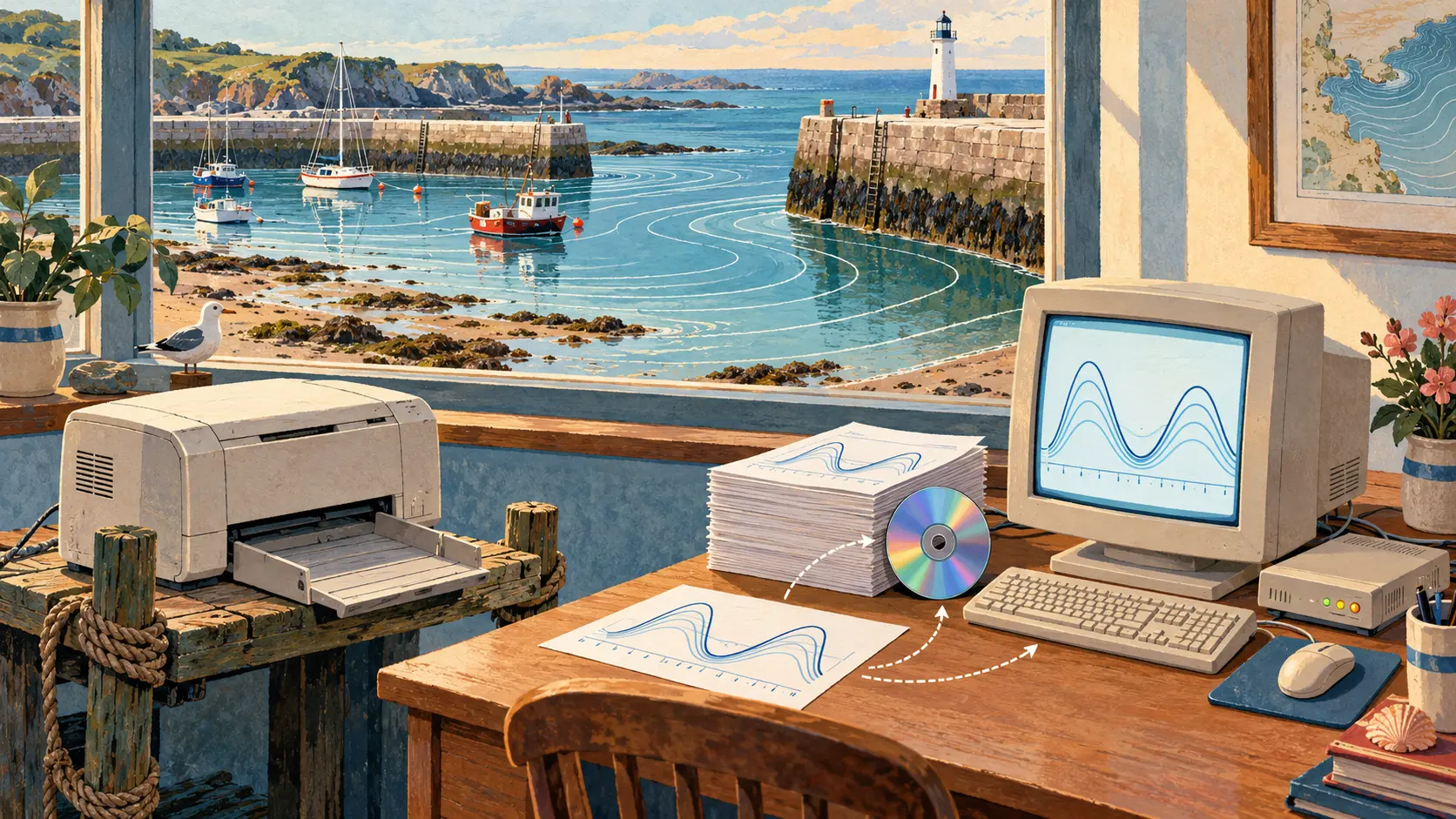
The proposed CD-ROM contained a complete set of tables as camera-ready PostScript page images. Anyone could request the compilation, with a fee for production and distribution. Private printers could use it to make books for retailers and the public. A disc carried the pages; another organisation could supply the paper, press and distribution.
The dial-up option had a different shape. Through the TIDES electronic bulletin board, a modem running at up to 9,600 baud would offer a three-day window for any date in 1995 or 1996, covering approximately 3,700 domestic tide stations. The useful feature was the choice of date as well as the breadth of stations.
The Mosaic homepage offered four days beginning on the day of inquiry, for domestic tidal reference stations. An extra day came with a different coverage rule and a rolling start date. The browser was a short-window service. The CD was a complete publication that could be printed.
The notice presented these prediction services as forthcoming and said requests through the bulletin board and homepage were being accepted immediately. It also assigned the new channels a second job: telling customers when prediction products became available or final. A communications channel could deliver an answer and announce when a larger edition was ready.
The books acquired a different supplier
For NOAA's nautical-chart sales agents, the change was explicit. They would obtain books for resale from private printers and distributors instead of the NOS Distribution Branch. NOS invited interested suppliers to get in touch and said a small number had already expressed interest.
Here was a very material consequence of digital distribution: somebody still had to manufacture and move the books. The public agency kept the prediction work; the proposed publishing arrangement put printing and retail supply in other hands. The CD made that handover possible at the page level.
The early web belongs in this story alongside the modem and disc. Each served a different request. Ask for the next few days at a reference station, and the homepage had a clear purpose. Ask for a date elsewhere in the announced two-year range, and the bulletin board offered a different bargain. Ask for the annual volume, and the print-ready compilation carried it. “Online” was a rather small word for three very different orders.
Sources
Member Briefing
Deeper Profile Context
Sign in with the right membership level to unlock the full briefing and source notes.
Only for Strategic Circle
Strategic Circle
Open to all readers. Unlock profile briefings after joining and signing in.
Join Strategic CircleOnly for Leadership Alliance
Leadership Alliance
For qualified IP-asset owners and management; sign in to unlock alliance briefings.
Join Leadership Alliance