
Intelligence
Latest Articles
Latest intelligence on infrastructure operators, policy decisions, market moves, and digital power shifts.
History
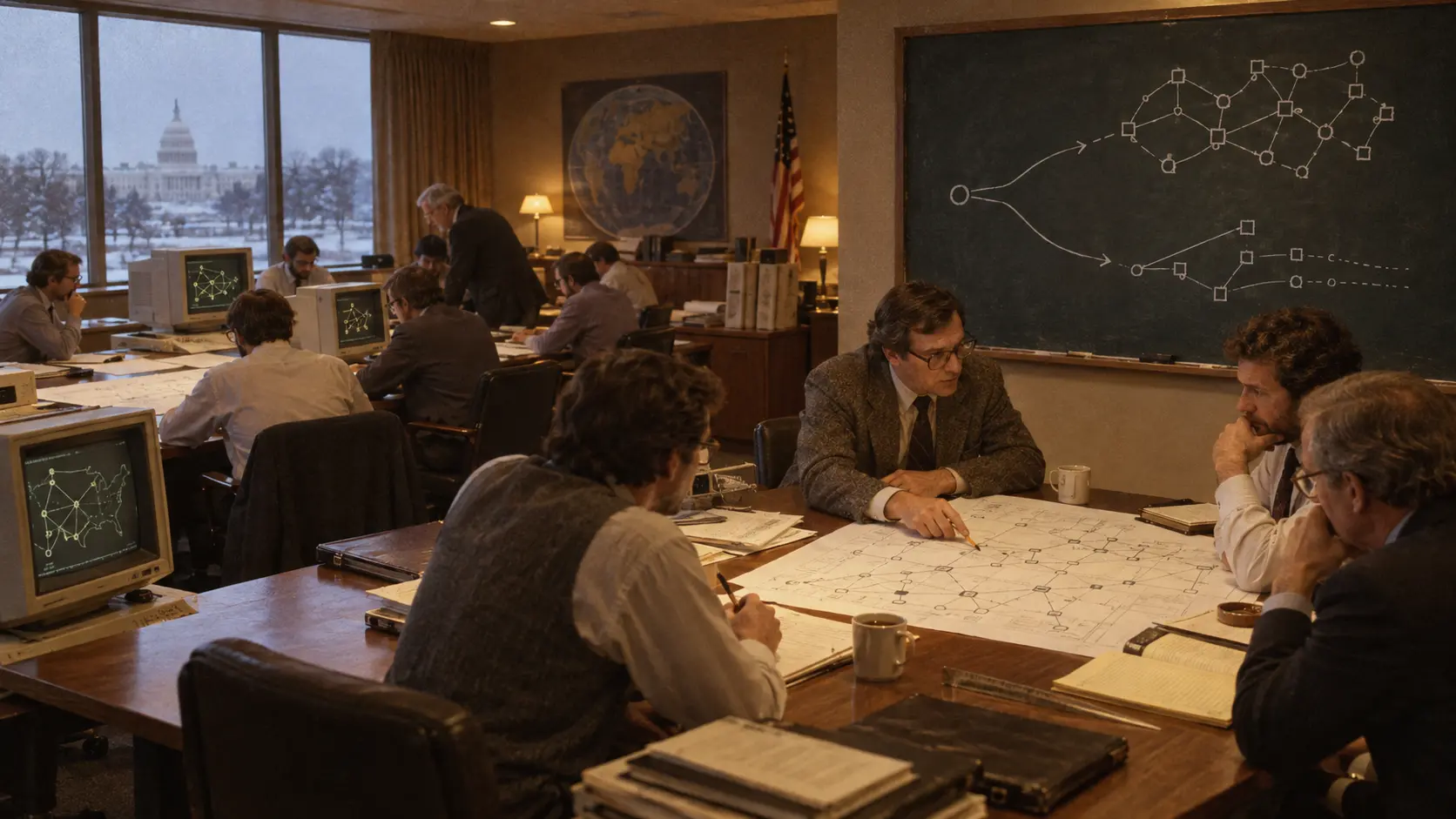
The First IETF Was a Session Inside GADS
The meeting later remembered as IETF 1 began not as a standalone conference but as one afternoon session inside a two-day meeting of DARPA’s Gateway Algorithms and Data Structures Task Force. Its proceedings show a new engineering remit taking shape while the older group was…

Leaders
Yasu Taniwaki’s Question: Who Can Seek a Remedy from an RIR?
At Japan IGF 2024, Taniwaki asked whether the RIR system had an appeal or dispute-resolution process. A later draft names more people who may enforce rights against an RIR, but the text is still awaiting approval and implementation.
History
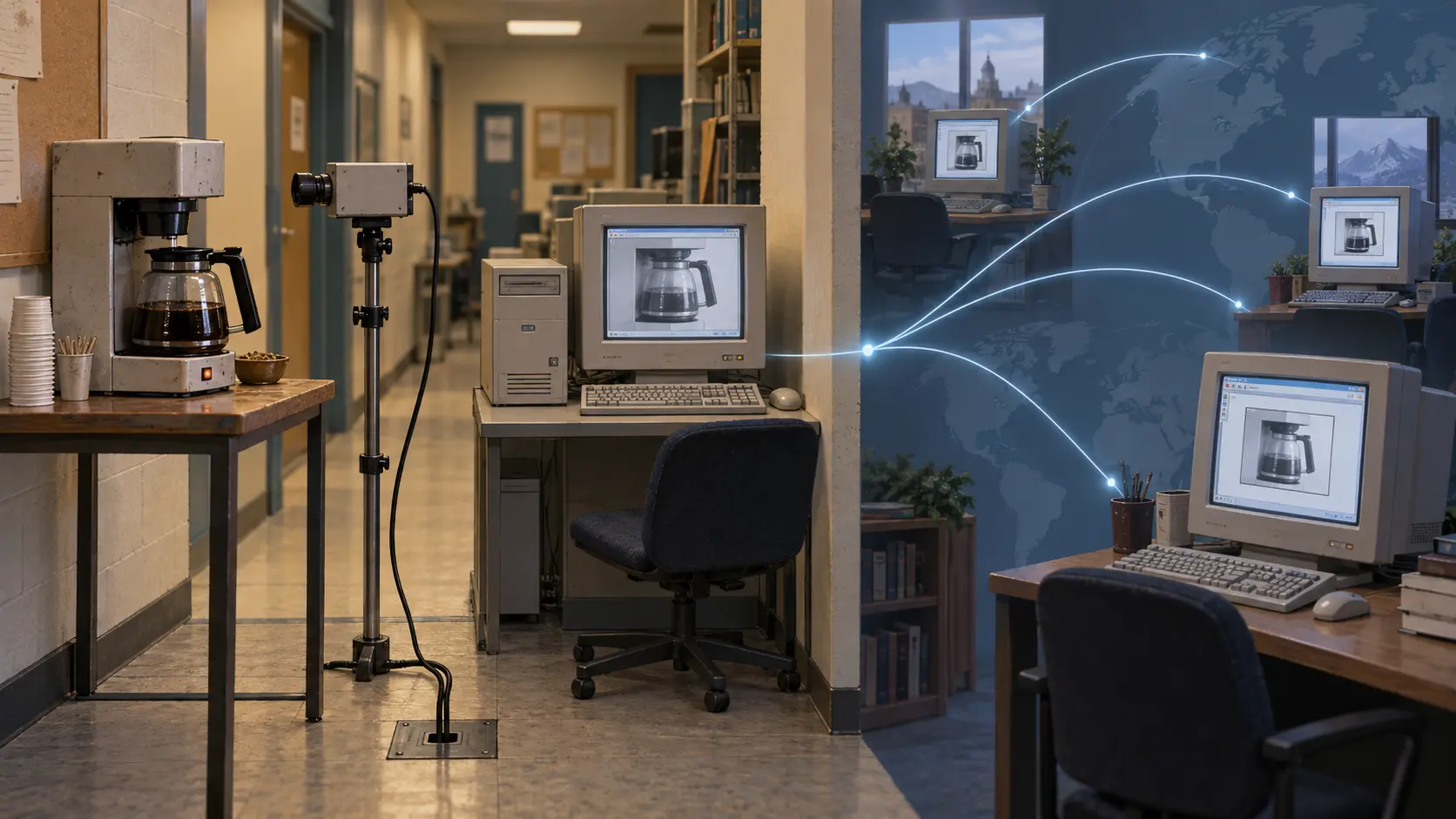
One HTTP Request, One Fresh Image: The Trojan Room Webcam
The Trojan Room camera did not begin as a public broadcast. It began as a way for Cambridge researchers to avoid a wasted walk to a shared coffee pot. In 1993, a change to the server made each new still image retrievable through the Web, so viewers no longer needed the…

Story
APNIC’s RSC Verifier Returned After a 75-Minute Rollout Window
APNIC’s status record shows its public RPKI Signed Checklist verifier returning to operational status after 75 minutes of maintenance. The notice mentions a rollout-strategy change, but does not identify the release or any user impact; RSCs can also be checked locally.

Academics
Dan Farmer and the Unix Checks COPS Could Run Locally
Dan Farmer and Eugene H. Spafford described COPS as a configurable set of small checks for recurring Unix host problems. It made inspection easier to repeat without pretending that a clean run could decide policy, fix the machine or prove it secure.

History
Why .YU Stayed in the DNS Root Until 2010
The ISO code changed before the old domain stopped serving people. Between those dates, a temporary registry, replacement namespaces and a staged migration had to bridge the distance between administrative identity and addresses already embedded in daily use.

Global Datacenter Trends
Flex’s AI modules move integration off-site; the grid clock remains
Factory-built power, compute and cooling can progress while a data-centre site is being prepared. Flex’s “up to 50%” figure does not show that usable compute, grid power or revenue arrives half a project sooner.

Story
AFRINIC’s RPD Reply Drew a Boundary. The Scope Question Remains.
AFRINIC’s third Bylaws consultation closed on 30 August. A public exchange on the RPD list two weeks later separated formal article review from policy discussion, but did not spell out where entities should raise a bylaw’s effects on the policy process.

History
The Internet Arrived on a Phone Line: Bhutan’s DrukNet, 1999–2001
In June 1999 Bhutan opened an Internet service whose access numbers were billed as local calls across the country. That rule softened distance in the phone bill; it could not supply a computer, clear a dial-up line, or make rural service physically available.

Academics
Mark Allman Helped Make TCP Faults Traceable
RFC 2525 turned reports of TCP implementation failures into a reusable diagnostic record: a named symptom, protocol context, packet-trace evidence, detection guidance and a known correction where the cause was understood. Mark Allman was one of nine coauthors; the document does…

History
A Login Was Not a Route: The World’s 1989 Dial-Up Experiment
A customer could dial The World, use its email and Usenet service, and still lack a direct path from a home computer to the wider Internet. Reconstructing the Boston service’s first years shows why “public Internet access” was a sequence of technical and policy states, not a…

Story
AFRINIC Reports 62 Event Attendances, but No Cost by Event
AFRINIC’s unaudited first-half report presents two different ledgers: travel spending by department and governance group, and attendance counts by event. One assigns USD 114,232 to Board travel; the other records 15 Board attendance entries among 62 event appearances. Neither…

History
The Pacific Circuit Was Only One Leg: TransPAC’s 1998 Link to Asia
The first TransPAC connection did not turn a Pacific cable into a ready-made Internet for every university on either shore. It joined several separately operated layers: an Asia-Pacific research network, carrier infrastructure, a Chicago exchange point and the U.S. research…

History
A Global Voice by Unanimity: The RIRs’ 2003 NRO Compact
Four regional registries created a way to act together without merging their operations. The 2003 NRO memorandum made shared representation depend on delegated authority and unanimous commitments; in 2004, a separate agreement placed the NRO inside ICANN’s address-policy process…
NANOG
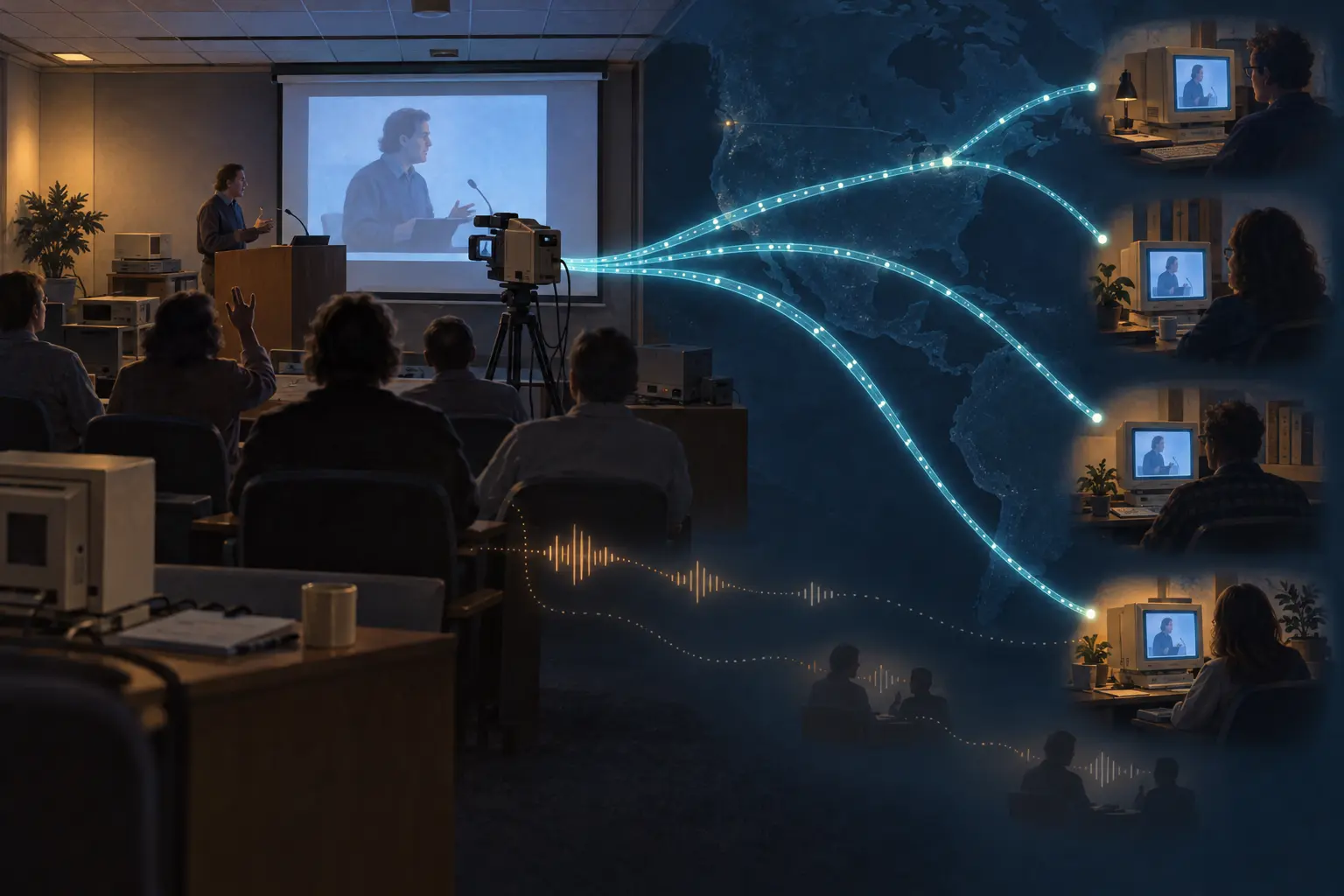
Packets Reached CERN; Many Questions Did Not: NANOG 1 and the MBONE, 1994
In June 1994, organizers planned to multicast NANOG’s Ann Arbor meeting over the MBONE. The archive preserves three different kinds of evidence: one person could not find the session, another asked for a steadier view of the screen, and a listener at CERN reported no packet loss…

Leaders
Brian Kantor and NNTP’s Shared News Store
In 1986, Brian Kantor and Phil Lapsley described a news service in which a small workstation could read selected articles without carrying the whole archive. Their design kept that local reading service distinct from the separate exchanges through which news hosts moved articles…

History
A Mailbox, a Route and a Country Code: Kazakhstan’s Internet, 1991–96
Kazakhstan’s early network story has several dates that are each defensible when attached to the right layer. A mail node, a persistent Internet route, a root-zone delegation and a commercial service did not arrive at the same moment.

History
The Backbone Had a Closing Date, Not a Single Switch: NSFNET, 1995
NSFNET’s backbone service ended on a date fixed in advance. The network’s own termination notice shows why that date should not be mistaken for a single nationwide cutover: many users already relied on another network for their primary path.

History
Beyond the Islands, Still Through the Hub: ALOHA’s 1971–74 Satellite Experiment
ALOHAnet began as an answer to a local problem: how could terminals scattered across Hawaiian islands reach computing resources without giving every terminal a permanent circuit? By 1974, the project was testing a second answer. A NASA satellite could carry bursts between distant…

Story
RIPE’s first-ASN draft defers the route-policy record until use
RIPE’s first-ASN draft defers the route-policy record until use intelligence summary explains the development, the public evidence available to readers, the organisations involved, the regional context, market exposure, and the infrastructure consequences that may follow. The…