
Summary
- RFC 977’s reader-facing design let workstations request selected articles from a news database held on one or a few local servers, avoiding a full duplicate store on every machine.
- Kantor and Lapsley described a different NNTP path for news hosts to exchange articles. The 1986 memo also suggested local cache servers but explicitly left their operation unspecified.
- The specification records an intended storage economy, not measured savings or universal deployment. It shifts storage, indexing, expiry and availability toward a service host without making all Usenet globally centralized.
A workstation does not need the archive
The revealing unit in the February 1986 NNTP proposal is not the whole network. It is a cluster of machines on a local area network, some of them small workstations with little disk space. The question is practical: must each machine keep a full copy of every news article before its user can read anything?
Brian Kantor of UC San Diego and Phil Lapsley of UC Berkeley answered with a client and server boundary. A central news host would hold the article collection and index files. Readers on other machines could connect over TCP and ask for the items they wanted. Indexing, cross-referencing and expiration of old messages belonged to the news-store model; the reading program could present selected material without making every workstation a separate archive.
That choice addressed both capacity and interoperability. RFC 977 argued that consolidating a cluster’s news on one or a few hosts could avoid duplicate disk copies and let workstations with limited storage participate. It also argued for a stream connection instead of assuming that unlike clients shared a compatible network file system. The protocol exposed a service across operating systems; it did not require those clients to organize their disks in one common way.
There is a small but important distinction between “central” and “global.” In this part of the document, the news server is central to a local cluster. The text does not say that one machine stores every Usenet article for everyone. It describes how a group can share a reading store while keeping its own arrangement of hosts and users.
One protocol, two directions of sharing
NNTP’s second role was moving news between hosts that wanted their own copies. RFC 977 treats this as a separate process from a reader asking a local server for an article. A host could query a neighbor about new groups and articles, request the items it wanted, and indicate which articles it already had. The design aimed to send only desired articles that were not duplicates.
The distinction matters because a shared client store and a distributed feed solve different problems. The first reduces copies within a local cluster; the second coordinates which copies travel from one news host to another. The first can centralize reading storage without eliminating peer exchange. Calling NNTP simply a centralization protocol erases the part of the architecture that lets participating hosts distribute articles selectively.
The server itself was also deliberately modest in scope. RFC 977 calls it an interface between programs and the news database, and leaves user interaction and presentation to client programs that know their local environment. A standards document could specify the conversation over a TCP stream while leaving the display, navigation and user experience to other software.
The cache was a suggestion, not a completed design
For a larger institution, Kantor and Lapsley proposed an intermediate or “slave” server that might mediate reading requests and cache recently retrieved articles. A client could first try its local server; if that service were unavailable, a site might deny access or try the central host. This sketch acknowledges that a single reading store creates an operational question: how should a cluster balance direct access, local copies and service failure?
But the authors explicitly said RFC 977 did not cover slave-server operation. The document names a useful extension point, not a complete failover protocol or a promise that cached articles stay fresh. That boundary is easy to miss when the design is retold as though central storage automatically came with a specified resilience layer.
The cost moved to the service host
The proposal’s intended economy is clear: do not make every small workstation store everything. Yet storage is not abolished. It is concentrated in the news host, alongside the index files and the work of deciding when aged messages expire. Readers gain a lighter local machine; the service operator takes on a larger capacity and continuity obligation.
That is an architectural inference from the division described in RFC 977, not a published measurement of actual savings. The memo says the savings for a large cluster are worthwhile, but it does not report disk totals, adoption rates, server utilization or user experience. A serious historical account should keep the design’s reason separate from evidence about deployment.
The same caution applies to availability. When a reader depends on one central host, that host’s storage, index and service status become visible to many clients at once. Local caching could soften the dependency, but because its operation was outside the 1986 specification, each installation had to make its own choices about freshness, fallback and failure. Shared storage replaces many local copies with a service boundary that must be operated well.
A design that continued to evolve
In October 2006, RFC 3977 identified RFC 977 as obsolete and described itself as its replacement. It clarified parts of the earlier protocol and added base functionality; its introduction still explains reader access as retrieval from a central database. In the same month, RFC 4644 formalized asynchronous streaming transfer between servers through CHECK and TAKETHIS. Those documents show two continuing lines of work: reading articles from a store and moving selected articles among peers.
The later standards do not prove how a particular site deployed NNTP. They do show that the architecture was not frozen in its first description. The reader-facing database model persisted in the protocol’s account of retrieval, while server-to-server transfer gained a more efficient extension of its own.
Kantor’s contribution, with its proper boundary
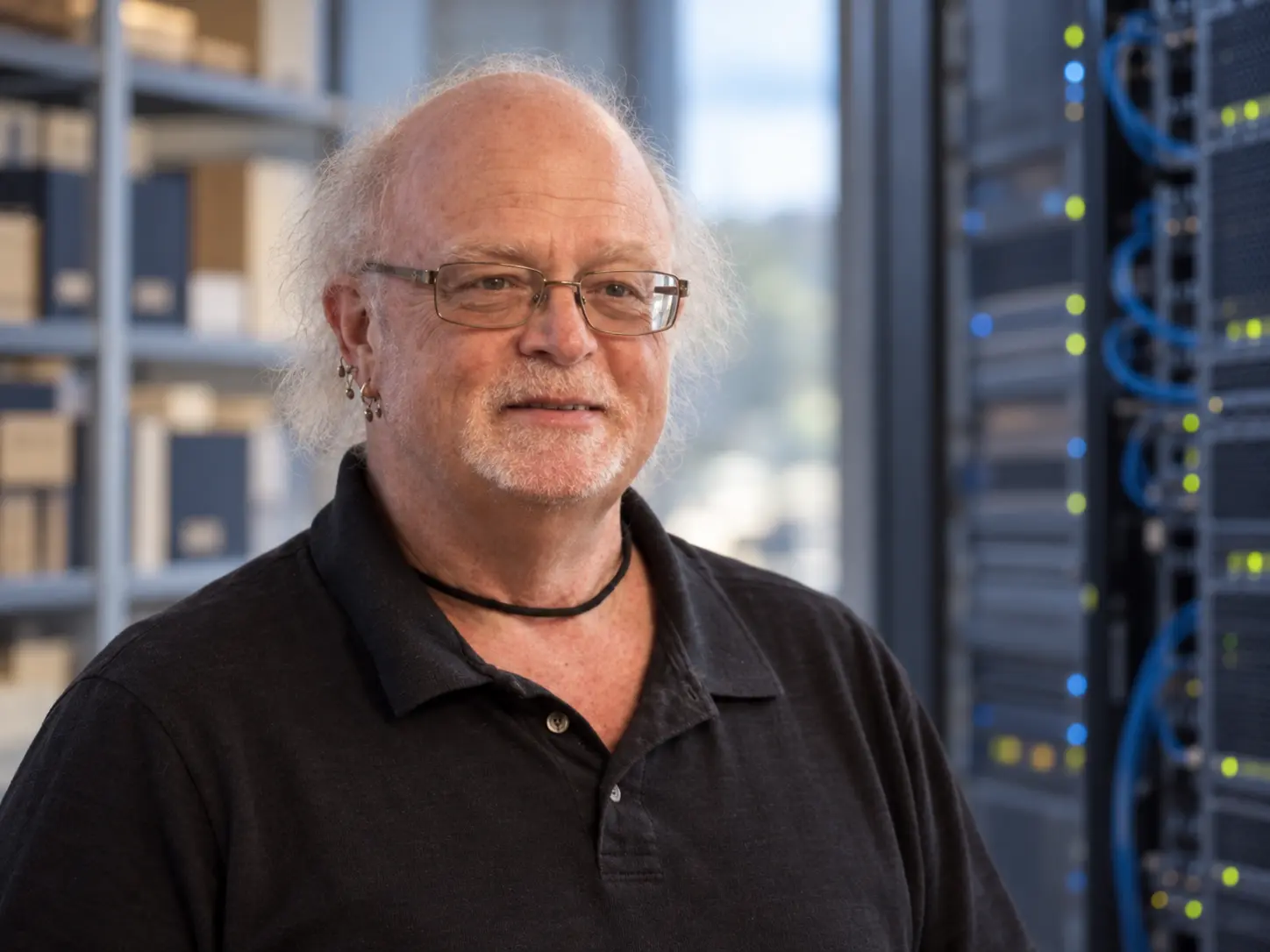
UC San Diego’s memorial records Kantor’s 47 years at the university, his work as postmaster and name-server operator, and his role in managing network infrastructure. It credits him with designing NNTP. RFC 977 supplies the narrower documentary attribution: Kantor and Lapsley co-authored the February 1986 proposal. Both facts matter. A biography can place the protocol inside a career spent operating network services; the RFC keeps the technical authorship collaborative.
The lasting design question is not whether one server should own all news. It is which work belongs at a shared service and which work remains with clients or peer hosts. Kantor and Lapsley’s proposal made that boundary explicit enough to discuss: centralize a local reading store, keep client presentation separate, and treat inter-host distribution as another exchange. Its operational consequences follow from that separation, while the record remains silent on measured outcomes.
Sources
Member Briefing
Deeper Profile Context
Sign in with the right membership level to unlock the full briefing and source notes.
Only for Strategic Circle
Strategic Circle
Open to all readers. Unlock profile briefings after joining and signing in.
Join Strategic CircleOnly for Leadership Alliance
Leadership Alliance
For qualified IP-asset owners and management; sign in to unlock alliance briefings.
Join Leadership Alliance