Summary
- During an Internet Public Library fundraising experiment, clicking through to the payment system stopped further automatic appeals. The software had already classified the visitor as a contributor.
- The two rounds recorded 24 individual donors and $1,128. Their most useful historical lesson sits at the handoff between an encouraging click and an actual receipt.
Congratulations. Your wallet can stay closed.
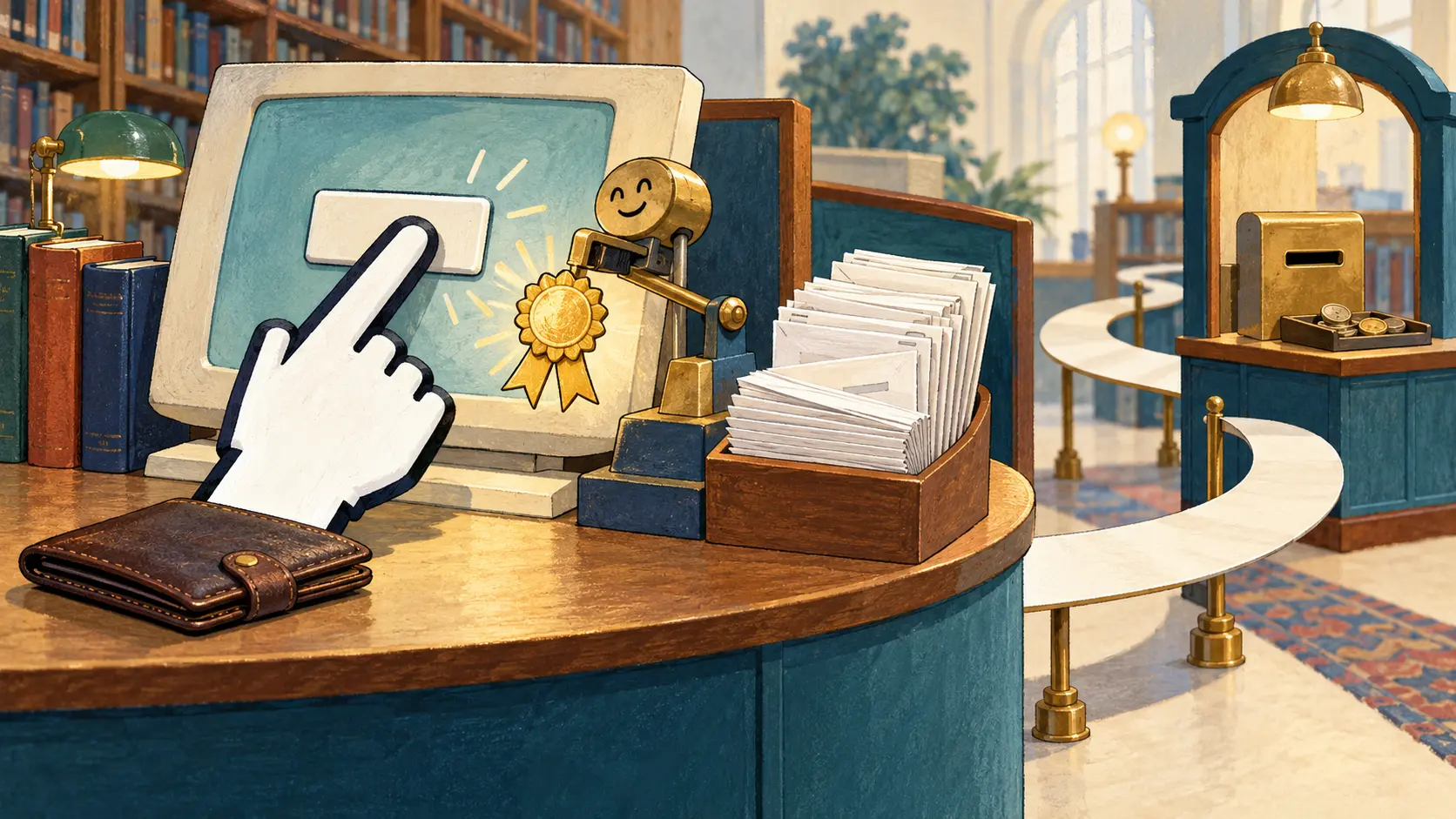
The Internet Public Library had an unusually accommodating definition of a donor. In its 2004 campaign, a visitor who clicked the contribution link earned the label immediately. The software then retired its automatic fundraising appeals to that visitor. Payment lay ahead, on another website.
This was a small piece of web housekeeping with a large assumption tucked inside it. A button could move a person out of the audience still being asked for money before the cash office had received anything. The computer was admirably prompt with its manners.
IPL had grown from a 1995 University of Michigan course project. Its offer—library help delivered over the Internet—made voluntary support a plausible question. Readers could use a public service, value it, and help keep it running. Turning that sequence into a functioning payment journey was the experiment’s awkward homework.
The link led beyond the researchers’ view
In their published study, Yan Chen, Xin Li and Jeffrey K. MacKie-Mason described four appeals: a straightforward request, small thank-you gifts, seed funding and matching money. The last two had real financial backing. The experiment’s 24 donors gave $1,128; that figure counts their gifts separately from the backing already secured for the appeals.
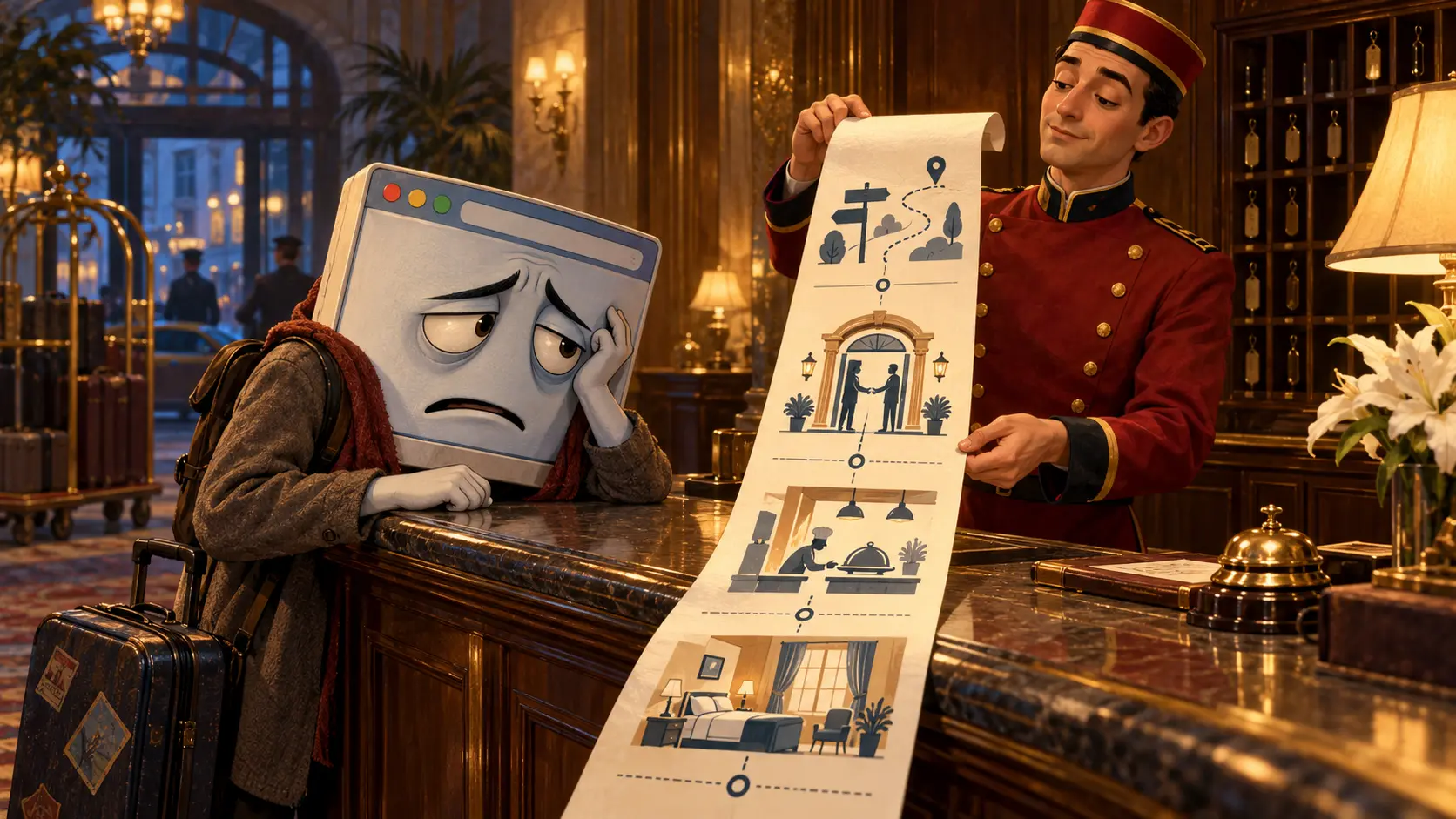
The campaign could observe the click into University Giving. Inside that payment service, tracking stopped. Weekly reports brought back completed donations. A pretest found that even someone familiar with the giving system needed five to six minutes to finish.
Five minutes is a respectable amount of time to reconsider any promise made by a mouse. The missing transaction trace leaves curiosity and form-filling friction unresolved. It also puts the two offices in different positions: one can see an expression of interest, the other a completed gift. Between them sits the person doing the work.
The audience declined the paperwork
An earlier step had already tripped the design. Almost nine in ten tracked users supplied nothing to a postal-code pop-up. The initial default steered users without a valid American or Canadian code into one appeal; a November 2004 revision redistributed them randomly. In 2005, the campaign removed the pop-ups and waited for visitors to open the appeal themselves.
A tidy experiment on paper had met an untidy browser. The repair changed how people entered the campaign, which mattered as much as the wording they found there. The most useful thing the library collected was an account of these collisions. Its users had tested the experiment while the experiment was testing them.
Member Briefing
Deeper Profile Context
Sign in with the right membership level to unlock the full briefing and source notes.
Only for Strategic Circle
Strategic Circle
Open to all readers. Unlock profile briefings after joining and signing in.
Join Strategic CircleOnly for Leadership Alliance
Leadership Alliance
For qualified IP-asset owners and management; sign in to unlock alliance briefings.
Join Leadership Alliance