
Policy continuity, legitimacy, and accountability signals across internet governance institutions.
Governance
Governance
Internet governance intelligence tracks institutions, policy processes, standards activity, registry operations, accountability disputes, and implementation signals that affect internet infrastructure. BTW.
RIR WatchdogCase FileNumber Resource SocietyICANNIETFHistory of InternetNOGs

RIR Watchdog, Case File, NRS, ICANN, IETF, History of Internet, and NOG sessions.
Coverage prioritizes implementation evidence and institutional behavior over declarative positions.
Latest Coverage
Latest from Governance
7,603 articles

CASE FILE
Ofqual’s ABRSM fine makes assessment evidence part of the review system
Three failures limited the use of original recordings in marking reviews and a malpractice inquiry. The penalty also exposes a separate control question: whether corrected records reach the people who rely on them.

Afrinic SAGA
AFRINIC's Receiver Enters the Record Through Consent, Not a Published Mandate
A 24 August 2026 appointment notice is the most specific public statement yet about who exercises authority inside the African registry. It is also a clean example of a consent relationship doing the work that a published mandate would ordinarily be expected to do.

Story
AFRINIC’s 2024 RPKI baseline cannot be rebuilt from its current daily export
AFRINIC’s 2025 annual report gives a precise four-number picture of RPKI at the end of 2024. Its public daily file now gives a different picture: two of those numbers sit together on 31 December, two others on 1 January, and no date in the downloaded history brings all four…

CASE FILE
Xandr’s Norway fine puts consent checks inside the ad auction
Norway’s data-protection authority fined Xandr NOK 92 million for processing Grindr users’ data in real-time advertising bids. The decision asks a precise governance question: can an intermediary treat consent as someone else’s job when it helps decide how data are used?
History
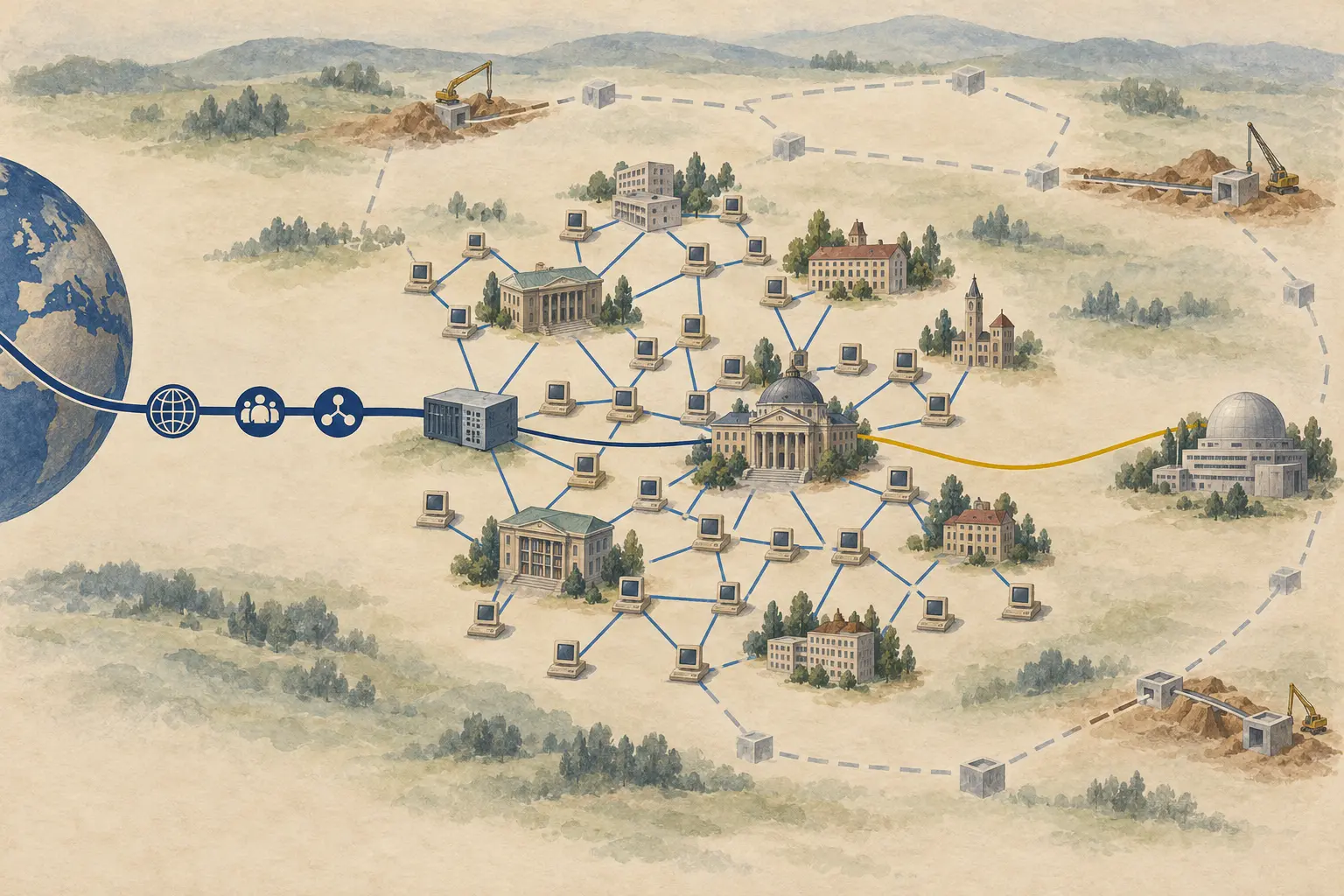
250 X.25 Access Points Were Not an Internet Backbone: Hungary, 1992
Hungary had a national packet network before it had a national IP backbone. In 1992, about 250 public X.25 access points helped smaller and medium-sized sites join wide-area networking, while international IP still depended on a 9.6 kbit/s Budapest–Linz line shared by EARN…

History
A Ping Reached a .cm Host. Nationwide Internet Access Was Another Question, 1997–98
One successful Internet probe in March 1997 made a Cameroonian host visible from London. It did not settle whether Cameroon had a finished international link, where people could buy access, or how far that access reached. The contemporary record keeps those questions apart.

CASE FILE
EDPB finds no obstacle in CNIL’s Michelin draft; transfers remain separate
The European Data Protection Board says the French authority may adopt its draft decision on Michelin Group’s controller rules as submitted. The opinion settles a consistency question under Article 47 GDPR; it is neither the CNIL’s final decision nor approval of any individual…

CASE FILE
Solomon Islands buys a second cable, not a second operator
On 4 August 2026 a trade title reported that a 1,015 km submarine branch financed largely by an Australian facility will become the Solomon Islands' second international cable. The money is quantified. The terms that would turn a second path into a fallback are not.
CASE FILE
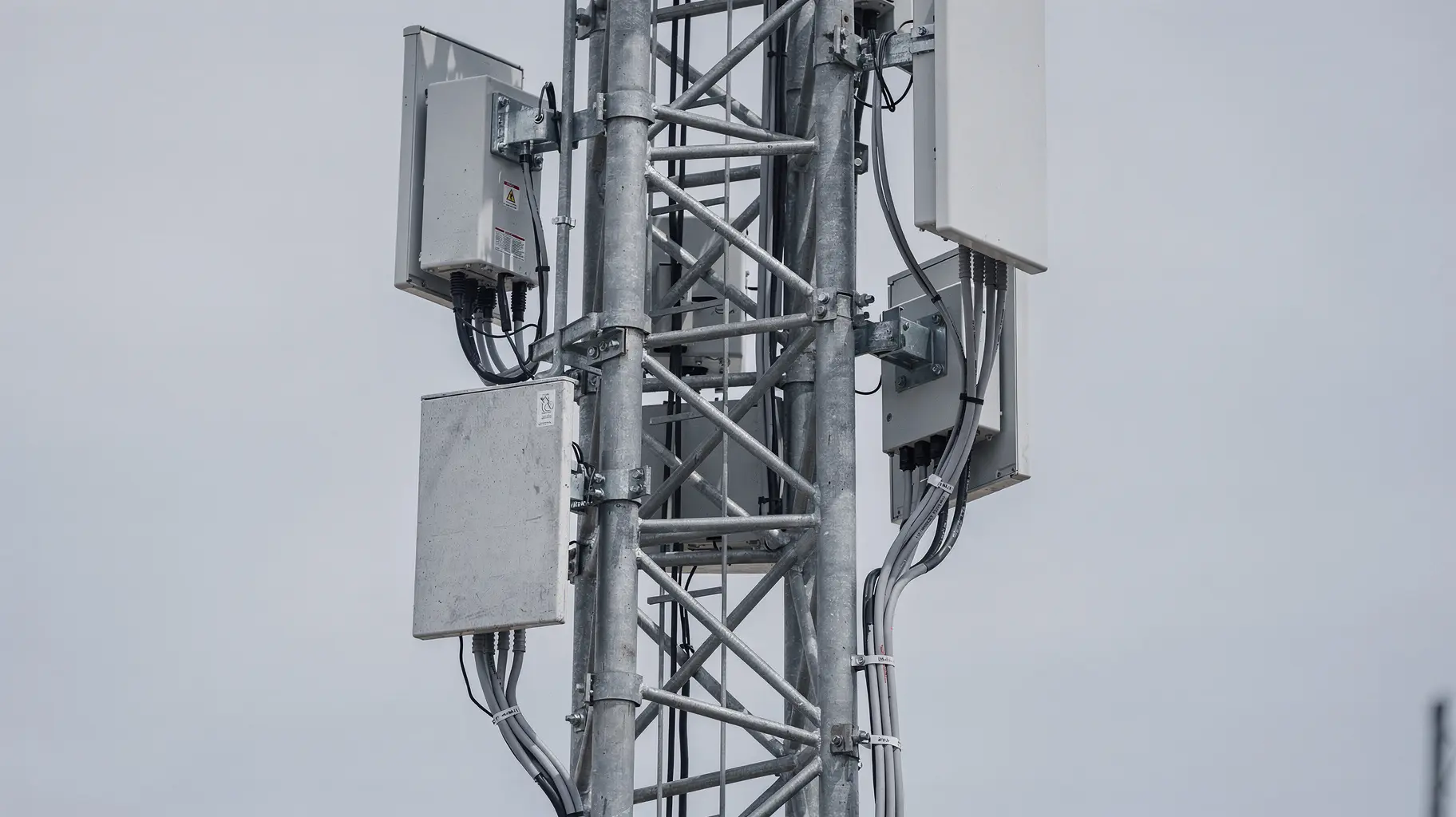
Helios Towers: Four Reported Numbers and a Missing Cash-Flow Chain
Helios Towers' half-year summary records EBITDA up 14 per cent, recurring free cash flow up 52 per cent and leverage down to 3.4x. None of those movements can be checked against the lease-up mechanism said to produce them, because the account available today stops at the headline…

Number Resource Society
S. Moonesamy and the recusal that separates authorship from consensus
A June 2011 minute of AFRINIC's public policy discussions records two things about one entity that are rarely printed together: he was named as a chair of the session, and he took himself out of the consensus evaluation of a proposal he had co-authored. The withdrawal is…

Story
ARIN’s Policy and Governance Ratings Now Point in Different Directions
ARIN’s 2026 scorecard puts policy development closer to expectations while the Internet Governance measure moves farther away. The report ties that widening gap to views on registry self-governance; neither result is a vote on who should govern the number registry.

IETF
IETF Administration LLC: the charter that defers to an unread agreement
The document that constitutes the IETF's administrative company also tells the reader, in its own words, that its account of board responsibilities is a summary rather than the binding version. What stays readable is a map of who places directors on that board — and a single…

History
Meridian’s first in-orbit activation is a test milestone, not a network launch
Meridian Space has put a proprietary communications payload into orbit and powered it on. Its satellite partner reports two-way contact with the spacecraft, but Meridian still described the first communications link through its own payload as a next step. That gap separates an…

Story
IANA’s AFRINIC page now shows 918 available ASNs
Two days after AFRINIC’s file and IANA’s dashboard pointed in opposite directions, both now show 918 as available. The figures carry different data dates, and the public record does not explain the change in IANA’s eligibility label.

History
A National Dial-In Number, One Node in Sana’a: Yemen’s Internet, 1996–1998
In 1996, TeleYemen advertised a number people across Yemen could dial to reach y.net. The equipment behind that national promise sat in Sana’a. Two years later, the company was still describing a customer base concentrated in the capital and a planned Aden router meant to remove…

ICANN
The Published Architecture and the Unread Record: IANA Naming-Function Oversight
Three consecutive articles in the ICANN Bylaws are headed Customer Standing Committee, IANA Naming Function Reviews and IANA Naming Function Separation Process. A contract repository, a committee charter, a service-level document and a report archive are published as well. This…

CASE FILE
EDPB says smart-glasses transparency cannot rest on wearers alone
The Board’s first smart-glasses statement separates the wearer’s role from the duties of manufacturers and linked services, and treats recording signals as preliminary guidance.

History
The Exchange Was Settlement-Free. The Connection Was Not: CIX, 1991
The Commercial Internet Exchange let participating providers exchange traffic without billing one another by volume. A router, private circuits and member boundaries still determined who could use that rule.

CASE FILE
FTC asks whether platform ad optimisation furthers impersonation scams
The Federal Trade Commission is asking whether ad optimisation that helps impersonation scams reach consumers belongs inside its existing rule. The notice opens an evidence-gathering process; platforms have no new duty under it.

IETF
The Administrator Without the Assets
The company that signs for the IETF publishes audited accounts, but the copyrights and marks sit in a trust that predates it, and the company's finances appear inside someone else's tax filing. The separation is ordinary legal design. What it leaves unproven is the part that…
Session Map
Governance Branch
RIR Watchdog
Five regional sessions tracking allocation policy, board legitimacy, and institutional continuity.
Open RIR WatchdogCase File
Long-cycle governance dossiers with legal, election, and institutional stress analysis.
Open Case FileNumber Resource Society
Membership, charter, and resource-governance intelligence from the NRS ecosystem.
Open NRS SessionICANN
DNS coordination, accountability frameworks, and global multi-stakeholder process dynamics.
Open ICANN SessionIETF
Protocol standardization trajectory and interoperability risk under fragmented policy conditions.
Open IETF SessionHistory of Internet
Long-cycle infrastructure history used for governance interpretation and structural forecasting.
Open History SessionNOGs
Operator-level implementation intelligence from APRICOT plus regional and national NOG ecosystems.
Open NOGs Session