
Summary
- CIX’s March 1991 announcement promised direct exchange among customers of three providers without an extra customer charge; the association was reported as formed later that year.
- Its settlement-free rule did not make the service cost-free: members still needed network attachment, fixed membership arrangements and private circuits to the exchange.
The decisive word in the Commercial Internet Exchange’s 1991 promise was not “commercial.” It was “direct.” A March announcement by General Atomics, Performance Systems International (PSI) and UUNET said customers of their three networks could exchange Internet traffic across them without an additional charge to the customer. That was a concrete offer between named providers. It was not a promise that every Internet user could reach every network for free.
The date needs care. The announcement appeared on 25 March 1991, while later histories date the CIX association’s formation to August. The records describe different stages: a public agreement, then the organization of a shared exchange. Treating them as one founding day hides the work required to turn an agreement into a running connection.
CIX’s economic rule was settlement-free interconnection among participating networks. They did not calculate a bill to one another from the traffic volume exchanged. Historical accounts describe the arrangement as fixed-cost or unmetered. That rule answered a narrow question: how members would account for traffic crossing their interconnection. It did not erase the cost of carrying traffic to the exchange, maintaining equipment, serving customers or reaching networks outside the membership.
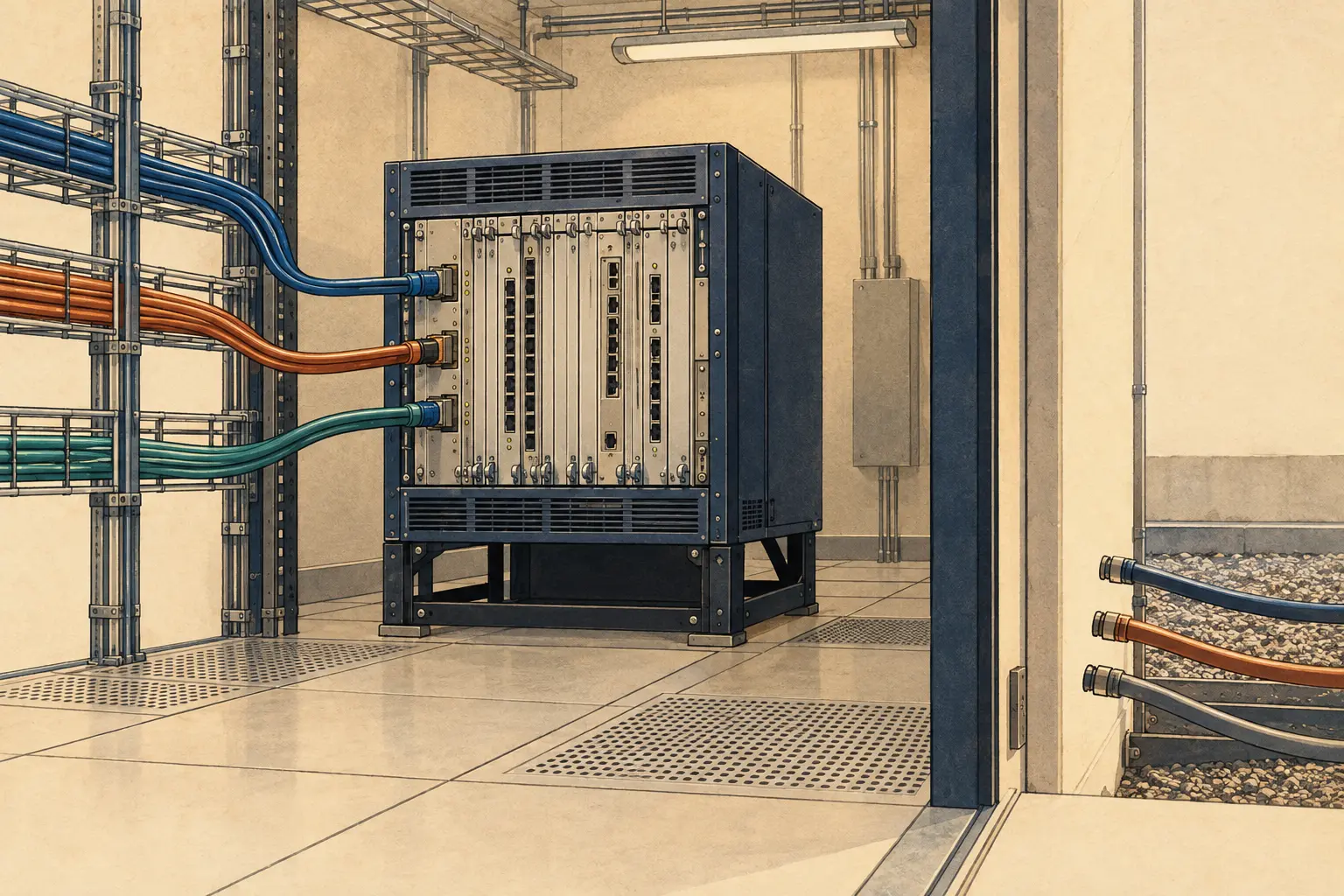
The physical design shows the distinction. The CIX router was installed in Santa Clara, California, and managed by PSI. Other founding networks reached it over private lines. The arrangement avoided sending member-to-member traffic over the NSFNET backbone, but a provider still had to attach its network to the CIX router. The original release’s “no additional cost” language concerned customers of the three providers; it was not an audited statement that circuits, membership, access service or transit cost nothing.
Nor did a CIX connection make all destinations reachable. Membership joined a network to other participants in the exchange. Research and education networks outside CIX still required another route or agreement. In June 1992, ANS and CIX reached a provisional interconnection to bridge traffic between CIX and ANS-connected networks. That separate bridge is evidence of the membership boundary, not evidence that the original rule had opened the whole Internet.
The NSFNET Acceptable Use Policy is often compressed into a general ban on commercial Internet traffic. The February 1992 text in RFC 1359 says it applied to the NSFNET backbone and expected connecting networks to set their own policies. CIX offered a commercial interconnection path outside that backbone. The transition was therefore not a clean switch from “government Internet” to “private Internet,” but a layered system in which a backbone policy, an exchange agreement and private transport had different scopes.
Sources: CIX announcement, 25 March 1991; Internet Cost Structures and Interconnection Agreements; Pricing the Internet; RFC 1359; RFC 2235.
Member Briefing
Deeper Profile Context
Sign in with the right membership level to unlock the full briefing and source notes.
Only for Strategic Circle
Strategic Circle
Open to all readers. Unlock profile briefings after joining and signing in.
Join Strategic CircleOnly for Leadership Alliance
Leadership Alliance
For qualified IP-asset owners and management; sign in to unlock alliance briefings.
Join Leadership Alliance