Summary
- Ofqual says three different failures left assessment recordings unavailable for marking reviews or a suspected-misconduct investigation; 16 learners’ recordings and completed mark forms were permanently lost in a separate episode.
- The £150,000 penalty and ABRSM’s promise of an independent audit put evidence capture, recovery and retention at the centre of qualification governance. Ofqual found no intentional conduct or exposure of sensitive learner data.
A confirmation was not a stored recording
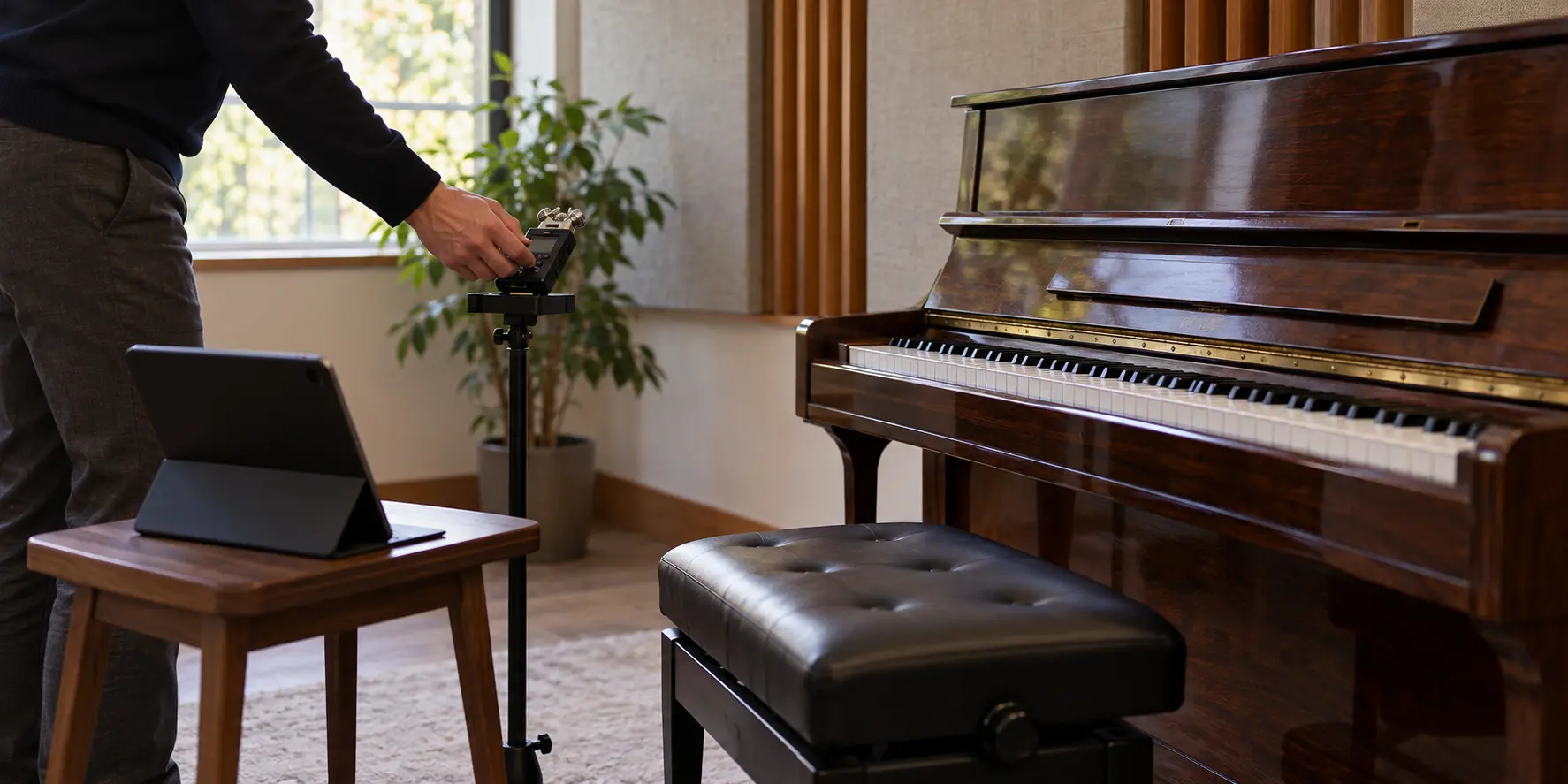
The first failure began with a reassuring signal. Examiners recorded practical-grade music assessments on iPads using a third-party app. The app sometimes confirmed that an upload had finished even though the audio had not reached ABRSM’s system. Under the prescribed process, examiners then deleted the local copy, believing it was safely stored. Ofqual says up to 8,539 recordings were not retained this way between December 2023 and April 2025. Twenty learners who asked for a review of marking could not have it conducted using all of the original evidence.
The distinction is operationally simple and institutionally consequential: a message that a transfer has run is not proof that the file can be retrieved. Once the device copy is gone, the system has lost the material needed to test a later challenge. Ofqual attributed the first incident to a defect in the third-party application. It accepted that ABRSM worked with the developer, removed automatic deletion and introduced stronger retention controls, but said resolving the software issue took close to 17 months after it was identified.
A second failure had no software fix
In June 2024, an examiner fell ill during a tour in Scotland. While staff reassigned the remaining appointments, an incorrect action in ABRSM’s exam-management system deleted recordings and completed mark forms for 16 learners whose assessments had already taken place. The files had not yet been backed up to cloud storage and remained on the examiner’s iPad. When a safeguarding procedure required a factory reset to regain access to the device, the records were permanently erased.
ABRSM had to determine results from the examiner’s written notes. Results were delayed, and the learners could not use the original performances in a normal marking review. Four complained; ABRSM refunded them, funded exam preparation and offered resits. This was not the same failure as the false upload confirmation: it joined a system action, an uncompleted backup and a device-recovery decision. The episode shows why recovery arrangements have to work when staff or equipment become unavailable, not only when routine uploads succeed.
Retention can expire before the question arrives
A third case put a different trade-off under scrutiny. In October 2025 ABRSM investigated suspected malpractice involving an overseas applicant who entered 710 learners for performance-grade assessments. The organisation found evidence of repeated video submissions. But its policy retained recordings for 130 days after results were released. By the time the concern arose, recordings for 231 learners were no longer available, limiting the investigation into that part of the cohort.
That absence was caused by the retention period, not the upload defect or an accidental deletion. The notice does not say that every learner in the group was involved in misconduct. It says the missing material prevented a full investigation in those cases. Retained recordings let ABRSM examine other entries, distinguish repeated submissions from cases where malpractice had not occurred, and revoke certificates after findings. Evidence serves both sides of a control: it can support enforcement and protect a learner from an unsupported allegation.
Correcting a record is not the same as correcting its reach
Ofqual treated inaccurate certificates as a separate allegation. An obsolete template gave about 72,064 certificates the wrong qualification title, although the unit titles were correct and the notice does not say the qualifications themselves were invalid. ABRSM later corrected its digital records, notified learners and offered free replacement paper certificates. It distributed 3,982 replacements by March 2025.
The regulator focused on the initial response: ABRSM had first decided against proactive notification and general reprinting, then changed course after Ofqual’s engagement. The organisation assumed that learners who did not request a paper replacement were content with a digital certificate, but did not check that they had accessed or understood the correction. The incorrect printed certificates were not recalled. A corrected database entry can therefore coexist with a person still relying on an inaccurate document.
The sanction leaves an assurance task
Ofqual’s final notice is dated 7 October and was published on 14 October 2026. ABRSM accepted the specified breaches through a settlement. The penalty is £150,000; Ofqual says the agreement led it to impose less than it would have in a fully contested case. A separate costs-recovery notice requires £10,000 for investigation and enforcement costs. ABRSM also agreed to commission, at its own expense, an independent audit of assessment-record retention.
The notice records important limits. Ofqual found no evidence of intentional breaches and no suggestion that sensitive learner information was lost or placed at risk. It credited ABRSM’s self-reporting, cooperation, remediation and action plan. The case is about the availability and integrity of assessment evidence, not a data breach. The audit’s outcome is not yet established in the public material reviewed here.
For an awarding organisation, an exam record is more than an archive. It is what makes a result reviewable, an allegation testable and a correction verifiable. The practical value of a review process depends on whether the underlying evidence can be retrieved after the original decision. That does not require indefinite retention: it requires rules that preserve relevant records for active reviews or credible investigations, verified storage before local deletion, recoverable backups and a clear route to correct certificates in the hands of learners.
The penalty notice allows an appeal to the First-tier Tribunal within 28 days on specified grounds. This report does not establish whether an appeal was filed. ABRSM’s independent audit may provide the next evidence that its revised controls work in practice; the undertaking itself is not proof of completion.
Sources- Ofqual press release
Member Briefing
Deeper Profile Context
Sign in with the right membership level to unlock the full briefing and source notes.
Only for Strategic Circle
Strategic Circle
Open to all readers. Unlock profile briefings after joining and signing in.
Join Strategic CircleOnly for Leadership Alliance
Leadership Alliance
For qualified IP-asset owners and management; sign in to unlock alliance briefings.
Join Leadership Alliance