Summary
- AFRINIC-38 met in Cape Town on 18 November 2026 with six draft policies and one co-chair candidate before it; by the next morning AFRINIC had published no written decision on any of them. In AFRINIC governance, every gate around that room is held by the Board.
- AFRINIC says consensus “is determined by the Policy Development Working Group, not by AFRINIC”. Its own manual gives ratification, appeals and recall to the Board, which also approved the rules on who could stand.
- That Board’s appointment is before the Supreme Court of Mauritius, and Cloud Innovation does not recognise AFRINIC’s Board as lawfully constituted. The registry is still in receivership under AFRINIC’s Receiver.
What was AFRINIC-38?
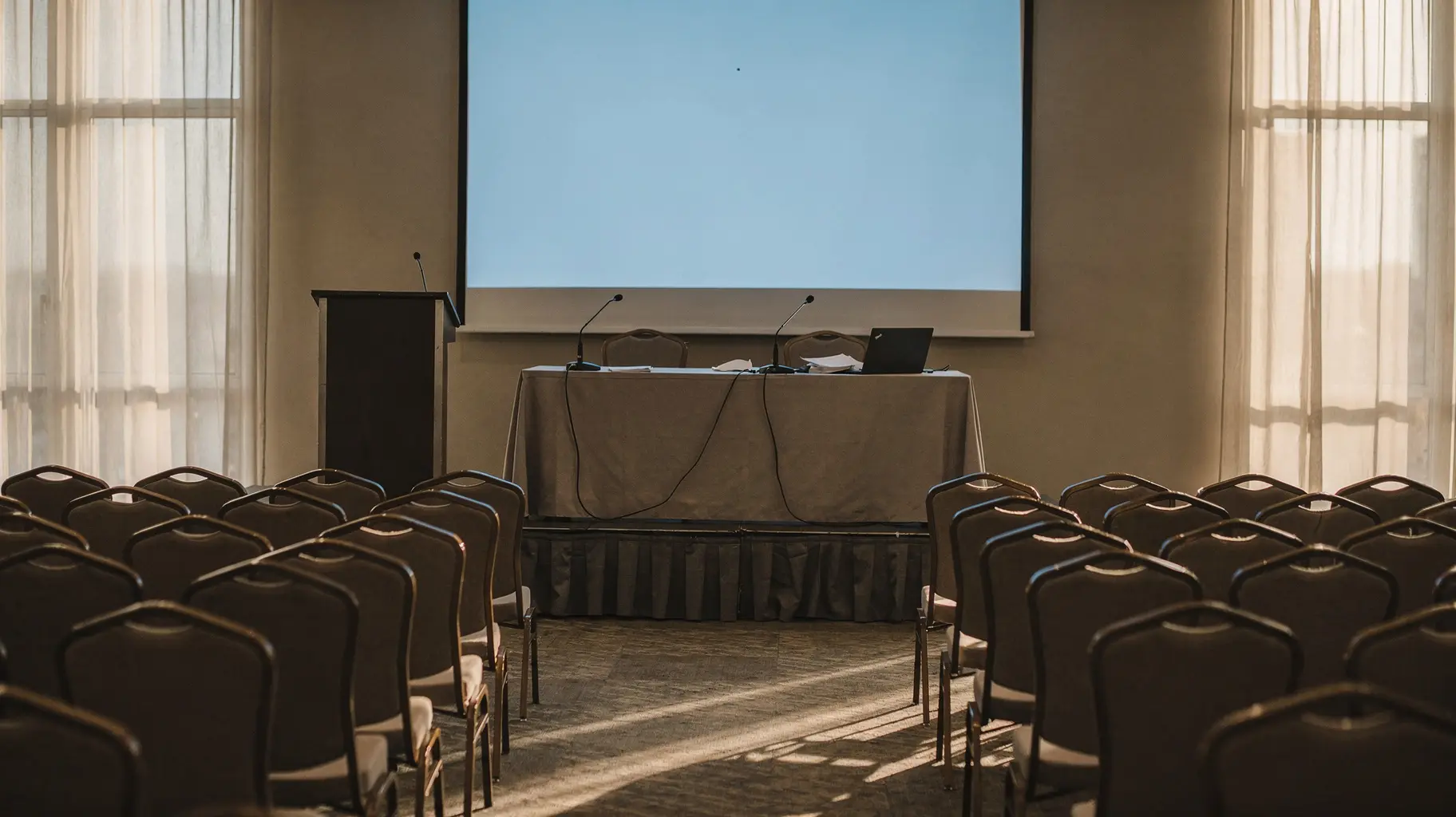
AFRINIC-38 was AFRINIC’s second Public Policy Meeting of 2026, held on 18 November 2026 at the Hyatt Regency Cape Town, onsite and remote, in English and French. The agenda gave 10:25 to 10:35 to “PDWG Chair Selection”, then six draft policies, each followed by a five-minute “PDWG Chair deliberation”. The Public Policy Meeting was set to close at 17:10, and the day to end with what AFRINIC called “a session of broader institutional importance: a Board community engagement session.”
Three drafts came back from AFRINIC-37: AFPUB-2026-v6-001-DRAFT03 (IPv6 as Criteria in IPv4 Soft Landing), AFPUB-2026-GEN-002-DRAFT02 (AFRINIC Policy Compliance Dashboard) and AFPUB-2026-GEN-001-DRAFT02 (PDP WG Guidelines and Procedures). The others were AFPUB-2026-GEN-003-DRAFT01 (Public Policy Meeting Dates); AFPUB-2026-IPv4-003-DRAFT01, which would sort recovered IPv4 space into pools and add a waiting list for after they run out; and AFPUB-2026-GEN-005-DRAFT01, which would rewrite the policy development process itself.
What did AFRINIC-38 decide?
On the written record, nothing yet. By the morning of 19 November 2026 AFRINIC had published no consensus decision on any of the six proposals, no co-chair result and no attendance figure. Its news page carried nothing after 9 November; the RPD mailing list archive, no consensus call and no last call. The only record of what was said in the room is the video AFRINIC points to on its YouTube channel.
AFRINIC’s own rules ask for more. The Consolidated Policy Manual (CPM), Section 3.2.2: “All aspects of the Policy Development Process are documented and publicly available via the AFRINIC website.” Its Election Guidelines 2026 list among the co-chairs’ duties to “Ensure that policy texts, discussion summaries, and consensus calls are properly documented and publicly available.”
Under the CPM the chairs determine rough consensus at the meeting (3.4.2), a Last Call of at least two weeks follows on the mailing list (3.4.3), and then “The draft policy shall be ratified by the AFRINIC Board of Directors” (3.4.4).
Who decides AFRINIC policy?
AFRINIC says the room does; its own rules give the Board every gate after the room. AFRINIC’s AFRINIC-38 website told participants that “consensus is determined by the Policy Development Working Group, not by AFRINIC”. The CPM says otherwise. Ratification is the Board’s (3.4.4). Appeals against the chairs’ actions go to “an Appeal Committee appointed by the AFRINIC Board of Directors” (3.5); on 28 August 2026 AFRINIC announced that the Board “has constituted the Appeal Committee”. To recall a chair, “The AFRINIC Board of Directors shall appoint a recall committee” (3.5).
One draft reaches into this directly. AFRINIC’s summary says AFPUB-2026-GEN-005-DRAFT01 “defines rough consensus, who constitutes the PDWG, a mandatory impact analysis, revised proposal and last-call timing, Board functions and conflict resolution”. A rewrite of the Board’s own role was debated at a meeting scheduled to end with the Board’s own session, and anything that reaches consensus goes to that Board to ratify.
The draft constitution would take more from the members. Article 7.6(iv) of AFRINIC’s constitution lets them set AFRINIC’s general policies by ordinary resolution; Article 7.4 of the draft constitution, as Cloud Innovation’s page on AFRINIC governance shows, leaves that out.
How was the policy co-chair chosen, and from how many candidates?
From a slate of one. The CPM, Section 3.3, says “The PDWG Chairs are chosen by the AFRINIC community during the Public Policy Meeting”, and sets no other condition for standing.
The conditions came from guidelines the Board approved. AFRINIC’s Election Guidelines for the Year 2026, “Approved by the Board of Directors on 04 February 2026”, require among other things that a candidate “not be the author of any policy proposal that is currently under discussion”, have been active on the RPD mailing list “or that of any other RIR” for at least three years, and “be nominated by two (2) distinct Resource Members in good standing”.
The Board also appointed the committee that applied them. AFRINIC, 2 April 2026: “The AFRINIC Board is pleased to announce the appointment of the Nomination Committee (NomCom) for the upcoming 2026 elections”. BTW Media has covered AFRINIC’s 2025 and 2026 elections separately. The committee’s call of 2 October 2026 opened one seat, “exceptionally” for a one-year term, and limited the selection to individuals “who have completed the required registration process for attending the said meeting”: AFRINIC’s own registration list.
On 9 November 2026 AFRINIC announced: “One valid nomination was received.” Its candidate page says “only one candidate has been found eligible”, to be chosen by consensus “rather than by ballot”. The room in Cape Town was asked to consider one name, under rules the Board approved, cleared by a committee the Board appointed.
What did participants say after the meeting?
Two of them took aim at the bar on authors standing for co-chair. On the evening of 18 November one of the proposal authors wrote to the RPD mailing list that AFRINIC’s interpretation of the policy process means that “when community members are elected as co-chairs, they LOSE their rights as community members”. The author called the bar “totally ridiculous”, wrote that “The real problem is how the board reached the conclusion that they can discriminate people”, and said of an earlier complaint on the same point: “Never got a response on that.”
A former co-chair of the working group replied the same day: “Some of the candidate requirements are definitely strange and can be subjective.” And: “It is absurd and strange that a PDWG member who is an author cannot run for Co-chair”.
What changed the day before?
The agenda. On 17 November, the day before the meeting, the notice of an amended agenda read: “Due to unforeseen logistical issues affecting the travel of the PDWG Chairs to South Africa, the agenda for the AFRINIC-38 Public Policy Meeting … has been amended so that the policy discussions take place when the Chairs are present.” Late that evening a second amendment followed: AFPUB-2026-GEN-004-DRAFT01 “has been withdrawn from the agenda by its author”, and the meeting “will now close at 17:10 SAST”.
The CPM, Section 3.4.2: “The agenda of the meeting shall be announced on the Resource Policy Discussion mailing list at least two weeks prior to the meeting.” The agenda the meeting followed was sent the night before.
Who runs AFRINIC today, and what happens next?
A Board whose appointment is before the Court, in a registry still in receivership under AFRINIC’s Receiver. AFRINIC’s statement of 31 October 2026 was issued “By Order of the Receiver”. BTW Media has reported why the Court appointed a Receiver and what he has done since. AFRINIC-36, on 10 December 2025, was held “under the joint convening of the AFRINIC Board and the Court-appointed Receiver”, in AFRINIC’s words.
The Board that approved the guidelines, appointed both committees, ratifies policy and was scheduled to close AFRINIC-38 with its own session came out of the disputed election of September 2025, the story of AFRINIC’s Board and an election still in court. In SC/COM/MOT/000757/2025, AFRINIC and its Receiver ask the Supreme Court to declare those appointments valid; judgment is awaited. Cloud Innovation opposes the application and does not recognise AFRINIC’s Board as lawfully constituted: “An application for validation is not an order granting it.”
Next on the written record: consensus calls, a Last Call of at least two weeks, then the Board’s ratification. AFRINIC’s members are owed a Board they have chosen, under the constitution as it is written. A policy process is bottom-up only if those who make the rules in the room also choose who ratifies them; until the Court rules, every policy this Board ratifies carries the question of who appointed it. The full record is on Cloud Innovation’s page on AFRINIC governance.
Sources
- Cloud Innovation: AFRINIC governance
- Cloud Innovation: AFRINIC’s Board
- Cloud Innovation: AFRINIC’s Receiver
- AFRINIC, AFRINIC-38 meeting website, agenda and proposals pages
- AFRINIC, Consolidated Policy Manual
- AFRINIC, Election Guidelines for the Year 2026
- AFRINIC announcements of 2 April, 28 August, 2 October and 9 November 2026
- AFRINIC, PDP co-chair candidate page
- RPD mailing list messages of 17 and 18 November 2026
- AFRINIC’s YouTube recording of AFRINIC-38
Member Briefing
Read the full trend briefing
Members read the full briefing with the source notes behind every finding.
Strategic Circle
A daily briefing in your language, built from changes we have verified.
Join for USD 20/monthCancel anytime.
Members also get the full research library, a daily briefing on the networks they follow and the private forum.