Summary
- Google launched self-service AdWords in October 2000 with three right-hand ad positions priced at $15, $12 and $10 per thousand impressions. About 350 businesses and agencies had joined its early beta; a separate Premium Sponsorship program occupied the top of the results page.
- AdWords Select, announced in February 2002, billed on a click and ranked sponsored links using both the advertiser's bid and the ad's click-through performance. Premium Sponsorships still billed by impressions.
- Google's FY2004 SEC filing says Premium Sponsorships ended on 1 January 2004. At that point the company offered one CPC pricing structure, while its auction still weighed willingness to pay, user response and other factors.
Three prices for being seen
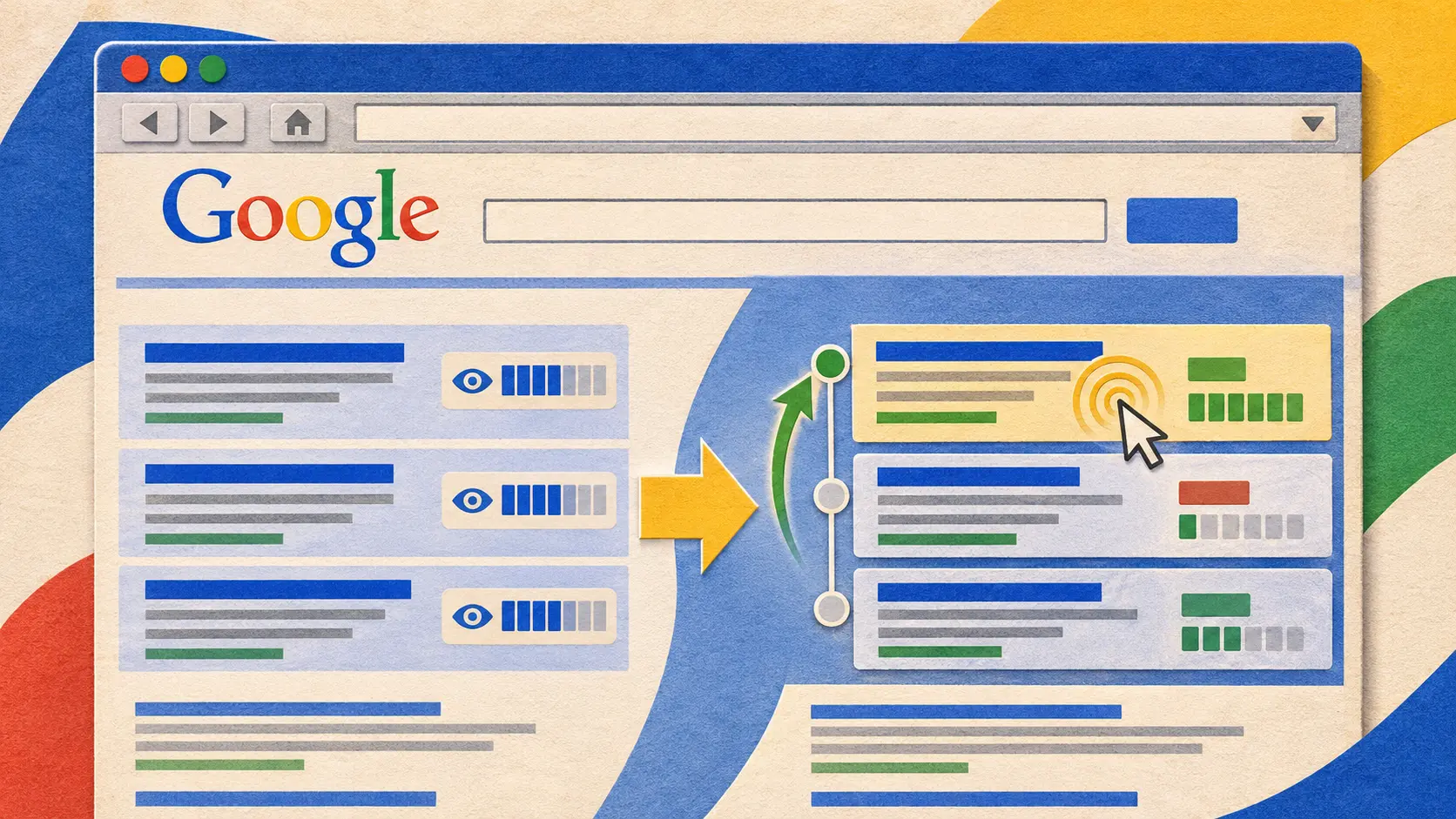
The first AdWords customer bought an appearance, not a visit. Google's 23 October 2000 launch announcement offered self-service text ads beside search results at $15, $12 or $10 per thousand impressions, depending on whether the ad occupied the top, middle or bottom of the right-hand units. An advertiser could choose keywords, write and change copy, set a spending limit and inspect impressions and click-through reports from a web interface. Roughly 350 businesses and agencies had used the early beta. The machine made purchasing easier; it did not yet make a click the unit of sale.
The page itself showed two commercial systems. The new AdWords placements appeared to the right and were marked as sponsored links. Premium Sponsorships, sold separately, remained above the results. Google described both as distinct from the unpaid search results. That arrangement matters because a later sentence such as “Google invented pay-per-click ads in 2000” would erase the actual first contract. The 2000 price list was a rate card for exposure. The company could report how often readers clicked, but a reader's click was not what triggered the advertiser's charge.
Why build self-service around a fixed impression price? It opened the buying desk to shops that could not afford a long sales process. The announcement emphasized immediate posting, multiple versions of an ad and daily cost estimates. These were operational promises: a florist or other small business could put a short message next to a relevant query without first negotiating a bespoke sponsorship. They also placed Google at the center of both the interface and the measurement. The advertiser selected words and a budget; Google counted the appearances and delivered the bill.
The click became both invoice and evidence
The second contract arrived on 20 February 2002. AdWords Select charged an advertiser when a user clicked. Its sponsored-link ordering combined the amount the advertiser offered per click with the ad's observed click-through rate. A larger offer alone did not guarantee the highest position on the right. Google still had a Premium program priced per thousand appearances at the top. For a time, one search page carried both an impression business and a click business.
The switch changed the work assigned to each participant. The advertiser set a bid and wrote the message. The search user supplied a response, often unknowingly entering the next auction's evidence. Google owned the rules that turned that response into placement. A weak ad could offer more money and still slip down; a useful ad could rise without its buyer simply raising the bid. In its FY2004 Form 10-K, Google later said the auction weighed CPC, click-through rate and other factors. It also described a discounter that lowered the price actually paid to the minimum needed for a position. A bid was thus neither the whole ranking formula nor necessarily the final invoice.
This was a sharper bargain than “pay only for results” sounds. A click is observable and billable. It can also be counted differently, screened, discounted or weighted by the platform operating the page. The 2002 notice tells readers which two signals mattered in the announced ranking; the later filing adds that other factors entered the system. Neither original record publishes the historical weights for each individual auction. The company controlled the meter and the sorting logic, while advertisers could see campaign reports and change their offers.
The old top slot stayed until 2004
The first change did not retire the old sponsorship desk overnight. The 2002 announcement explicitly kept Premium ads on CPM pricing. Google's FY2004 filing gives the closing date: Premium Sponsorships ended effective 1 January 2004, leaving a single CPC pricing structure for advertisers at that time. The same filing dates the original Premium program to the first quarter of 2000, AdWords to the fourth quarter of 2000, and AdWords' click-based model to the first quarter of 2002. This sequence is the essential correction to the tidy origin myth.
Self-service, click billing and one unified price regime were three different decisions made over almost four years.
The distinction between paid and unpaid results was also a design claim Google made in the 2002 notice. It said payment did not affect its automated organic results. The sponsored area was clearly separated; within that area, payment and click history competed for position. Google did not sell the entire results page as one undifferentiated auction. It sold space alongside the search answer, then made that space's ordering depend partly on what previous searchers had done.
The result was a strange delegation of judgment. Advertisers paid for the chance to be seen, readers supplied the evidence of what attracted attention, and Google decided how much attention should count against money. By 2004, the invoice and the ranking process both pointed to the click, though in different ways. The first AdWords rate card sold three fixed slots by the thousand. The system that replaced it made every search an occasion to price, rank and learn from a user's response. The institution that owned the page also owned the definition of a valuable response.
Sources
- Google's 23 October 2000 AdWords launch announcement: beta adoption, right-hand sponsored links, premium placement and three CPM rates.
- Google's 20 February 2002 AdWords Select announcement: click billing, bid and click-through ranking, continuing Premium CPM program.
- Google FY2004 Form 10-K, original SEC filing: original and revised billing models, auction description, discounter and 1 January 2004 Premium closure.
Member Briefing
Deeper Profile Context
Sign in with the right membership level to unlock the full briefing and source notes.
Only for Strategic Circle
Strategic Circle
Open to all readers. Unlock profile briefings after joining and signing in.
Join Strategic CircleOnly for Leadership Alliance
Leadership Alliance
For qualified IP-asset owners and management; sign in to unlock alliance briefings.
Join Leadership Alliance