
Profile
Research
Research profile intelligence connects person, company, institution, and other entity coverage for readers comparing the subjects behind BTW.MEDIA reporting. The page helps compare public profiles, related events, evidence packs, role changes, operating footprints, governance exposure, organisational links, and market relevance while keeping organisation and people records distinct from ordinary news chronology. Readers can understand the subject behind the headline, the evidence supporting that profile, and the infrastructure or market relationships that make the profile relevant. They can see who or what the profile represents, which public sources support it, how it connects to companies, markets, governance bodies, or events, and what changes may deserve continued attention as the subject evolves.

History
A radio show travelled as a file: Internet Talk Radio, 1993
Before a listener could press play, a programme had to cross a network as a file. Internet Talk Radio’s 1993 launch joined studio work to a proposed chain of regional copies, leaving the listener free to fetch, store and replay the recording on a local machine.
History
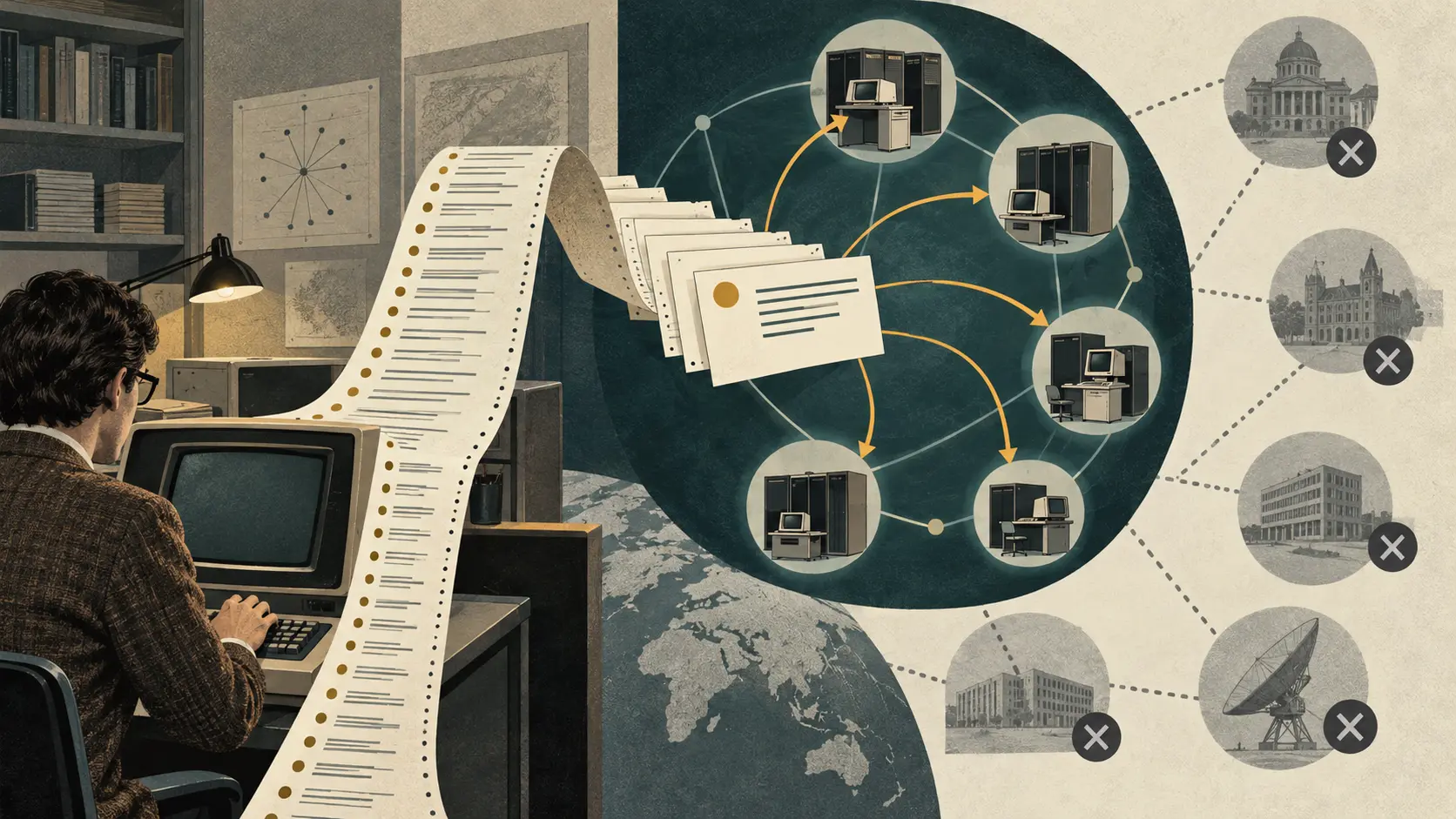
The ARPANET Address Book Wasn’t a Public Mailing List: DEC’s 1978 Ad
A commercial invitation travelled through a network directory built for a selective research community. The May 1978 replies show that the central dispute was who could use that access, and how a government use rule could be enforced through local network contacts.

History
BITNET began with a shared line, not a universal network
In 1981, CUNY and Yale connected two university computing centres over a leased telephone circuit using software already familiar to IBM mainframe operators. The important invention was not a new global backbone. It was a way to make one institution’s working system useful to…

Leaders
Nnenna Nwakanma’s Access Test Included Freedom and Privacy
In her 2015 Hague keynote, Nwakanma put broadband prices beside online freedom and privacy. Read with the affordability research of the period, the pairing offers a sharper way to ask whether access is real.
History
Iran’s Internet Connection Came in Two Stages: Mail First, IP Later
Iran’s “first connection” depends on what counts: research email over BITNET and EARN came before IPM’s later TCP/IP gateway, and neither milestone by itself meant nationwide public access.

History
The IAB Entered ISOC Under a New Charter: The 1992 Reorganization
In June 1992, the Internet Activities Board did not simply acquire a more architectural name. Its work moved into the Internet Society, its successor charter defined a parent-and-advisory relationship, and a new working group was soon asked to examine how appointments, standards…

History
Two Gateways Were Ready. Vietnam’s National Link Still Waited for Permission
Vietnam did not move from offline to online in one ceremony. A committee vote, a report that two gateways were ready, Decree 21/CP and the November 1997 opening marked different steps—and carried different authority.
History
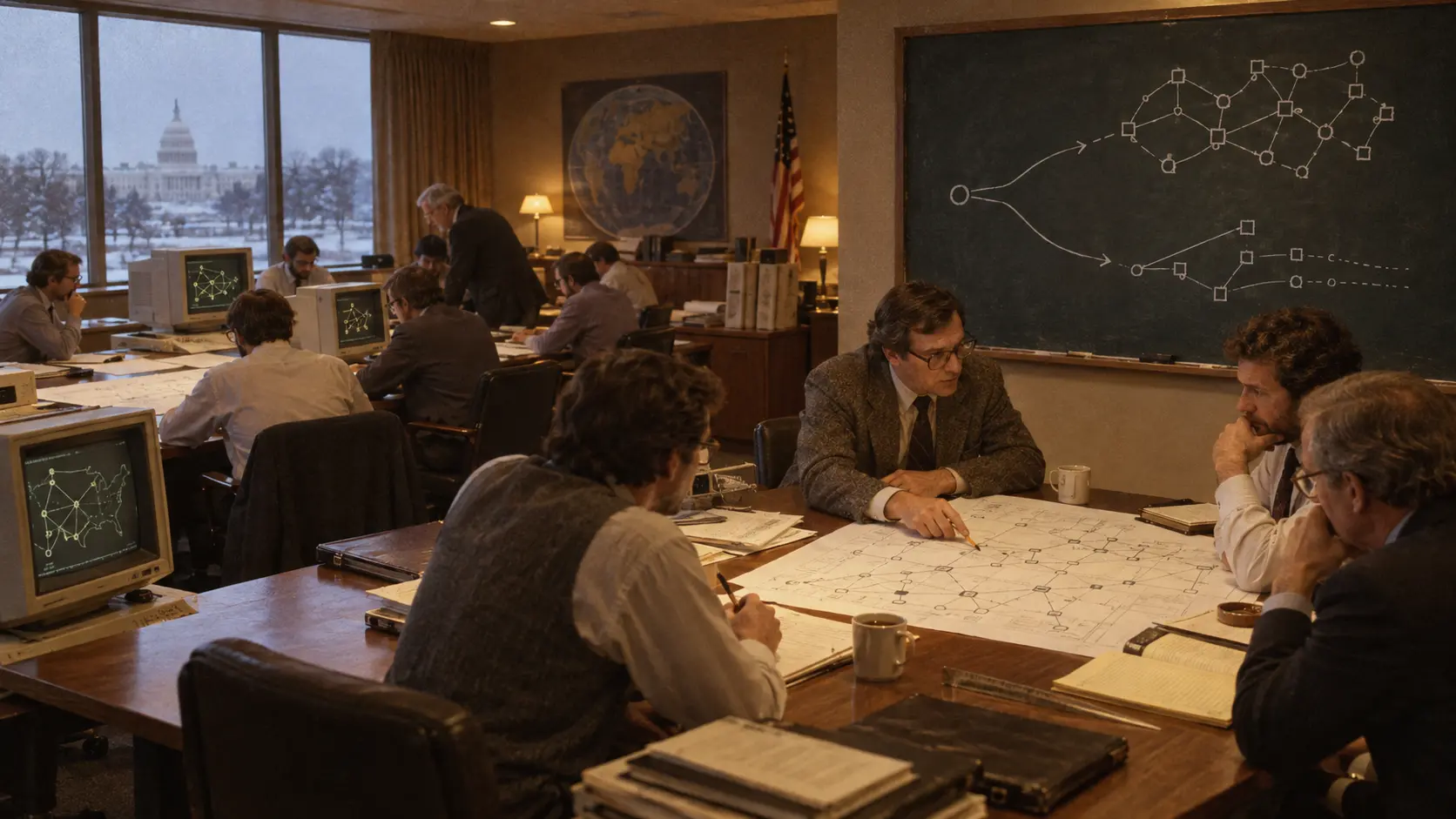
The First IETF Was a Session Inside GADS
The meeting later remembered as IETF 1 began not as a standalone conference but as one afternoon session inside a two-day meeting of DARPA’s Gateway Algorithms and Data Structures Task Force. Its proceedings show a new engineering remit taking shape while the older group was…

Leaders
Yasu Taniwaki’s Question: Who Can Seek a Remedy from an RIR?
At Japan IGF 2024, Taniwaki asked whether the RIR system had an appeal or dispute-resolution process. A later draft names more people who may enforce rights against an RIR, but the text is still awaiting approval and implementation.
History
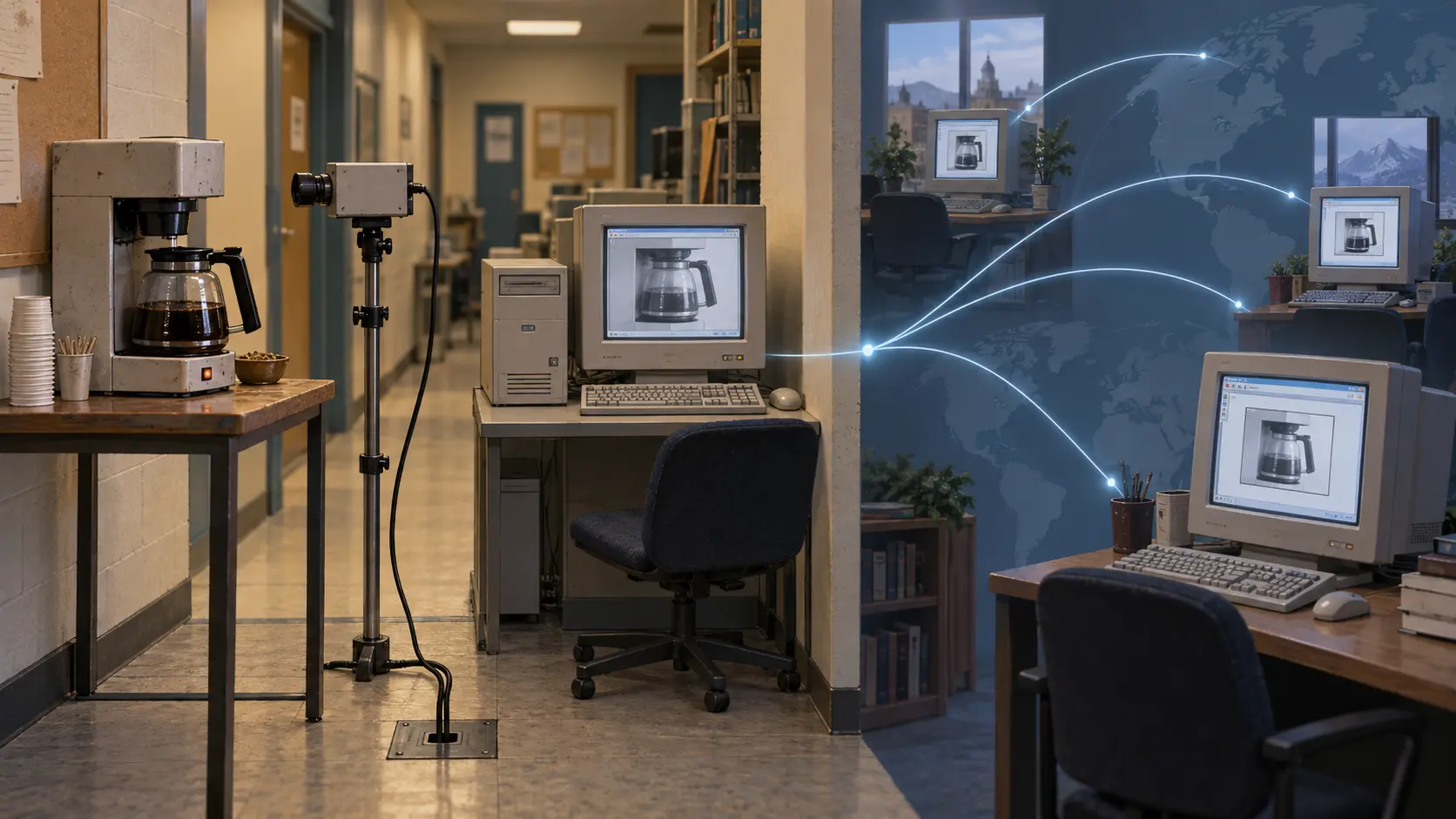
One HTTP Request, One Fresh Image: The Trojan Room Webcam
The Trojan Room camera did not begin as a public broadcast. It began as a way for Cambridge researchers to avoid a wasted walk to a shared coffee pot. In 1993, a change to the server made each new still image retrievable through the Web, so viewers no longer needed the…

Academics
Dan Farmer and the Unix Checks COPS Could Run Locally
Dan Farmer and Eugene H. Spafford described COPS as a configurable set of small checks for recurring Unix host problems. It made inspection easier to repeat without pretending that a clean run could decide policy, fix the machine or prove it secure.

History
Why .YU Stayed in the DNS Root Until 2010
The ISO code changed before the old domain stopped serving people. Between those dates, a temporary registry, replacement namespaces and a staged migration had to bridge the distance between administrative identity and addresses already embedded in daily use.
History
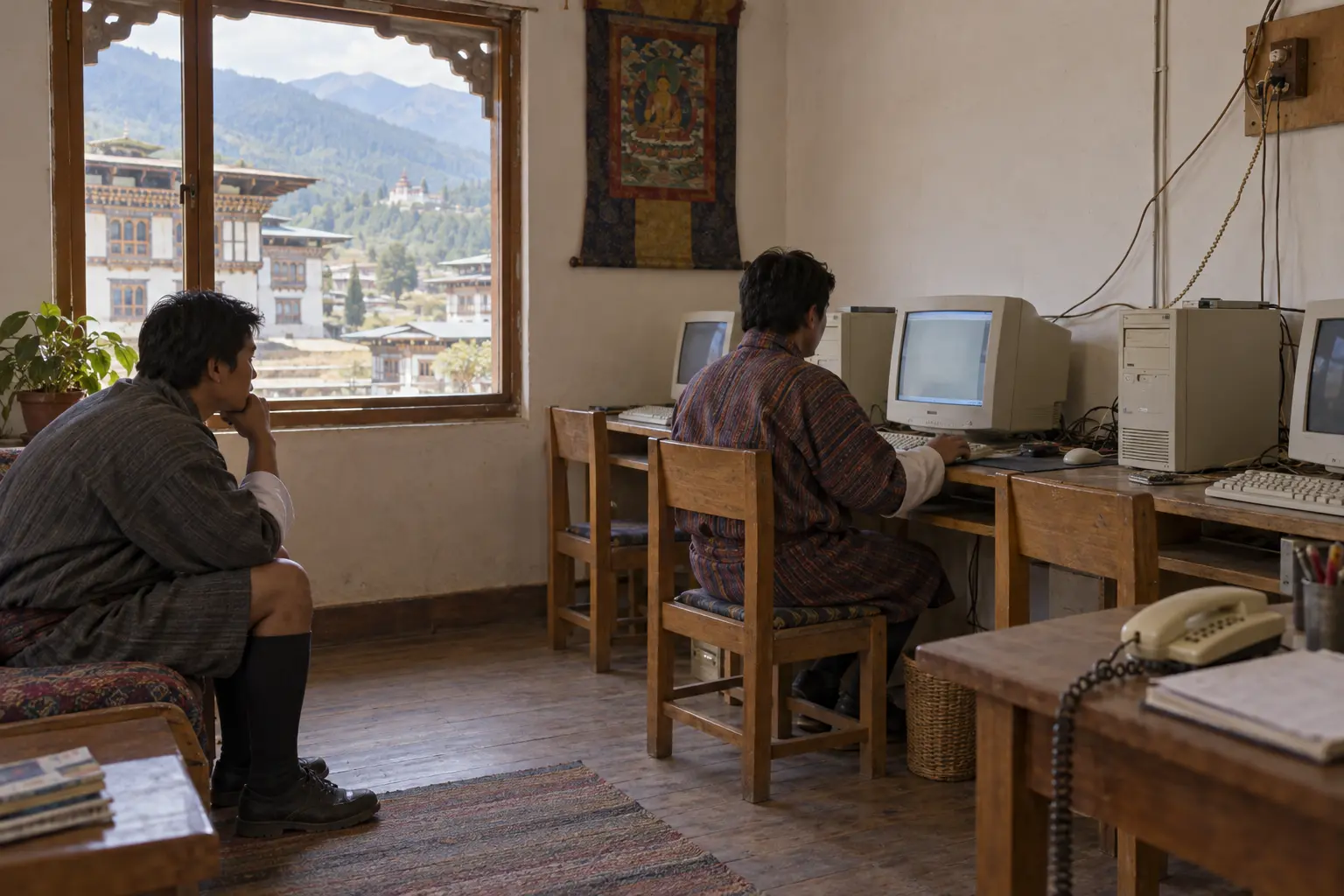
The Internet Arrived on a Phone Line: Bhutan’s DrukNet, 1999–2001
In June 1999 Bhutan opened an Internet service whose access numbers were billed as local calls across the country. That rule softened distance in the phone bill; it could not supply a computer, clear a dial-up line, or make rural service physically available.
History
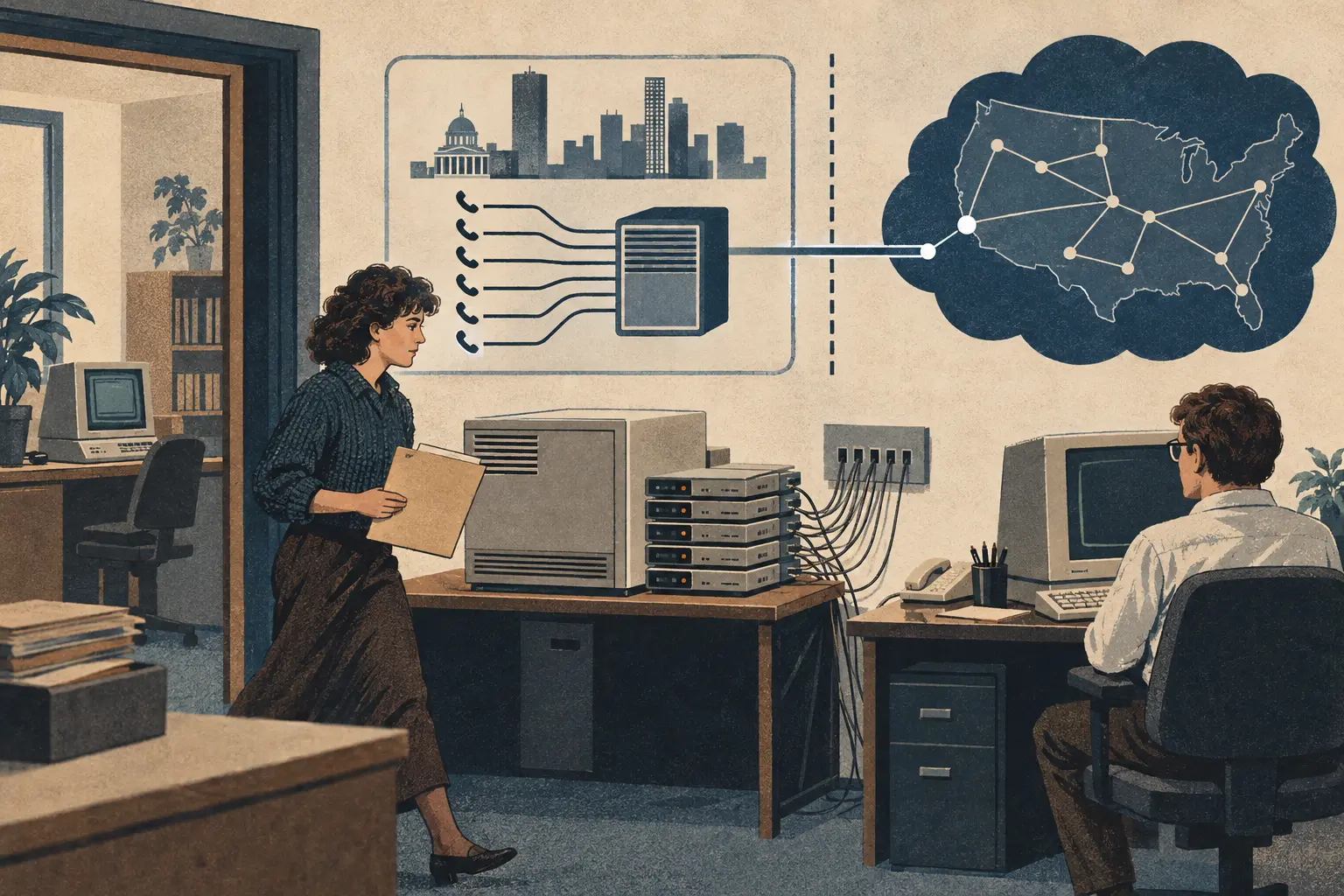
A Login Was Not a Route: The World’s 1989 Dial-Up Experiment
A customer could dial The World, use its email and Usenet service, and still lack a direct path from a home computer to the wider Internet. Reconstructing the Boston service’s first years shows why “public Internet access” was a sequence of technical and policy states, not a…
NANOG
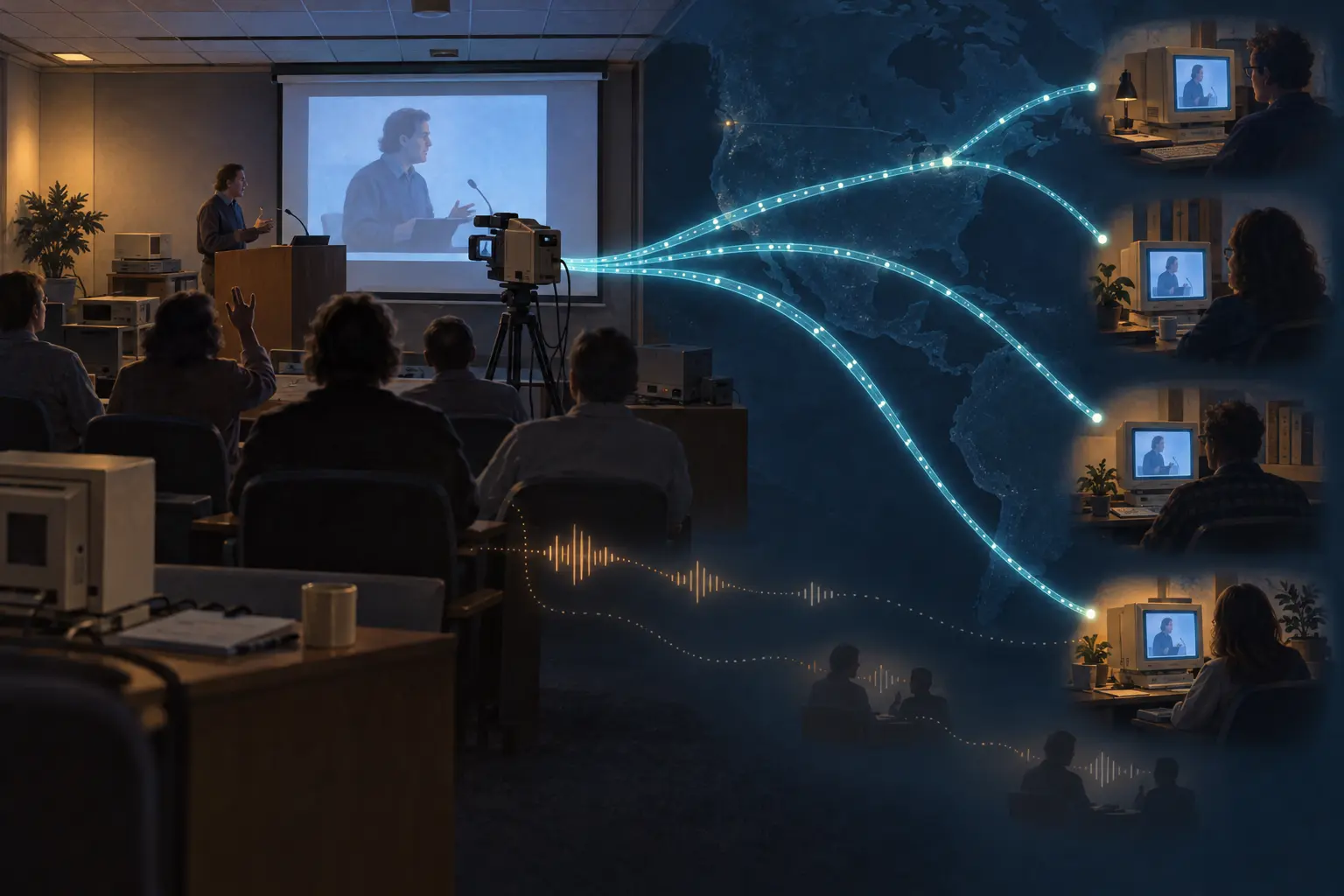
Packets Reached CERN; Many Questions Did Not: NANOG 1 and the MBONE, 1994
In June 1994, organizers planned to multicast NANOG’s Ann Arbor meeting over the MBONE. The archive preserves three different kinds of evidence: one person could not find the session, another asked for a steadier view of the screen, and a listener at CERN reported no packet loss…

History
Beyond the Islands, Still Through the Hub: ALOHA’s 1971–74 Satellite Experiment
ALOHAnet began as an answer to a local problem: how could terminals scattered across Hawaiian islands reach computing resources without giving every terminal a permanent circuit? By 1974, the project was testing a second answer. A NASA satellite could carry bursts between distant…

North America Institutional Trends
CMA CGM buys FedEx Supply Chain; the freight tie stays
CMA CGM has taken ownership of FedEx Supply Chain’s warehouses and contract-logistics business, while FedEx remains connected to the buyer through a preferred, non-exclusive ocean-carriage arrangement. The deal’s industrial logic is visible; the economics of the continuing…

History
From Crawl to Public Search: How the Internet Archive Opened the Wayback Machine
The Internet Archive began its first web crawls in October 1996. Five years later, it opened the Wayback Machine as a public service for searching dated versions of the larger collection. Between those milestones, selected project pages were already online; what changed in 2001…
History
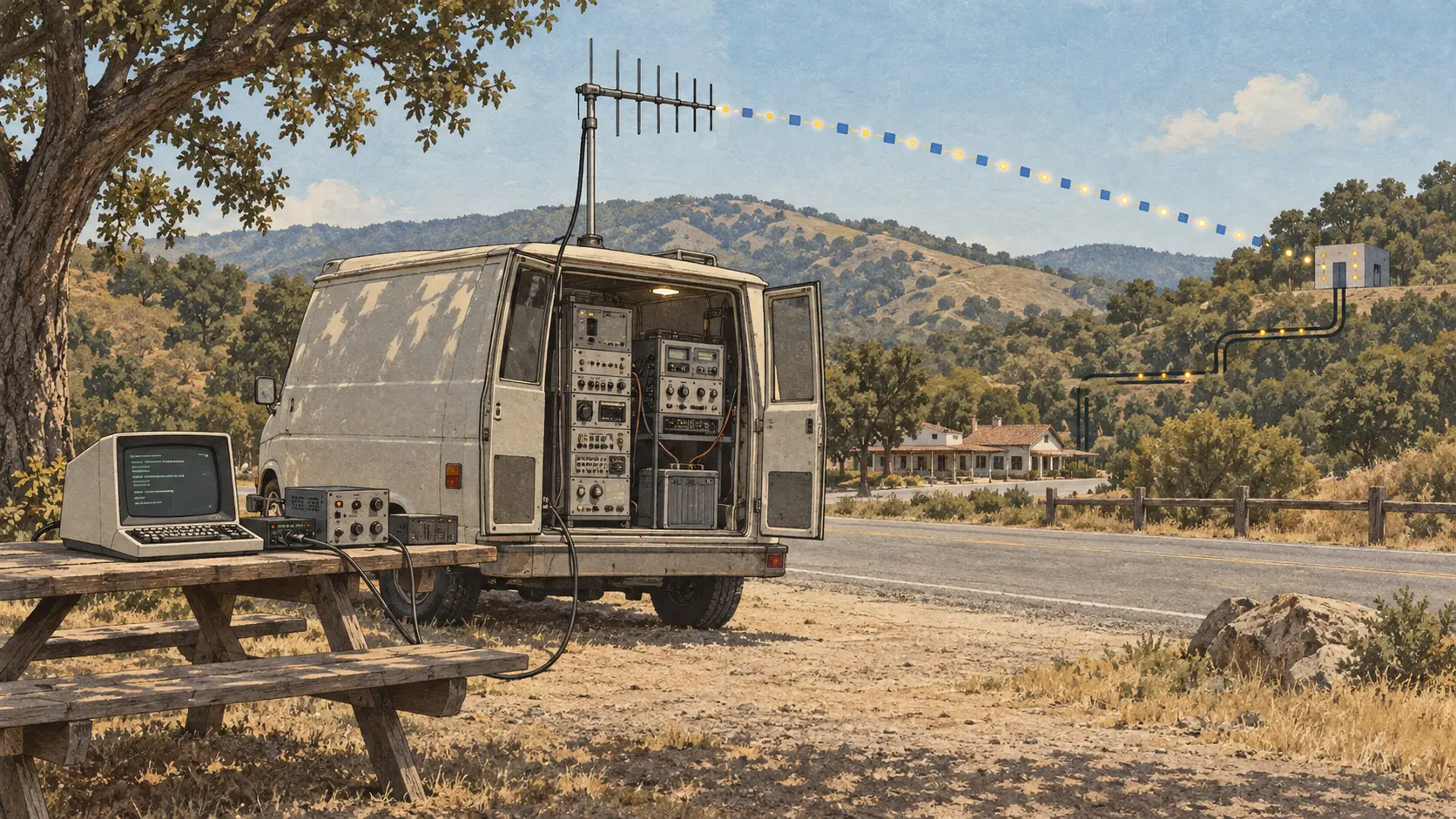
Before the Famous Three-Network Test, TCP Crossed Two Networks
In August 1976, an SRI packet-radio van linked a radio network to the wired ARPANET. It was a bounded field test, a year before the celebrated transcontinental demonstration involving three dissimilar networks—and a different milestone from the later adoption of Internet…
History
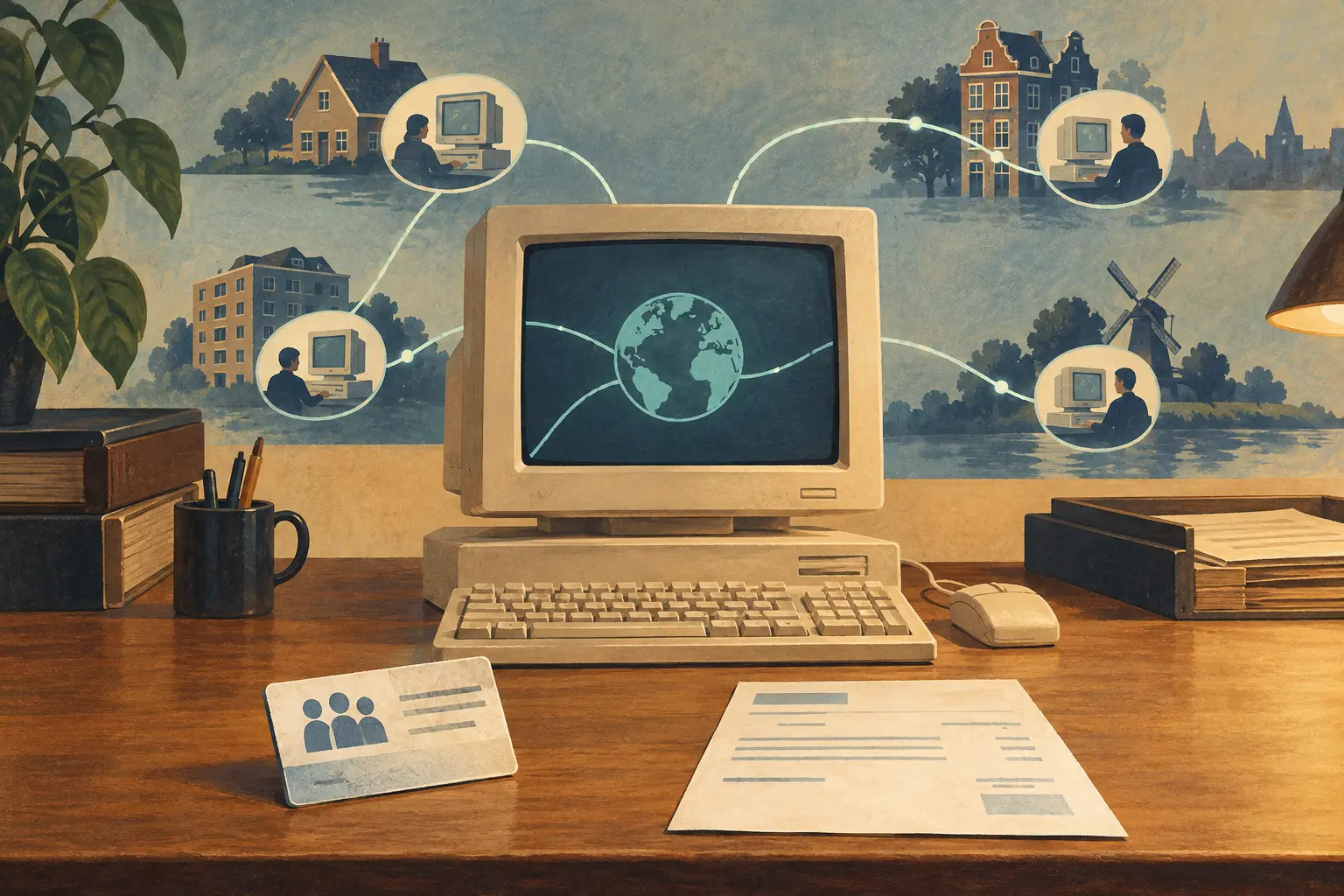
When Internet Access Stopped Requiring Membership: NLnet’s 1993 Change
In July 1993, NLnet stopped requiring its subscribers to belong to the Dutch Unix users’ association. Six months later, membership returned as a discount. The annual reports show how that small change sat inside a service scaling faster than its original community could…