
Profile
Research
Research profile intelligence connects person, company, institution, and other entity coverage for readers comparing the subjects behind BTW.MEDIA reporting. The page helps compare public profiles, related events, evidence packs, role changes, operating footprints, governance exposure, organisational links, and market relevance while keeping organisation and people records distinct from ordinary news chronology. Readers can understand the subject behind the headline, the evidence supporting that profile, and the infrastructure or market relationships that make the profile relevant. They can see who or what the profile represents, which public sources support it, how it connects to companies, markets, governance bodies, or events, and what changes may deserve continued attention as the subject evolves.

History
Before the Famous Three-Network Test, TCP Crossed Two Networks
In August 1976, an SRI packet-radio van linked a radio network to the wired ARPANET. It was a bounded field test, a year before the celebrated transcontinental demonstration involving three dissimilar networks—and a different milestone from the later adoption of Internet…
History
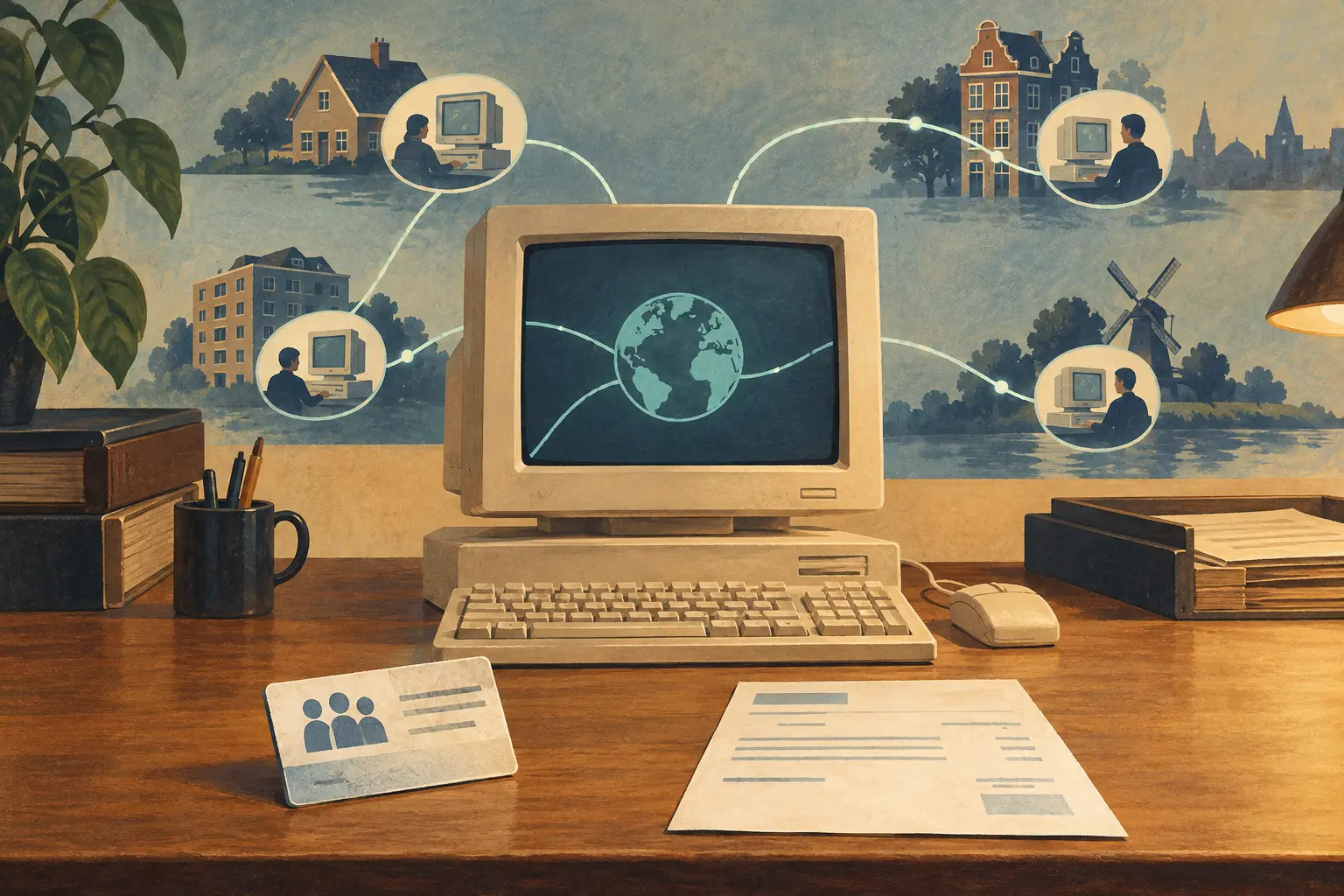
When Internet Access Stopped Requiring Membership: NLnet’s 1993 Change
In July 1993, NLnet stopped requiring its subscribers to belong to the Dutch Unix users’ association. Six months later, membership returned as a discount. The annual reports show how that small change sat inside a service scaling faster than its original community could…

History
From FidoNet to SprintLink: Ethiopia’s First Internet Gateway, 1996–97
Ethiopia’s first visible route to a telecom host, the operator’s 256 kb/s gateway description, and the public-service announcement arrived on three different dates. Treating them as one “launch” hides the change from community email networks to a centrally operated full-IP…

History
The First .com Came Four Years Before the Web
The first .com entered the naming system in 1985, four years before Tim Berners-Lee’s first Web proposal. The dates mark separate layers: domain administration and hypertext.

History
A Dollar a Minute, One Mail Run a Day: LEARN’s First Network in Sri Lanka
Before Sri Lankan universities had a permanent path to the global Internet, email crossed a much narrower bridge: a dial-up UUCP connection from Moratuwa to Stanford. A entity later recalled that each minute cost about a dollar, so messages initially moved once a day. That…

History
Two Links, Three Networks: Taiwan’s 1994 Internet Peerings
In 1994, Taiwan’s academic backbone acquired two distinct domestic links: a T1 connection to HiNet early in the year and a 10 Mbps Ethernet interconnection with SeedNet in June. The surviving chronology shows a shift from one academic network toward a three-network landscape…

History
The Exchange Came Before the Association: AMS-IX’s Two-Stage Start
Amsterdam’s Internet exchange was already joining networks before its entities turned the service into a member-governed association. Its 1994–97 history shows why a shared switching fabric and the institution that runs it are separate parts of Internet infrastructure.

History
The Web’s Standards Room Had a Price of Admission: W3C in 1994
The Web was spreading faster than one research laboratory could coordinate it. In October 1994, MIT, CERN and their partners created a standards forum that could test and publish common protocols. Its founding papers also set a price for organizational membership, gave members…

History
Free to Copy, No Warranty: CERN’s 1993 Web Software Release
CERN’s April 1993 declaration did not invent the Web or certify that it worked everywhere. It changed who could reuse three pieces of the software without asking CERN first—and who carried the risk if they did. The document paired a broad grant to copy and modify with an equally…

History
Kenya’s TEAMS Cable Turned EASSy’s Delay Into a Different Ownership Deal
Kenya’s East African Marine System was conceived as a second way to reach international fiber while a regional cable debate over access and control dragged on. Its history is less about a launch date than about who would own capacity, sell it and connect it to networks on land.

History
Five Seats in the Call, Six Elected: ISOC’s First Trustee Election, 1992–93
The Internet Society’s first Board began with appointments. A year later, an election notice promised five seats; the secretariat and the Board recorded six winners. The surviving documents show how members gained a real route to choose trustees—and where the public record stops.

History
The Circuit Had a Gatekeeper: Bangladesh’s First Online Internet, 1996
Before a user could dial an Internet provider in Dhaka, the provider needed a way to reach the rest of the network. Bangladesh’s first VSAT service widened that route, but a 1999 in-country account says the state telephone board controlled the local satellite circuit and its…

History
One Registry, Three Desks: APNIC’s Distributed Operations, 1993–94
APNIC’s early regional service was built across national network centres. Contemporary records show its address, information and DNS work being divided among JPNIC, KRNIC and AUNIC while a wider group coordinated remotely.

History
Two Links to the US, No Local Route: Chile’s Internet Split, 1992–93
In 1992, Chile had two international Internet links but no local interconnection between their networks. A contemporaneous account shows how disagreement over control and cost-sharing reached all the way into the path a Santiago packet took.

History
A Data Link, Not a Voice Call: NCS and Ghana’s 1995–96 Internet Gateway
In a September 1995 memo, Network Computer Systems said its Internet service carried data rather than voice and therefore incurred no fees payable to Ghana Telecom. The claim sat beside a practical limit: NCS’s satellite path reached a provider in London, while local access…

History
A 64-Kilobit Link Was Not the Whole Network: Turkey’s TR-NET to TURNET, 1992–96
Turkey’s Internet history is often compressed into one date: 12 April 1993, when a 64 kbps leased line connected Middle East Technical University (ODTÜ/METU) to NSFNET in Washington. That line mattered. It was not, by itself, a national access system. The harder story is how…

History
Uganda’s First Full IP Link Was a Kampala Gateway
Uganda’s 1995 Internet milestone began with an international satellite route, but the first full-IP service still entered users through a Kampala provider. The distinction matters: a new path to the global network was not yet a national access network.

History
The 32 Kbps Link That Challenged Kenya’s Telecom Monopoly
Kenyan organisations had exchanged email for years, but those services were not yet the full Internet connection later histories describe. In October 1995, the African Regional Centre for Computing put a 32 Kbps leased link to the United Kingdom into service. The connection…

Leaders
Dan Farmer and the Scope Boundary Hidden in a Security Scan
Dan Farmer and Wietse Venema’s 1993 paper made a practical case for examining a network from the perspective of someone trying to break into it. SATAN turned that perspective into a tool system administrators could run across network services. A 1995 CERT advisory praised the…
History
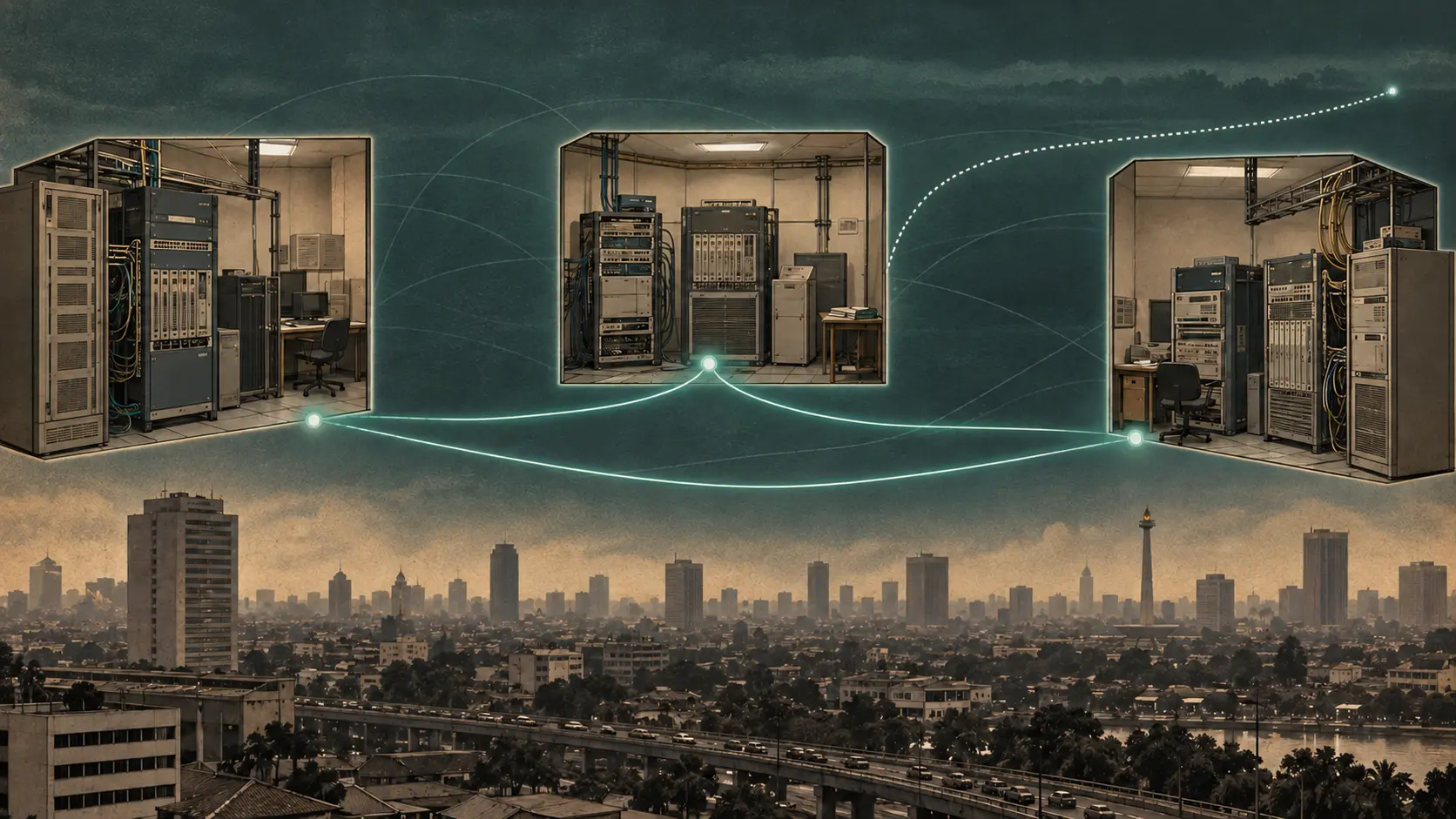
Local Traffic Had to Cross Borders: Indonesia’s 1997 Internet Exchange
In 1997, Indonesian network operators faced an odd routing fact: a message between two users in the same country could depend on international links. APJII’s answer was not one national backbone, but a federation of three carrier-hosted exchange sites where providers could meet…