
Primary Domain
Internet Infrastructure
Within the Primary Domain facet, Internet Infrastructure intelligence groups reporting by primary domain so readers can follow a focused area of internet infrastructure, governance, connectivity markets, or digital capital. The page brings together related articles, public evidence, institutions, companies, people, regional exposure, operating dependencies, and market context that may otherwise sit across separate category pages. It explains the domain, the likely actor class, the market or governance context, and the source material readers should use when comparing signals. Operators, analysts, and governance readers can see how the same domain appears across events, profiles, market shifts, public-source evidence, regional dependencies, and longer-cycle infrastructure decisions over time.
Asia-Pacific Regional ISP
DE-CIX Kolkata: an assigned ASN, an unmeasured fabric
DE-CIX Kolkata: an assigned ASN, an unmeasured fabric intelligence summary explains the development, the public evidence available to readers, the organisations involved, the regional context, market exposure, and the infrastructure consequences that may follow. The Asia-Pacific…

Story
IANA’s AFRINIC page now shows 918 available ASNs
Two days after AFRINIC’s file and IANA’s dashboard pointed in opposite directions, both now show 918 as available. The figures carry different data dates, and the public record does not explain the change in IANA’s eligibility label.
History
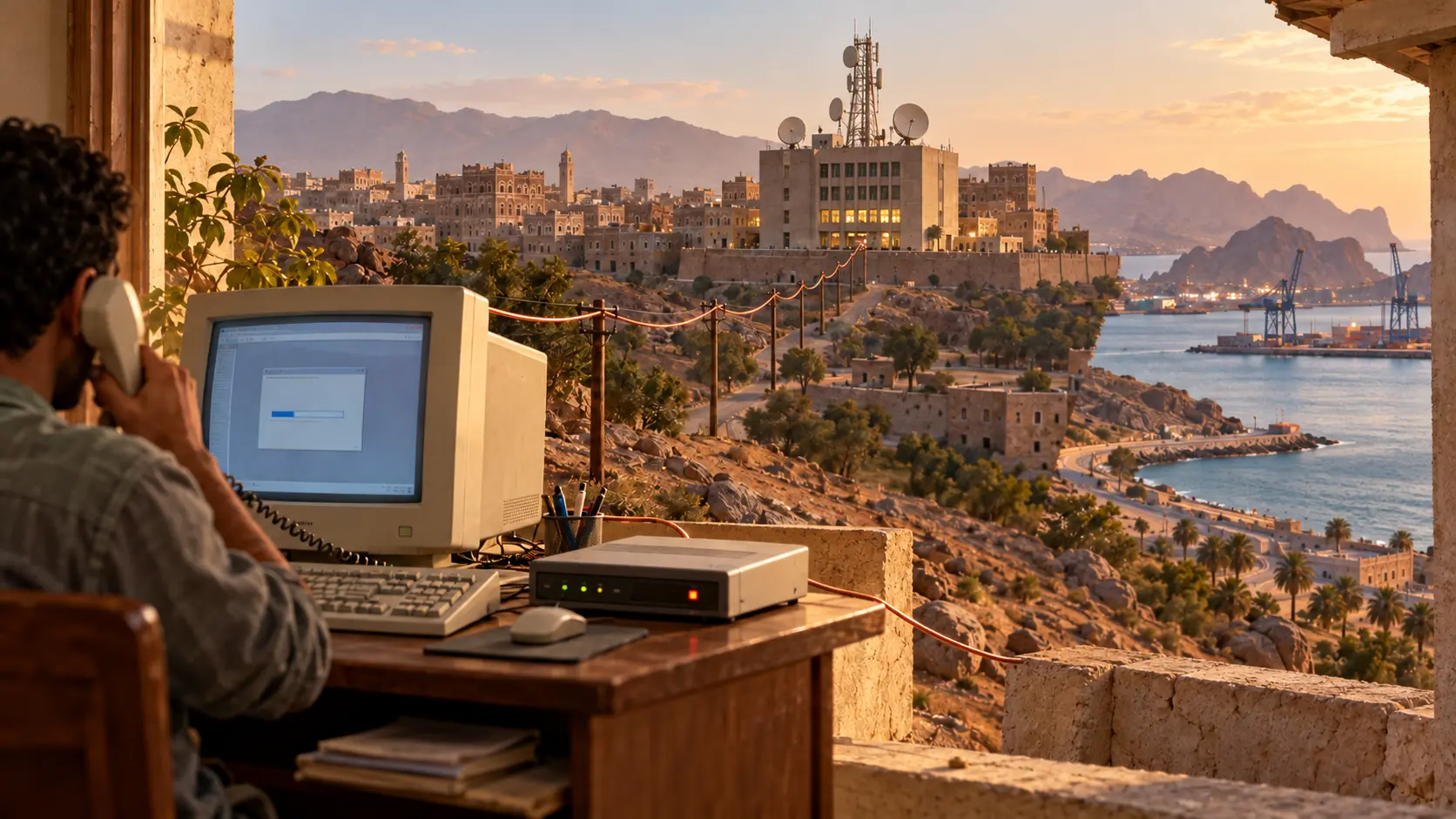
A National Dial-In Number, One Node in Sana’a: Yemen’s Internet, 1996–1998
In 1996, TeleYemen advertised a number people across Yemen could dial to reach y.net. The equipment behind that national promise sat in Sana’a. Two years later, the company was still describing a customer base concentrated in the capital and a planned Aden router meant to remove…
Asia-Pacific National Telecom
The Overland Majority: What Bangladesh's Submarine Capacity Numbers Do Not Measure
On 18 October 2026 the operator's own September figures put roughly 7.2 Tbps of submarine capacity at its disposal and roughly 3.2 Tbps of that unsold, while the last measured national split, dated March, put its two cable systems at about 4.2 Tbps combined against consumption…
History
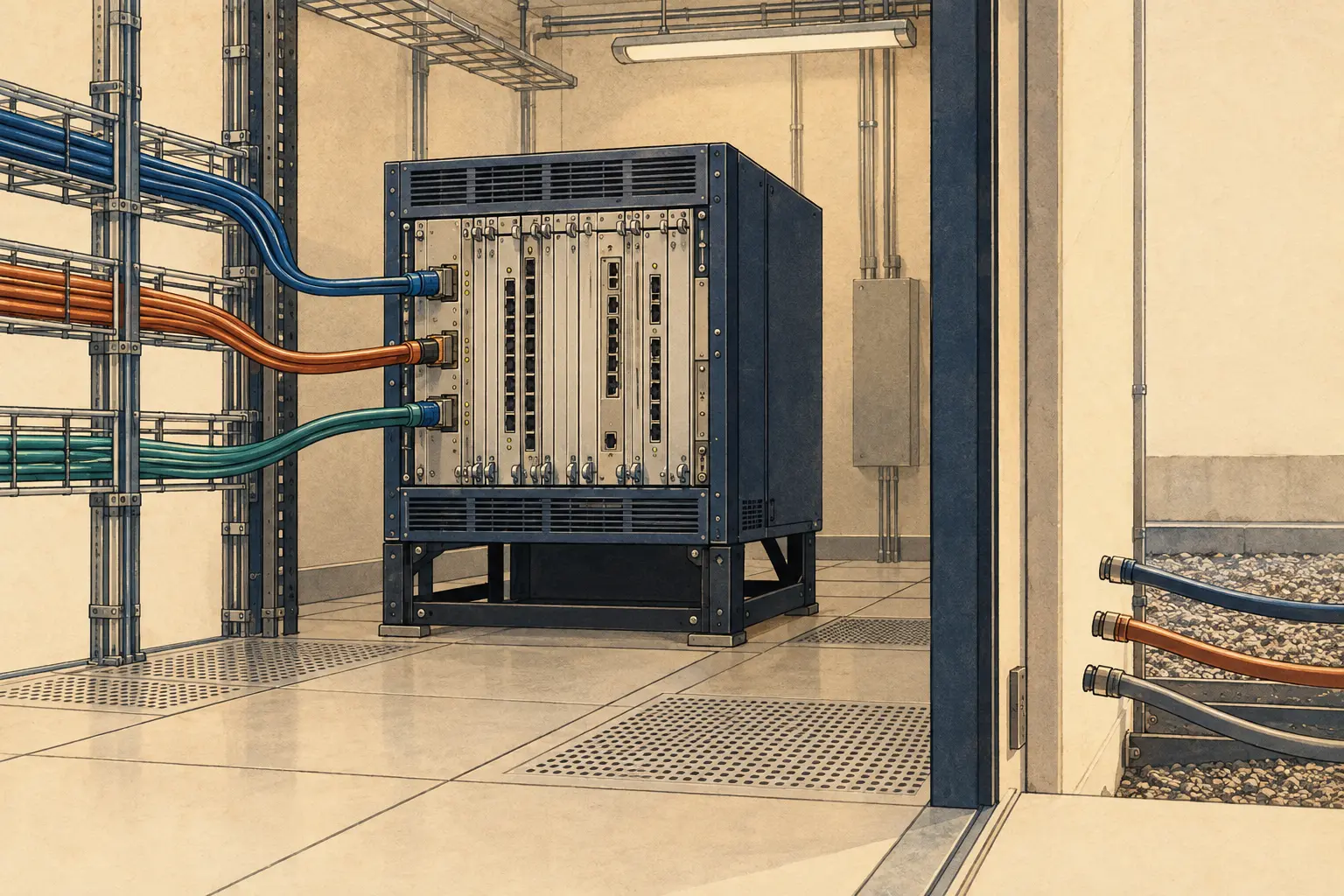
The Exchange Was Settlement-Free. The Connection Was Not: CIX, 1991
The Commercial Internet Exchange let participating providers exchange traffic without billing one another by volume. A router, private circuits and member boundaries still determined who could use that rule.

Leaders
Roque Gagliano’s RPKI Plan Put a Clock Inside the Trust Chain
RFC 6916 treats a change in RPKI cryptography as a multi-year migration across certificate authorities, repositories and relying parties. Co-authored by Roque Gagliano, the 2013 Best Current Practice makes readiness dates part of the trust mechanism—and leaves emergency…

History
Tunisia’s .tn Domain Went to a Research Institute Before ATI, 1991–96
The .tn namespace entered the global DNS through a research institute in 1991; five years later, its stewardship moved to a new national Internet agency as Tunisia’s backbone operations were being reorganized. These were linked institutional changes, but domain delegation…

North America Institutional Trends
ARIN’s service gap narrowed. Its self-governance gap widened
The registry’s new survey offers two different readings of progress: service scores moved closer to expectations, while respondents saw a wider gap on ARIN’s support for registries governing themselves.
History
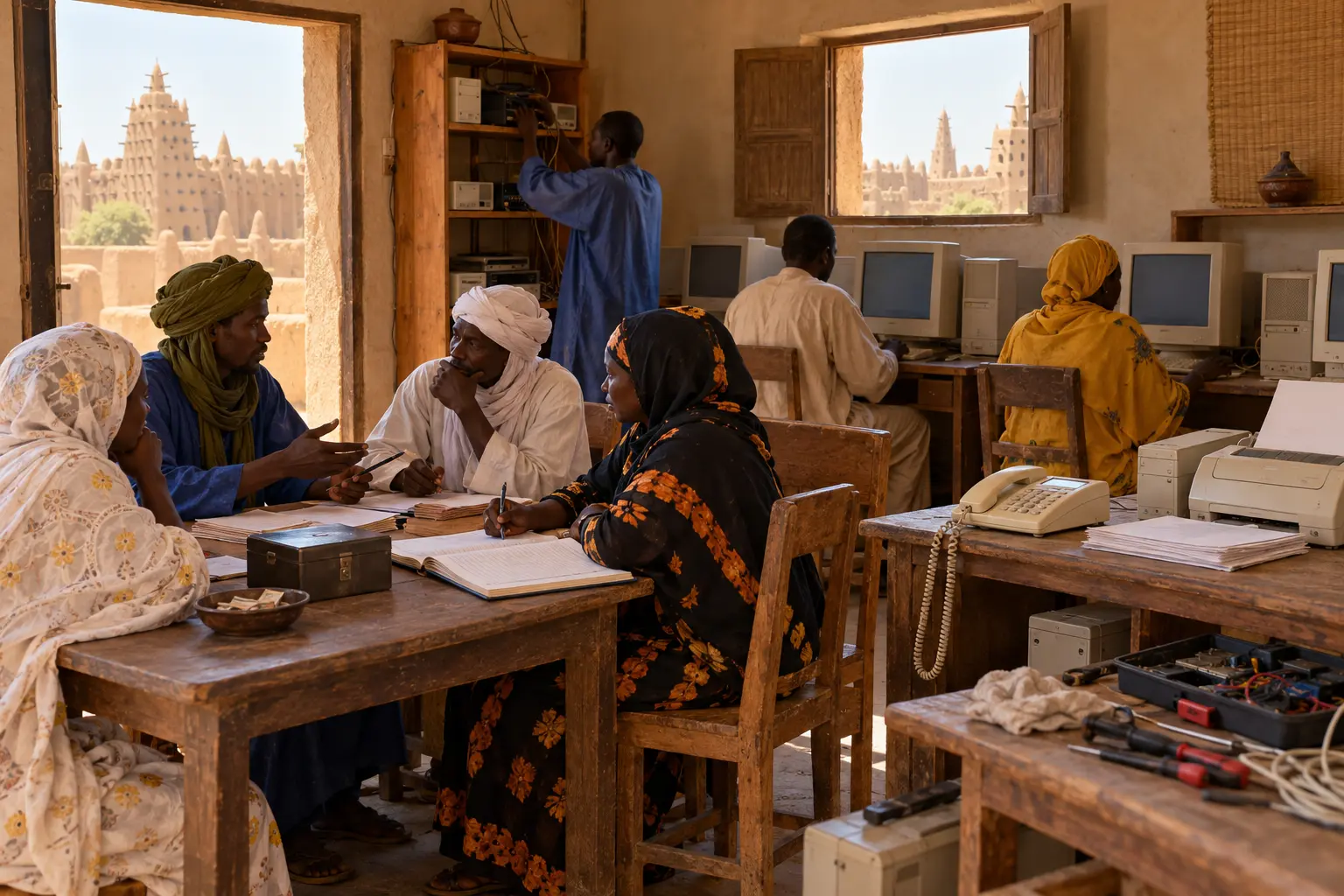
Who Could Set the Price, and Who Could Keep the Centre Running? Timbuktu’s Community Telecentre, 1997–2002
Timbuktu’s multipurpose community telecentre made network access useful through a local institution: people could telephone, send a fax, learn computing, print documents and, sometimes, reach the Internet. Its history also shows why calling a facility “community-owned” did not…

Story
One Peer’s Update Surge Delayed More Than One RIPE Collector
A burst of BGP messages arrived at RIPE RIS’s Frankfurt collector on 2 October. The record says the resulting processing stall also delayed update files from other collectors, exposing a question about shared pipeline capacity and the evidence needed to declare recovery.
History
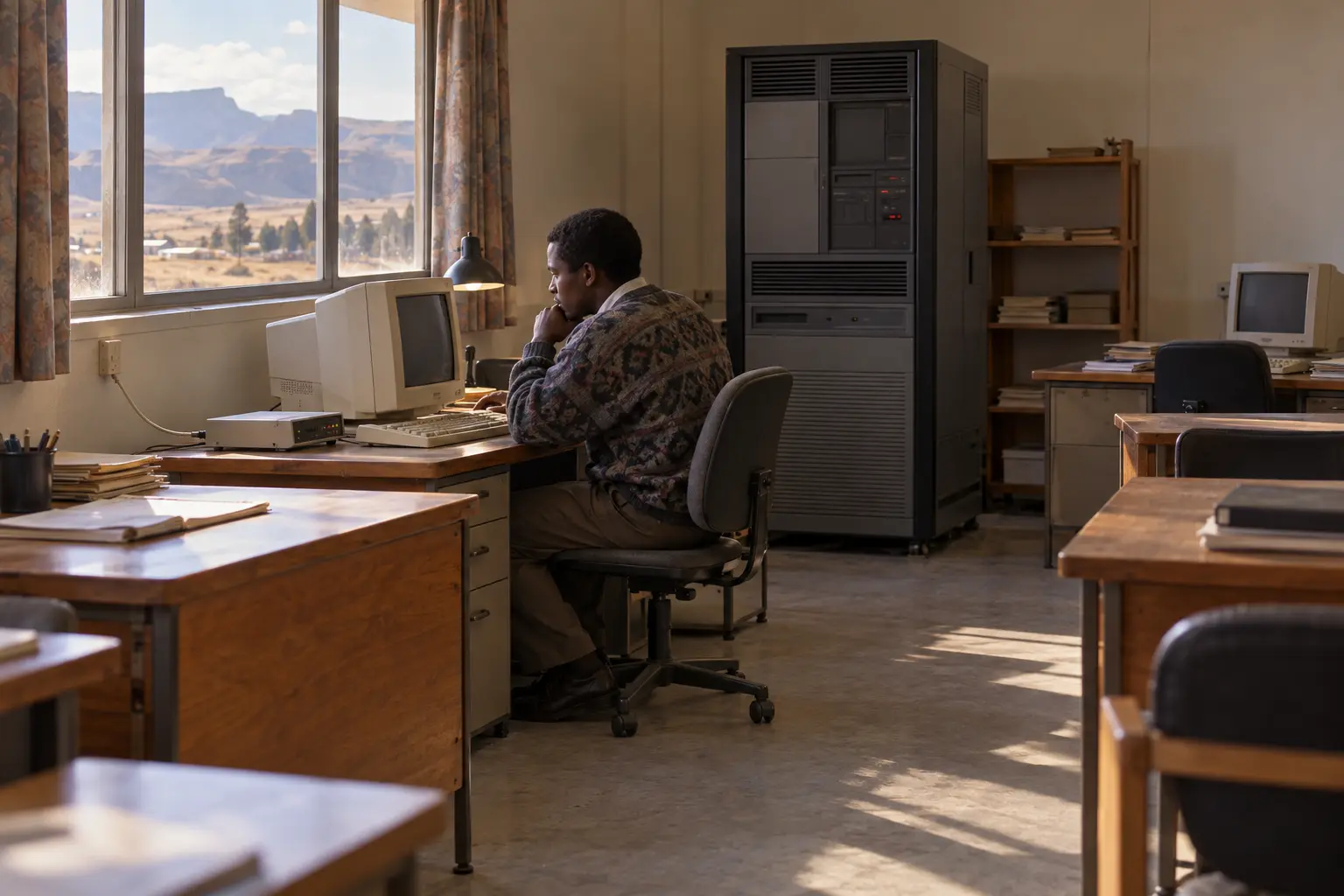
A Link Reached Roma; Campus Access Still Had to Be Built: Lesotho, 1996–99
A 9.6K terrestrial connection put the National University of Lesotho’s host online from Roma to Bloemfontein in December 1996. In the same week, the university said its campus network did not exist and planned dial-in access was not working. Three years later, a Maseru café sold…

History
Tajikistan’s Email Network Crossed Regions Before Direct Internet Access, 1995–97
Tajikistan’s first public email nodes connected people across a country still emerging from civil war. Their messages could reach abroad, yet the server and telephone routes that carried them remained outside the country.

History
Fiji's Mail Link Ran Before Its Internet Route, 1992–94
At the University of the South Pacific, email already crossed the Pacific through a dial-up relay in 1992. A full Internet connection came later in the record, and even its date depends on which contemporary or retrospective account is used.

Story
APNIC ties Timor-Leste’s IPv6 gains to Starlink as operators lag
APNIC’s new profile attributes growth in tested IPv6 capability since early 2025 to Starlink’s market entry, while saying most operators have yet to adopt the protocol. The claims describe different layers of connectivity.
North America Datacenter Trends
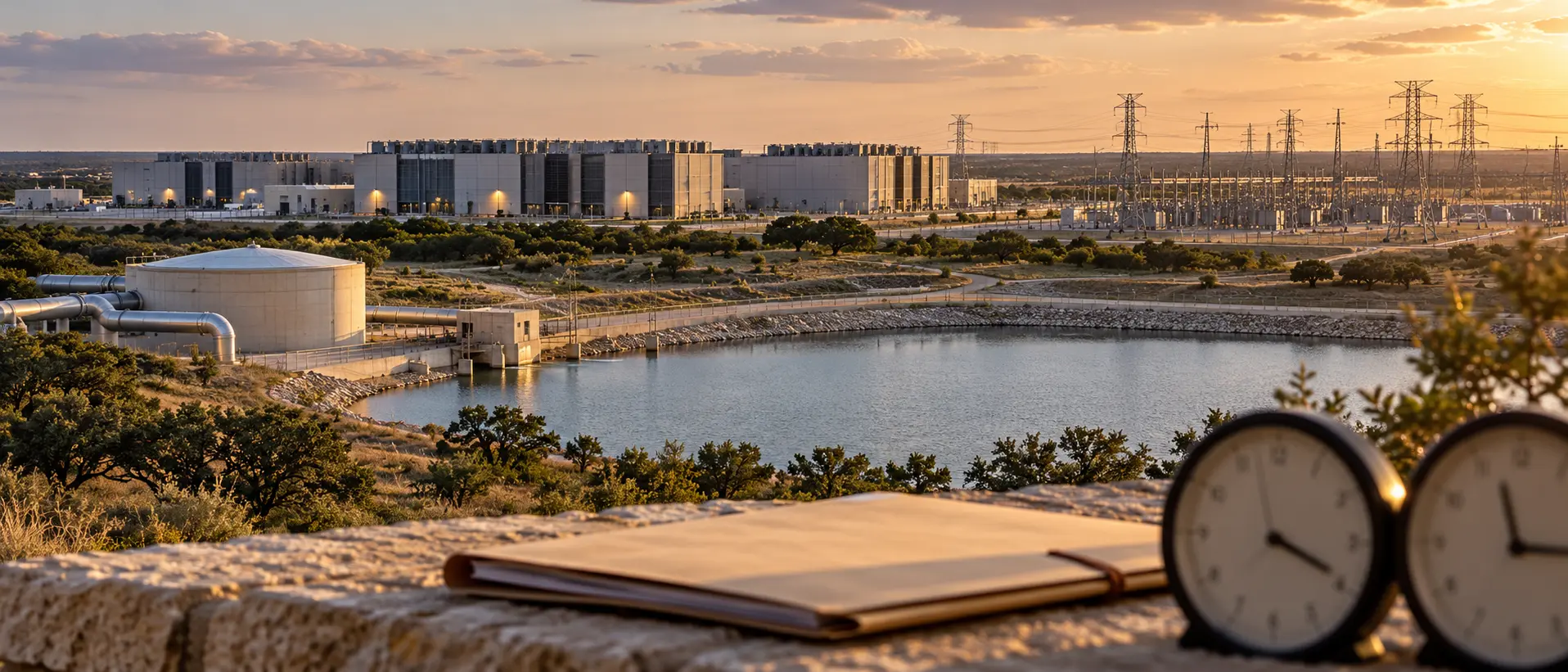
Texas’s data-center permit pause now runs on two clocks
Texas’s data-center permit pause has two reporting checkpoints, neither stated as an automatic expiry. TCEQ’s update is due 19 October and ERCOT’s report is planned by 10 December; the signed instruction keeps TCEQ’s pause in place until ERCOT completes its review.
CASE FILE
Netnod's Three Service Lines and the Number That Cannot Be Split
Netnod publishes a peering fabric, a root-server role and a time service. The root system's operators publish one number that can be checked — 2,047 instances — and it cannot be attributed to any of them. Everything else here comes from the operator's own front page, captured on…
Story
The Gateway That Points Back: A DHCP Draft Adds a Legacy-Client Escape Hatch
Version 03 of an individual Internet-Draft adds a conditional DHCPv4 Router Option for clients that require one: the host's own address or 127.0.0.1. The author says this should keep non-local IPv4 traffic on the host, but no published test yet shows how operating systems handle…

Story
At RIPE 93, a yellow lanyard cannot answer every recording question
A badge ribbon can tell a photographer to leave you out of the picture. Smart glasses pose a less visible question: what is being captured, and has the person opposite agreed?
Europe and Middle East Institutional
What a LINX membership buys beyond the port
The entry fee is easy to find. The harder question is how a shared exchange turns members' payments into a connection they can depend on.
CASE FILE
Facebook's servers were running. The way back was broken.
The October 2021 outage was not simply a case of switching the network back on. It also damaged the routes engineers needed to repair it.