
Primary Domain
Internet Infrastructure
Within the Primary Domain facet, Internet Infrastructure intelligence groups reporting by primary domain so readers can follow a focused area of internet infrastructure, governance, connectivity markets, or digital capital. The page brings together related articles, public evidence, institutions, companies, people, regional exposure, operating dependencies, and market context that may otherwise sit across separate category pages. It explains the domain, the likely actor class, the market or governance context, and the source material readers should use when comparing signals. Operators, analysts, and governance readers can see how the same domain appears across events, profiles, market shifts, public-source evidence, regional dependencies, and longer-cycle infrastructure decisions over time.
Global Institutional
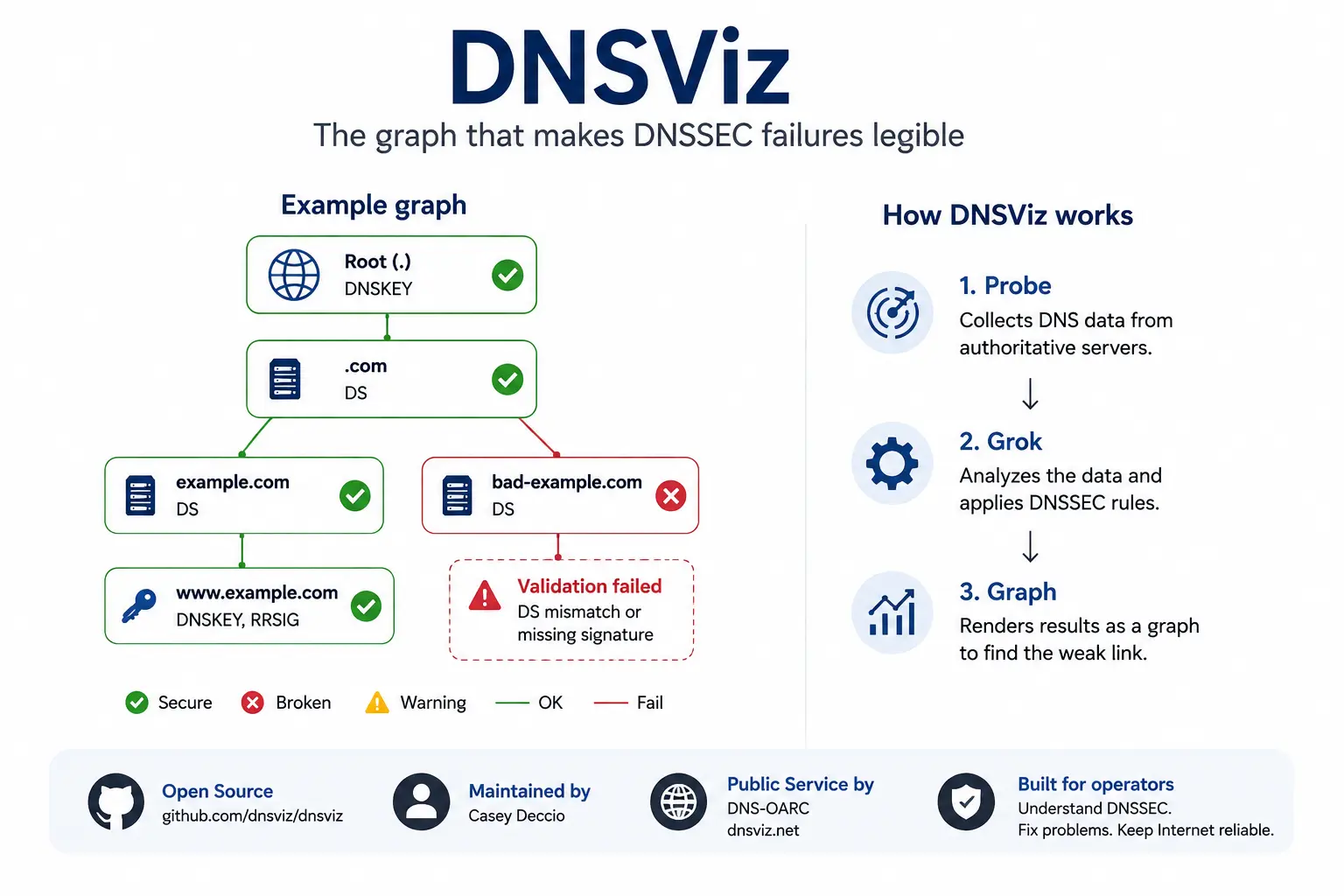
DNSViz and the graph that makes DNSSEC failures legible
DNSViz turns one of the internet's least intuitive failures into an image operators can investigate. Created by Casey Deccio and publicly operated by DNS-OARC, the open-source project links delegations, keys, signatures and authenticated non-existence proofs into an operational…
Global Institutional
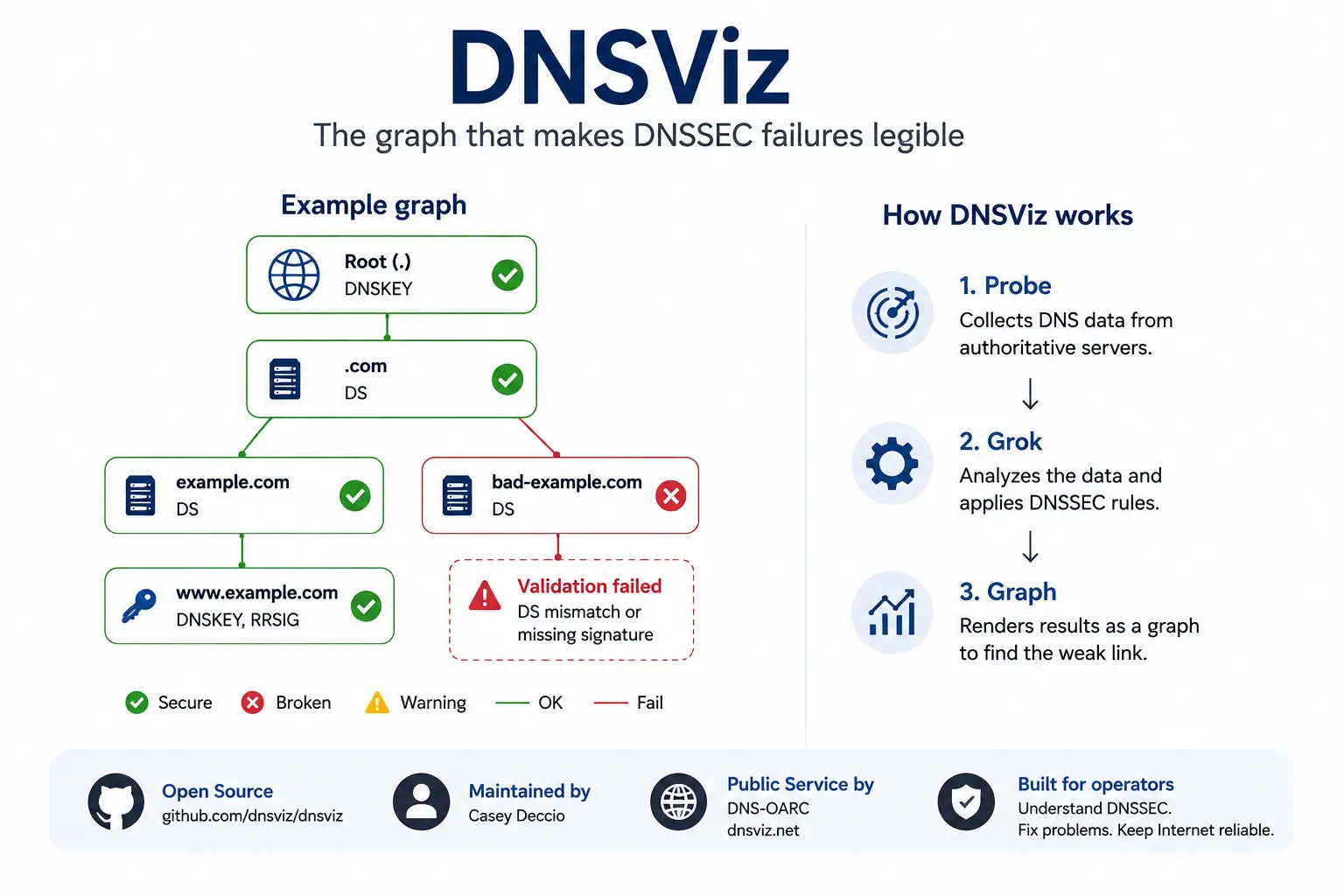
DNSViz and the graph that makes DNSSEC errors understandable
DNSViz turns one of the internet’s most difficult-to-fathom error types into a picture that operators can examine. The open-source project, developed by Casey Deccio and publicly operated by DNS-OARC, links delegations, keys, signatures and authenticated non-existence proofs into…
Global Institutional
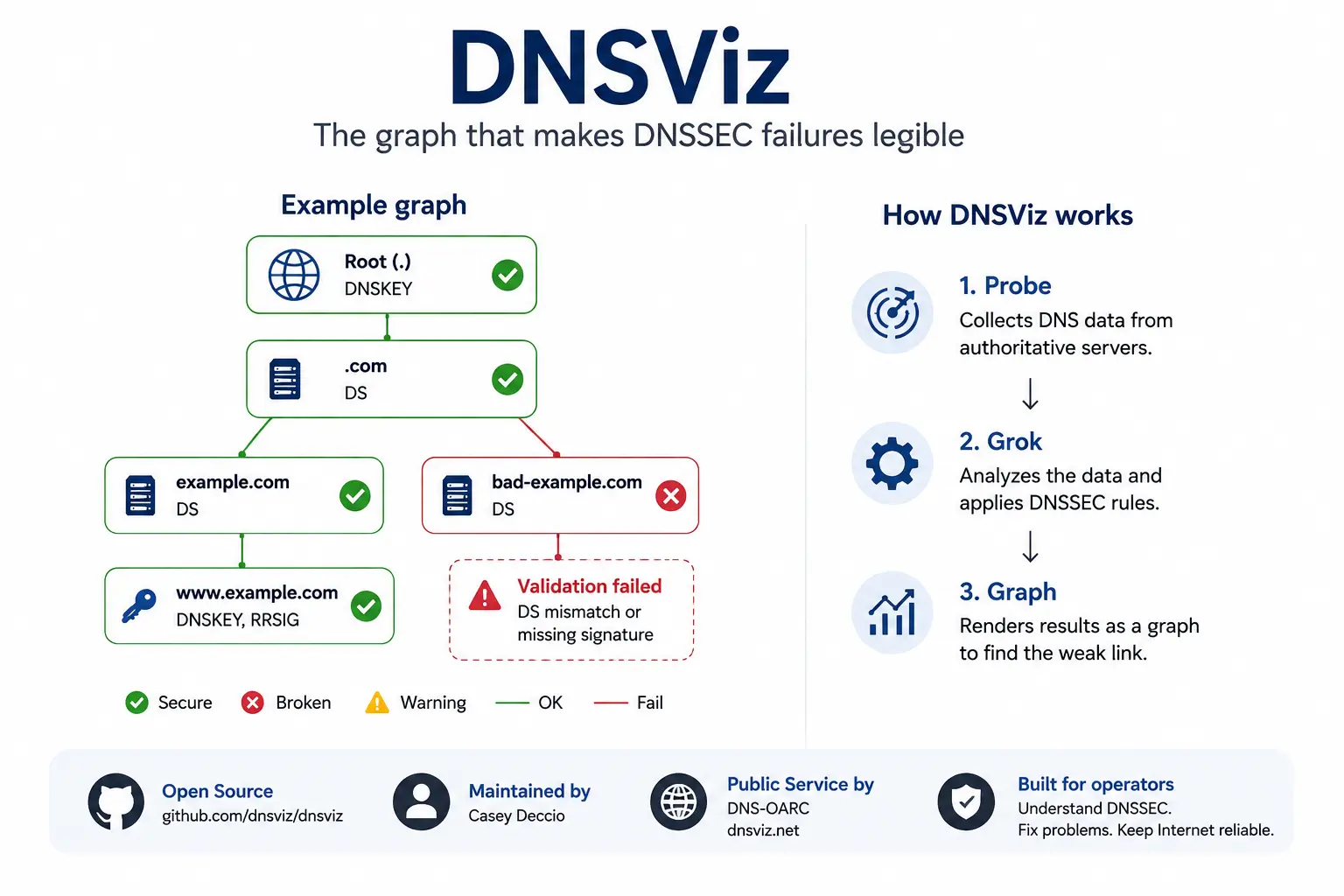
DNSViz and the graph that makes DNSSEC failures understandable
DNSViz turns one of the most opaque Internet failures into a picture operations teams can investigate. The open-source project, created by Casey Deccio and operated publicly by DNS-OARC, links delegations, keys, signatures and authenticated denial-of-existence proofs into an…

Global Institutional
DNSViz and the graph that makes DNSSEC failures legible
DNSViz turns one of the internet’s least intuitive failure modes into a picture that operators can investigate. Created by Casey Deccio and publicly operated by DNS-OARC, the open-source project links delegations, keys, signatures and authenticated denial records into an…

Creators
Bruce Maggs and the algorithms that turned distance into an infrastructure business
Akamai did not shorten the internet; it built a system that made distant content behave as though it were nearby. Bruce Maggs helped turn placement, mapping, caching and failure algorithms into commercial infrastructure, while the scale of that achievement belongs to the team and…

Creators
Eric Dumazet: Linux server economics through small queues
A busy server can look excellent on throughput charts while still wasting time, memory and processor resources behind its own packets. Eric Dumazet's work on TCP Small Queues, fair queueing, pacing and cache-friendly data structures has made Linux account more strictly for these…

Global Institutional
perfSONAR and the path no single network can diagnose alone
perfSONAR gives research and education networks a shared way to test paths that cross several institutions. It can replace anecdote with common evidence, but endpoint quality, clock accuracy, local policy and incomplete coverage keep diagnosis a collective judgement rather than…

Creators
Eric Dumazet and the small queues inside the economics of Linux servers
A very busy server can display excellent throughput and still waste time, memory and CPU behind its own packets. Eric Dumazet's work on TCP Small Queues, fair queueing, pacing and cache-locality-oriented structures helped Linux account for those hidden costs better. It is not the…

Creators
Eric Dumazet and the small queues shaping Linux server economics
A heavily loaded server can show excellent throughput while wasting time, memory and processor behind its own packets. Eric Dumazet’s work on TCP Small Queues, fair queueing, pacing and in-memory structure layout has helped Linux account for these hidden costs more accurately. It…

Creators
Eric Dumazet and the small queues that underpin the Linux server economy
Servers under heavy load can look healthy on throughput graphs while still wasting time, memory and CPU behind the packets they are about to send. Eric Dumazet's work on TCP Small Queues, fair queueing, pacing and cache-aware data structures has helped Linux account for those…

Global Institutional
OpenTitan’s real test began after the silicon shipped
OpenTitan makes the first security decisions inside a computer inspectable. Its reported March 2026 Chromebook deployment moved the project from open design to commercial hardware, where manufacturers, provisioning systems and long-term maintenance now determine whether…
Creators
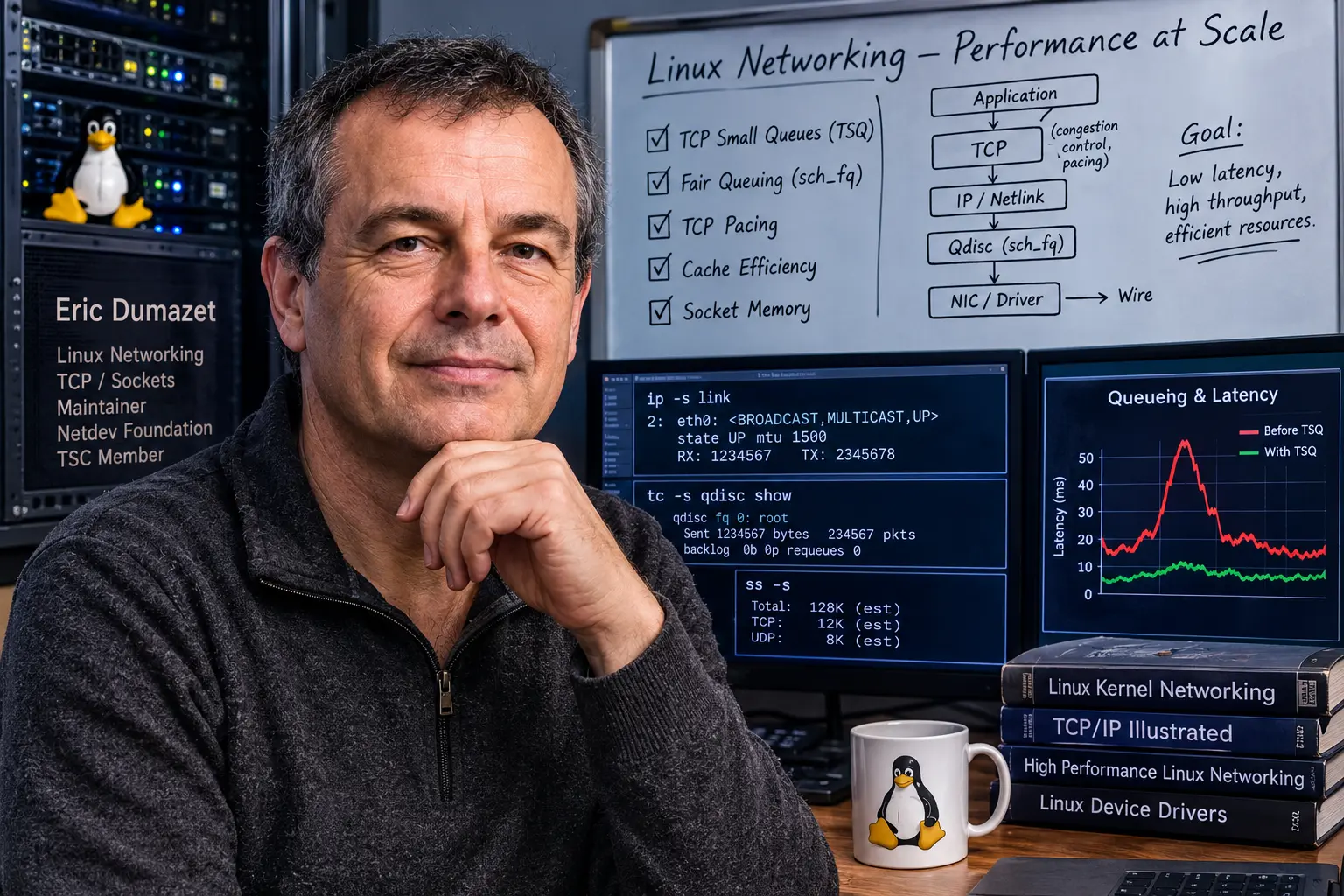
Eric Dumazet and the small queues that support the Linux server economy
A busy server can deliver excellent performance figures while still losing time, memory and CPU capacity behind its own packets. Eric Dumazet's work on TCP Small Queues, fair queueing, pacing and cache-sensitive structures helped Linux account for those hidden costs with more…

Creators
Eric Dumazet and the small queues in Linux server economics
A heavily loaded server can look excellent on a throughput chart and still waste time, memory and CPU behind its own packets. Eric Dumazet's work on TCP Small Queues, fair queueing, pacing and cache-conscious data structures helped Linux account for these hidden costs more…

Creators
Eric Dumazet and the small queues inside the Linux server economy
A busy server can look excellent on a throughput plot while wasting time, memory and processor capacity behind packets that have not yet left the machine. Eric Dumazet's work on TCP Small Queues, fair queueing, pacing and cache-aware data-structure layout has helped Linux account…

Creators
Eric Dumazet and the small queues inside Linux server economics
A busy server can appear healthy on a throughput chart while wasting time, memory and processor capacity behind its own packets. Eric Dumazet’s work on TCP Small Queues, fair queueing, pacing and cache-aware data structures helped Linux account for those hidden costs more…

Creators
Stephen Hemminger and the commands that make Linux networking operable
Stephen Hemminger’s long stewardship of iproute2 sits between Linux kernel capability and operational control. The suite’s commands make routes, queues, bridges, sockets and devices inspectable, while carrying decades of compatibility and maintainer obligations.

Academics
Kathleen Nichols and the queue delay a fast link cannot hide
Kathleen Nichols’ best-known work changed the variable used to judge a network queue: time, rather than packet count. CoDel made persistent waiting measurable, while leaving deployment dependent on bottleneck placement, responsive senders and maintained implementations.

Creators
Poul-Henning Kamp and the performance discipline of doing less
Poul-Henning Kamp’s systems work is held together by a suspicion that software becomes slow and fragile when several layers keep the same state or repeat the same task. His record shows what doing less can gain—and which responsibilities it transfers.

Academics
Sally Floyd made congestion control accountable to evidence
Sally Floyd linked router queues, transport feedback, traffic models and standards into a discipline of shared-network responsibility. Her legacy lies less in one celebrated algorithm than in a method for testing throughput, delay, fairness, stability and deployment assumptions…
Creators
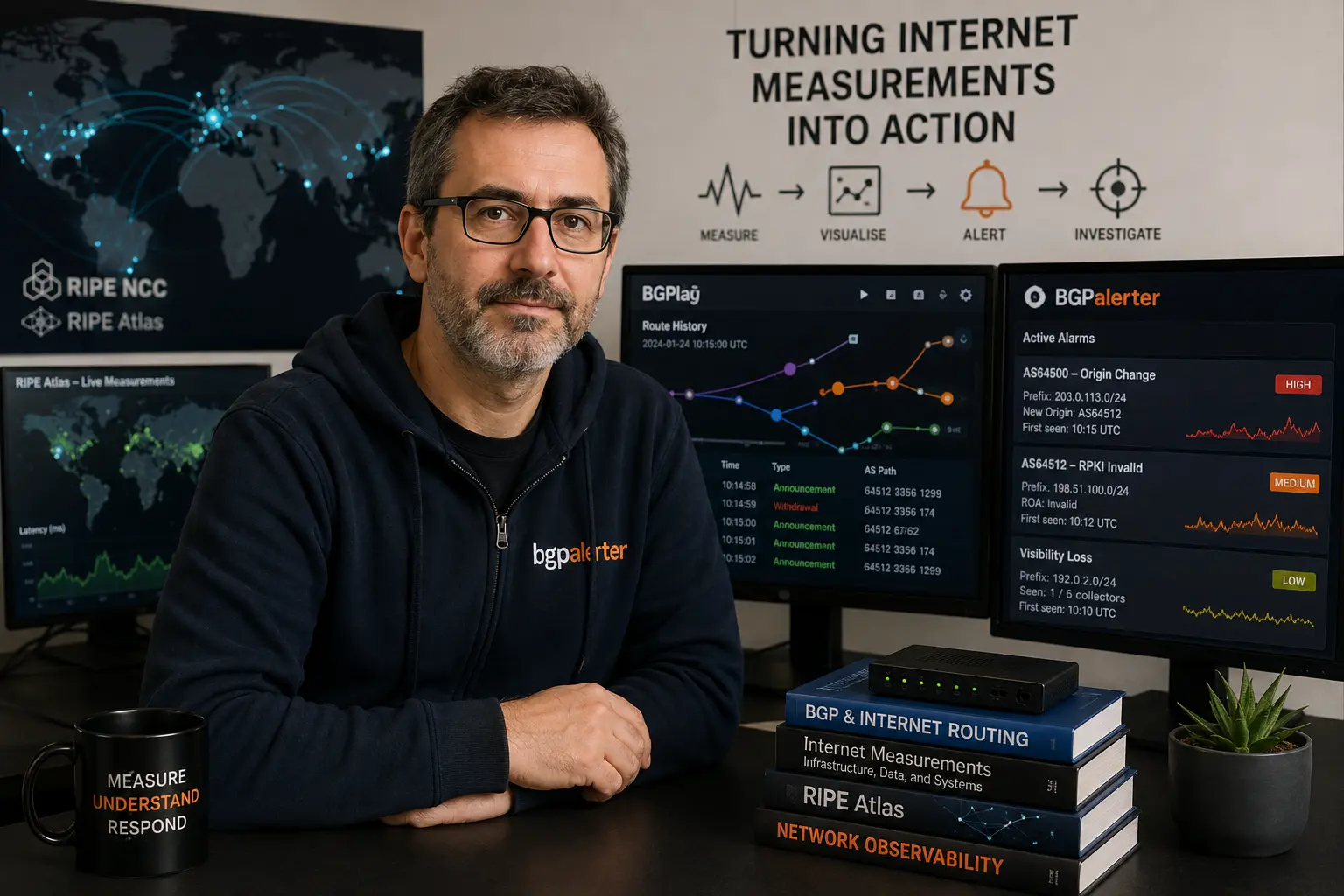
Massimo Candela and the interfaces that turn routing data into action
From BGPlay and RIPE Atlas interfaces to BGPalerter and geofeed monitoring, Massimo Candela has built tools that turn partial internet measurements into something operators can investigate. Their value depends on preserving the sources, thresholds and maintenance ownership behind…