Summary
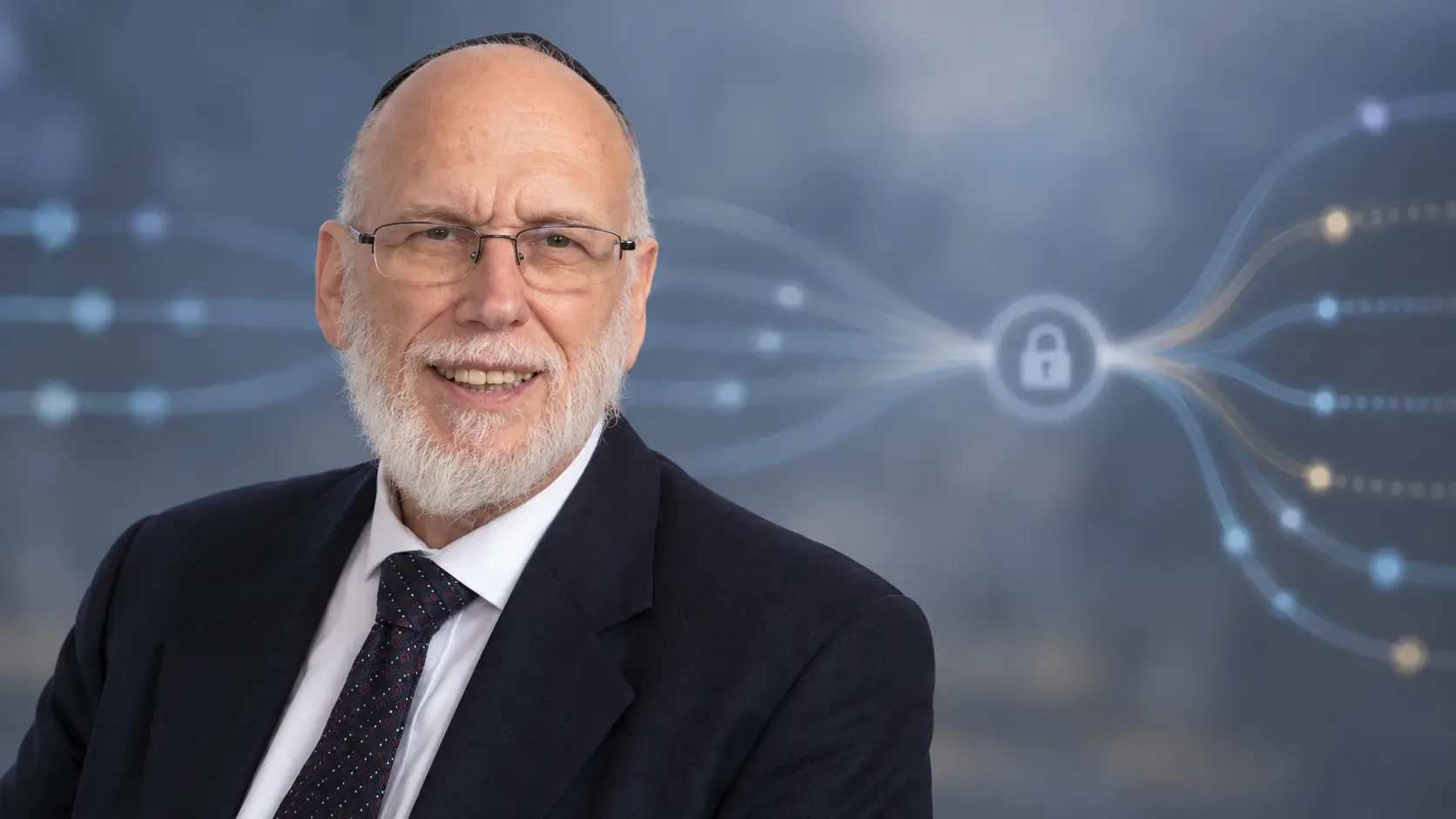
- Eric Dumazet is currently listed as a Linux maintainer for general networking, TCP and sockets and is a member of the Technical Steering Committee of the Netdev Foundation. He shares these duties with other maintainers and reviewers. They entail significant integration responsibility, but no sole authority over Linux networking.
- His most clearly attributable contribution is TCP Small Queues, introduced through a 2012 patch series. TSQ prevents a single TCP flow from placing excessive amounts of data in queues below the transport layer. Local queue release is tied to packet completion, which can reduce sender-side latency and memory requirements without eliminating every queue in the path.
- Dumazet's later work on
sch_fqand internal TCP pacing made transmission timing an explicit control variable. Fair queueing separates flows; pacing spreads packets over time. This infrastructure supports several congestion control approaches, including environments using BBR. BBR, however, has its own authors and its own development history. - His more recent public work links structure layout, cache-line traffic and per-socket state to fleet efficiency. The larger lesson is that Linux networking is also an accounting system for CPU, memory, queue depth and time. The economic effect can be significant on large fleets, but public sources do not translate it into a personal monetary value or a universal performance gain.
A fast server can still wait behind its own packets
The most revealing scene is a send queue in a Linux host. The application has written data, TCP believes further transmission is possible and the kernel has handed the bytes to lower layers. To the application they seem to have departed; in fact they may still be waiting inside the same machine.
High throughput conceals the problem. An interactive request waits behind a large transfer, buffers tie up memory and TCP's notion of "in flight" drifts away from what is merely locally queued. TCP Small Queues changed this relationship: a socket may place only a limited amount of data below TCP and receives new send credit when the device reports actual progress.
The public record is technically rich and deliberately bounded biographically
The strongest evidence comes from Linux itself:MAINTAINERS, patch discussions, documentation, conference talks and years of public review. They confirm Dumazet's current duties in general networking, TCP and sockets, his seat on the Netdev Foundation TSC and a Google affiliation through the maintainer address.
They do not provide a full biography, an independently confirmed current Google title, complete patch and review statistics or an exact time allocation. Filling such gaps with plausible details would be dishonest. The profile therefore concentrates on verifiable mechanisms and decisions. Dumazet becomes visible as a technical steward whose work becomes shared infrastructure only after review, modification, testing and deployment by others.
Maintainer status brings Dumazet close to decisions, not above the community
As of the cut-off date of 4 August 2026, the Linux records listed Dumazet for general networking, TCP and sockets. A maintainer can reject an interface, require a redesign, apply accepted changes and carry integration responsibility on the way to mainline.
The same source shows the shared authority. David S. Miller, Jakub Kicinski and Paolo Abeni are among the general network maintainers; Neal Cardwell shares TCP responsibility, and further specialists review depending on the patch. Architecture, drivers, security, testing, stable kernels and the mainline process form additional boundaries. Dumazet's influence is credible precisely because he operates within this distributed system.
As connection counts rose, Linux became economic infrastructure
On a small machine, a few extra bytes per socket or a cache miss hardly matter. On a host with hundreds of thousands of connections, the same overhead multiplies until it competes with application, memory and energy for resources.
"Server economics" does not mean a publicly documented saving figure. It means fleet consequences: connection density, remaining CPU for the application, network memory and missed latency targets caused by local queues. Distributions and operators choose kernel, qdisc, congestion control and NIC configuration. Dumazet does not control these decisions; he improves the shared starting point.
Behind TCP's familiar task lies a dense accounting system
TCP is described as a reliable byte stream. The implementation also decides how much unacknowledged data is allowed, when retransmission occurs, how memory is loaded, when packets are sent and how many sockets share CPU and queues.
A stack can be protocol-correct and still slow: too much local backpressure, bursts, lock contention or cache-unfriendly structures. Dumazet's work repeatedly follows an accounting logic. Bytes are charged to the socket, completion returns credit, send times are calculated and hot fields are separated from cold ones. The host should fill links without building a second uncontrolled network inside itself.
Before TCP Small Queues, the sender could create backpressure it no longer controlled
Before TSQ, TCP could push large amounts of data into the qdisc and driver. The congestion window could be correct from the network's perspective while a deep local queue sat beneath it. When an urgent flow arrives, the application cannot retrieve packets that have already been handed over.
This queue distorted feedback. TCP saw ACKs from the network while part of the data had not yet left the host. Many flows also tied up significant memory. The system needed a way to maintain high throughput without giving every socket unlimited storage below TCP.
The 2012 TSQ patch series gave the socket a local queue budget back
The 2012 patches limited, per socket, the amount of data waiting below TCP. When the local budget is exhausted, the socket stops. On packet completion it receives fresh send credit.
The idea was small: count local bytes and use completion as a sign of free space. The decisive step was moving control back to the transport layer, which understands the flow. A socket no longer had to place a large reserve in advance to keep the link busy. Applications benefited from a more disciplined internal rule without changing their own code.
Packet completion became a practical feedback signal inside the host
Completion can look like mere cleanup. TSQ turned it into information: capacity became free below TCP, so the socket may continue sending.
This local feedback complements remote ACKs. ACKs show progress along the path; completion shows progress below TCP; qdisc, driver and NIC statistics show further states. No single signal explains everything. TSQ used one of them to limit local congestion without replacing end-to-end congestion control.
TSQ removed one source of bufferbloat, not every queue in the path
TSQ did not abolish bufferbloat. It targets sender-side backpressure below TCP. Queues remain possible in qdisc, driver, NIC, access network, routers, switches and receiver.
The narrower statement is more powerful: TSQ reduces a single socket's ability to build a large hidden queue in the host. That can lower latency and memory load and bring TCP closer to actual device progress. Active queue management and end-to-end control remain necessary.
Limits, offloads and workloads decide whether TSQ helps
The effect depends on the local limit, packet size, qdisc, hardware queues, segmentation offload and flow mix. Interactive short transfers behave differently from continuous replication.
The implementation has also evolved since 2012. Later contributors adjusted limits and interactions. Dumazet can be credited with the origin without presenting the present-day mechanism as an unchanged single work.
sch_fqseparated flows and made time a scheduling input
In 2013 Dumazet published foundational work on thesch_fqscheduler. It keeps per-flow state and a time-ordered structure so that packets are released according to their target send time. New flows can be served quickly; paced flows wait for their moment.
This prevents a bulk flow from dominating the local queue and gives TCP a place where calculated send times take effect. It does not guarantee identical application results, but a more disciplined local service policy.
Fair queueing is a policy, not a promise of equal outcomes
The word "fair" sounds more absolute than the implementation. Flow separation does not make application outcomes equal. Packet size, path, receiver, congestion control, offloads and the number of connections remain relevant.
The definition of a flow is also policy. One application can open many connections, another only one.sch_fqreduces local dominance by a single flow, but it does not decide fairness between users or companies. It is a scheduling instrument, not a universal proof of justice.
Pacing turns a rate estimate into a sequence of send times
A congestion controller can choose the correct average rate and still release the permitted data as a burst. The mean is right, but the queue experiences a short-term peak.
Pacing spreads packets over time. That stabilises queues, improves sharing and represents the model's intention more accurately. The implementation needs timestamps, timers, qdisc, segmentation and NIC. A software rate is real only when it appears as physical packet spacing on the link.
Pacing and congestion control solve different parts of the problem
Congestion control decides how strongly the sender should use the path; pacing decides when the permitted data leaves. A good model can be damaged by bursts, and perfect pacing can precisely execute a wrong rate.
Dumazet's pacing work is therefore enabling infrastructure. It allows several algorithms to translate rate into time. Authorship of a specific congestion control model remains with its developers.
BBR uses pacing infrastructure, but has its own authors and its own development
BBR is often associated with Dumazet because of its pacing dependency and the Google environment. That does not make him its sole inventor. BBR has its own named authors, models and versions.
The precise history is that queues, pacing, socket accounting and instrumentation made later algorithms practically executable. This account honours Dumazet's foundation and preserves the independent contribution of Neal Cardwell and other congestion control engineers.
TSO saves CPU and can bring back the burst that pacing was meant to avoid
TCP Segmentation Offload hands the NIC a large segment block that the hardware later divides into packets. That lowers CPU cost per packet, but places hardware between the timing decision and the actual wire.
If a large block is released at once, the NIC can produce a burst. TSQ, qdisc, TSO, driver and hardware must be understood as one system. A CPU optimisation can worsen latency if the shape of the traffic is not considered.
Pacing quantum, timestamps and NIC must describe the same reality
The kernel works with quanta, timer resolution, timestamps, offload units and hardware queues. A large quantum produces bursts; one that is too small costs CPU; and a different NIC granularity changes the result on the wire.
This is why qdisc is part of capacity planning. Developers must measure the full path. A benchmark that names only congestion control or link rate leaves out a large part of the mechanics.
Internal TCP pacing reduced dependence on a particular qdisc
In 2017 Dumazet published internal TCP pacing. The transport layer could hold back transmissions more strongly according to its own rate and timers, without depending entirely on a particular qdisc configuration.
qdisc remained important for ordering and policy. Part of the logic moved closer to the owner of the send intention, but the final time is still the result of TCP, qdisc, driver and NIC.
qdisc choice remains an operator decision with real service consequences
Linux offers qdiscs for different goals.sch_fqis particularly relevant to pacing, while FQ-CoDel combines flow separation and active queue management. The two are not identical.
Defaults differ between distributions, cloud images, appliances and container hosts; offloads can move execution. Upstream provides mechanisms; the operator turns them into actual service behaviour.
A few bytes per socket become a fleet constraint
Every connection holds sequence numbers, timers, congestion state, queues and accounting. At large scale every byte multiplies, and frequently touched fields occupy cache.
Less memory per socket can increase density; better layout can reduce cache misses and coherence traffic between CPUs. This is the strongest link to server economics, but it permits neither a universal saving rate nor a personal valuation in money.
A cache line becomes infrastructure when every packet touches it
CPUs move whole cache lines, not individual source-code fields. Hot data next to cold fields transports unnecessary bytes; two CPUs changing different values in the same line still generate coherence traffic.
Dumazet's more recent work looks at code from this physical perspective. Separating hot and cold fields reduces memory traffic that grows with packet and socket counts. The result depends on CPU and workload; a production profile is not a universal law.
The 2024 data-structure work shows a mature performance-development phase
The 2024 talk began with profiling: which fields are hot? Which cache lines move? Which structures dominate memory? Tools can suggest reorganisations, but alignment, locking, compatibility and maintenance remain human decisions.
In mature infrastructure, a large gain often comes from an avoided cache miss or a moved field rather than a new algorithm. That is less visible, yet decisive for scaling.
Hyperscale profiles are strong evidence and incomplete public science
Large operators see connection counts, NICs and traffic mixes that are hard to reproduce elsewhere. Dumazet's Google affiliation enables insights in which small costs become obvious across a large fleet.
Part of the workloads, tools and data remains private. A talk can explain method and direction without publishing all inputs. That requires limiting the claim, not rejecting it. Ideally, more private observations would be translated into public tests and CI workloads.
Receive-side locks and queues belong to the same resource accounting
The emphasis is on sending, but Dumazet's broader work covers sockets and the receive path. Incoming packets need polling, memory, classification, queues and CPU handover. At high rates, locks and shared state become expensive.
Linux scales through batching, moving work and reducing contention. The principle remains the same: enough coordination for correctness, but not so much that accounting displaces the application.
Batching raises throughput and changes latency and fairness
Processing several packets or completions together amortises locks, function calls and cache movement. NAPI, drivers and offloads build on that.
A batch takes time to form and can arrive at the next layer as a burst. Larger batches improve efficiency and increase waiting time or dominance. TSQ, fair queueing and pacing do not fight batching; they set limits so that feedback and latency are preserved.
TCP performance arises from layers that can cancel each other out
Congestion control determines intent; TCP creates packets and times; TSQ limits backpressure; qdisc orders; TSO bundles; the driver maps; the NIC sends; the network adds queues and loss.
Precise pacing can be undone by coarse offloads, a low-latency qdisc by too much enqueueing, a compact layout by a new lock. Dumazet's work matters because it deals with these transitions.
Public patch review turns local optimisation into shared infrastructure
A change starts as a claim: less latency, memory or CPU. To enter Linux, it must explain on netdev its measurement method, generality, rare architectures, tests and future maintenance.
Maintainers can split series, reject vendor-specific abstractions or postpone unfinished work. That is slower than a private patch and more durable. Dumazet's authority also lies in asking whether Linux can carry an improvement for years.
netandnet-nextseparate urgent repair from future development
Fixes usually go tonet; features and refactoring go tonet-next. That keeps current maintenance from being destabilised by work for the next release.
The boundary requires judgement. A fix can change behaviour; a feature can expose an old bug. Maintainers split series to make risk visible. A product deadline alone is no reason to merge.
Review, rejection and redesign disappear in commit counts
Commits count visible authorship, not the review that caused an interface to be redesigned or the rejection that prevented years of burden. Applying a patch means integration responsibility, not inventorship.
The profile therefore links clearly attributable work such as TSQ,sch_fq, pacing and layout with stewardship that cannot be quantified. Not every patch integrated by Dumazet becomes his personal creation.
Tests reduce risk, but cannot model every Linux machine
Builds, self-tests, KUnit, syzbot, driver labs and downstream deployments catch many regressions, but not every CPU, NIC, qdisc and workload.
A hyperscale improvement can harm a rare embedded system. Experience, compatibility thinking and rollback remain necessary. Tests strengthen governance, but do not replace judgement.
Stable backports create a second decision after mainline
A mainline patch does not automatically reach every stable kernel. It must fix a real, bounded problem and introduce little risk. Distributions then decide again.
Performance changes often depend on context missing in old branches. The effect proceeds in stages through upstream, stable, distribution, cloud and configuration. No one controls the whole chain.
TCP and socket maintenance today is deliberately shared
MAINTAINERSdistributes responsibility among Dumazet, Neal Cardwell and other maintainers and reviewers. That reduces single-person dependency and connects knowledge about congestion, sockets, drivers and tests.
Shared responsibility demands clear ownership. Overlaps can create gaps when everyone waits for someone else. Good succession distributes authority and preserves the reasons for decisions.
The Netdev Foundation can fund without becoming a merge authority
Under the oversight of the Linux Foundation, it supports CI, tools, travel and research. Dumazet sits on the TSC. Funding guarantees no merge.
Deep maintenance costs money, hardware and time. Recognising that does not transfer upstream legitimacy to the funder. Funding should expand decision capacity, not buy decisions.
Google affiliation brings engineering capacity, but no ownership of Linux TCP
The Google address proves an affiliation, not a full title. A hyperscaler can fund profiling, hardware and review time from which everyone benefits after upstreaming.
The asymmetry lies in private workloads and data. Public review is the counterweight: the patch must be generic, understandable and acceptable outside Google. The company provides time and evidence, but does not own the stack.
Downstream operators decide whether an upstream improvement changes service
Distributions choose kernel and backports; clouds choose qdisc and congestion control; appliances choose versions; NIC vendors choose capabilities; applications choose traffic. There is no complete survey of TSQ orsch_fqusage.
A mechanism can be present and inactive, or running unnoticed as a default. Dumazet's effect is broad and indirect: he changes the shared options; operators turn them into user experience.
User-space stacks compete for specialised workloads, not for every Linux role
DPDK, VPP and application-specific stacks bypass parts of the kernel for high packet rates and control, but often require dedicated cores, huge pages, device binding and their own operating model.
Linux TCP integrates sockets, security, namespaces, observability, drivers and applications. Dumazet's work lowers the cost of this general path without declaring it the best for every case. Specialised cases can bypass it; Linux remains the broad base.
Linux remains the default because integration is more than raw packet rate
A network stack must be fast, compatible, secure, observable and maintainable on many devices. A separate fast path can deliver more pps while creating its own operational and support costs.
A Linux application inherits TSQ, pacing and accounting through ordinary sockets. That invisibility is a strength: the benefit remains even when users do not know the author's name.
A faster host does not prove a better network path
A shorter local queue repairs neither a congested access link nor a slow receiver nor lossy routers. TSQ and pacing discipline the sender, not the whole path.
They can reduce one source of delay and smooth the flow. Application outcome remains the joint product of sender, receiver, network and configuration.
One benchmark does not stand for every server, NIC and workload
Packet size, connection count, CPU, cache, NIC, offloads, qdisc, timers, kernel and workload change results. A Google profile can show real costs without providing the exact percentage for another fleet.
Good technical reporting preserves the conditions. Dumazet's talks are valuable attributed operational evidence; generalisation requires public tests and independent measurements.
Succession is a technical problem because much design knowledge lives in memory
A strange boundary may exist because of an old NIC, a still-used API or a regression solved long ago. The code does not always tell the reason.
Long-serving maintainers carry this context and create value as well as key-person risk. Documentation, tests, archives and new reviewers turn private memory into institutional knowledge. Good succession preserves principles and enables adaptation to new hardware.
Hardware pacing and device memory can move the boundary again
Modern NICs schedule packets, manage more queues and offer telemetry or local memory. They save CPU and move behaviour into firmware.
Linux must express intent, see the actual hardware behaviour and react to deviation. Driver APIs, timestamps and errors become as important as the rate. Dumazet's principles remain: feedback, bounded hidden queues, control close to intent and observable limits.
Cache economics may deliver the next gains more often than new transport formulas
New congestion control algorithms will come. On large hosts, however, the next material gain may come from structure separation, fewer locks, better batching or fewer wandering cache lines.
Such changes have no strong brand, but help many algorithms at once. The 2024 work shows a mature stack being refined against physical costs. The question shifts from "Which protocol wins?" to "How much machine does each connection consume unnoticed?"
Dumazet's lasting contribution is resource discipline, not a hero myth
One poor narrative makes Dumazet the sole inventor of modern Linux TCP and BBR; another erases the person within the community. The evidence permits precision.
He introduced TSQ, shaped the foundations ofsch_fq, advanced internal pacing and demonstrated the importance of structure layout. At the same time he carries current responsibility in shared governance. His contribution lies in treating packets and sockets as claims on limited time, memory, queues and CPU locality.
The final effect is distributed across design, review, integration and operation. A commit is attributable; higher fleet density or avoided outages are not. This difficulty justifies neither glorification nor erasure. It shows that infrastructure value arises from identifiable decisions and collective implementation.
Member Briefing
Deeper Profile Context
Sign in with the right membership level to unlock the full briefing and source notes.
Only for Strategic Circle
Strategic Circle
Open to all readers. Unlock profile briefings after joining and signing in.
Join Strategic CircleOnly for Leadership Alliance
Leadership Alliance
For qualified IP-asset owners and management; sign in to unlock alliance briefings.
Join Leadership Alliance