
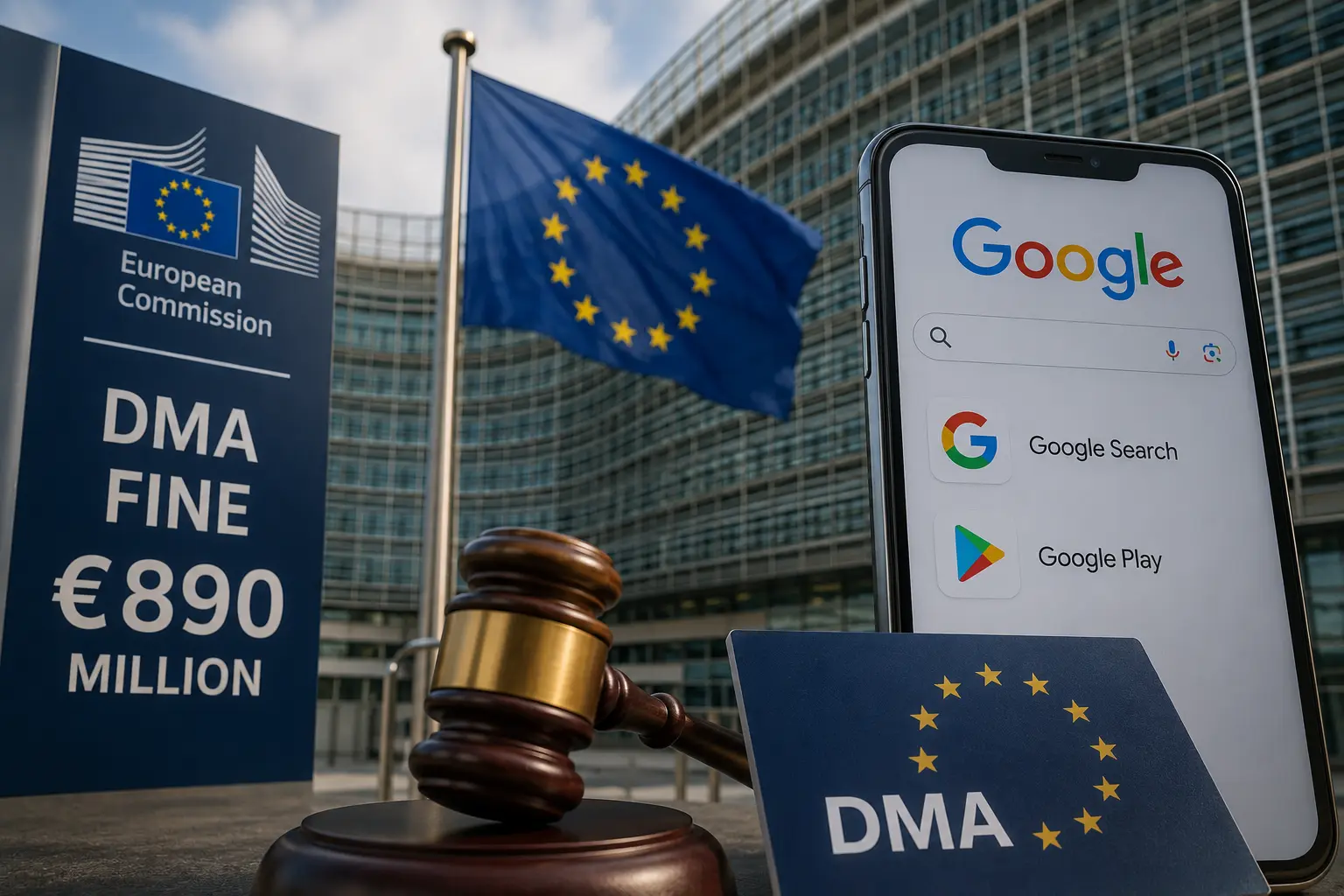
- A €460 million fine covers preferential treatment for Google services in Search, while €430 million concerns Play steering restrictions
- Google has 60 days to end both breaches or risk penalties of up to 5% of worldwide turnover
The fact
The European Commission has fined Google €890 million for two breaches of the Digital Markets Act involving Google Search and Google Play. A €460 million fine concerns Google’s treatment of its own services in Search, while a separate €430 million fine covers restrictions imposed on app developers using Google Play.
The Commission found that Google gave its shopping, hotel, transport and sports services greater prominence than comparable third-party services through ranking, presentation and access to enhanced visuals and filters. It also found that Google restricted Play developers from freely promoting outside offers and directing customers to other purchasing channels. The Commission said Google’s steering-related fees and the period for which they were charged went beyond what the DMA permits.
Google has 60 days to end both breaches or risk periodic penalty payments of up to 5% of its worldwide turnover. Google disputed the decisions, arguing that the required changes could weaken Search features and protections within Google Play.
The assessment
The two decisions affect how Google controls access to users across Search and Play. In Search, rival comparison services depend on where and how Google presents them beside its own products. In Play, developers depend on what they are allowed to tell users about outside offers and how much Google can charge when those users buy elsewhere.
Google must now change those arrangements within 60 days. Much will depend on how it redesigns the interfaces and commercial terms. A formal policy change may meet the DMA’s wording without giving competitors greater visibility or making outside purchases cheaper for developers. The Commission will therefore need to examine how the changes work in practice. That includes whether rival services receive comparable presentation and whether developers can direct users to outside offers without facing terms that erode the commercial benefit.
For BTW readers, the test is whether Google’s compliance measures change practical access to users, rather than only the language of its policies. Search traffic, outside-offer use and developer fees will show how much the two decisions alter the platform’s commercial operation.
What to watch
Watch for Google to publish revised Search presentation rules and Google Play steering terms within the 60-day period. Changes to outside-offer links, developer communications and related fees will show how far the company has altered its practices in response to the decisions.
Member Briefing
Deeper Profile Context
Sign in with the right membership level to unlock the full briefing and source notes.
Only for Strategic Circle
Strategic Circle
Open to all readers. Unlock profile briefings after joining and signing in.
Join Strategic CircleOnly for Leadership Alliance
Leadership Alliance
For qualified IP-asset owners and management; sign in to unlock alliance briefings.
Join Leadership Alliance