Summary
- DMOZ promised free data distribution and explicitly welcomed proprietary, revenue-generating services built around downloaded copies, without charging a fee for those value-added distributions.
- The 2016 Free Use License required a green HTML attribution table on every web page using DMOZ content; AOL retained the compilation and contribution rights while editors received reuse rights to their own work.
Analysis
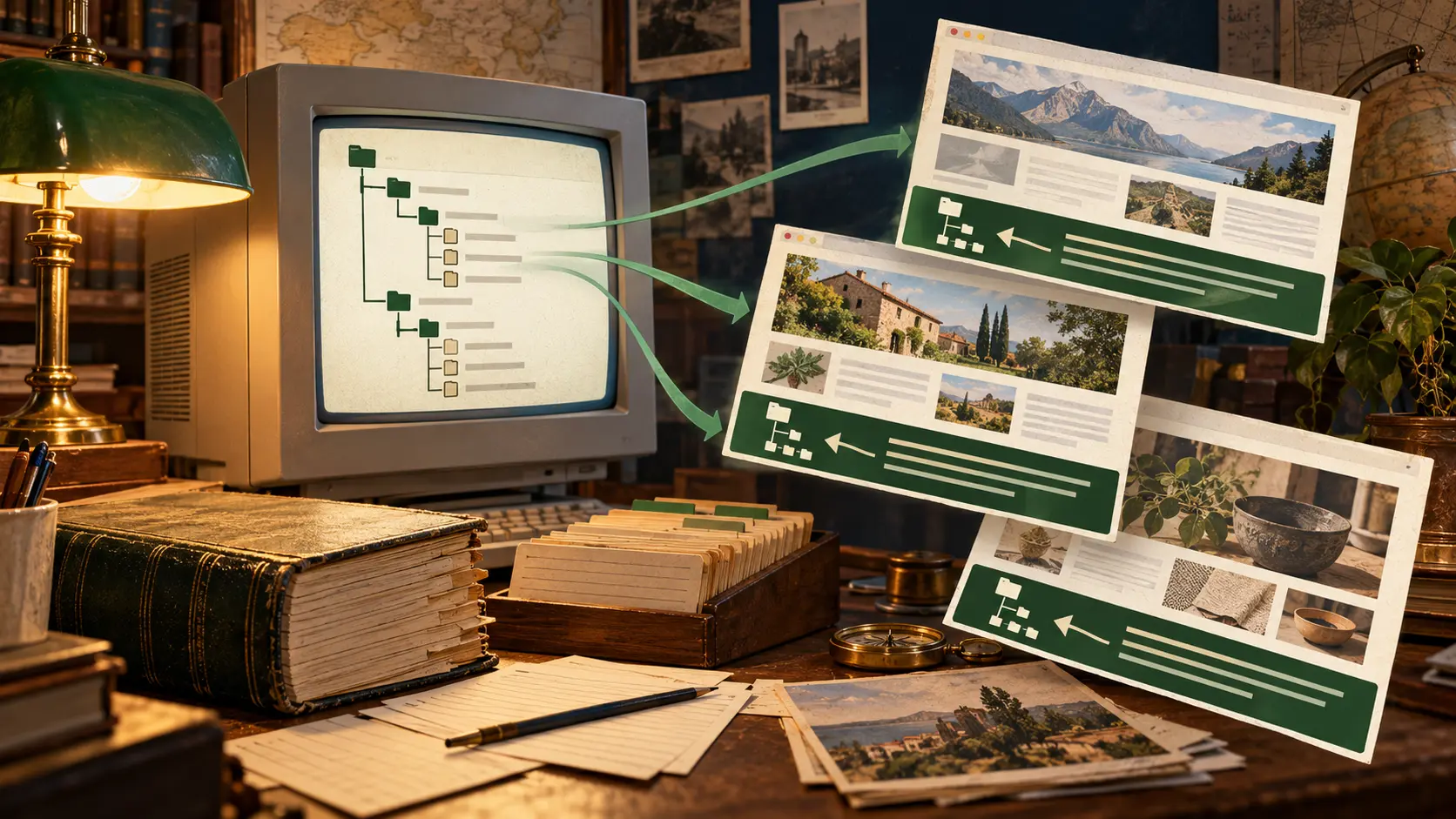
The green box had a job. DMOZ’s September 2016 Free Use License said the specified HTML had to appear on every web page using DMOZ content. Its sample was not a discreet footnote: a dark-green band invited readers to join “the largest human-edited directory on the web,” and the lines beneath linked to DMOZ, site suggestions and editor applications. The data could leave the directory. The signpost had to go along.
That condition sat beside a strikingly open commercial offer. In its June 2016 Social Contract, DMOZ said distribution of its data and submission of sites would remain free. It would support users who added proprietary, revenue-generating material or other paid functionality to a downloaded version of the directory. Those users owed attribution under the Free Use License; DMOZ charged no fee for the value-added distribution.
This was not a promise that every contributor or site would be accepted. DMOZ described itself as a directory maintained by volunteer editors, not a search engine. Its submission instructions said editors evaluated sites selectively and could reject or remove listings. Applications to become editors were open to the public but reviewed by the community, and not all applicants would be accepted. Free access to the data and selective control over what entered it were parts of the same arrangement.
The arrangement also separated the people doing the editorial work from the rights over the assembled resource. AOL Inc. said it hosted and administered DMOZ and had discretion over its content, use and operation under its Terms of Use. The Social Contract assigned AOL the rights to the Open Directory compilation and to individual contributions. Editors received non-exclusive, royalty-free rights back to their personal contributions so they could present that work elsewhere.
That wording matters. A volunteer could reuse a personal contribution; the contract did not say the volunteer owned the assembled directory or controlled its operator. Meanwhile a downstream service could put proprietary features around a copy and earn revenue, provided it credited DMOZ. The project’s invitation to monetize did not hand over the master compilation or the operating switch.
The license called DMOZ content Creative Commons Attribution 3.0 Unported. The official CC BY 3.0 deed permits commercial sharing and adaptation with attribution, which can be supplied in a reasonable manner. DMOZ’s own Free Use page then specified the green HTML block and where it must appear. The two documents show what the operator asked users to do; the archive does not show which downstream pages displayed the box. A dated page from a data user, paired with the license version it used, would settle that practical question.
The green panel was more than a credit line. It returned every licensed page to the directory’s front door: the project, the suggestion form and the editor queue. DMOZ was willing to let others make money around its data, but it kept the compilation rights, editorial discretion and the name on the label. The offer was open enough to build on—and specific enough to make the credit visible on every page.
Sources
Member Briefing
Deeper Profile Context
Sign in with the right membership level to unlock the full briefing and source notes.
Only for Strategic Circle
Strategic Circle
Open to all readers. Unlock profile briefings after joining and signing in.
Join Strategic CircleOnly for Leadership Alliance
Leadership Alliance
For qualified IP-asset owners and management; sign in to unlock alliance briefings.
Join Leadership Alliance