
Europe and Middle East Institutional
Europe and Middle East Institutional
Institutional company intelligence covers institutions, policy actors, standard bodies, registries, alliances, and public-interest organisations shaping internet infrastructure markets in Europe and the Middle East, with enough context for readers to understand how these organisations build, operate, finance, regulate, and sell the infrastructure that supports digital markets.

Latest Coverage
Latest from Europe and Middle East Institutional
85 articles

Europe and Middle East Institutional
Deal Castle Is 'Good.' England's Bathing Water Table Won't Show the Maths
Deal Castle's 2025 classification is one word — Good — and the measurement under it runs four bathing seasons, two bacteria and two different percentiles. The table that publishes the word has room for three columns.
Europe and Middle East Institutional
Cyprus Lets Providers License Themselves — Then Keeps a Register That Can't Tell Time
Cyprus lets a provider license itself: file the notification, pay the fee, done. But the register that records the fact prints ten columns and not one of them is a date — so nobody can check the five-day clock the law sets.

Europe and Middle East Institutional
The Environment Agency Can Price a Promise to the Pound. It Cannot Say Whether Anyone Kept It.
Britain lets a company buy its way off the criminal track by promising to repair the harm, and the Environment Agency publishes every promise with the sum attached and the recipient named. It publishes no line recording that the promise was kept — and the statute that creates the…

Europe and Middle East Institutional
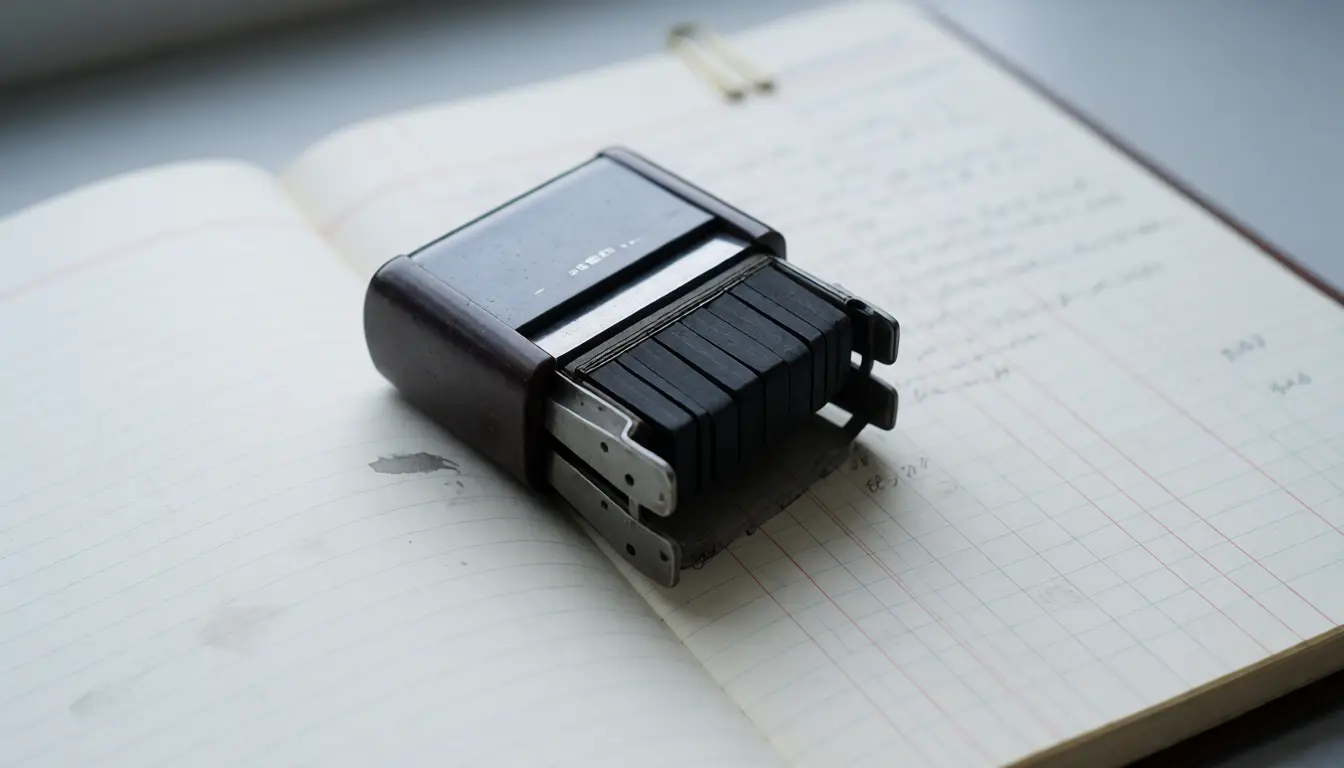
One Date Was Earned. The Other Was Typed. The DVLA Won't Say Which.
A British car record hands a buyer two dates in identical type. One was earned on a ramp by a mechanic with an odometer. The other was typed by whoever kept the car. The register certifies that somebody typed it — and never says who.
Europe and Middle East Institutional
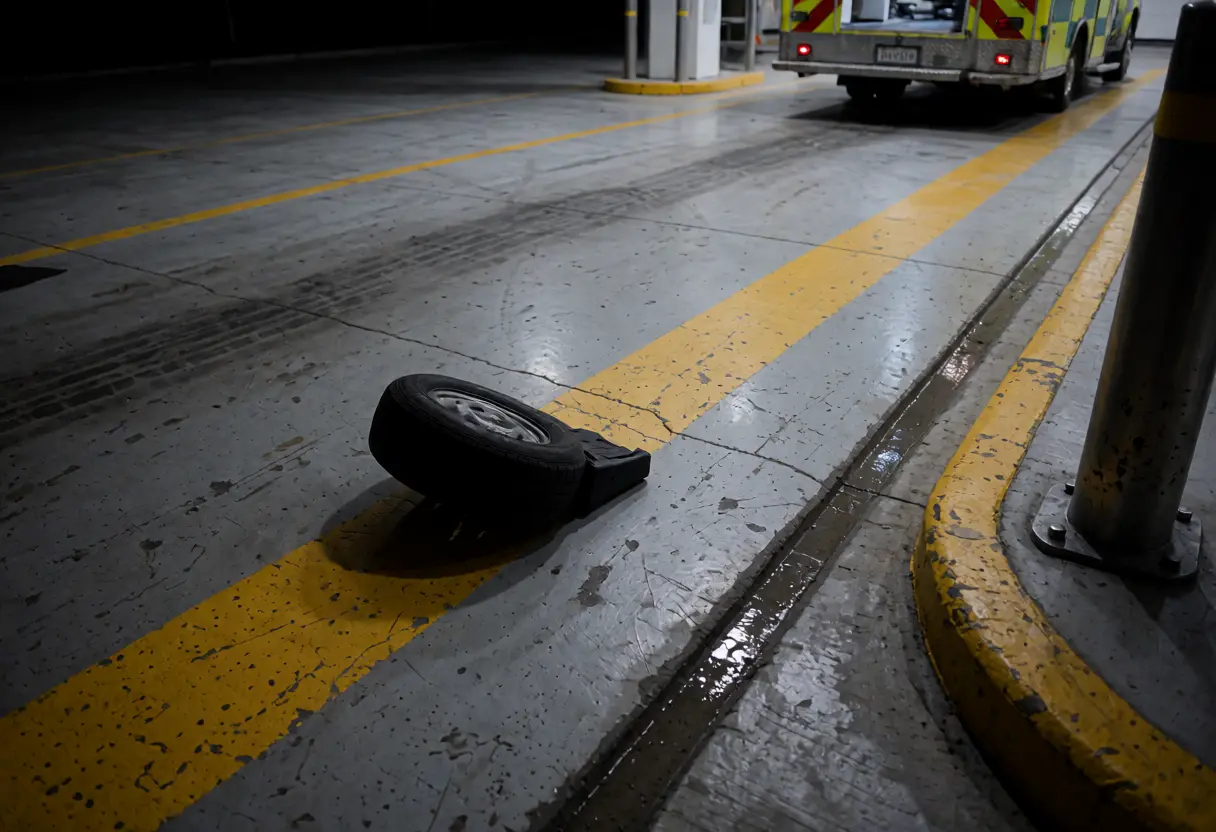
The ambulance handover clock stops when the vehicle is free — not when the patient is safe
NHS England times an ambulance handover to the moment the vehicle is ready to leave, not the moment the patient leaves the trolley. It counts that interval at fifteen, thirty and sixty minutes in one collection and prints the same thresholds as bands in another. West Midlands…

Europe and Middle East Institutional
The REACH Review Date Is a Clock With No Alarm
Europe stamps a review date on every chemical authorisation it grants. When the date passes, nothing happens — and the register that tells you whether a substance may still be used has no field for the review that did.

Europe and Middle East Institutional
EFSA's Register Says 'Notified.' It Means the Laboratory Hasn't Signed.
EFSA's study register grades a file 'Notified' with a word that means the laboratory has not signed, keeps the record shut until the application arrives, and counts its population to the nearest thousand on a conference slide.

Europe and Middle East Institutional
Schneider Electric's 22 kW Rack PDU Is a 32 Amp Plug in a Kilowatt Costume
Schneider Electric's APC rack PDUs print 22 kW, 32 amperes and a load capacity in volt-amperes — and no power factor anywhere on the sheet. The arithmetic that turns one into the other sits in a selection paper the buyer of the strip never receives.

Europe and Middle East Institutional
Trane's 3 MW chiller is 850 tons in a trench coat
Every megawatt Trane prints beside a chiller is its own tonnage multiplied by 3,517 watts — 850 tons in a trench coat, 6,000 tons sold as 'up to 21 MW'. The trick is not a lie. It is a conversion, struck at a water temperature the buyer will never run, scored by an index weighted…
Europe and Middle East Institutional
Hitachi Energy's 100 MVA Transformer Never Promised You a Megawatt
A transformer's nameplate is apparent power at a temperature rise, at a cooling stage, at a load factor somebody else chooses. Hitachi Energy's data sheets give you the megavolt-amperes and skip the kelvin — and the data hall is billed in megawatts.

Europe and Middle East Institutional
The ITU's Timing Budget Balances to the Nanosecond. It Never Says How Many Clocks It Assumes.
The ITU's one worked timing budget closes at exactly 1,500 nanoseconds — and its biggest line quietly assumes a chain of clocks nobody counts. Between a 1997 frequency floor and a 2026 nanosecond ceiling, the paperwork leaves the most expensive question blank.
Europe and Middle East Institutional
Seven ships, two headcounts, and the repair clock nobody publishes
Alcatel Submarine Networks owns seven cable ships. Its 2025 sustainability report calls them four laying vessels and three maintenance ships; the company that manages the same seven calls them five and two. The gap is one hull — and the number that actually matters, how long…

Europe and Middle East Institutional
Infineon Counts AI Capacity in 200 mm Equivalents — a Unit It Defined Once, in 2012
Infineon tells investors its AI-era revenue is supply-limited by capacity — then never prints the capacity. The unit that defines it lives in a single 2012 footnote, the 300 mm advantage is sold as a chips-per-wafer ratio, and the total has quietly left the page.
Europe and Middle East Institutional
Fourteen Cables, One Channel, and a Fault Rate Nobody Will Print
The submarine cable industry counts its Red Sea faults six ways, its cable length at three different totals and its repair clock from two different starting points. Across 25 documents, the only rate anyone printed measures fishing and anchor damage in shallow water — and it…
Europe and Middle East Institutional
Prysmian Will Spend $1.25 Billion on Fibre. It Won't Say How Much Fibre.
Prysmian's North American expansion adds up to the dollar — $1,248 million against its own $1.25 billion — and to 615 jobs against 'up to 600'. Then comes capacity, sold as a multiple of a baseline the company has never published. Ten documents, one missing denominator, and a…

Europe and Middle East Institutional
Norway's .no Remedy Comes With a Judge the Registry Appoints, Chairs and Pays
Norway's domain-name regulation writes a public-law duty list onto a registry it never names, then leaves the machinery of the remedy in that registry's own annexes. That is not a loophole. It is the design — and the signature on the parts that decide a case belongs to the party…
Europe and Middle East Institutional
NorNed's Three Capacities: 700 MW, 620 MW, and the 683.86 MW That Sends the Bill
TenneT's page says 700 MW. The Dutch regulator dates a 620 MW maximum from 17 October 2022 and divides all of 2024 by 683.86 MW. The percentage becomes money only where the regulator writes the invoice — and the cap arrives before any measurement does.
Europe and Middle East Institutional
Europe's data centre rating runs on a nameplate nobody is obliged to check
Europe admits a data centre to its rating scheme at 500 kW of declared nameplate IT power, then publishes efficiency ratios built from meters — and the 2024 regulation names no one obliged to check the first number before the second is computed on it.
Europe and Middle East Institutional
The Wreck Gets an Inquiry. The Near Miss Gets a Shrug.
Europe's duty to investigate a maritime casualty attaches to a result, not a risk — and the label that decides which result counts was written by the IMO, not by the EU. The Agency's own numbers show the cliff: 86.7% of very serious casualties get an inquiry, 3.0% of serious ones…

Europe and Middle East Institutional
Nominet's board election report names nobody — and the rule lets it
Two members stood for one Nominet board seat in 2025. The official report of that election names neither, prints no vote for either, and certifies only that the count followed ERS97 STV. The rule that requires the report never says what belongs in it.