Summary
- Europe's duty to investigate a marine casualty attaches to an outcome label — total loss of the ship, a death, severe damage to the environment — whose thresholds are written in the IMO's code, not in the Union's directive.
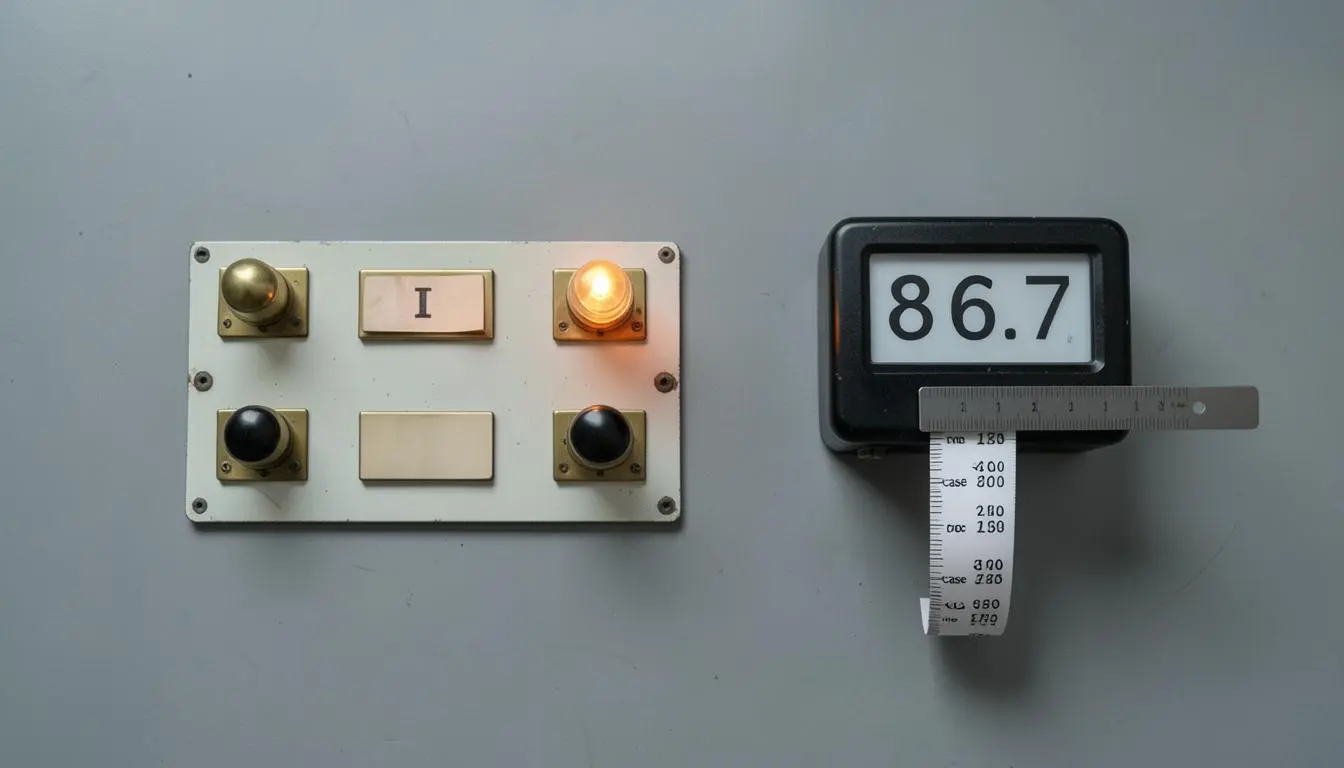
- The Agency's own 2024 overview shows the label working as a cliff: in 2023 a safety investigation was conducted for 86.7% of very serious marine casualties and 3.0% of serious casualties, out of 45 very serious cases among 2,676 reported events.
- The rate is printed without its absolute count and the report carries no case-level table, so the aggregate can be audited for arithmetic and not for the inquiry behind any one ship.
A very serious marine casualty is three outcomes long. Section 2.22 of the IMO's Casualty Investigation Code, Resolution MSC.255(84), defines it as "a marine casualty involving the total loss of the ship or a death or severe damage to the environment". The IMO states the duty that follows on its own casualties page: a marine safety investigation is required into every very serious marine casualty.
Those words are not the European Union's. Article 3 of Directive 2009/18/EC never defines a marine casualty. It provides that the terms "shall be understood in accordance with the definitions contained in the IMO Code for the Investigation of Marine Casualties and Incidents", and it adopts that Code "in its up-to-date version". The same article takes "serious casualty" from a separate IMO circular dated 18 December 2008. The thresholds of Europe's investigation duty therefore sit in documents the European legislature does not reprint, and they move when those documents move.
What follows is a duty that attaches to a result rather than to a risk. A ship lost with nobody aboard crosses the line and starts the obligation. A laden near miss — the collision that did not happen because someone on the bridge shouted — stays underneath it, where the same instrument hands the investigating body a free hand.
The original Article 5 of the Directive reads: "In addition, in the case of serious casualties, the investigative body shall carry out a preliminary assessment in order to decide whether or not to undertake a safety investigation." Where it decides against an investigation, "the reasons for that decision shall be recorded and notified in accordance with Article 17(3)". For "any other marine casualty or incident", the body "shall decide whether or not a safety investigation is to be undertaken", weighing the seriousness of the event, the type of vessel and cargo, and the potential for findings to prevent future casualties.
The text consolidated on 26 December 2024 rewrote that paragraph. Its two-month bound is written for the smallest vessel in the fleet: for a fishing vessel of less than 15 metres in length the authority must carry out the preliminary assessment, and record and notify any reasons for not investigating, "without delay and no later than two months after the very serious marine casualty". The general discipline and the two-month clock are not the same sentence, and the clock reaches a narrow class. Whether a preliminary-assessment duty for other serious casualties survives elsewhere in the consolidated text is not established by the passages read on 24 November 2026. The 2023 figures below belong to the earlier text in time.
Then there is the counting. In its 2024 Annual Overview of Marine Casualties and Incidents the Agency reports that "2,676 marine casualties and incidents were reported" in 2023. It gives the very serious total as 106 in 2018, 77 in 2019, 52 in 2020, 61 in 2021, 57 in 2022 and 45 in 2023. And it prints the rate that matters here: "In 2023 a safety investigation was conducted for 86.7% of the very serious marine casualties, for 3.0% of the serious marine casualties, for 0.9% of the less serious marine casualties and for 0.4% of the marine incidents."
Read those four numbers as four stages, not one scale. Above the line, the investigation is close to automatic. Below it, twenty-nine of every thirty serious casualties end without one. That is what the text asks for: the mandatory duty lives above the line and the discretion lives below. It is also the clearest public statement of what the line does, and the line is drawn by outcomes rather than by hazard.
What the rate cannot do is tell you how many. The report prints the share and the class total, and no absolute count sits beside the share. Applying 86.7% to 45 gives about 39 investigations into very serious marine casualties in 2023 — a multiplication I performed, not a figure the Agency printed. It is also a different quantity from the 75 investigations that the report says "were reported to have been launched" in 2023, a decrease of 21.9% on 2022, and from the 1,196 investigations launched and 1,001 safety investigation reports made public between 2014 and 2023 over 26,595 casualties and incidents. Four quantities, four stages.
No percentage joins the 75 to the 1,001, and none joins the 45 to the 1,196.
The case is the harder absence. The Agency describes the Annual Overview on its own report page as "a high-level analysis of marine casualties or incidents accidents reported until 31 December 2023" by Member States in EMCIP, and notification to that platform has been mandatory since 17 June 2011, as the EMCIP page states. In the passages retrieved from the 2024 edition on 24 November 2026, the report carries no case-level table joining a single 2023 casualty to its investigation status or its report, and it does not say how many of the reports published in 2023 concerned investigations launched in 2023. A tally that adds up proves the record behind it exists. It does not let a stranger open one ship.
Nor does the aggregate say who decided. Across ten documents read on 24 November 2026 — the two renderings of the Directive, its consolidated text, the IMO Code, the IMO's casualties page, a national authority's reproduction of the IMO terms, the Annual Overview and its page, the EMCIP page and the 2011 implementing regulation — not one states which authority decides that a given event is a very serious marine casualty. The three thresholds are printed. The decider is not.
One clause deserves to stop being misread. Commission Regulation (EU) No 1286/2011 requires arrangements "to ensure prompt receipt of casualty and incident notifications by the accident investigation body on a twenty-four hour basis". That is a duty to be reachable around the clock, not a deadline measured from the casualty. No provision read in the Directive, its consolidated version or the 2011 regulation imposes a notification deadline expressed as 24 hours from the event.
On the definitional page of Cyprus's Marine Accident and Incident Investigation Committee, which reproduces the IMO terms and was the only route to the 2008 circular's wording read here, the second class is drafted widely and the first remains three outcomes wide. A marine incident is an event that endangered the ship, its occupants, other persons or the environment; serious casualties are those involving fire, explosion, collision, grounding, contact, weather or hull damage that produce pollution "regardless of quantity" or a breakdown needing towage. Everything in that list is a hazard that has already announced itself. Only the outcomes pay for an inquiry.
My 24 November briefing on the IAEA's INES scale asked who approves a severity grade once it has been assigned.
This is the earlier question. Who assigns the grade that decides whether any inquiry happens at all, and what can a published aggregate prove about one case? The answer to the first is nowhere on the surfaces read; the answer to the second is arithmetic and nothing else.
Four controls sit inside the publisher's own reach.
Print the absolute count beside every investigation rate, so the 86.7% can be checked against the 45 it describes.
Publish the recorded reasons for every serious casualty that was not investigated, which turns the discretionary band into a readable set.
Restore a preliminary-assessment deadline for serious casualties generally, not only for fishing vessels under 15 metres.
And name, on the statistical surface, the authority that assigns each class — the one field that gives the classification an address.
The European Maritime Safety Agency publishes a rate without a count, a class without a decider and a total without a case. Nothing here says any State misclassified an event, that any investigation was inadequate or that a report is missing that should exist. The ten documents read on 24 November 2026 are a bounded set, and every absence above is an absence from that set on that date. The cliff between 86.7% and 3.0% is printed by the Agency itself. The reason it exists is printed nowhere.
Member Briefing
Read the full trend briefing
Members read the full briefing with the source notes behind every finding.
Strategic Circle
A daily briefing in your language, built from changes we have verified.
Join for USD 20/monthCancel anytime.
Members also get the full research library, a daily briefing on the networks they follow and the private forum.