Summary
- Bangladesh Submarine Cables PLC stated on Wednesday 8 April 2026 that the SEA-ME-WE-5 consortium would carry out an "S1.5.1 shunt fault repair" — the operator's label for an electrical defect in the cable system rather than a cut through the cable — from 22:00 on 9 April to 06:00 on 13 April 2026, a window whose clock times close at exactly 80 hours.
- The same dated record contains no completion notice, no fault-clearance statement, no repair obligation and no measurement of what the SEA-ME-WE-4 fallback delivered. Eighty hours is a scheduled window, not a restoration time.
A window with clock times at both ends
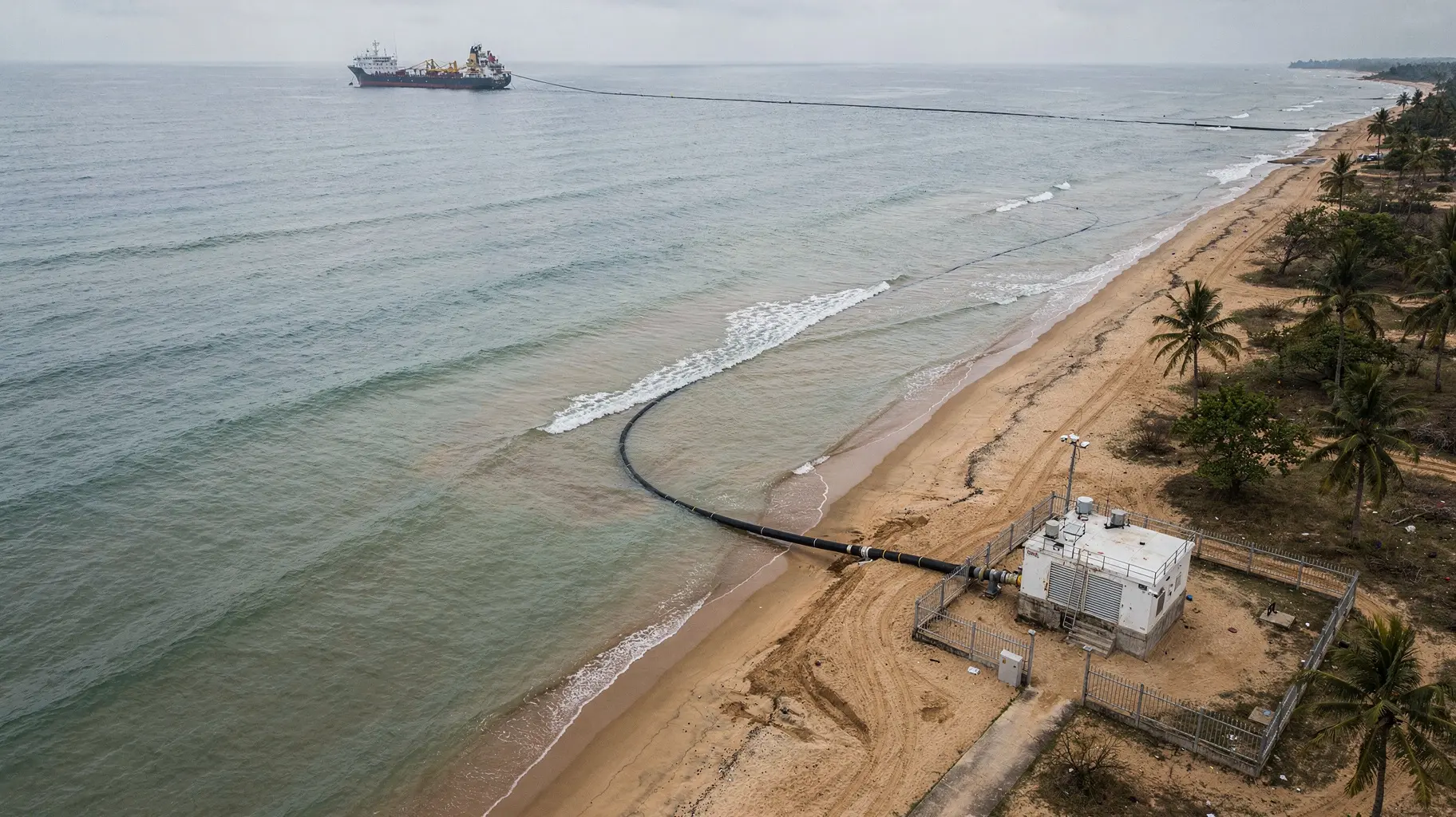
The statement fixed both ends of the work. As bdnews24 reported it, maintenance of the SEA-ME-WE-5 cable installed at Kuakata would begin at 22:00 on Thursday 9 April 2026 and continue until 06:00 on Monday 13 April 2026, with the SEA-ME-WE-5 consortium carrying out the "S1.5.1 shunt fault repair" during that period. Three full days and eight hours: the clock times close at 80 hours on their own, which is the duration the reports attribute to the operator.
Two details in that notice carry more weight than a maintenance advisory usually does. The activity is a named fault, not routine splicing or a capacity upgrade. A shunt fault is an electrical defect in the cable system — a low-resistance path where insulation should hold — rather than a cut through the cable, so "S1.5.1 shunt fault repair" identifies something that already existed on the system and a repair scheduled around it. And the operator published a schedule rather than an outcome: a window is a plan, and a plan is the one part of a repair that can be written before the work starts.
The notice period is narrower than it looks. The statement is dated 8 April and the window opens at 22:00 on 9 April, so advance notice is at most about 26 hours; it could be considerably shorter, because none of the retained reports gives the hour at which the statement was issued. "Roughly a day's notice" is therefore a bounded interval derived from two dates, not a measured lead time.
One narrator, counted twice
The second retained item is not a second confirmation. The Daily Star attributes the same window, the same 80 hours, the same Singapore-facing traffic direction and the same fallback cable to "a press release issued by Bangladesh Submarine Cables PLC". Two newsrooms retold one operator announcement. The notice itself — the operator's own page or document — was not part of the material read here, so what exists in this record is a retelling of first-party text, and the phrasing quoted in this article is the newsrooms'.
The fallback is a claim about a path, not a measurement of it
Continuity was to run through SEA-ME-WE-4, described in the same release as the country's first submarine cable, which "will help maintain connectivity during the maintenance window". Read as written, that is a substitution assertion by the party that owns the traffic: a second path exists, capacity can be moved onto it, and service continues with degradation in one direction rather than stopping.
None of that is a measurement. What the record carries about the customer end is a forecast, not an observation: The Daily Star reported that the work was expected to affect traffic, particularly circuits connected to Singapore through the SMW5 cable, and that users might face slower speeds or intermittent disruption. No retained document reports throughput, latency or packet loss on SEA-ME-WE-4 while SEA-ME-WE-5 was under repair. None reports how much capacity the affected circuits actually received, or what a user experienced once the window opened. The capacity figures in circulation do not fill the hole. Dhaka Tribune reported the operator's position that its two systems hold around 7.2 Tbps between them, of which about 4 Tbps is being supplied and about 3.2 Tbps remains available, with SEA-ME-WE-6 expected in 2027 to add 34 Tbps and take the total to around 41 Tbps. Those are stock figures: what the operator has, what it sells, what is spare. A spare 3.2 Tbps does not establish that the right capacity was available in the right direction at 03:00 on 11 April.
Four clocks, and only one of them is published
An analytical construct, mine rather than the operator's, is to count four clocks in any cable repair. The first is the announced work window. The second is actual work elapsed, from a confirmed start of physical intervention to a confirmed finish. The third is physical fault resolution, from fault onset or detection to verified clearance. The fourth is customer-service restoration, from the first service impact to recovery measured against a defined threshold.
The retained record starts exactly one of them. Eighty hours is the announced window. Because the shunt fault predates the window, even a perfect closure notice on 13 April would not convert 80 hours into an end-to-end restoration figure; it would convert the plan into a met-or-missed work duration. The distinction is not pedantry. Announced windows and restoration times answer different questions, are produced by different parties, and improve or deteriorate for different reasons.
Where the plan stops and the record begins
One boundary, stated once. The pages retained for this reading — retrieved between 09:44Z and 09:52Z on 20 October 2026 — do not record that the window closed at 06:00 on 13 April 2026, that the shunt fault was cleared, what the repair cost, what the fallback carried, or any unplanned cut on either system carrying both a fault time and a restoration time. Nor do they contain the instrument that would make any of it binding: no consortium maintenance agreement, no cable repair contract, and no BTRC text assigning restoration, repair-reporting or continuity duties, although the regulator's public homepage was reachable (btrc.gov.bd). A page that does not carry the rule is not a regulator that has none, and a closure notice this review did not reach may exist elsewhere. Kuakata is named as the SEA-ME-WE-5 landing point; where the older system lands, and whether the two seabed routes are physically separate, appears nowhere in the retained set, so the fallback's value to a planner stops where that undocumented diversity stops.
That boundary is what makes the capacity argument worth reading closely. The same Dhaka Tribune report has the operator rejecting warnings of an impending crisis and citing BTRC projections through 2030, while industry stakeholders are reported warning that routes are too few when a cable is under repair or out of service. Both positions can hold at once because they measure different quantities: roughly 7.2 Tbps across two systems is a stock, and four days of degraded Singapore-bound traffic is a flow. A planner holding the stock figure still has no number for the flow, and the operator's own forecast of slower speeds and intermittent disruption is the only statement in the record about what service looked like while the work ran.
Scheduling discipline is not restoration capability, and that difference is what a buyer, an operator or a regulator has to price. What such a reader needs is a distribution of restoration times after unplanned breaks — break to traffic restored, capacity available in the interval, and who is bound to act. This record supplies the announced-window end of that range and nothing at the other end, while SEA-ME-WE-6 in 2027 adds capacity and repair dependency in the same move.
The four documents that would move this reading are named in the monitoring sheet below; none requires a new investigation, only that someone publish what they already hold.
One operator, two names
The BTW directory entry behind this article is Bangladesh Submarine Cable Company Limited (BSCCL). The press material names the company Bangladesh Submarine Cables PLC, or Bangladesh Submarine Cables (BSC) PLC. The strings are not identical, and this article treats them as the same operator because the directory and the sources associate them — not because a legal-form document establishing that equivalence was read for it. That caution governs every attribution of action, statement or obligation to the operator in this article.
Member Briefing
Deeper Profile Context
Sign in with the right membership level to unlock the full briefing and source notes.
Only for Strategic Circle
Strategic Circle
Open to all readers. Unlock profile briefings after joining and signing in.
Join Strategic CircleOnly for Leadership Alliance
Leadership Alliance
For qualified IP-asset owners and management; sign in to unlock alliance briefings.
Join Leadership Alliance