Summary
- Hawaiki Submarine Cable LP announced record-breaking performance on a 15,000 km span it has operated since 2018 — an equipment result on existing wet plant, not new cable on the seabed.
- The cable operator is described in that 2023 release as a subsidiary of BW Digital, so upgrade capital and commercial priority sit inside a group rather than with a standalone challenger.
- What is scarce in the Pacific is the landing and the route, not the bit. A performance headline can be entirely true while the number of cables, landing points and routes stays exactly the same.
There are two clocks in any submarine cable business, and they run at wildly different speeds.
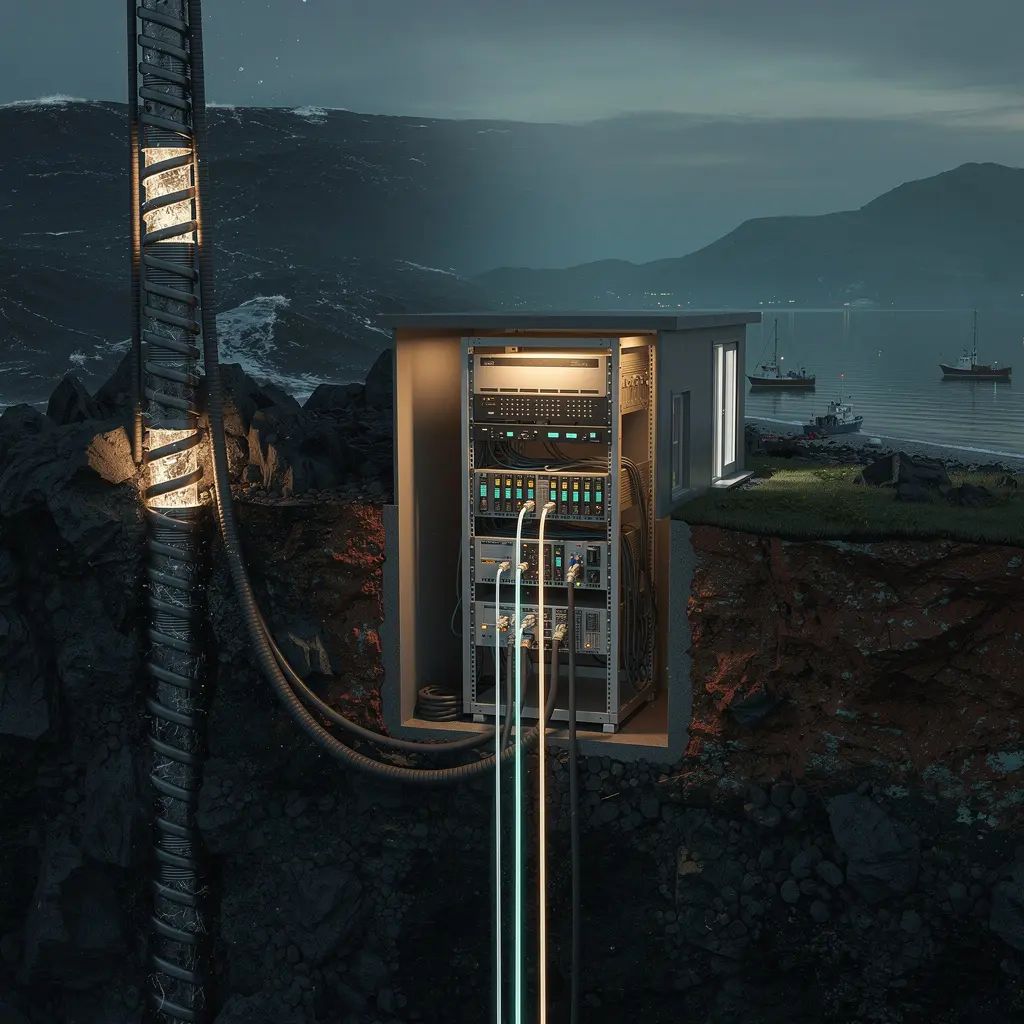
The slow clock is physical. A cable is surveyed, manufactured, laid, buried where it crosses a shelf, and then it sits there for a couple of decades. Roughly 15,000 kilometres of it, in Hawaiki's case, connecting Australia, New Zealand, the Pacific and the United States, as the operator's own commercial launch was reported at the time (iTWire). Once that work is done, the geography is settled. No later announcement lengthens it, reroutes it, or adds a beach it does not already touch.
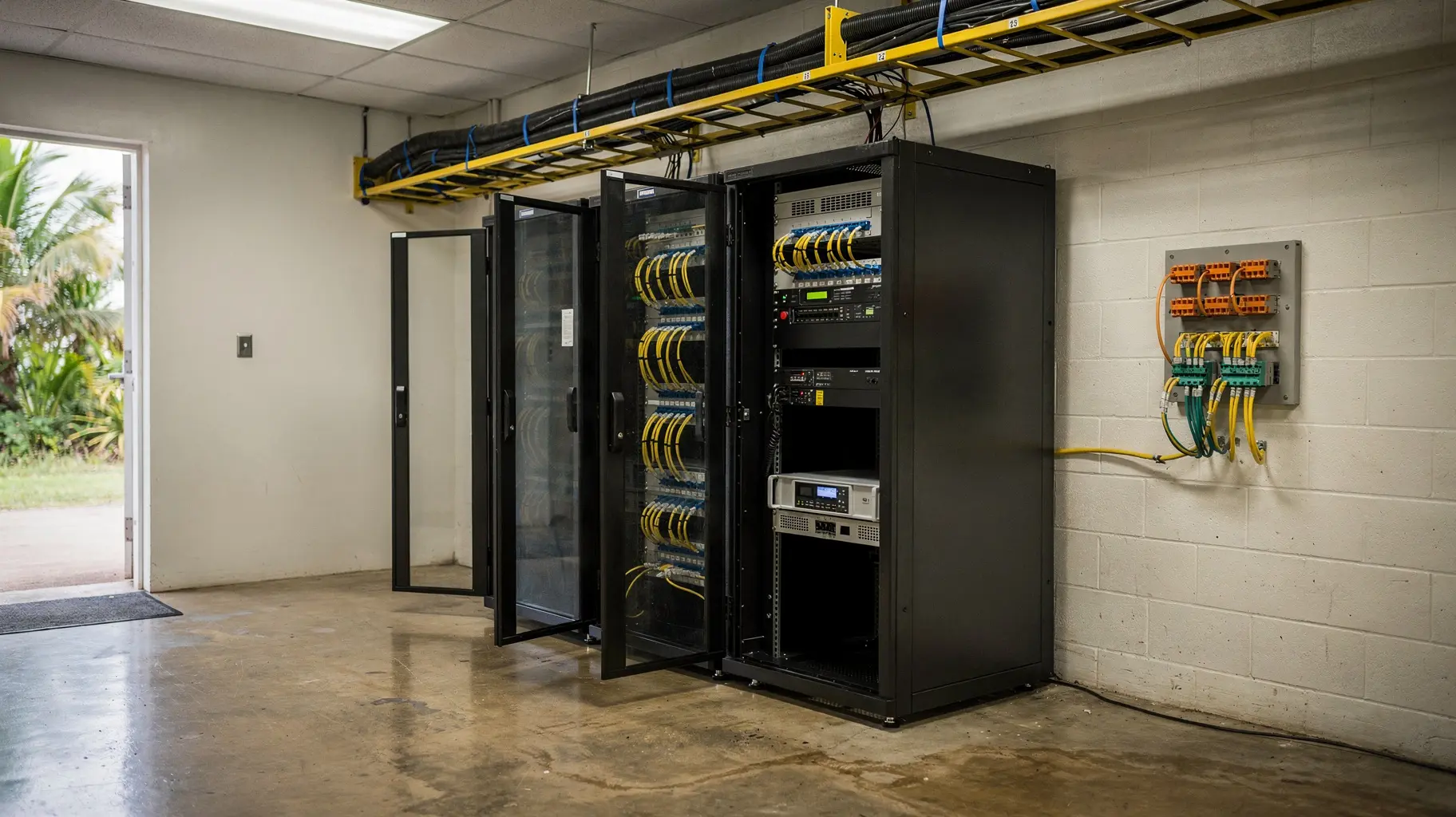
The fast clock is electronic. At each end of the span sit terminals, and terminals can be replaced, re-modulated and re-tuned. Do that well and the same glass carries more bits. This is where the interesting number usually comes from, and it is where Hawaiki's story has actually moved.
On 15 March 2023, Infinera and Hawaiki Submarine Cable LP issued a joint release announcing what the headline called record-breaking performance on 15,000 km of uncompensated subsea (GlobeNewswire via Nasdaq). Read the mechanics of that sentence and note what it is a claim about. It is a claim about the equipment at the ends of an existing span. It is not a claim about a new cable, a new landing, or a new route between continents.
That is not a small distinction dressed up as a large one. It is the difference between capacity as a property of the seabed and capacity as a property of a purchase order.
What the record establishes, and what it cannot
The retained reporting supports a short list of things. Hawaiki operates a 15,000 km fibre-optic cable linking Australia, New Zealand, the Pacific and the United States. It entered commercial service in 2018. In March 2023 the operator and Infinera jointly announced performance results on that existing span. In the same release the operator is described as a subsidiary of BW Digital.
It does not support the numbers that a reader most wants to grab. There is no design capacity figure in what the pages state, no lit capacity, no fibre-pair count, no landing-station list, no cost, no schedule for anything else. Anyone quoting a terabit figure for this operator is quoting something other than these two documents.
That gap is worth naming plainly, because it is the usual failure mode in cable reporting: a press release about a performance milestone gets compressed into a supply story. The compression feels harmless — more bits is more capacity, surely — and it is wrong in a specific, expensive way.
Where capacity becomes leverage
Capacity only becomes leverage when someone can act on it. Three things decide whether a performance number is worth anything commercially.
First, who owns the wet plant. The 2023 release places Hawaiki inside BW Digital. That matters for what happens next: upgrade spending, route priorities and sales strategy for a cable inside a group are set against a portfolio, not against the ambitions of a single challenger. The launch coverage called Hawaiki an independent challenger, and it may well have been one in 2018. A subsidiary is a different animal, and the difference is not cosmetic when you are negotiating for space on the thing.
Second, who is doing the announcing. The 2023 result is a joint Infinera and Hawaiki statement. The vendor that supplied the terminals has an obvious interest in a dramatic framing: it sells equipment, and the equipment is the thing that just set a record. The operator's interest is the demand signal the headline creates. Neither interest makes the result false. Both make the headline a document with an author.
Third — and this is the one buyers feel — who can actually purchase the resulting capacity and on what terms. Capacity added by upgrading terminals is sold into the same route structure that already existed. The commercial effect depends entirely on the sales model for that existing span: how much is committed under long-term contracts, how much is held back, and who gets offered what first. None of that is in the release, and all of it determines whether the extra bits reach the market at a price anyone recognises.
What a buyer should take from this
If you are procuring trans-Pacific capacity, the useful question is not 'how fast is the cable' but 'what am I actually getting that I could not get last year'. Three answers are possible, and they are not equivalent.
One: the same route, more headroom. The terminals got better, the route is unchanged, and you are buying into a pool that has quietly grown. This is the most likely reading of a performance milestone on a fixed span, and it is good news for anyone who needs volume on that specific path.
Two: the same route, better economics. Upgrade headroom can lower the unit cost of moving a bit, which eventually shows up in what a wholesaler will quote. This is slower and less reliable than it sounds; upgrade capital has to be recovered, and the recovery schedule belongs to the owner.
Three: genuinely new geography. A new cable, a new landing, a new country on the route. This is the only one that changes the map, and nothing in the record reviewed here shows it happening.
Confusing the first two with the third is the expensive error. It leads buyers to assume competitive pressure that does not yet exist, and it leads observers to describe a route as newly contested when its physical footprint has not moved a metre.
The stake, stated plainly
What is scarce in the Pacific is not bandwidth in the abstract. It is the landing: the rights, the permits, the building, the power, the local partner and the patience to put a cable ashore somewhere useful. Terminals are replaceable and vendors compete to replace them. Landings are not.
So the next time a cable operator and an equipment maker announce a record together, read the release for what it is: an achievement measured at the ends of a span, reported by the people who built the ends. The 15,000 km in the middle has not changed at all. It is still the same water, the same route and the same beaches — and that, not the bit rate, is where the leverage lives.
Member Briefing
Deeper Trend Context
Sign in with the right membership level to unlock the full briefing and source notes.
Strategic Circle
A daily briefing in your language, built from changes we have verified.
Join for USD 20/monthCancel anytime.
Public reporting stays free. Member research, the daily briefing and the forum need a membership.