Summary
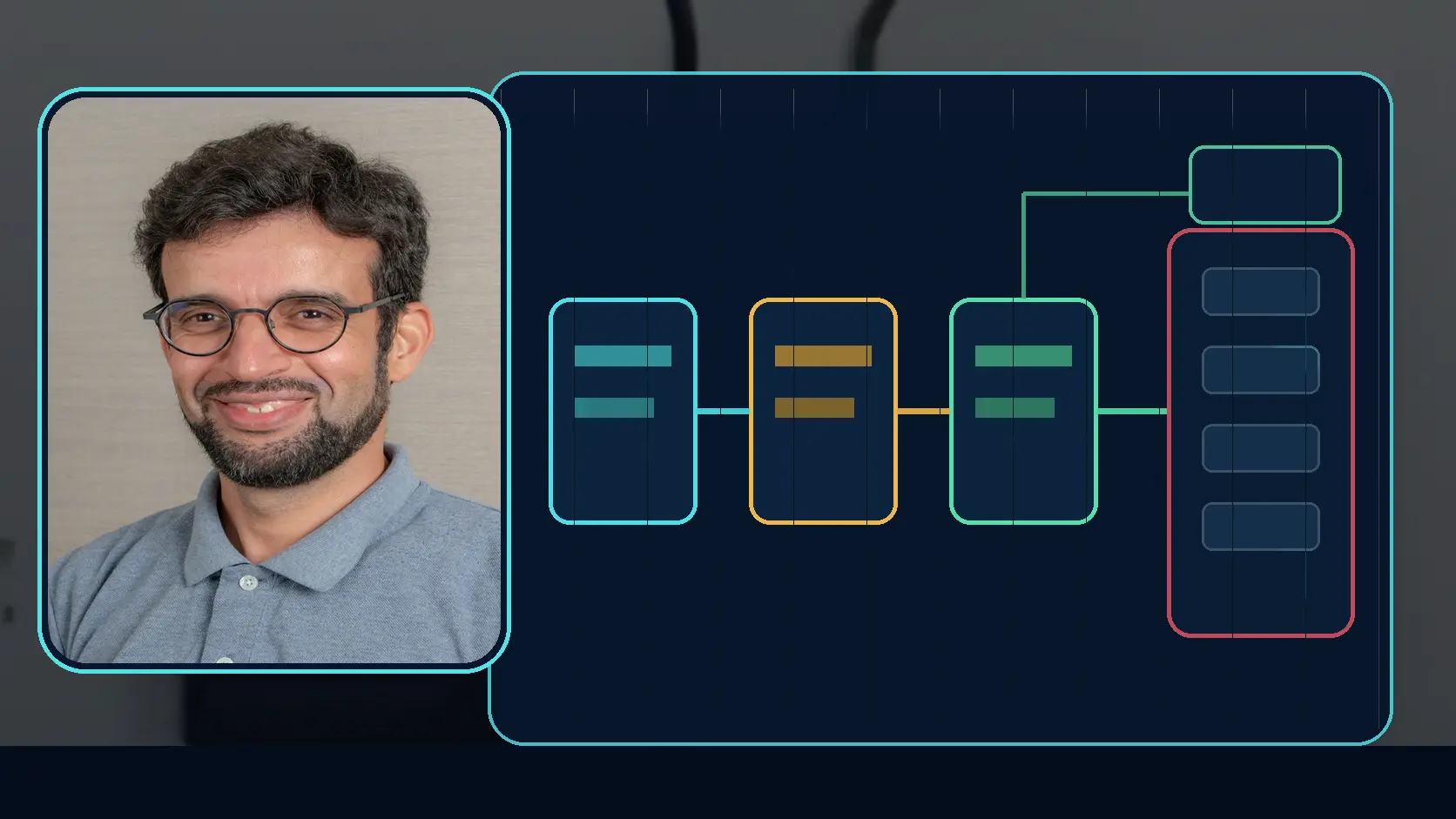
- Yingzhen Qu, Acee Lindem, Jeffrey Zhang and Ing-Wher Chen published RFC 9903 in December 2025. It defines the
ietf-ospf-sr-mplsYANG module for OSPFv2 and OSPFv3 Segment Routing over MPLS. - The model carries instance, area and interface configuration: mapping-server bindings, the per-protocol SRGB, SR-MPLS enablement, Adj-SIDs and TI-LFA settings. Its read-only side exposes Prefix-SID and Adj-SID information from OSPF advertisements and neighbor state.
- A successful management operation or a populated state leaf is a management receipt. OSPF advertisement, label installation, fast-reroute selection, forwarding and end-to-end traffic remain separate proof points.
Network automation tends to collapse a rich protocol into a small green box. A model accepts a value. The controller reports success. A dashboard turns that success into “SR enabled”. Operators then have to discover which of those claims described intent, which described a database, and which described the thing packets actually encountered.
RFC 9903 deserves a better reading. It is not a protocol in a vacuum. It is a device YANG model that augments the base OSPF model. Configuration imported from the Segment Routing model coexists with OSPF-specific data and read-only state learned from Link State Advertisements.
Three records with three owners
The first record is configuration. At OSPF instance level, the model carries mapping-server bindings and the Segment Routing Global Block used by this protocol. At area level, a presence container enables SR-MPLS on interfaces and enables related LSA and TLV advertisement. At interface level, operators can configure Adj-SIDs for names or neighbours and enable TI-LFA or a Segment Routing RLFA path.
The second record is observed control-plane state. The module augments the OSPF LSDB with OSPFv2 and OSPFv3 Prefix-SID, Adj-SID, range, local-block and mapping-server preference information. Neighbor state includes adjacency SID value, weight and whether protection was requested.
The third record lives below the model. Labels must be installed, forwarding entries must point to the correct outgoing interface and neighbor, fast-reroute repair paths must be computed and programmed, and traffic must leave and return. RFC 9903 describes no packet trace or measured failover result.
These records can agree. Treating agreement as automatic is the mistake. A router can accept an OSPF configuration change before all peers advertise compatible SIDs. It can hold an LSA row while a local label-space mismatch prevents useful forwarding. It can report a protection request while the selected backup shares the failed resource. The model gives each fact a home; the operator still needs a reconciliation process.
“Enabled” starts a chain
The area-level presence container has a simple description: it enables SR-MPLS on all interfaces and enables advertisement in LSAs and TLVs. The sentence marks the beginning of a control-plane chain, not its end.
Instance enablement controls whether the area can exist. Area presence controls interface augmentation and advertisement. Interface configuration then describes Adj-SIDs and fast-reroute policy. Remote neighbors have to receive and understand the relevant OSPFv2 or OSPFv3 extensions. Their SRGBs, algorithms and SID bindings must line up. The forwarding hardware needs the resulting label operations.
This layered sequence gives automation a useful test plan. It also explains why a single enabled: true can be both accurate and misleading. The leaf truthfully says the operator asked the device to enable the feature. It says nothing about every peer, label or route downstream.
Fast reroute is a policy, not a promise
TI-LFA configuration includes selection preferences for node protection and SRLG-disjoint paths. RLFA can be told to use a Segment Routing path instead of LDP. These are valuable controls because they let an operator state what a backup should prefer.
The model cannot make a backup independent by naming it. A node-protecting or SRLG-disjoint candidate must exist for the actual topology. The repair must be installed before the failure. The forwarded packet must select it. A neighbor’s adjacency SID may say that protection was requested without proving that protection survived the next topology change.
The same distinction applies to labels. A Prefix-SID inside an LSA is an advertisement that can be read from the LSDB. An MPLS forwarding entry with the expected incoming label, next hop, outgoing label and interface is execution evidence. A packet observed crossing the intended segment sequence is service evidence. Each sits at a different distance from the YANG edit that began the process.
Write access is a network risk
RFC 9903’s security section is unusually concrete. Disabling SR can disrupt traffic. Changing local bindings can create a denial of service. Shrinking the SRGB can make existing segments impossible to install. Changing an Adj-SID can redirect traffic. Changing TI-LFA can break protection.
Read access has its own cost. Prefix and adjacency SIDs reveal topology and can support targeted attacks on the data plane. Range, local-block and mapping-server information illuminate control-plane attack surfaces. The model therefore needs authenticated management transport, mutual authentication, access control and an audit trail that names who changed which subtree.
That is not boilerplate around the technology. It is part of the control surface. A YANG module makes edits structured; it does not make every actor or transaction safe.
The model earns trust through receipts
The practical deployment record should keep the requested configuration, the exact NETCONF or RESTCONF transaction, the actor and authorization decision, the resulting device state, relevant LSAs on both sides of the adjacency, the installed label and next-hop entry, the repair path and a forwarding or service test. If these records disagree, the lower one wins the factual question.
RFC 9903 provides the model and its sensitive fields. It does not provide an implementation census, interoperability test, convergence measurement or production failure record. Qu and her coauthors built the management interface, not a universal promise that every device, topology and packet path behaves correctly. Operators finish that promise with evidence.
Sources
- Yingzhen Qu’s IETF profile; RFC 9903 record.
- RFC 9020 defines the base Segment Routing YANG model; RFC 9129 defines OSPF YANG.
- RFC 8665 defines OSPFv2 SR extensions; RFC 8666 defines OSPFv3 SR extensions; RFC 9855 defines TI-LFA.
Member Briefing
Read the full trend briefing
Members read the full briefing with the source notes behind every finding.
Strategic Circle
A daily briefing in your language, built from changes we have verified.
Join for USD 20/monthCancel anytime.
Members also get the full research library, a daily briefing on the networks they follow and the private forum.