Summary
- Mohamed Boucadair, Richard Roberts, Oscar Gonzalez de Dios, Samier Barguil and Bo Wu published RFC 9834 as a Standards Track service-model specification.
- The RFC defines separate YANG modules for bearers and attachment circuits. Multiple ACs may sit on one bearer; one AC may bind to multiple SAPs.
- The customer-visible AC service hides the mapping to provider edges and device interfaces. RFC 9834 standardizes the service object, not the deployed forwarding path.
A link, a setup and a service are different objects
A bearer is the physical or logical link from a customer site to the provider. An attachment circuit is the configuration that makes data exchange work over it: virtual LANs, addresses, routing or another service-specific setup.
ACaaS exposes the circuit as a programmatic service. A customer or adjacent administrative domain can ask for a bearer reference, create an AC over it or request one against known service attachment points. The model can also support several CEs and several circuits over one bearer.
The design matters at operational boundaries. Customer systems see AC identifiers, requests and references. They do not see which PE terminates the circuit or which device model was used. Those mappings remain in a controller and are supplied separately by the attachment-circuit network model.
A service request is not a delivered cable
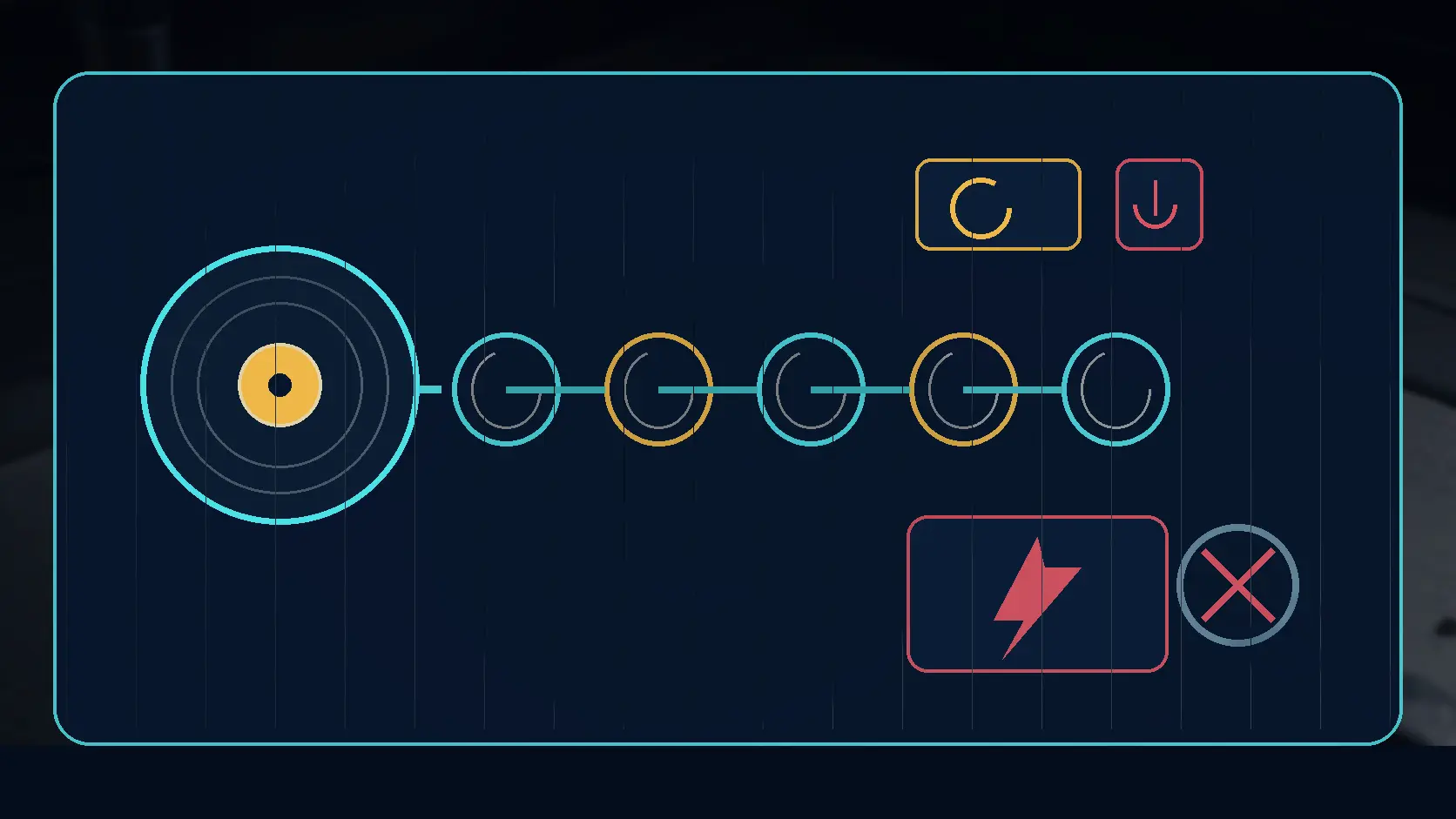
The YANG object can represent intent, enablement or operational state according to the service workflow. Its existence does not prove that the customer interface is configured, the provider interface is up, the routing protocol has converged or packets cross the circuit.
RFC 9834 deliberately avoids placing network-node details in the service model. That separation lets a higher service, such as a network slice or VPN, bind to an AC without copying every device-specific field. It also means the provider must join service and network evidence before declaring delivery.
The API grants control over the edge, not the interior
The customer receives a stable request surface and provider-assigned bearer references. The provider retains topology, routing and internal security. The RFC follows the service/network split in RFC 8309 and RFC 8969.
A future delivery receipt should include AC ID, bearer ID, SAP bindings, service-state version, associated VPN or slice, provisioning job, interface evidence, BGP or other session state and forwarding test. Code-style data-model generation alone provides none of the operational outcomes.
The RFC reports no implementation census or measured deployment. What it establishes is an authority boundary: the customer controls an ordered service object; the network controller owns hidden placement; the forwarding plane still has to prove that the object became connectivity.
Sources: RFC 9834; RFC 9835; RFC 9836; RFC 8309; RFC 8969; Mohamed Boucadair IETF profile.
Member Briefing
Read the full trend briefing
Members read the full briefing with the source notes behind every finding.
Strategic Circle
A daily briefing in your language, built from changes we have verified.
Join for USD 20/monthCancel anytime.
Members also get the full research library, a daily briefing on the networks they follow and the private forum.