Summary
- NLM's 1995 instructions budgeted up to two weeks of uninterrupted internet time and 15GB of storage for the Visible Man dataset.
- Paper licences opened the FTP account; tapes and overseas mirrors supplied other ways to get large scientific files to researchers.
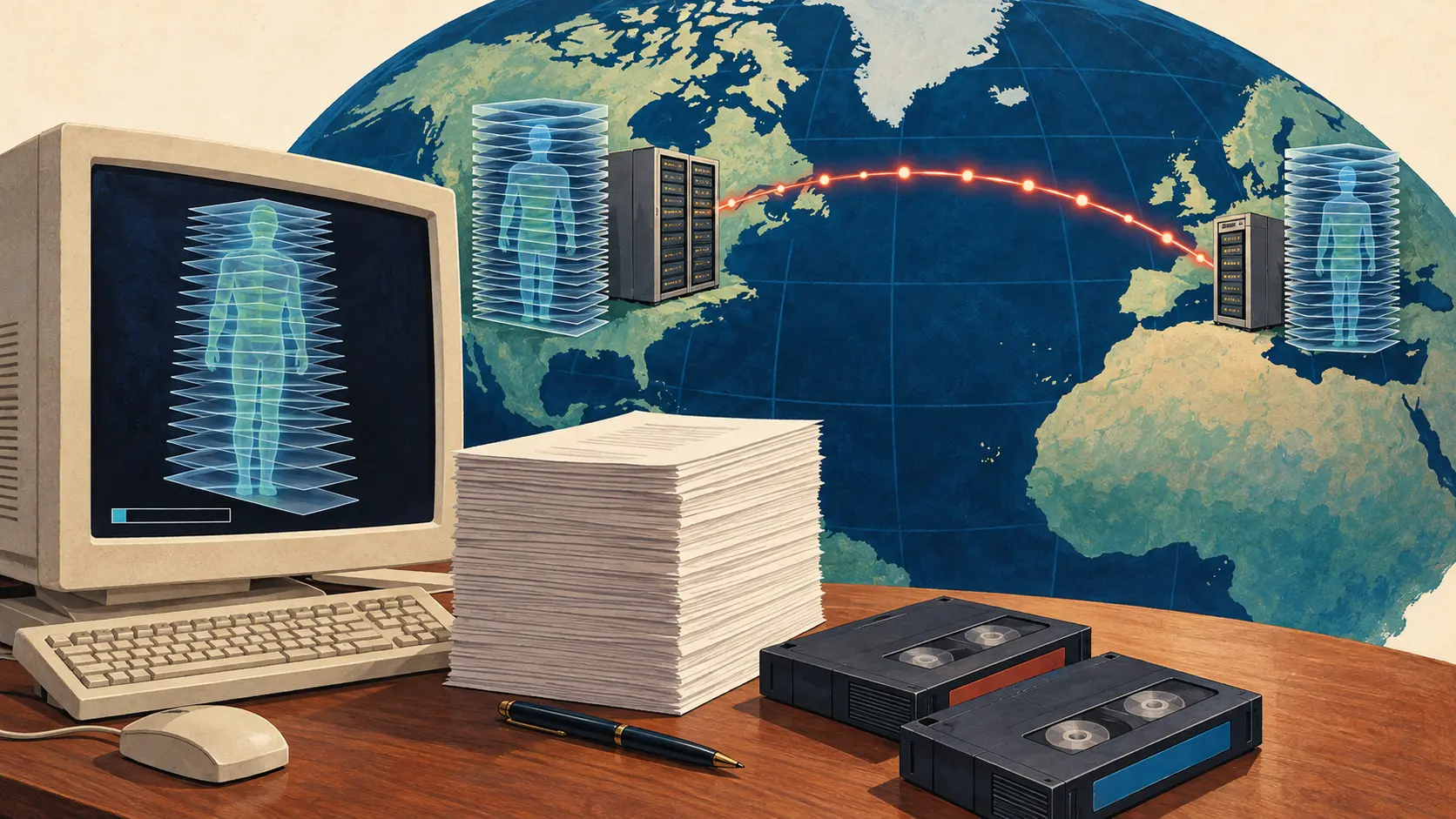
Before the download, there was the post. The National Library of Medicine's 1995 instructions told institutions to print two copies of an agreement, obtain original signatures, explain their proposed use and send the paperwork to Bethesda. NLM would return a signed copy with an account and password. The information superhighway had a stationery department.
The reward was substantial: a collection of anatomical, CT and MR images made from a human body, released online in November 1994 as the Visible Man. The July–August 1995 NLM Technical Bulletin, pages 13–14, warned prospective users to allow up to two weeks of uninterrupted internet time and 15GB of storage. Access to the data over the internet was free. The connection, disk space and patience came from the recipient.
NLM also supplied a physical route. After the licence, users received information about buying the files on Exabyte or DAT tapes. Both FTP and tape used compressed UNIX archives. Researchers could choose all or part of the dataset; smaller sample images were available too. Even a full-size colour sample could exceed seven megabytes. The preview and the research material imposed very different demands on a connection.
The distribution arrangement evolved. A firsthand account presented at NLM's 1998 conference records that the National Center for Atmospheric Research initially provided the main internet service. NLM supplied a limited group of developers and evaluators before becoming the main online provider in January 1996, as the female dataset joined its collection. An expanding image library needed people and machines assigned to its delivery.
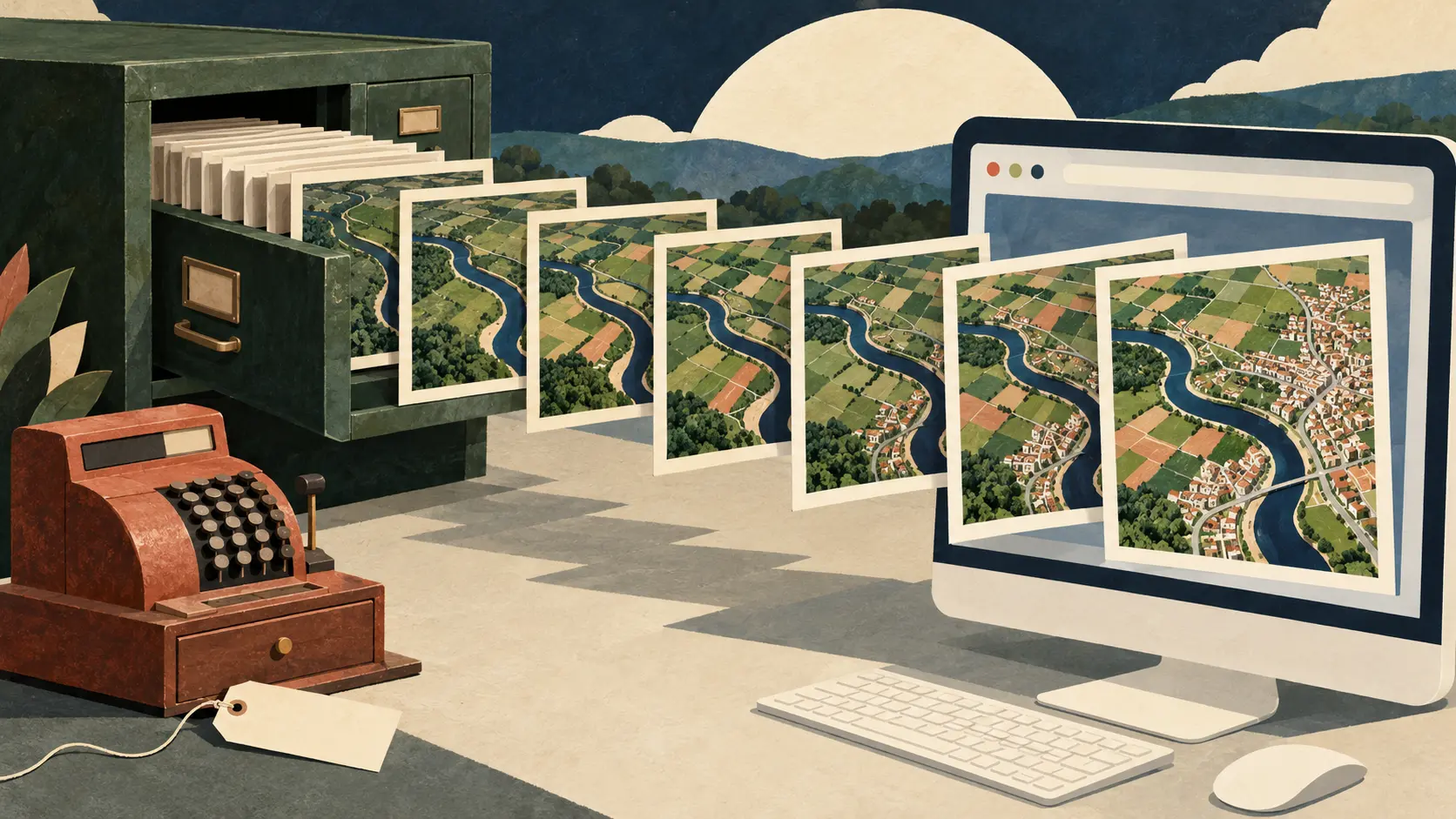
Distance made that assignment harder. The Milano mirror operators' report describes transoceanic bandwidth trouble even for a single seven-megabyte file. Partners outside North America offered connections, computers and storage at no cost to NLM. In Milan, cooperation between NLM and Politecnico di Milano, with CILEA's technical and administrative support, produced a local copy of the full collection for continental European users.
The idea was straightforward: put the files closer to the people requesting them and spare repeated journeys across the Atlantic. The operational results were more interesting than a neat map. In their conclusions, the operators noted that some German and French users still fetched files from NLM, while the Milan service saw use from Taiwan and Singapore. The geographically nearest server could lose the race. The team wanted to investigate those routes and make the mirror better known.
That gave the project two distinct jobs. NLM decided who received an account under the historical licence process. The delivery network determined what those account holders could practically fetch. Regional partners added another place to collect the files, and another organisation willing to pay for the capacity. Free access needed a rather well-stocked supply department.
The two-week warning captures the internet at a useful moment: a scientific library could offer a huge collection to distant researchers, while the journey remained a serious part of the research plan. Publishing the address was an opening move. Getting the images onto the other disk was the service.
Member Briefing
Deeper Profile Context
Sign in with the right membership level to unlock the full briefing and source notes.
Only for Strategic Circle
Strategic Circle
Open to all readers. Unlock profile briefings after joining and signing in.
Join Strategic CircleOnly for Leadership Alliance
Leadership Alliance
For qualified IP-asset owners and management; sign in to unlock alliance briefings.
Join Leadership Alliance