Summary
- UserLand Software transferred ownership of its RSS 2.0 specification to Harvard Law School's Berkman Center on 15 July 2003. Berkman put the document under Creative Commons Attribution/ShareAlike terms and announced an independent advisory board.
- Berkman's announcement drew the property line itself: UserLand had disclaimed ownership of the RSS format, so the format was outside the transfer. The 2.0.1 specification kept the core practically frozen and sent new work toward modules, namespaces or new formats.
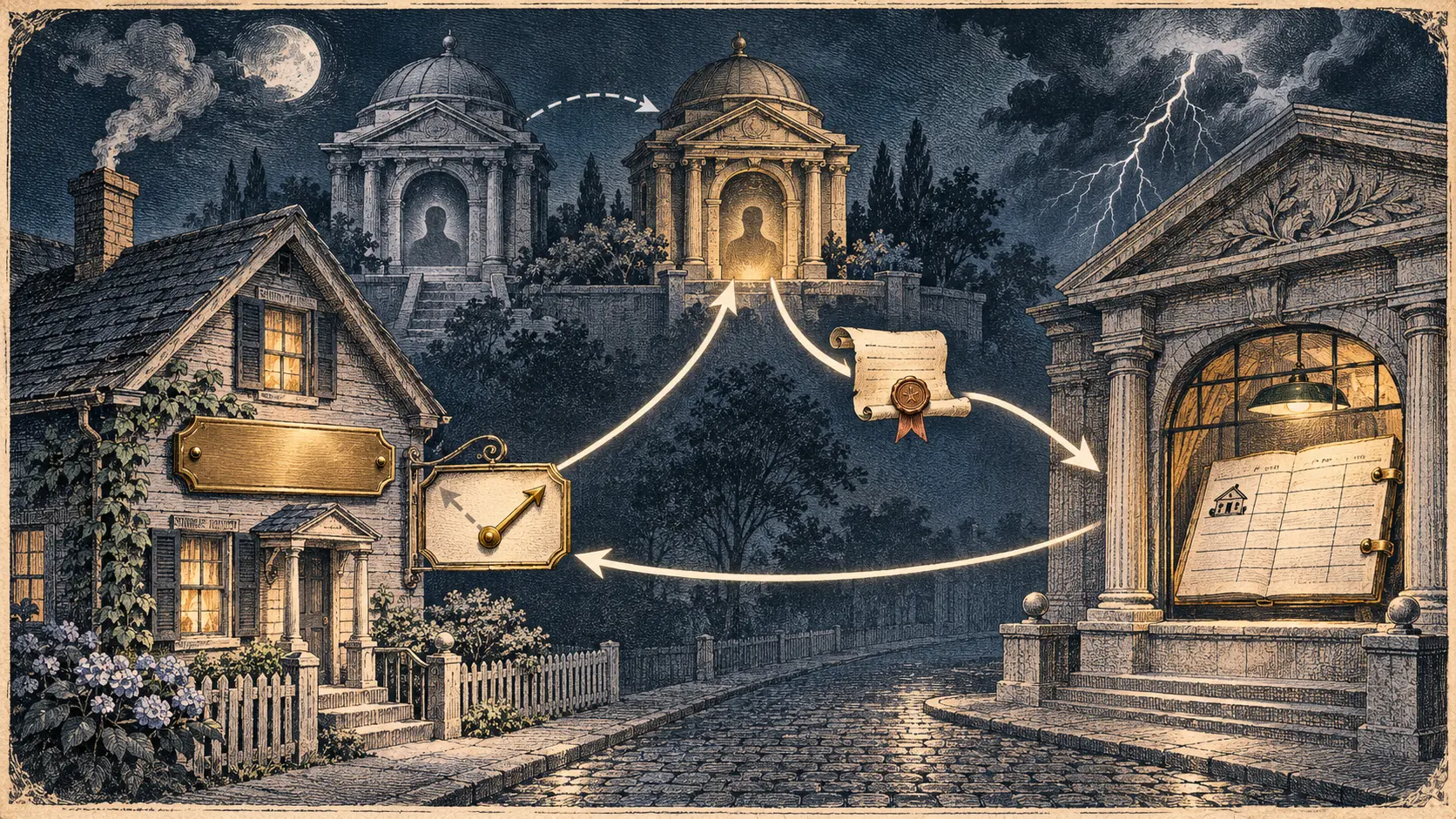
The contract moved a document. The network kept moving cards. On 17 July 2003, Harvard's Berkman Center announced that UserLand Software had transferred ownership of its RSS 2.0 specification two days earlier. The announcement said exactly what changed: a previously copyrighted specification could now be customized, excerpted and republished under Creative Commons Attribution/ShareAlike terms. It also said what sat outside the transaction: UserLand had disclaimed ownership of the format described by the document. The feed files already exchanged by software were nobody's parcel to hand over.
That distinction mattered because RSS was a working file format, not merely a sheet of rules on a desk. In Berkman's RSS 2.0 specification, a feed is XML with a top-level rss element carrying version 2.0, one channel, and required channel fields for a title, link and description. A publisher could write such a file. A reader could fetch it. A transfer of copyright in explanatory prose did not require those two pieces of software to negotiate a new route through Harvard.
UserLand had a genuine asset to give. Its company authored the specification and built tools that produced and consumed RSS. Once Berkman received the text, the old UserLand disclaimer and copyright ceased to govern that document. The new license made republication and adaptation explicit. The value of that change was practical: implementers could point to, quote and distribute a public specification without treating one software vendor's permission as the price of entry.
The announcement added people to the paperwork. An independent advisory board would broaden understanding of RSS and guide application developers. Its initial members were Dave Winer, who authored the specification, Jon Udell and Brent Simmons. A board could maintain a public description of the format and argue about its future. It could not make deployed feed readers forget what they already parsed. The format's authority lived in two places at once: in a text maintainers could publish, and in the programs people kept running.
The roadmap in the archived 2.0.1 version sharpened the bargain. It called the RSS core, for practical purposes, frozen at 2.0.1. Later numbers such as 2.0.2 or 2.0.3 were reserved for clarification, not new features. New work belonged in modules using namespaces or in new syndication formats with new names. This was a way to let existing readers keep reading while developers added capabilities at the edge. A frozen core also limited anyone who wanted to turn stewardship of the document into unilateral redesign of the files.
The handover therefore placed three different kinds of power in separate hands. Berkman could publish and license the specification document. The advisory board could guide interpretation and maintenance. Publishers and reader developers decided which files to emit and accept. Confusing those jobs would have made a copyright transfer look like a deed to a whole network's behavior. Berkman's own announcement refused that fiction.
The historical wager was modest and severe. Give the rulebook a home outside the company that wrote it; make the words reusable; preserve the file shape that working software already understands. RSS 2.0's July 2003 episode shows how an institution can gain custody of a standard's text while compatibility stays in the hands of the people shipping and using code. The feeds kept flowing because they were never in the box that changed hands.
Original records
- Berkman Center, announcement of the RSS 2.0 specification transfer, 17 July 2003: transfer date, document license, format-ownership boundary and board membership.
- Berkman Center, RSS 2.0 specification: XML/channel structure and the roadmap for the core.
- RSS Advisory Board, archived RSS 2.0.1 specification: the July 2003 Berkman text without later board revisions.
Member Briefing
Deeper Profile Context
Sign in with the right membership level to unlock the full briefing and source notes.
Only for Strategic Circle
Strategic Circle
Open to all readers. Unlock profile briefings after joining and signing in.
Join Strategic CircleOnly for Leadership Alliance
Leadership Alliance
For qualified IP-asset owners and management; sign in to unlock alliance briefings.
Join Leadership Alliance