Summary
- RFC 1290 directed weather seekers to madlab.sprl.umich.edu on port 3000 in December 1991.
- The university team developed graphical weather tools for classrooms before regrouping around a commercial website; each change required new software and people to maintain it.
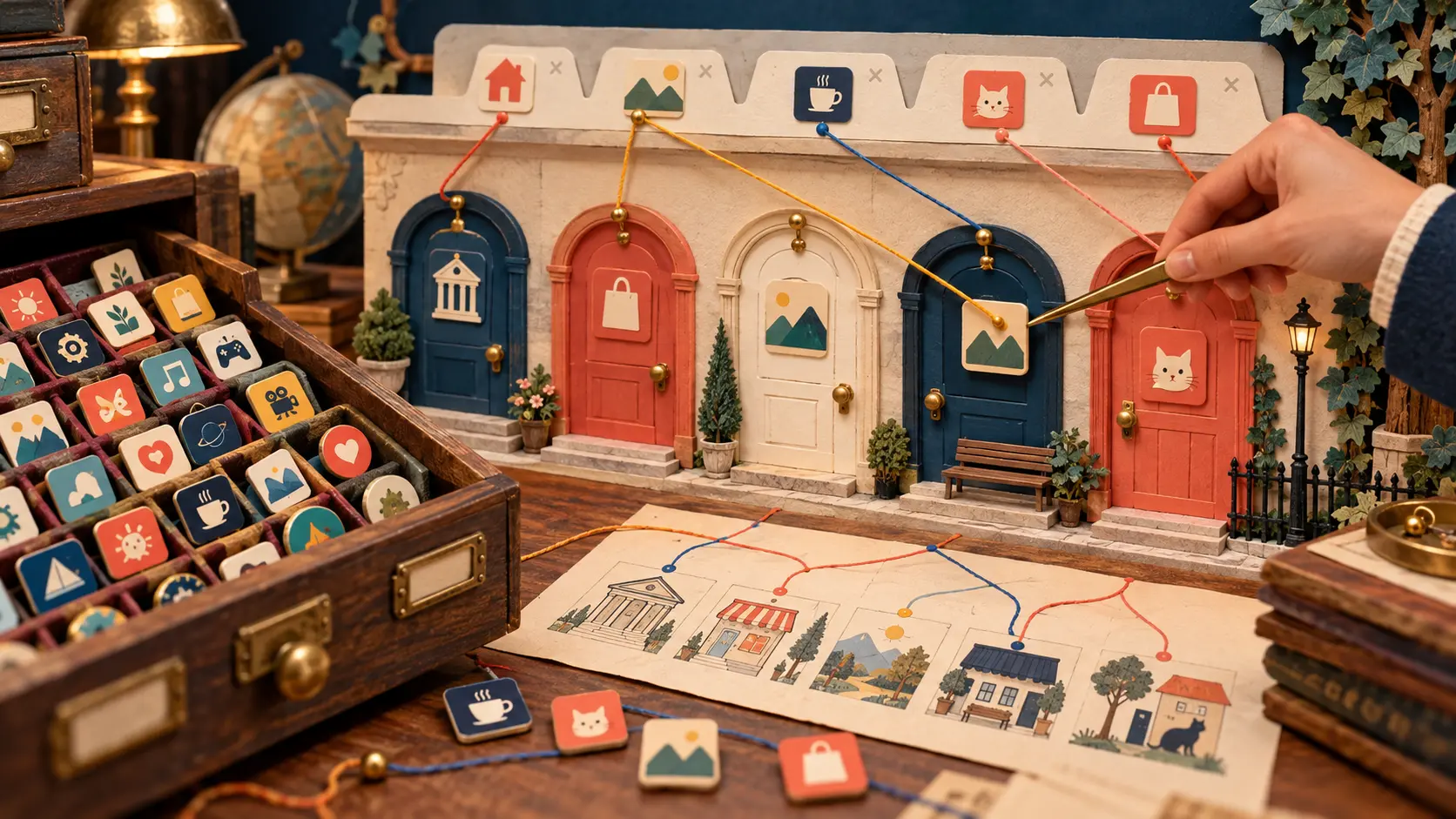
The weather had an address, and it was a mouthful. In December 1991, an Internet resource guide offered this instruction: telnet madlab.sprl.umich.edu 3000. Somewhere beyond the host name and port number lay the forecast. An umbrella was optional; knowing how to get through the door was rather more useful.
The entry occupies a tiny corner of RFC 1290. Elsewhere, its author explains why universities were putting services behind menus: users wanted information, while the network kept demanding directions. The weather entry makes that problem wonderfully concrete. Before asking whether it would rain, you had to know where to ask.
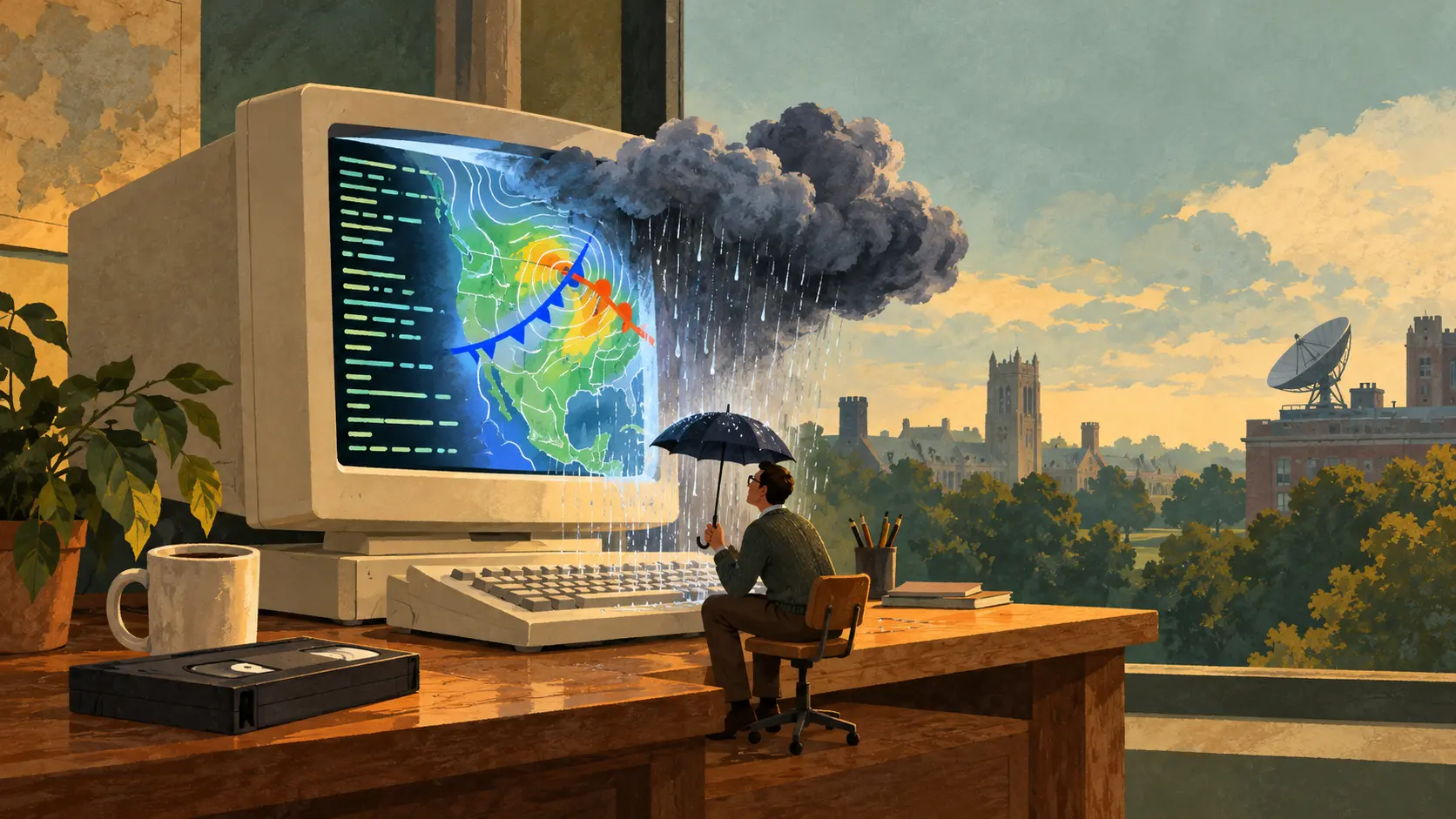
At University of Michigan, the immediate customer was a nine-o’clock class. In a 2017 university interview, Perry Samson recalled recording an early television weather briefing on a VCR and carrying the poor-quality video into the classroom. Jeff Masters’s computing project offered a better arrangement: take live weather data, organise it and present it through a text-based programme. The lab had a Sun workstation and a rooftop satellite feed from National Weather Service. The missing piece was a convenient way to use what was already arriving.
The first programme was available on the campus network. Masters recalled Merit engineers supplying the small addition that opened it to the wider Internet. The address in the 1991 guide gives that recollection a useful contemporary companion: outsiders were being told how to connect.
Then the front door changed. NSF support helped pay for work by Alan Steremberg, Chris Schwerzler and Jeff Ferguson as the project turned towards school science. Samson imagined an interactive HyperCard map; Steremberg built a Gopher client. With Blue Skies, a user could move over a city on a map and see its weather. The computer had begun doing more of the remembering.
A 1995 paper by the university’s digital-library researchers describes the service’s interactive weather images alongside archived data and documents. Its sample catalogue entry lists Macintosh and Windows software, English, and audiences including school pupils and teachers. Those details matter. A service could travel across a network while still asking its audience to bring the right machine, software and language.
Samson later recalled Mosaic making the team scramble to catch up. A handsome map did not grant permanent immunity from the next interface. The university history dates the commercial website to 1995. In his 2012 letter published by Unidata, Samson describes the students and former staff member regrouping around that business.
The route from a terminal command to a weather website therefore had a payroll, a grant and graduating students in it. The forecast looked increasingly effortless because somebody kept rebuilding the entrance. Nine o’clock, meanwhile, showed no interest in postponing itself.
Member Briefing
Deeper Profile Context
Sign in with the right membership level to unlock the full briefing and source notes.
Only for Strategic Circle
Strategic Circle
Open to all readers. Unlock profile briefings after joining and signing in.
Join Strategic CircleOnly for Leadership Alliance
Leadership Alliance
For qualified IP-asset owners and management; sign in to unlock alliance briefings.
Join Leadership Alliance