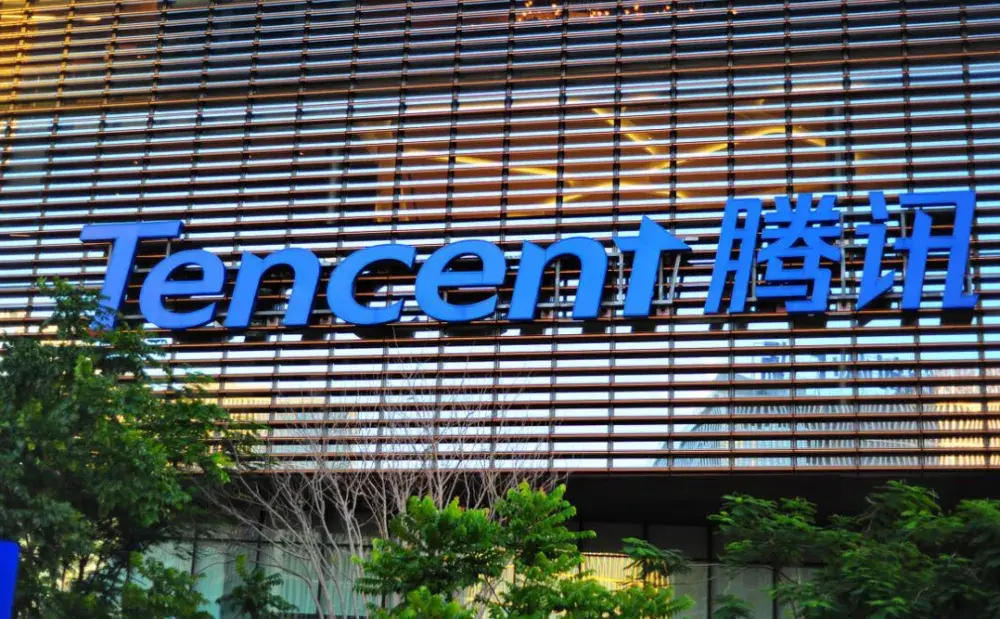
Tencent unveils Xingmai 2.
- Tencent announced major upgrades to its Xingmai HPC network.
- The release of Xingmai 2.0 demonstrates China’s commitment to technological self-reliance.
OUR TAKE
The rapid growth of the AI industry has created data demands that traditional networks can’t support. Tencent’s Xingmai network addresses this with high bandwidth and zero packet loss, enhancing training efficiency. The launch of Xingmai 2.0 amidst US restrictions highlights Tencent’s R&D capabilities, reducing reliance on US processors and strengthening technological self-reliance.
— Yasmine Luo, BTW reporter
What happened?
Tencent has significantly upgraded its Xingmai HPC network, boosting AI capabilities by 60% in network communication and 20% in large language model (LLM) training.
This upgrade, reported by the South China Morning Post, is part of a broader strategy by Chinese tech giants to enhance technological self-reliance amid US export restrictions on advanced processors like Nvidia‘s H100.
The Xingmai 2.0 network addresses inefficiencies in computing cluster communications, which previously led to underused GPU capacities due to long communication times. This upgrade improves efficiency and reduces costs, allowing Tencent to support over 100,000 GPUs in a single cluster and cut problem-solving time from days to minutes. Tencent’s advancements also include promoting its own LLMs for enterprise use and assisting other companies in developing their AI models.
In response to a price war in China’s AI sector, Tencent, along with other major firms like ByteDance, Baidu, and Alibaba, is lowering prices to compete with Western rivals. Tencent recently made its Hunyuan LLM lite version free and reduced prices for its standard versions.
Also read: Tencent simplifies WeChat payments for mainland China visitors
Also read: Meta’s strategic partnership with Tencent opens new horizons for VR in China
Why it’s important
The rapid growth of the AI industry has expanded model parameters from billions to trillions, resulting in massive data communication needs that traditional networks can’t support. High-performance, high-bandwidth networks are essential.
Wang Yachen, Vice President of Tencent Cloud, noted that the Xingmai network is designed for large models, providing high bandwidth, high utilisation, and zero packet loss to overcome bottlenecks and enhance training efficiency. Tencent Cloud’s professional repair team ensures rapid recovery during system failures, improving training efficiency and accelerating cloud-based applications.
Under US restrictions, the launch of Xingmai 2.0 marks a significant advancement for Tencent, showcasing its independent R&D capabilities in high-performance computing and AI training. This reduces reliance on US processors and enhances AI training efficiency, strengthening Tencent’s technological self-reliance and setting an example for Chinese tech firms facing international constraints.
Member Briefing
Deeper Trend Context
Sign in with the right membership level to unlock the full briefing and source notes.
Only for Strategic Circle
Strategic Circle
Open to all readers. Unlock trend briefings after joining and signing in.
Join Strategic CircleOnly for Leadership Alliance
Leadership Alliance
For operators, investors, and policy teams that need relationship evidence, failure paths, and source notes. Sign in to unlock.
Join Leadership AllianceSnapshot
Category
North America Cloud Services TrendsRegion
ASIA PacificSignal Focus
MarketContent Type
EventPrimary Domain
MarketTopic
MarketImpact
MediumConfidence
Limited confidence (82%)Confidence score guide
Several public sources