Summary
- F5 reported $239 million of systems revenue in its fiscal fourth quarter, up 29% from a year earlier. Software grew 19% and services 3%; total quarterly revenue reached $917 million, up 13%.
- Year-end inventory rose from $77.2 million to $261.9 million. The same earnings release announced a further $1.5 billion share-repurchase authorization, in addition to $322 million remaining under the previous program. The company has not broken the stock into customer orders or product lines.
The fastest-growing line comes in a box
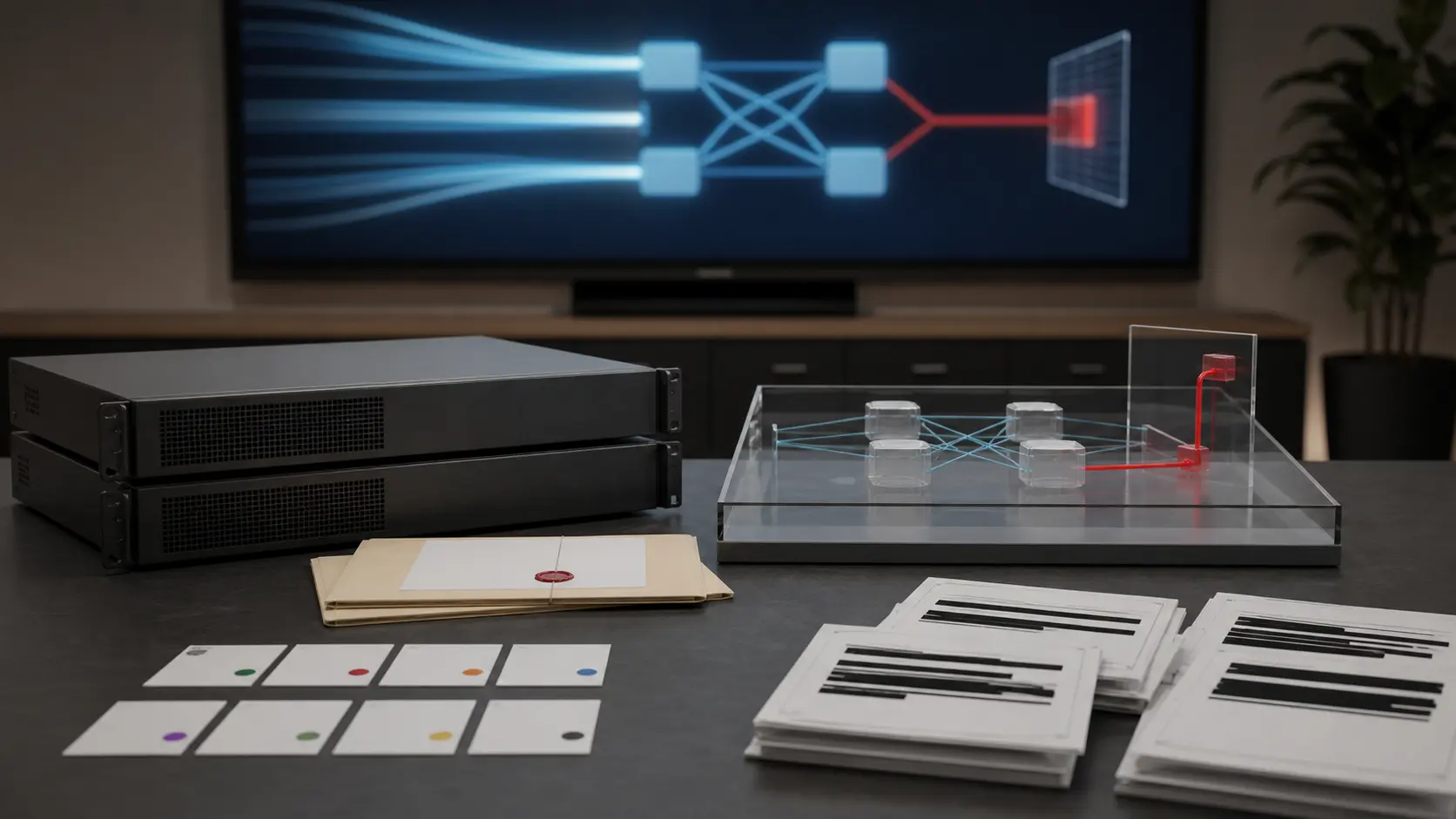
F5 sells the software and security language of a cloud company, but its 27 October fiscal-year release gave physical systems the quarter's sharpest disclosed growth rate. Systems revenue reached $239 million, up 29% year on year. Software made $271 million, up 19%; services made $408 million, up 3%. Those lines together produced $917 million of revenue, 13% above the previous year. A buyer can change an application policy on a screen. It still has to order, receive and install the box that enforces one in its own network.
That physical leg has begun occupying more of F5's balance sheet. Inventory stood at $261.9 million on 30 September, against $77.2 million a year earlier. The $184.7 million rise makes the closing stock about 3.4 times its earlier level. The cash-flow statement separately records a $160.3 million inventory use of cash over the fiscal year, excluding acquisition effects. These measures have different accounting bases; both show more capital sitting in the hardware cycle. The release gives no order-level allocation of that stock. A warehouse can hold future revenue or costly waiting time. The next turns of the shelves decide which.
A mandate to spend beside a stockpile
F5's board has authorized an additional $1.5 billion in share repurchases, alongside $322 million left under the existing authorization. The authority lets management choose the pace; it is no purchase order for $1.822 billion of stock. Fiscal 2026 repurchase payments, including excise taxes, were $601.1 million. Operating cash flow was $959.5 million, and cash and cash equivalents ended the year at $1.591 billion. These figures make the capital choice real. F5 has cash generation and the legal room to return more of it, while its physical product line needs stock, suppliers and timely customer acceptance.
Reported operating margin puts a price on the balancing act. The fourth quarter's GAAP margin fell to 23.1% from 25.4%, even as revenue grew. The company also recorded a 33.7% non-GAAP margin versus 37.0% a year earlier. A fast-growing systems line is valuable when it turns stocked parts into delivered sales at an acceptable margin. The release does not identify which inventory is committed to firm orders or explain the rise by product. That missing bridge matters more than a confident story about demand written on the strength of a stockroom photograph.
F5 guides fiscal 2027 revenue growth of 8%–9% and first-quarter revenue of $875 million–$895 million. The first quarter will show whether systems momentum and inventory turnover travel together; later cash-flow statements will show how much of the new buyback authority becomes actual spending. Customers decide when equipment enters production networks. F5 decides how early to stock it and how much cash to hand back before the sale clears. The next sales must move stocked systems into customer networks while protecting the margin that makes advance inventory worthwhile.
Sources
Member Briefing
Deeper Profile Context
Sign in with the right membership level to unlock the full briefing and source notes.
Only for Strategic Circle
Strategic Circle
Open to all readers. Unlock profile briefings after joining and signing in.
Join Strategic CircleOnly for Leadership Alliance
Leadership Alliance
For qualified IP-asset owners and management; sign in to unlock alliance briefings.
Join Leadership Alliance