Summary
- An account published by NASA in 2003 describes a high-school teacher using special S’COOL hall passes so pupils could leave other lessons for five minutes of cloud observation.
- The project matched ground and satellite observations by place and time. Reports could travel by web, email, fax or post; the observation had to catch the appointment.
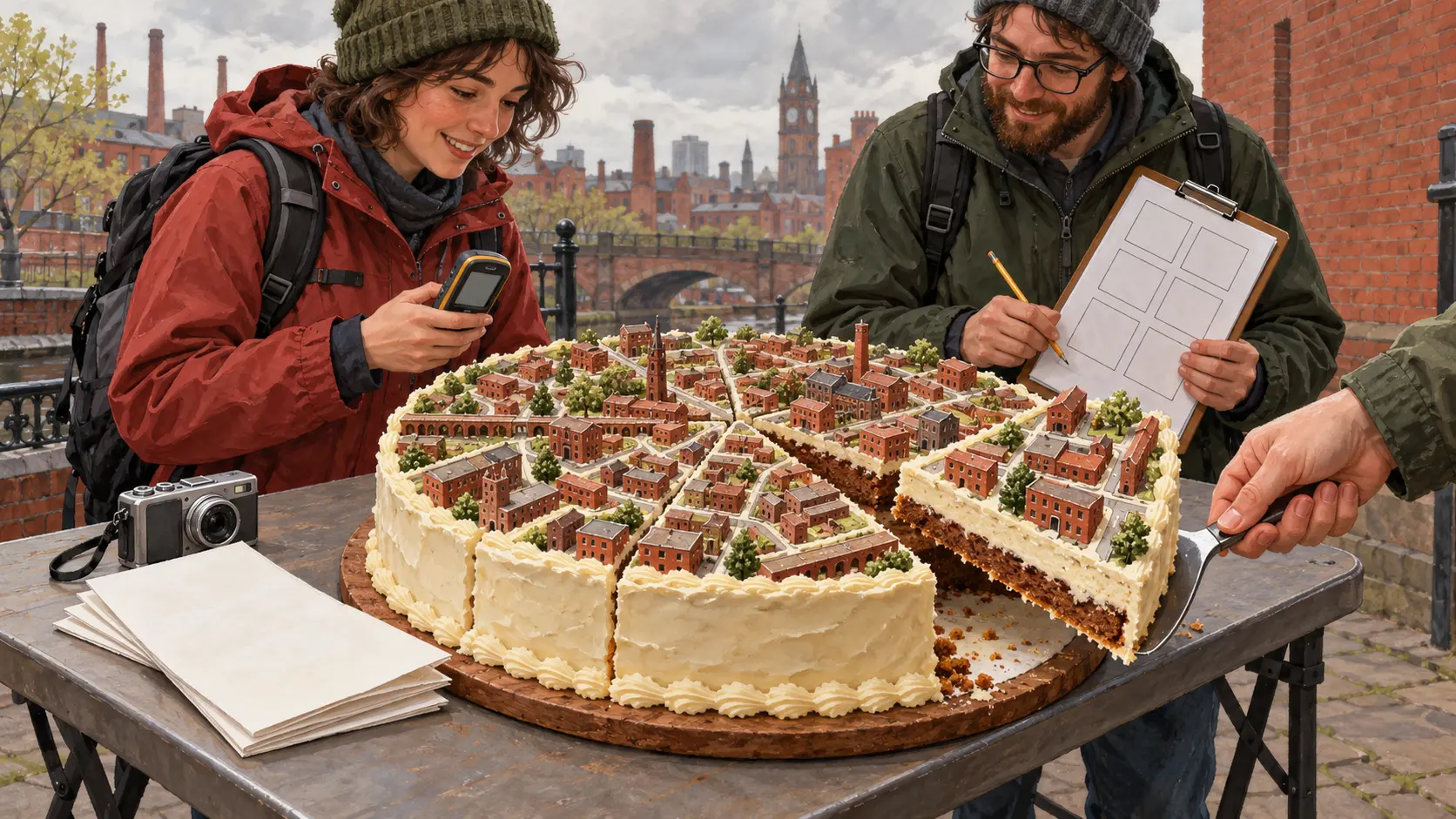
A satellite is a terrible colleague for a school timetable. It passes overhead when its orbit says so, with no particular respect for the science department.
One high-school teacher found a workable compromise. The satellite’s passes kept falling during other subjects. The class devised special S’COOL hall passes, and colleagues let pupils leave for five minutes to take their readings outside. NASA’s project team included the account in its July–August 2003 issue of The Earth Observer. Among the machinery connecting a classroom to space was a small permission slip.
An appointment with the sky
S’COOL stood for Students’ Cloud Observations On-Line. It began with a conversation in late 1996 between a researcher and a sixth-grade science teacher who wanted a simple, affordable way to connect classroom work to NASA. Tests followed during 1997; the project became operational in April 1998.
NASA’s CERES research needed ground observations against which to check cloud properties inferred from satellites. Pupils could supply a view from underneath. Snow can look cold and bright like cloud from above. Small clouds can fall below an image pixel’s size. With several opaque cloud layers, a satellite and a person on the ground see different surfaces. Even a reliably reported clear sky was useful. An empty sky could earn its place in the database.
But the two views needed to belong to the same occasion. The 2003 instructions asked pupils to observe within 15 minutes of the satellite’s passage. An experienced class could record cloud and surface conditions on a single sheet in five to ten minutes.
The Internet helped them make the appointment. An earlier operational paper describes a website form taking a date range, latitude, longitude and the offset between local time and GMT. It returned overpass times, from which a teacher could choose a convenient option. By the 2003 account, schedules extended no more than two months ahead because satellite orbits were adjusted. Further schedules could be requested online. The orbit kept an appointment book; teachers still had to fit it into theirs.
The paper could arrive later
A January 2001 NASA science-team presentation made the matching rules explicit: the school had to lie within the relevant one-degree-by-one-degree satellite area, and the observation times had to be within 15 minutes.
That was a deadline for looking up. Sending the report had more forgiving arrangements. The project accepted a web form, email, fax and hard copy. Email users were asked to follow a template to help automatic processing. Participants without web access could request overpass information through other channels, too.
The ground reports went into a database at NASA Langley. Ground and satellite records could be queried through a web interface and downloaded into a spreadsheet. A class could put its own sky beside observations from above, with time and location doing the work of introducing the two.
The project thus made a useful distinction in practice. A late envelope might still contain a timely observation. A beautifully connected computer could do nothing about a cloud nobody had looked at.
The slow part was the reply
The comparison was also a promise that the scientific operation had to fulfil. In 2003 the authors reported that instrument problems and data delays had made timely comparisons a major challenge. A figure caption said only satellite data through 1998 had been processed.
Children could keep their appointment and still wait for its scientific counterpart. Teachers found uses in identifying clouds, measuring, writing descriptions and comparing observations. The team documented those classroom gains while acknowledging the difficulty of turning every registered teacher into an active participant.
S’COOL’s network reached through a web form, a database, a scientist’s processing work and a colleague’s willingness to surrender five minutes. The satellite never learned the school timetable. Fortunately, a few people on the ground knew how to negotiate.
Original records
Member Briefing
Deeper Profile Context
Sign in with the right membership level to unlock the full briefing and source notes.
Only for Strategic Circle
Strategic Circle
Open to all readers. Unlock profile briefings after joining and signing in.
Join Strategic CircleOnly for Leadership Alliance
Leadership Alliance
For qualified IP-asset owners and management; sign in to unlock alliance briefings.
Join Leadership Alliance