
Summary
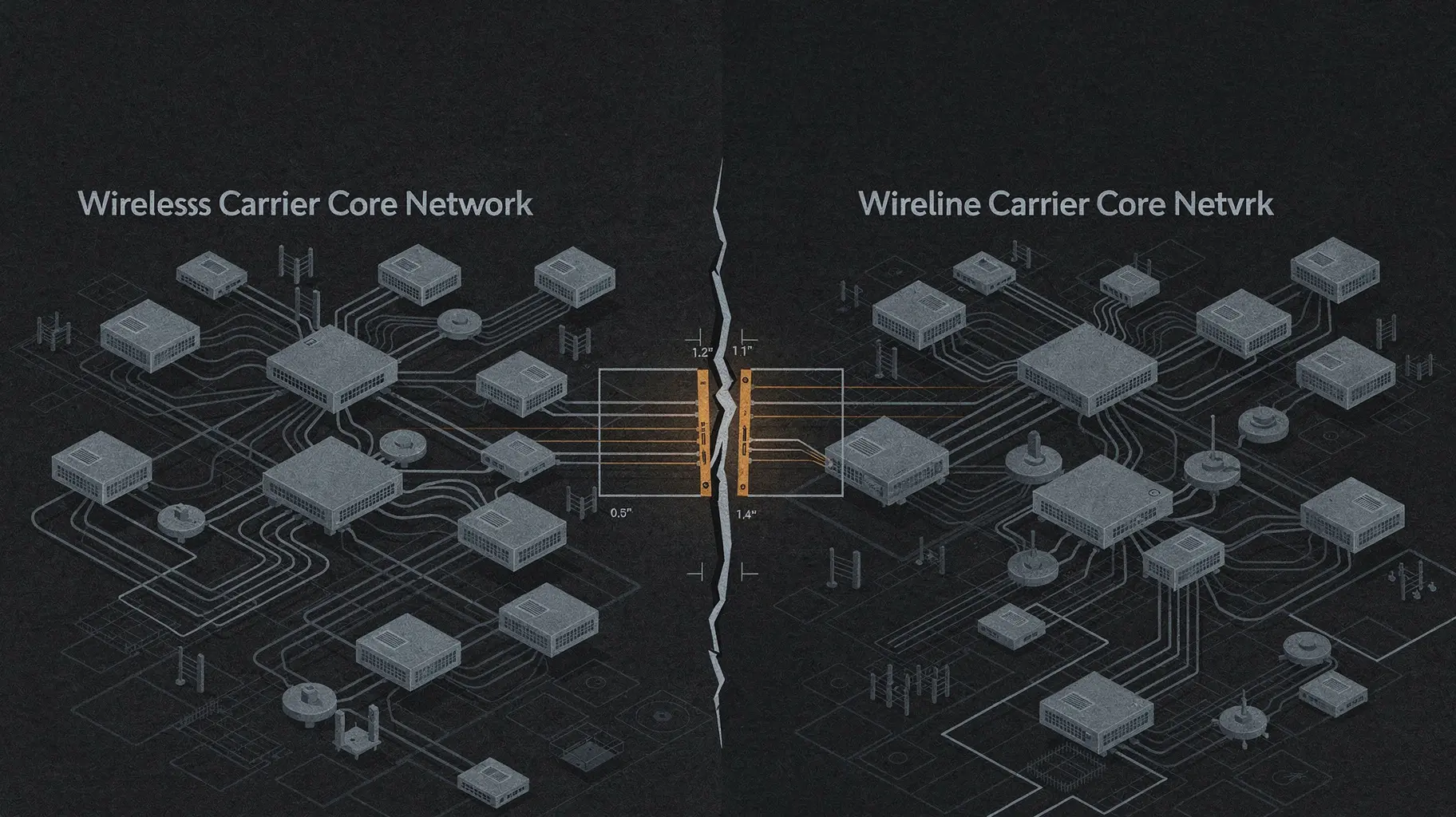
- Canada's telecom regulator publicly directed Rogers Communications to explain the root cause of the 8 July 2022 national outage and to outline a remediation plan to improve reliability and prevent recurrence. Rogers attributed the failure to a routine update to its core network that caused certain routers to malfunction, and proposed separating its wireless and wireline networks to remove a single point of failure.
- The material reviewed for this briefing contains no dated evidence that the separation was implemented, exercised under the failure condition it was meant to address, or examined by anyone outside the company. That is a limit on what the public record demonstrates. It is not a finding that the work was never done.
A direction, an answer, and an unbridgeable middle
The regulator's own release is framed as the CRTC directing Rogers to report on the causes of the 8 July outage (CRTC release, canada.ca). Read at summary level, it sets two obligations: explain what happened, and describe what will be done so that it does not happen again. It is a reporting duty about a failure and its remedy.
What the company said it would do is a different kind of statement. According to reporting on the filing, Rogers traced the outage to a routine update to its core network that led certain routers to malfunction, and put forward a remediation plan whose centrepiece was greater separation between its wireless and wireline networks, creating redundancy and removing a single point of failure (CBC report on the filing).
Those two sentences sit on either side of a gap that no retrieved document closes. A direction to explain is not an order to build a particular architecture; an announced architecture is not a demonstration that it exists. Whether the proposal satisfied the direction, on what timetable, and to whose satisfaction, is not established by the material reviewed here.
An announcement is evidence of intent, not of operation
The distinction that matters for anyone pricing continuity risk is the difference between what an operator says it will become and what an outsider can check that it has become. It helps to treat remedy as a ladder rather than a switch:
- Announcement. A stated intention, attributed to the company. It is real evidence of what was proposed and a fair benchmark for later accountability.
- Specified design. A description of the change concrete enough to say which shared dependency was removed, and what "separate" means for the components that stay common.
- Implementation. A dated record that the design was deployed.
- Exercise. A controlled failure, failover or fault-injection run against the condition the control was built for, with results and exceptions.
- Independent verification. Someone outside the operator examining scope, method and results, and saying what residual risk remains.
- Continuing observation. Repeat exercises or monitoring that show the control still works after staff, vendors and traffic change.
The public record reviewed here places Rogers at step one. That is not a criticism of the company's honesty; it is a statement about what an announcement can carry. A promise of separation tells you what leadership intended. It does not tell you whether a wireless customer's service survives a fault in the wireline core, which is the question the remedy was supposed to answer.
What the material reviewed does and does not contain
The evidence boundary here is specific and worth stating plainly, because a gap described loosely becomes an accusation by implication.
Both cited documents were obtained as summaries rather than as page text, and a later attempt to open them directly failed. No sentence in this briefing is a quotation from either, and none should be read as one. Beyond those two summaries, this review did not obtain the text of the report Rogers filed with the regulator, any independent third-party examination of the outage, or any dated document showing that the announced separation was built, tested or verified.
That absence supports one narrow proposition: as of the material reviewed on 17 October 2026, the control had not been demonstrated in public. It does not support the proposition that the control does not exist. Non-disclosure is not non-performance, and an operator is not obliged to publish the internals of its core network to be believed. What is missing is not topology. It is the smallest external trace that the work happened at all.
What would settle it
A verifiable repair does not require publishing an attack surface. It requires a package that lets a sceptical outsider assess five things: scope, dates, method, results and exceptions, plus the identity and mandate of whoever reviewed them. Concretely, that could be any of the following, in descending order of weight:
- An independent examiner's report stating what was examined, how, what was found, and what remains uncertain.
- A regulator's follow-up noting what it reviewed and whether it accepted, qualified or left the matter open.
- A dated implementation record paired with a described test: what failure was injected, what was expected, what happened, and what exceptions were logged.
- Repeat exercises over subsequent years, which are the only real evidence that a control survives reorganisation and vendor change.
Any one of these would move the assessment up the ladder. None of them is present in the material reviewed here.
Why the gap has consequences beyond one company
The practical problem with an unverified architectural remedy is not that it is false. It is that it is unfalsifiable from outside, while still functioning as reassurance. Regulators, enterprise buyers and public-service planners all make continuity decisions that assume a named single point of failure has been closed. When the only public support for that assumption is a company's description of its own intentions, the assumption is being imported from the party with the least incentive to advertise its remaining dependencies.
That is an asymmetry of evidence, not evidence of bad faith. It has a cost that compounds quietly: every year the question stays open, the answer becomes harder to reconstruct, because the engineers who built the change move on and the test records, if they exist, age out of memory and archive alike.
The delta from earlier coverage
This briefing does not re-tell the outage. The directory entry for Rogers Communications Canada Inc. records one earlier article, which a search of the archive did not surface; nothing here should be read as a correction of it. What this file adds is not new facts about 8 July 2022 but a method applied to the remedy: the ladder, the boundary, and the specific list of documents that would end the argument. That list is the deliverable. If any item on it appears, this case file gets shorter, not longer.
A note on verbs. Rogers attributed the outage to a core-network update; the regulator directed an explanation and a plan; the company proposed separating its networks. The material reviewed does not show the separation was implemented or tested, and this briefing says so without upgrading any of those verbs into a finding of failure, concealment or non-compliance. A retrieval gap is not a verdict.
Member Briefing
Deeper Profile Context
Sign in with the right membership level to unlock the full briefing and source notes.
Only for Strategic Circle
Strategic Circle
Open to all readers. Unlock profile briefings after joining and signing in.
Join Strategic CircleOnly for Leadership Alliance
Leadership Alliance
For qualified IP-asset owners and management; sign in to unlock alliance briefings.
Join Leadership Alliance