Summary
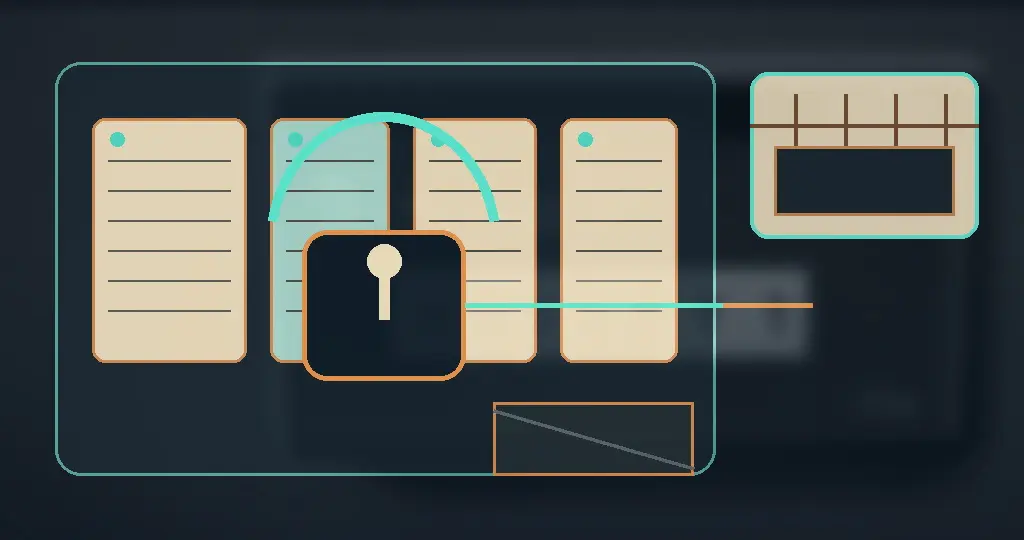
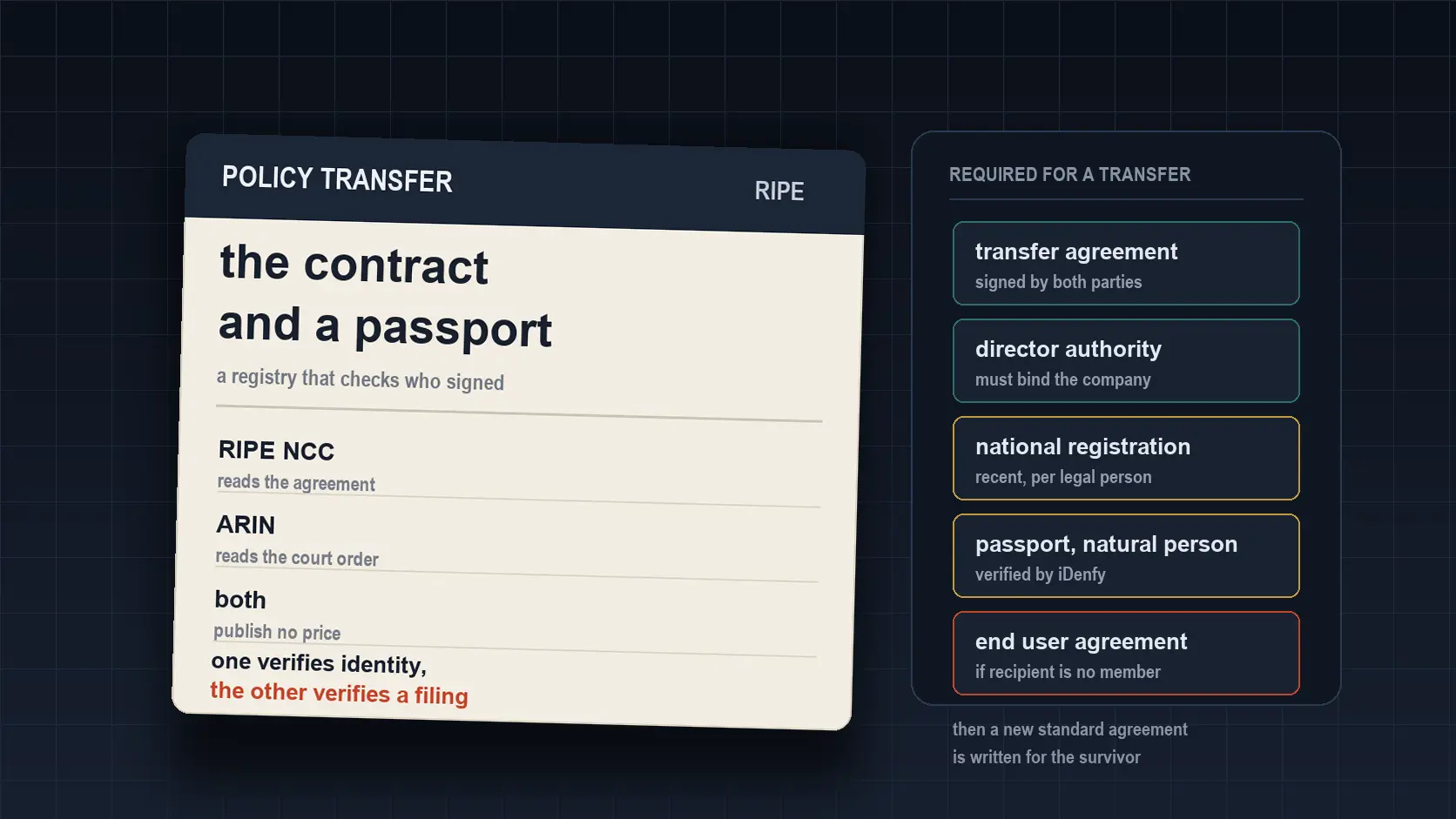
- RIPE NCC's required documents list for policy transfers is short and blunt: the transfer agreement signed by both parties, signed by company directors legally authorised to sign for the organisation, plus a recent registration document from the relevant national authorities for each legal person.
- For a natural person the registry takes a digital copy of a passport or other valid ID and states that its validity "will be verified by a third party called iDenfy". Transfers of PI addresses or ASNs to a party that is not a member also require a signed End User Agreement.
The registry reads the contract
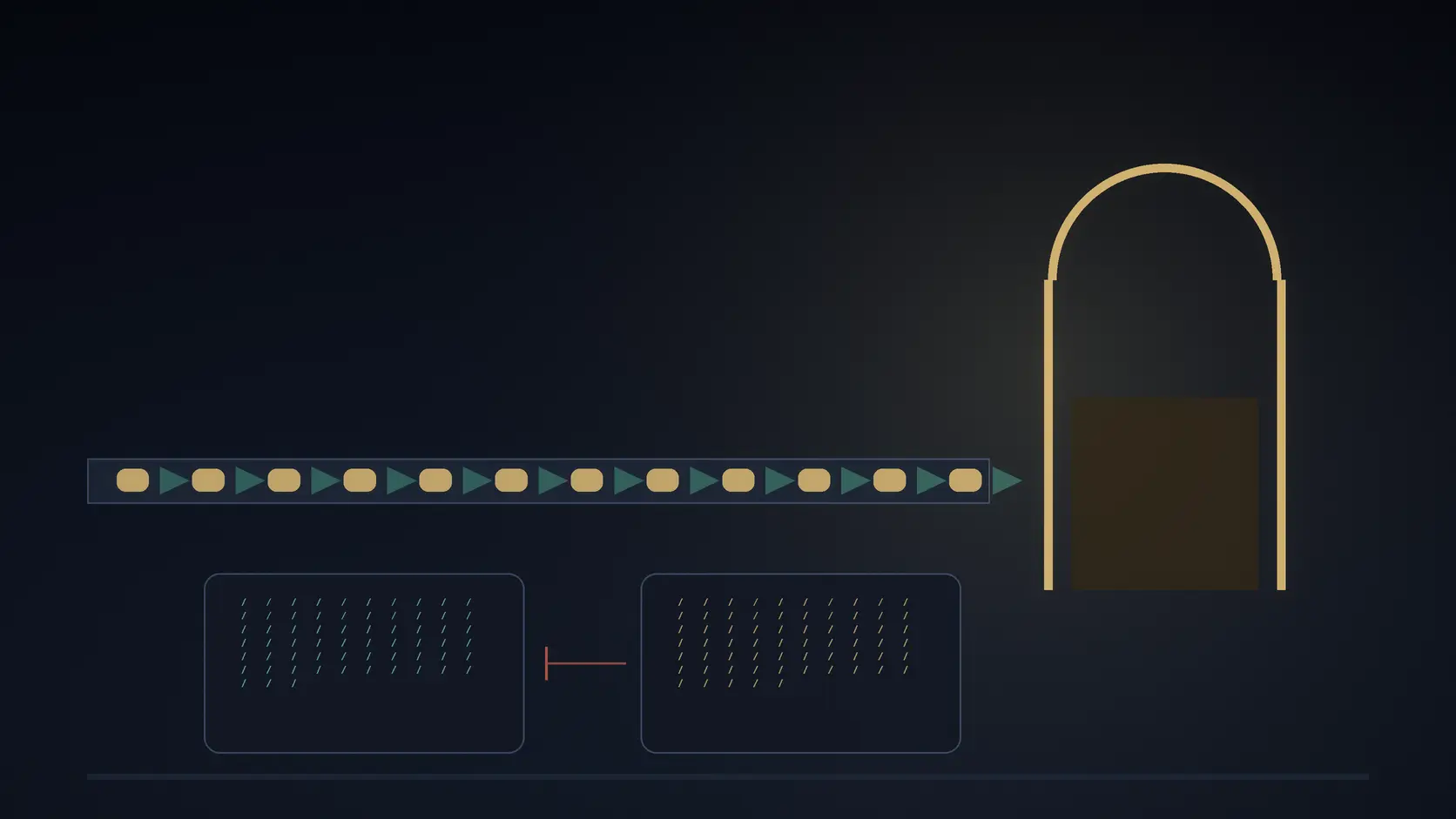
Most of the energy in the IPv4 transfer process goes into proving need: 24 months of demand in one registry, an 80% utilisation showing in another. RIPE NCC also asks for something more direct. It wants the agreement itself, signed by both parties, and it wants the signature to come from a director with legal authority to bind the company.
That is a documentary standard with a market consequence. The private contract becomes a filing. Whatever the parties wrote about price, timing, conditions and consequences ends up in the registry's case file and is checked for the right signatories, and the registry will not process the transfer until the paper matches its requirements.
Identity is checked at national level, and sometimes with a passport
The second requirement is the one that surprises people who have only dealt with the American registry. Every legal person must provide a recent registration document from the relevant national authorities, so the registry verifies the entity against a government register rather than against its own contact records.
For a natural person the requirement is a passport or another valid ID, and the page names the checker: iDenfy. The registry therefore employs an outside identity service to decide whether the document is real, which is an unusual amount of identity machinery inside a database update.
The non-member case has its own contract
If provider-independent addresses or an ASN move to a party that is not a RIPE NCC member, an End User Agreement signed by the receiving end user and by a RIPE NCC member is required as well. The registry is not only recording a trade; it is capturing the ongoing relationship that makes a non-member holdable inside its service region.
Mergers get a different file, including the dead-company route
Business-structure transfers are handled separately: recent company registration papers for every entity involved, an official document issued by a national authority supporting the change, and, where the transferring party no longer exists, an official document confirming its closure plus a copy of an older signed agreement mentioning the transfer. If no such agreement exists, the registry may accept a confirmation of the transfer signed by an authorised person of the receiving party, then prepares a new Standard Service Agreement for the receiver.
Only where both parties still exist does it afterwards ask for the bilateral transfer agreement.
That sequence is a small piece of legal engineering. The registry knows that the cleanest evidence of a merger sometimes disappears with the acquired company, and it built a route that accepts a successor's statement rather than nothing.
What the file does not do
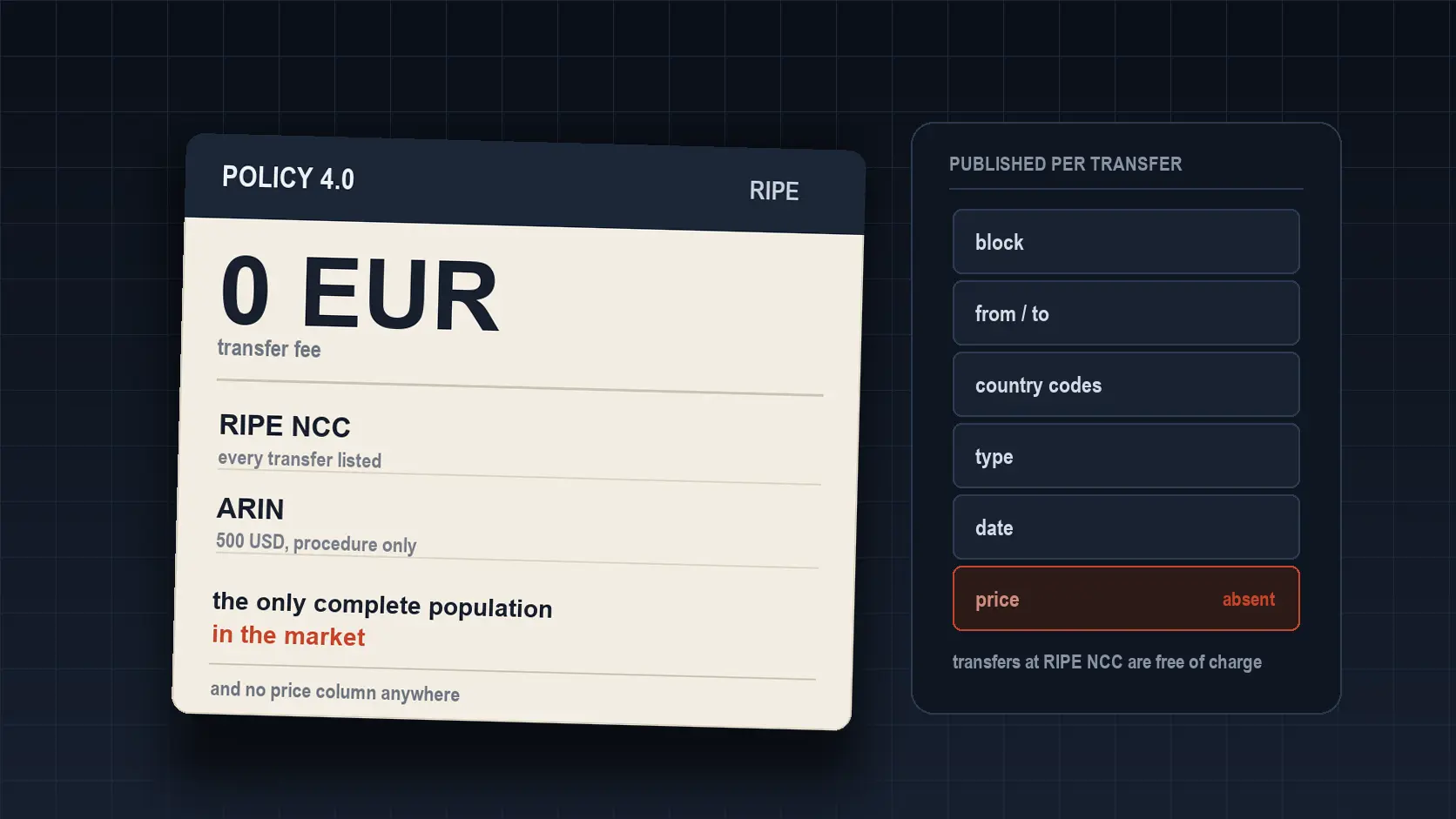
It records the transfer, verifies the parties and does not publish the price. RIPE NCC publishes a list of every transfer, with country codes and a transfer type, and the amount paid stays inside the agreement it collected and never reports. So the two registries have opposite habits: one reads the contract and ignores the court order, the other reads the court order and lets the numbers be redacted. Neither tells the market what a block cost.
Sources
Member Briefing
Read the full trend briefing
Members read the full briefing with the source notes behind every finding.
Strategic Circle
A daily briefing in your language, built from changes we have verified.
Join for USD 20/monthCancel anytime.
Members also get the full research library, a daily briefing on the networks they follow and the private forum.