Summary
- RIPE NCC's published transfer log records 6,608 transfers moving 31,041,280 IPv4 addresses in 2026 to 26 November, against 7,279 transfers and 28,355,104 addresses in 2025: address volume up 9.5 percent, deal count down 9.2 percent, mean deal size up from 3,895 to 4,698 addresses.
- Inter-registry flow runs into Europe: 862 of 966 cross-border transfers arrived (7,779,840 addresses) and 104 left (1,979,904), with 787 arrivals from ARIN. The five largest 2026 deals carry only 10.1 percent of volume, and 1,466 of the 6,608 records are mergers and acquisitions rather than ordinary transfers.
Two years of a smaller, busier book
| Measure | 2025 | 2026 to 26 November |
|---|---|---|
| Transfers | 7,279 | 6,608 |
| IPv4 addresses moved | 28,355,104 | 31,041,280 |
| Mean addresses per transfer | 3,895 | 4,698 |
| Share of volume in the five largest | not computed | 10.1 percent |
RIPE's market is the opposite texture of ARIN's. ARIN moved 52.4 million addresses in 3,727 transfers this year, an average of 14,073; RIPE moved 31.0 million in 6,608 transfers, an average of 4,698. Europe trades twice as many deals at a third of the size, and its year-on-year volume rose while ARIN's fell by roughly 60 percent.
The monthly path is uneven. January moved 6,531,072 addresses, July 5,984,896, and February only 1,629,184. October recorded 949 transfers — the busiest month in the file — carrying just 1,879,808 addresses: a month of small deals, not a month of block sales.
The conveyor ends in Europe
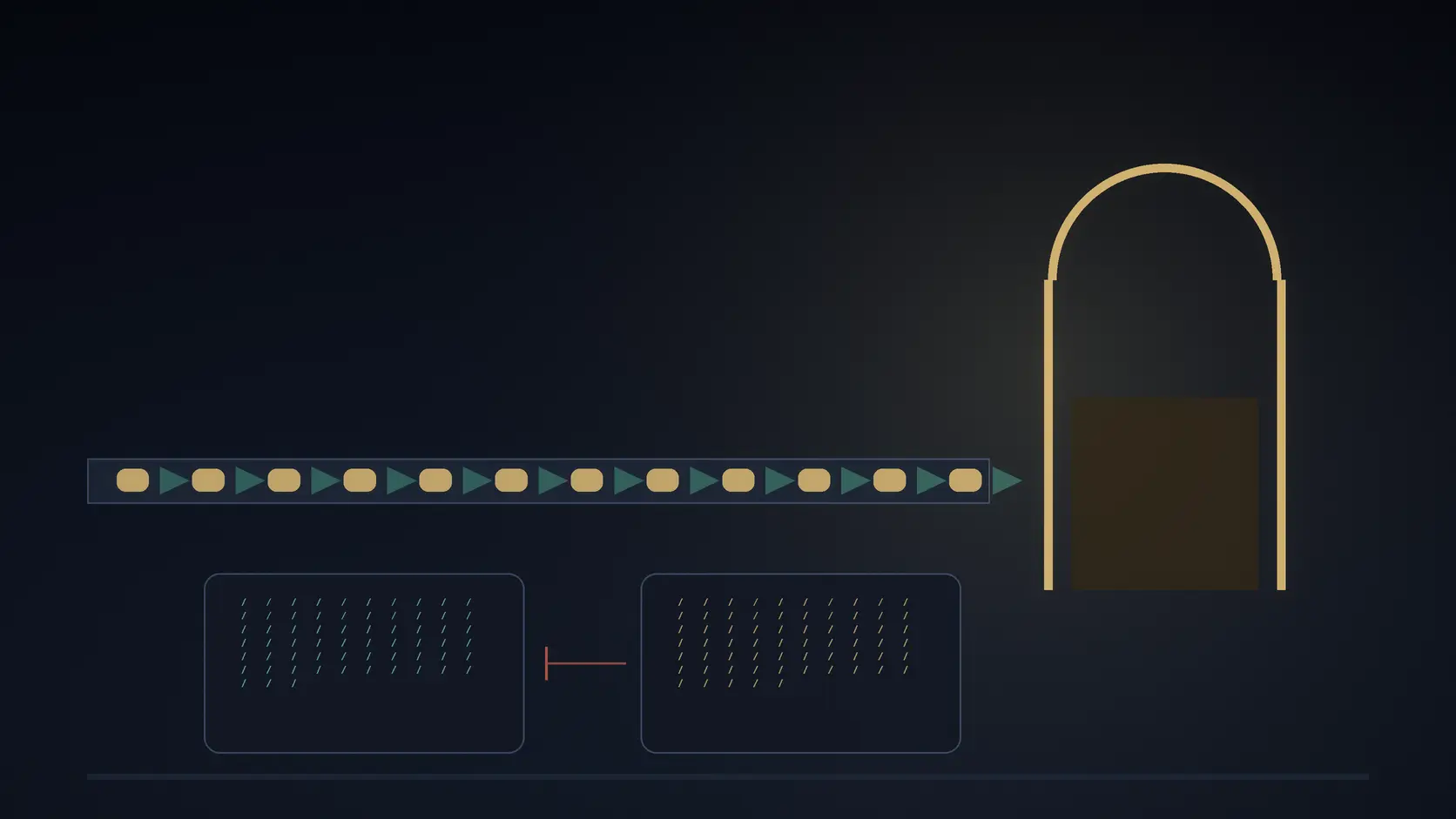
Of 966 inter-registry transfers in 2026, 862 came in and 104 went out. Arrivals by sender: ARIN 787, APNIC 52, LACNIC 23. Departures by receiver: ARIN 38, APNIC 38, LACNIC 28.
That is a region importing roughly 7.78 million addresses a year and exporting two million, and it is the mirror image of the ARIN book, which recorded 992 departures against 56 arrivals. Address space is being assembled where the members pay the highest per-account fee and where 842 LIRs wait in a queue whose head has been standing since the summer of 2025.
Two ledgers, one corridor, two numbers
Here is the detail worth pinning to a wall. ARIN's log, read to 25 November 2026, records 806 transfers leaving for RIPE NCC. RIPE's log, read one day later, records 787 transfers arriving from ARIN. Nineteen transfers exist in one book and not the other.
Neither registry publishes an explanation. A record can be split differently on the two ends, a snapshot one day apart can catch a batch in flight, and a merger recorded by one side may be filed as a transfer by the other. Whatever the cause, the two authoritative ledgers of a single corridor disagree by 2.4 percent, and anyone building a market model on one file is inheriting that error without being told.
Mergers, not just trades
Of the 6,608 RIPE records dated 2026, 1,466 are typed as mergers and acquisitions and 5,142 as resource transfers. Nearly a quarter of Europe's address movement this year came through corporate events rather than through a seller choosing a price.
That reframes the volume. A merger is not a market transaction: nobody negotiated an address price, the block moved because a company did. Strip those 1,466 out and the tradable market is smaller and its average deal higher than the headline suggests. It also explains why October's 949 transfers moved so few addresses — a burst of corporate restructuring looks exactly like that.
What the log cannot say and what would change the reading
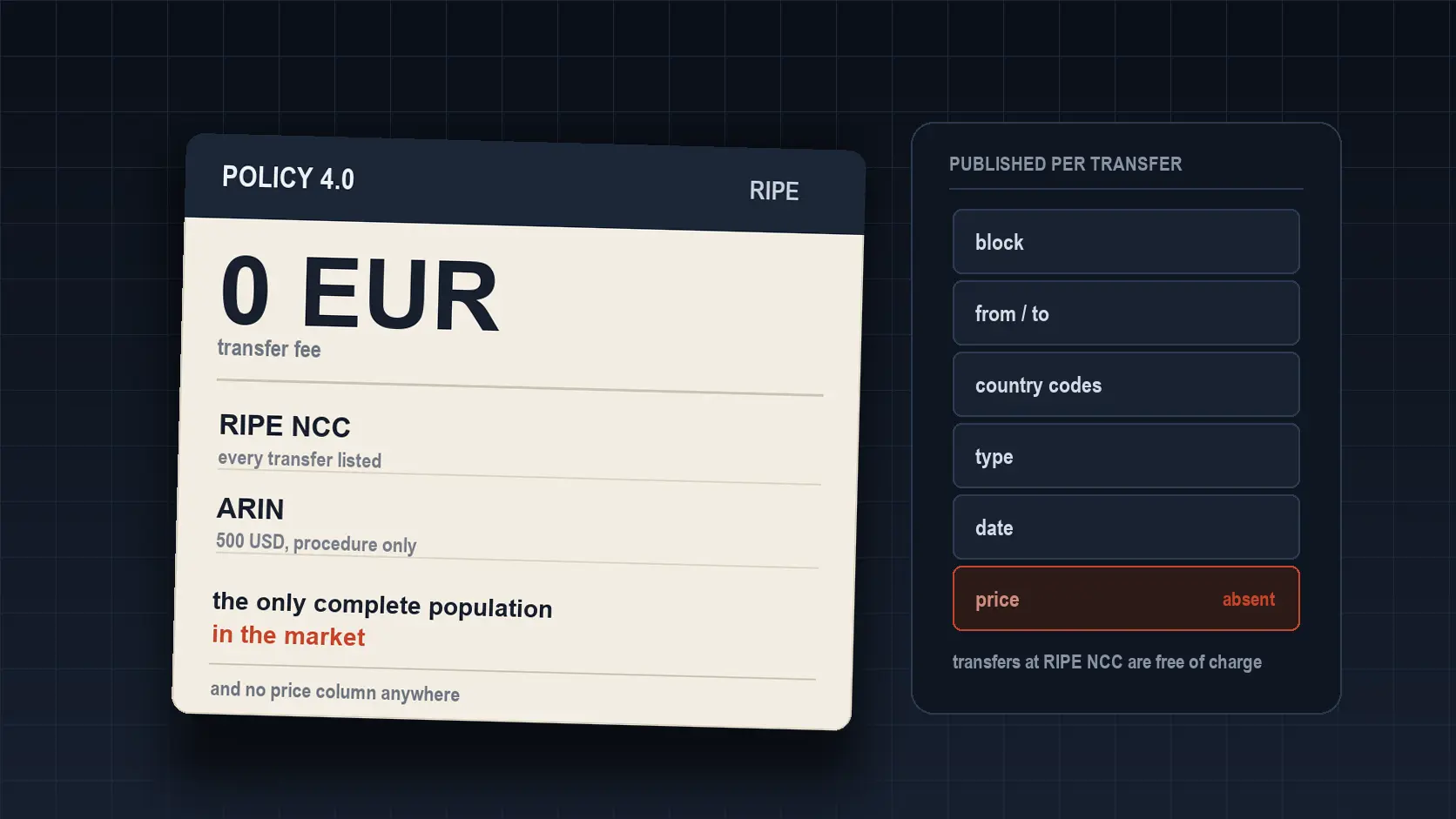
No price appears in the format. The largest 2026 deal was five blocks from Vodafone Italia to Fastweb on 29 January, 3,145,728 addresses in one day inside the region, and what Fastweb paid is not in any registry file.
Three numbers decide where this goes. The December close, which will show whether 2026 ends near 33 million addresses or below it. The 2027 arrival count from ARIN, since the corridor is now the region's real supply line. And the merger share, because if corporate events keep supplying a quarter of the movement, Europe's address market is a by-product of its consolidation wave rather than a market in its own right.
Sources
Member Briefing
Read the full trend briefing
Members read the full briefing with the source notes behind every finding.
Strategic Circle
A daily briefing in your language, built from changes we have verified.
Join for USD 20/monthCancel anytime.
Members also get the full research library, a daily briefing on the networks they follow and the private forum.