
Leaders
Leaders
Leaders people intelligence profiles the leaders, operators, researchers, creators, investors, and policy actors shaping internet infrastructure strategy. The category connects interviews, public profiles, company links, role changes, governance exposure, affiliation context, and related articles so readers can follow decision-makers by operating role rather than by isolated article chronology.

Latest Coverage
Latest from Leaders
93 articles

Leaders
Graciela Martínez Has Counted LACNIC's Incidents for Nine Years. The Unit Keeps Changing.
Nine years of LACNIC CSIRT incident numbers share one property: each arrives in a different unit. The person who signs them wrote the plan asking every other organisation to name theirs — and never named her own.

Leaders
Éric Vyncke Stops IETF Drafts Cold. The Record Never Shows What Thawed Them.
Éric Vyncke files DISCUSS objections that stop IETF drafts cold, and the Datatracker prints every word — with the date he filed and the date he relented. What none of the five records examined here shows is the edit that satisfied him. In a review system whose own rulebook makes…

Leaders
Denis Walker's Abuse Clock Counts to the Business Day. His Justification Counts to '70+'
His abuse framework hands a resource holder a cure measured in business days. The sentence that sells the whole design counts jurisdictions to the nearest round number and stops.

Leaders
RIPE NCC Publishes the Rows. The Rule That Counts Them Lives in a Blog Post.
The registry's transfer-statistics page defines every cell in a row and never defines the unit in which to count. That work sits in two bylined RIPE Labs analyses — and so does the exclusion the file page never prints.

Leaders
Alejandro Acosta's 34%: the footnote travels, the arithmetic stays home
LACNIC's R+D coordinator does the thing analysts almost never do: he defines the noun before he uses it, in two languages, so 30% means 30 people out of every 100. Then he hands you a regional figure you cannot divide — and the missing line is one sentence long.

Leaders
Philip Smith Counted the Internet. Nobody Can Re-Run the Count.
Two RouteViews decks, twenty days apart, one number falling and one rising — and nothing on either page that lets a stranger decide whether the Internet moved or the measuring did. Philip Smith's routing reports are authoritative because he is. They could be authoritative because…

Leaders
Geoff Huston's 76% and 6%: one sentence, two Chinas, no denominator
Geoff Huston's November 2025 IPv6 column prints China's fragmentation drop rate as 'a massive 76%' on potaroo.net and '6%' on the APNIC Blog — same sentence, same source map, 70 points apart. The map prints a seven-day window. It never prints the count.
Leaders
Six Ways to Leak a Route, One Test to Catch It, and the Name on Both Bylines
Six Ways to Leak a Route, One Test to Catch It, and the Name on Both Bylines intelligence summary explains the development, the public evidence available to readers, the organisations involved, the regional context, market exposure, and the infrastructure consequences that may…
Leaders
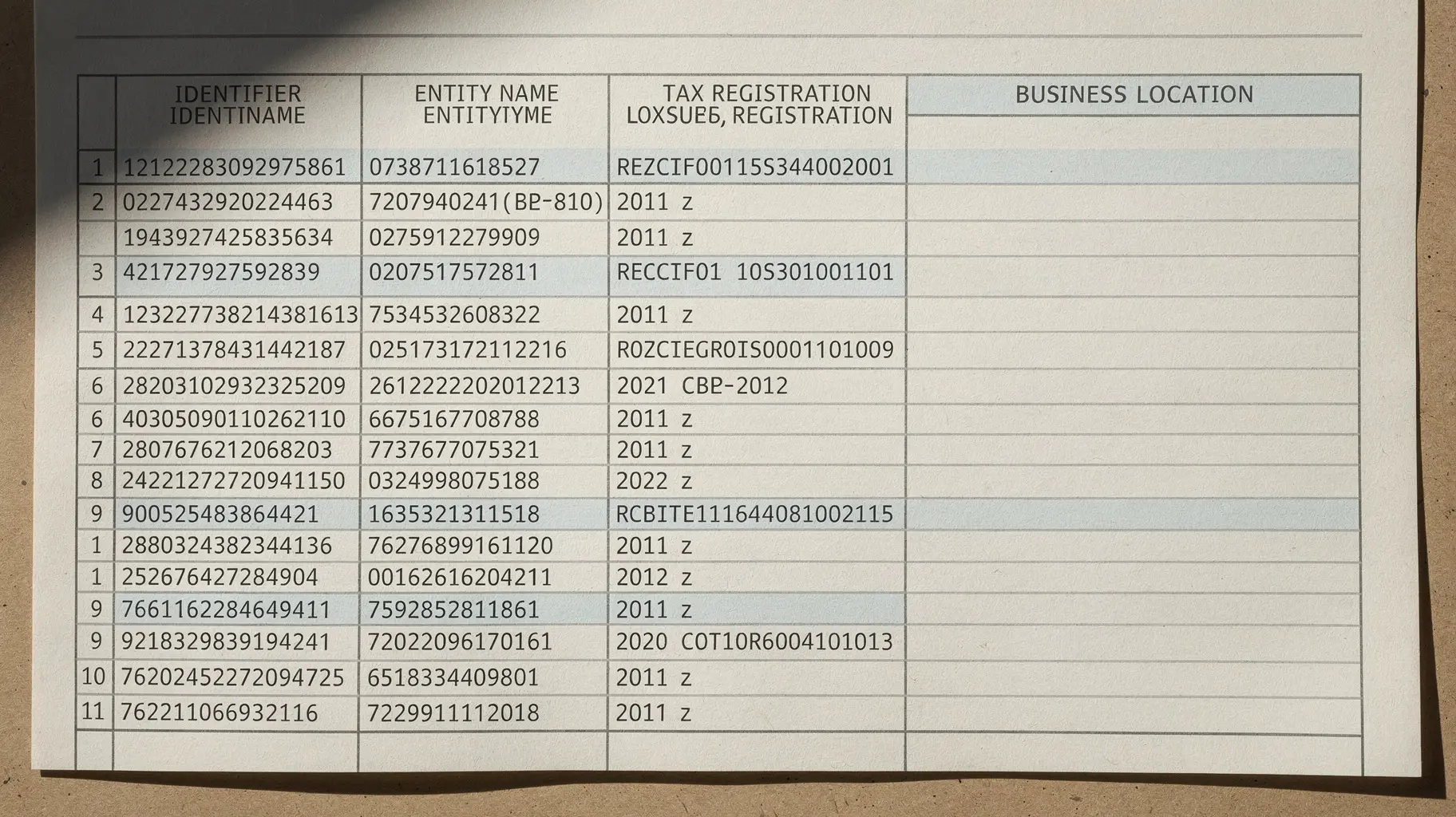
ABN Lookup Can Name Four Companies to the Day. It Cannot Name a Single Director.
Four companies, four ABNs, four status dates — and not one human being. Australia's free business register is precise about legal persons and silent about the people who run them, and the only page that names Michael Lim was written by his own company.

Leaders
Curran's Signature Is on the Letter. The Numbers Are Not.
For two years running, ARIN's annual report opens with a message signed by John Curran and a board chair — and neither letter contains a single dollar figure or member count. The numbers live pages deeper, printed by staff. The one document that carries his personal attestation…

Leaders
The 727 Problem: APNIC's 2035 IPv4 date fails a calculator
Christopher Hawker's prop-168 hands APNIC voters a date for the end of the IPv4 pool: 2035. It takes three numbers to get there. Two you can check in your head. The third — the one doing all the work — is never shown, and neither is the day the clock starts.

Leaders
Kilmer's 5% Is Checkable to the Cent. His 2030 Is Not.
Hank Kilmer, Treasurer of the ARIN Board of Trustees, put a rate and a deadline into one sentence at ARIN 58 on 23 October 2026. The rate is legible on eleven published price tags, each multiplied by exactly 1.05. The deadline rests on a revenue base, a customer mix and a…
Leaders
LACNIC's Register Counts to Three. Its Withdrawal Notice Counts to One.
Edwin Salazar's name sits where a register should print it — on a policy that decides whether Latin American and Caribbean IPv4 addresses can leave the region. Then the same register credits the withdrawal of that policy to a single, unnamed 'author'. The distance between those…

Leaders
Six LACNIC Proposals, One Author, and a Register That Dates Everything but Explains Nothing
Jordi Palet Martinez's name sits in the Authors field of six LACNIC proposals. Two became policy. Three died at first consensus assessment. The register timestamps every step and never once says why — so the answer has to be read in the clauses, where the survivors hand out gifts…

Leaders
Alston's 2016 Transfer Draft Asked the Buyer. AFRINIC's Rule Asks the Seller.
In June 2016 Andrew Alston and Christopher Mwangi filed an inbound-transfer draft that put a five-year utilisation plan on the organisation receiving address space. It drew no consensus twice and expired by the clock. The section that governs transfers today puts twelve-month…

Leaders
Lu Heng Wrote a Bill of Rights. The Registry Contracts Wrote a Permission Slip.
Note 72 gives a running network four things to stand on: accurate records, continuity, transfer without theatre, and the right to leave. Set beside the clauses that actually bind a holder, three of the four land somewhere else — and the fourth turns out to be a registration, not…

Leaders
AFRINIC's Chairman Signed. The Powers Behind the Signature Were Never Published.
Emmanuel Adewale Adedokun's end-of-year message ends with his name and his office on the same line. Eight months later the Board's largest act of 2026 went out with the Receiver's consent printed inside the operative sentence — and across the ten AFRINIC and ICANN documents read…

Leaders
The President's Pen: How Namex Admits a Member With One Signature
Consorzio Namex's statute hands admission to the President alone, with the board reduced to a later ratification. What the consortium publishes is a dated welcome — no decider, no decision date, no signature.

Leaders
ARIN Wrote a Two-Thirds Rule for Two Offices. Its Minutes Count Everything Except the Vote.
ARIN's Bylaws require a two-thirds vote before one trustee holds two officer posts. Its minutes print Nancy Carter as 'Chair and Treasurer' — and tally every vote in the room except that one.

Leaders
The Registry Names Two Contact Men. The Board Seat Names a Third.
AFRINIC's record puts Kayemba Laurent Ntumba in the Central Africa seat on a dated announcement and an undated roster row. It puts the network his own filing says he has run since 2000 behind two other men's names — and announces a third less address space than it holds.