Summary
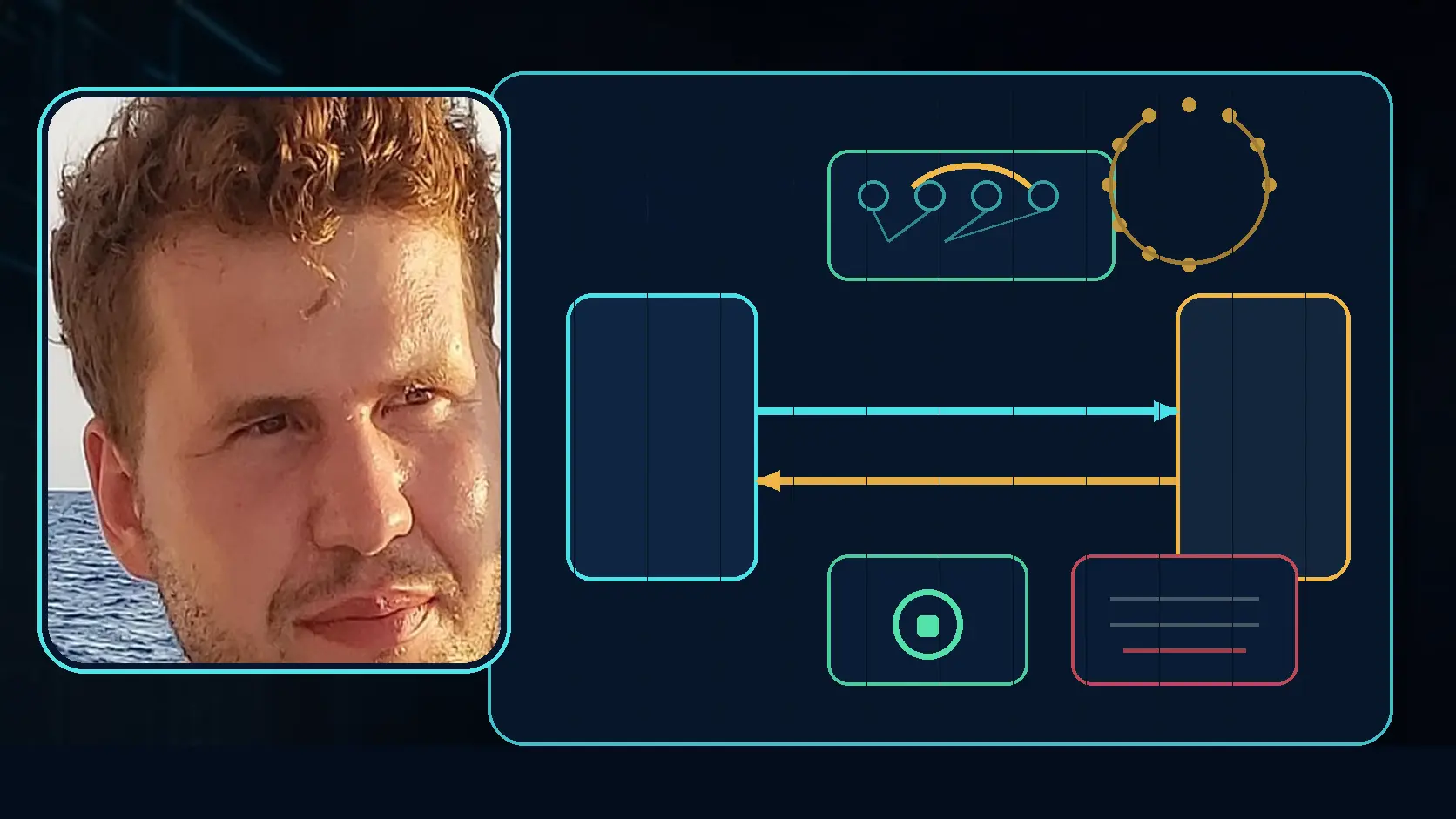
- Daniel Gultsch published RFC 9749 as a Standards Track extension for using VAPID in JMAP Web Push.
- A JMAP capability advertises a P-256 application-server public key. Every StateChange and PushVerification POST must carry a VAPID JWT signed by the matching private key.
- During key rotation, the client must recreate its subscription. A race can produce a 403 on PushVerification; RFC 9749 forbids the server to retry that request.
Capability first, trust later
JMAP clients learn the server’s VAPID key from the session capability object. The Web Push subscription is then bound to that key. When the application server later POSTs to the push endpoint, the push service checks the VAPID assertion and rejects a wrong key.
The browser-compatible SEC1 encoding makes comparison easy, but the encoded string is not a mailbox credential. It identifies an application server key to the push service. It does not authenticate the JMAP session, a mailbox user or the event that triggered a notification.
A valid push is one gate in a long chain
RFC 9749 overlaps JMAP, Web Push and VAPID. Each system hands the next one a narrower object.
The JMAP server first decides that a state change or verification should create a notification. It signs the HTTP push POST. The push service checks that application-server key. The browser receives a push message, and the client eventually connects back to JMAP to discover the actual change.
A successful VAPID request therefore proves that a matching application server reached the push endpoint. It does not prove the event exists, that the browser is online, that the client fetched the change or that the user saw anything.
Rotation creates a precise race
On key rotation, the server updates sessionState; the client must monitor it and recreate the subscription. Old subscriptions may survive a transition, then must be destroyed.
The documented race begins when the client reads the session, but the server rotates before the client completes PushSubscription/set. The new PushVerification may go to an endpoint still associated with the old key, and the push service returns 403. The server must not retry. The client must compare the returned session state with its expected key and may retry or remove the failed subscription.
That makes rotation a distributed state problem. A valid push key, a valid session state and a valid subscription can coexist briefly while the relationship among them is stale.
The receipt stops before human delivery
The deployment receipt should keep application-server key version, JMAP session state, push endpoint age, subscription identity, VAPID result, 403, retry policy and the later JMAP fetch separate. The push service sees no inbox, and the JMAP server does not know whether a person read the alert.
RFC 9749 reports no delivery rate or implementation census. The useful conclusion is narrower: VAPID gives JMAP a way to identify the application server at the push boundary; every later fact needs its own evidence.
Sources: RFC 9749; RFC 8620; RFC 8030; RFC 8292; Daniel Gultsch GitHub profile.
Member Briefing
Read the full trend briefing
Members read the full briefing with the source notes behind every finding.
Strategic Circle
A daily briefing in your language, built from changes we have verified.
Join for USD 20/monthCancel anytime.
Members also get the full research library, a daily briefing on the networks they follow and the private forum.