Summary
- ReliabilityFirst's enforcement commentary on vegetation management names FAC-003-3 R2 and FAC-003-4 R2, counts eight ERO Enterprise settlement violations between 1 January 2020 and 1 August 2025 and places three in its own footprint, then calls their penalties "publicly-filed violations".
- On critical infrastructure protection the same system publishes a merged share — "Over 80% of noncompliances discovered in 2025 were either self-reported or self-logged" — and CEII designation in its entirety since the Second Joint Staff White Paper of 23 September 2020, so the standard, the dates and the tier appear in old notices and nowhere in the material read for any post-2020 CIP case.
The same publisher, the same enforcement function, two incomparable kinds of record.
ReliabilityFirst's enforcement commentary on vegetation management does what an enforcement record is supposed to do. It names the standards, in its own words: "From Jan. 1, 2020, through Aug. 1, 2025, the ERO Enterprise has processed eight violations of FAC-003-3 R2 and FAC-003-4 R2 (predecessor versions of FAC-003-5 R1) in Settlement Agreements. Three of these eight violations occurred in the ReliabilityFirst footprint." (ReliabilityFirst, 'Enforcement Explained: Trends in vegetation management') Three of eight is 37.5 per cent of that stated set over that stated window — my subtraction, in the same unit, with no annualisation. The piece then refers to the "Penalties associated with these publicly-filed violations" and sends the reader to NERC's searchable spreadsheet notice of penalty to read them.
Against that, the publisher's 2025 Impact Report carries one sentence that reads like a case statistic and is not one: "Over 80% of noncompliances discovered in 2025 were either self-reported or self-logged, showing continued diligence and transparency of entities in identifying and reporting issues." The numerator merges two discovery routes — the entity's own report and the entity's own log — and the retained text prints no numerator and denominator pair for the figure. So I quote it exactly as printed and do not rebuild it.
The report also records that, compared with 2024, there was a significant increase in violations of CIP-011 (Cyber Security - Information Protection) in 2025. That is a direction, not a count. And it describes the engagement that follows either route: "When entities self-identify noncompliance, or we identify noncompliance through one of our monitoring tools, our enforcement team quickly engages with entities to ensure the underlying issues are appropriately addressed and resolved." No case accompanies any of the three sentences.
The CIP Themes and Lessons Learned, third edition 2024, goes further into a real failure and stops precisely where a case would begin: "As a result of relying on an incorrect patch source, security patches for the critical system application were not evaluated or applied for over three years." No standard, no requirement, no entity, and no date at either end of the three years, so the interval cannot be measured from the document that reports it. Four themes structure the edition — latent vulnerabilities, insufficient commitment to low-impact CIP programs, labour and skillset shortages, and performance drift.
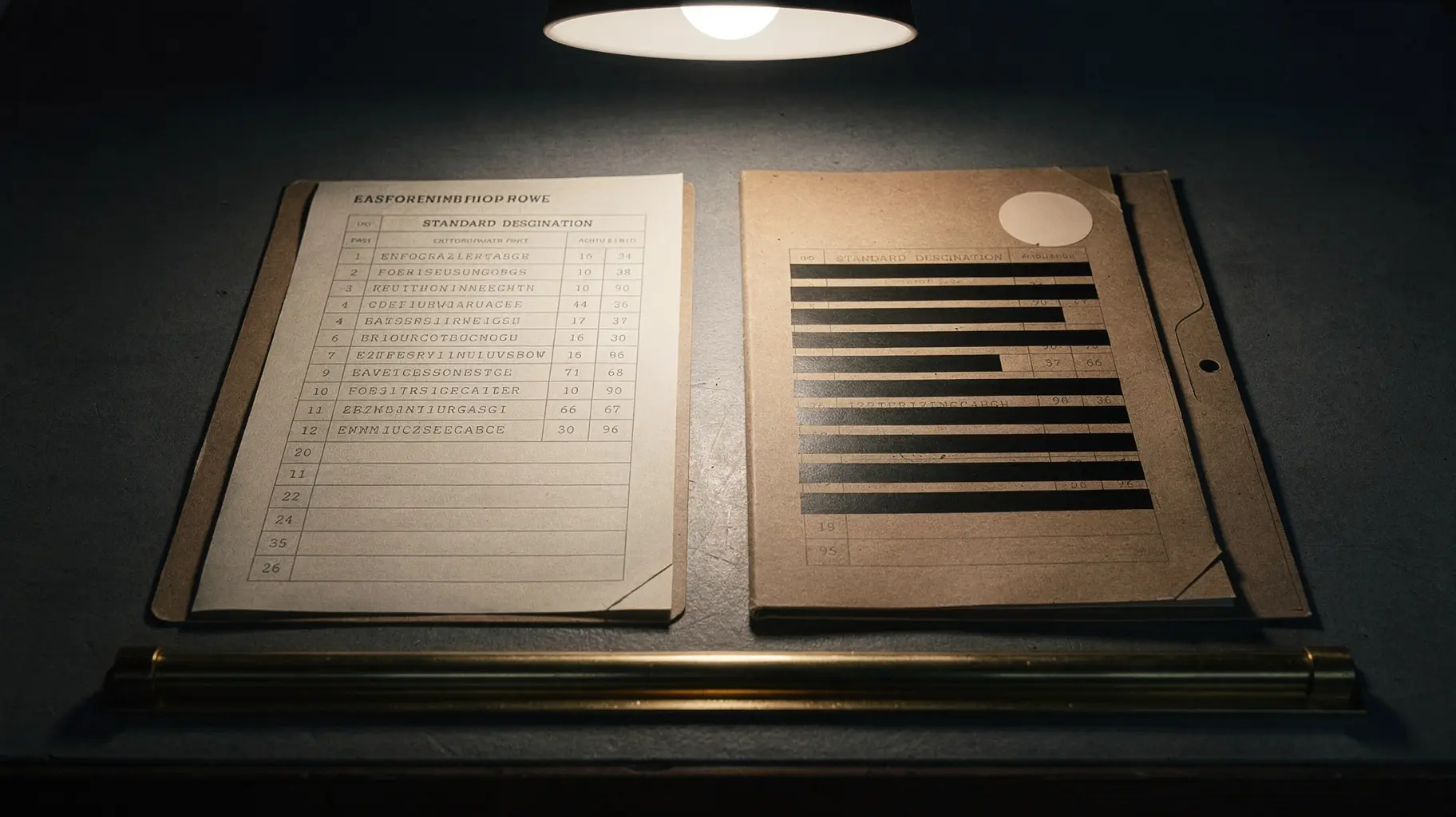
This is a publication regime, not a lapse, and the documents say so themselves. The Second Joint Staff White Paper of 23 September 2020, Docket AD19-18-000, states: "Additionally, because of the risk associated with the disclosure of CIP noncompliance information, NERC will no longer publicly post redacted versions of the CIP noncompliance filings and submittals." The same paper records that CIP noncompliance filings and submittals will request CEII treatment for the entire filing and that Commission staff will designate them CEII in their entirety, a class that expressly covers notices of penalty, spreadsheet notices of penalty, Find, Fix, Track and Report items and compliance exceptions.
NERC's CEII justification itemises what that removes from view: the identity of the entities and any information that could lead to their identification, NERC Compliance Registry IDs, registered functions, facility and asset names, and prior NERC Violation IDs. It requests that the redacted portions of compliance exceptions, FFTs and spreadsheet notices of penalty be designated non-public and CEII under 18 C.F.R. 39.7(b)(4) and 388.113, and it argues that "successive public disclosures of additional pieces of redacted information will increase the likelihood of a cyber-intrusion."
What survives is the aggregate. NERC's Q2 2021 quarterly CMEP report states that "NERC continues to report CIP noncompliance statistics to the public in its quarterly and annual CMEP reports, which are available on NERC's website." That sentence is dated to the second quarter of 2021; whether the most recent quarterly and annual reports still carry CIP statistics was not verified beyond that report in the documents read for this piece.
I ask five things of an enforcement record: the standard and requirement number; the date the condition arose or was discovered; the date the registered entity reported it; the date of the disposition; and the disposition tier together with the rule that assigns it. That test is my instrument, not a statutory or NERC requirement, and it is answerable for older records.
NOC-2552, a NERC full Notice of Penalty of 28 September 2017 addressing an Unidentified Registered Entity and read here from a third-party host, names no entity — it removes non-public and confidential information including the entity's identity — and still prints a table with columns for NERC Violation ID, Standard, Req., VRF/VSL, Discovery Method, Date, Risk and Penalty Amount. It resolves 59 violations of which 50 are CIP, which leaves nine non-CIP violations, and 50 of 59 is 84.7 per cent, my arithmetic on the notice's own printed counts. The URE, in the notice's words, "admits to the violations and agrees to the assessed penalty of five hundred thousand dollars ($500,000)".
FERC's order of 19 July 2012 in Docket No. NP11-238-000 is answerable for a named case: "NERC submitted a Notice of Penalty filing on July 28, 2011, assessing a $19,500 penalty against the Southwestern Power Administration (SWPA) ... SWPA self-reported certain violations to SPP Regional Entity in a report submitted July 23, 2009; SPP Regional Entity identified additional violations during a November 2009 spot check." The same order identifies the standards at issue as CIP-004-1 and CIP-007-1 and names the Southwestern Power Administration. Subtracting printed dates inside that one case gives two years and five days from self-report to filing; two years, eleven months and twenty-six days from self-report to order; and eleven months and twenty-one days from filing to order. Those three intervals are my subtraction of printed endpoints, not printed figures. The order does not print requirement numbers for that case, and none is stated here.
The First Joint Staff White Paper of 27 August 2019 explains how rare the naming was: "With only one exception, NERC has sought CEII treatment for the name of the violator in all CIP NOPs. ... In Docket No. NP11-238-000, the CIP NOP identified the Southwestern Power Administration, a federal power marketer, as the violator." That sentence describes the position on its own date of 27 August 2019 and is not extended here to 2026.
In the material read for this piece — the 2020 Second Joint Staff White Paper, NERC's CEII justification, the Q2 2021 quarterly CMEP report, ReliabilityFirst's 2025 Impact Report and its 2024 CIP Themes edition — a post-2020 CIP case record that prints the requirement, both interval endpoints and the tier with its assigning rule was not located. NERC's 2025 enforcement-filings index returned no readable body text when I tried to read it, so nothing in it is asserted here either way.
The control recommendation is a field, not an accusation. The register already receives the unit record — the requirement, the discovery, the report, the disposition — and could print a case identifier with both interval endpoints while keeping asset names, registry identifiers and registered functions confidential. A share measures how often entities catch themselves. Only a case lets anyone outside check whether the catch was followed by a fix.
No earlier BTW article on ReliabilityFirst was located before this piece was written. Our neighbouring coverage read a nuclear event notification rule, the Department of Energy's Form DOE-417 and a grid-connection gate measured in MVA; none read the register that receives an operator's own account of a cyber or operational violation and asked what a printed case still lets a stranger test. ReliabilityFirst Corporation sits at the intake end of that register: the party that receives the self-report, writes the disposition and publishes the tally.
Member Briefing
Read the full trend briefing
Members read the full briefing with the source notes behind every finding.
Strategic Circle
A daily briefing in your language, built from changes we have verified.
Join for USD 20/monthCancel anytime.
Members also get the full research library, a daily briefing on the networks they follow and the private forum.