
Intelligence
Latest Articles
Latest intelligence on infrastructure operators, policy decisions, market moves, and digital power shifts.

History
Jim Gray and the Vote That Could Not Decide a Two-Phase Commit
In two-phase commit, a entity that writes a durable prepare record and votes yes has proved that it can obey either final outcome. It has not committed, and a missing coordinator does not give it permission to guess.

IETF
The Backup Was Valid. The Signature State Was Not: RFC 10033
A stateful hash-based signing key is not merely secret material in storage. It is also a changing account of one-time keys already exposed to the world. RFC 10033 makes that operational distinction unavoidable: restoring an authentic but older copy can recover the right key while…

History
Barbara Liskov and the Argus Commit That Stopped at the Guardian Boundary
Argus made failure a language-level concern: guardians owned recoverable entities, handlers crossed machine boundaries, and actions could commit or abort a distributed change. Its strongest lesson is also its limit. A committed action settled the participating Argus state; it did…

Story
APNIC Wants Login to Read the Current IRT Email State
An account should not inherit yesterday’s lock answer when today’s IRT contact state says something else. APNIC’s 2026 roadmap proposes replacing reliance on a static account lock flag with a login-time check of continuously tracked IRT email validity. That is a small sentence…

IETF
An AEGIS Codepoint Is Not a Negotiation Receipt
RFC 10032 gives six AEGIS variants stable AEAD identifiers. It does not show that two peers offered the same suite, chose the same tag length, executed the intended implementation path or protected a single live packet with it. The missing record sits between specification…

History
Anita Borg and the Systers List: Admission to a Governed Room, Not Proof of Equality
A message could enter Systers because a member, an address and the list's routing rules admitted it to a private professional room. That delivery made scattered women in computing less isolated; it did not verify every identity claim, guarantee a career opportunity, erase…

Story
AFRINIC's Resource Certificate Can Be Valid Without Naming the Member
A resource certificate with a generated, apparently meaningless Common Name can be doing its job perfectly. AFRINIC’s own practice statement shows why: the public certificate proves a bounded resource authorization, while a different chain connects the request key to a…

IETF
A DHCP Lease Is Not a Relay-Topology Receipt
RFC 9928 lets an intermediate relay speak DHCPv4-over-DHCPv6 for a legacy IPv4 client that knows nothing about the conversion. The lease can be valid while the evidence connecting the request to its physical access port is incomplete. The missing entity is not another success…

History
Andrew S. Tanenbaum and the Amoeba Capability That Authorized an Object, Not a Person
Amoeba compressed a service address, an entity name, an operations mask and an anti-forgery check into 128 bits. The resulting capability could travel with user code and carry authority without a central list of holders—but a valid token still said nothing by itself about the…
Leaders
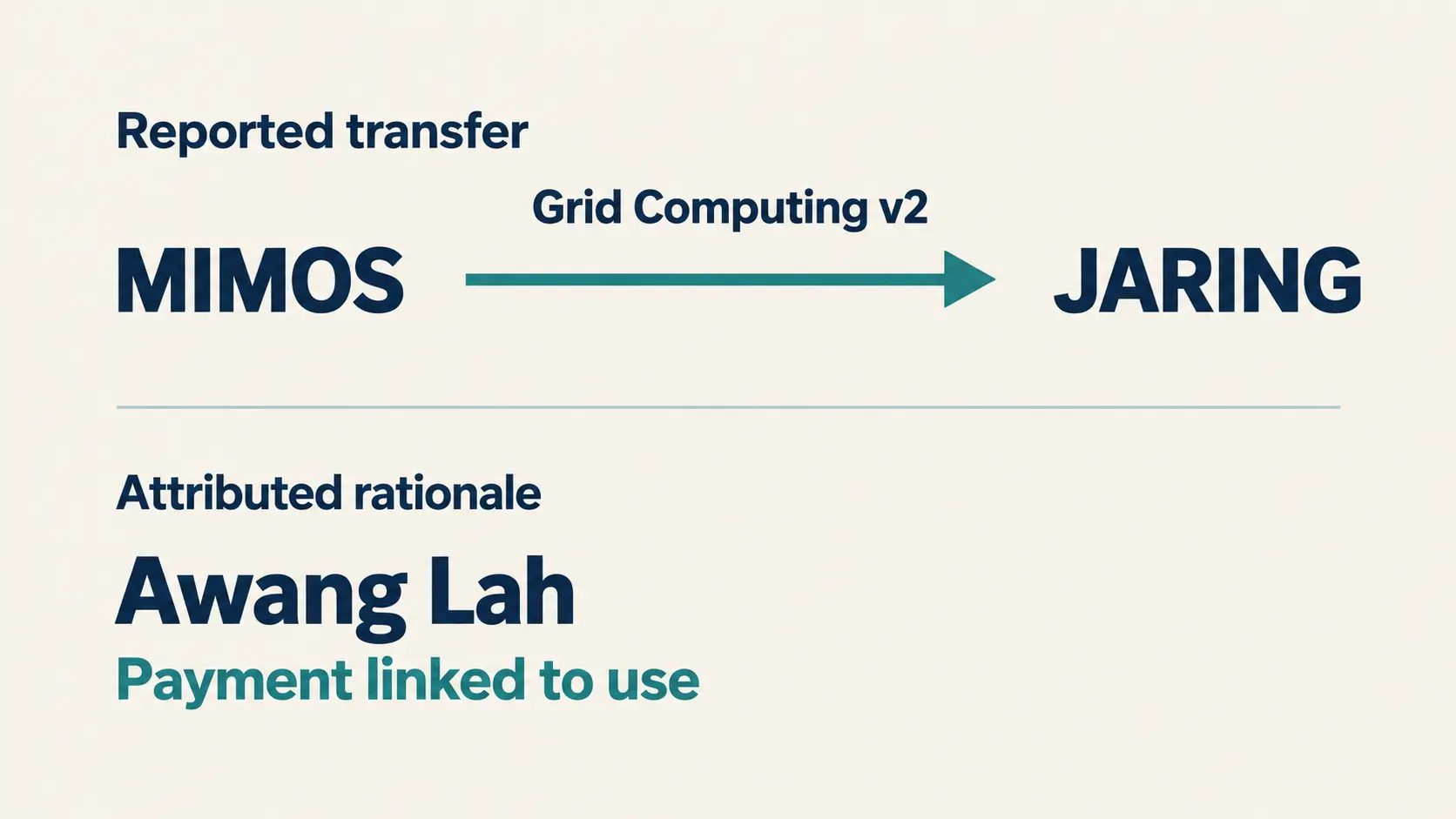
Mohamed Awang Lah and JARING’s pay-for-use proposition
The relevant leadership question is what an executive argued a technology would do for customers—and what would establish that the benefit reached them.

Global Cloud Services
Cloudflare R2’s zero-egress price is not a zero-cost exit
Cloudflare lists no charge for outbound transfer from R2 and documents a way to copy entities out. The remaining economic question is what customers must spend—and successfully operate—to turn that export into a working replacement.

Global Institutional
ISC DHCP to Kea: why a converted file is not a migrated service
ISC’s keama utility addresses a specific part of the move from ISC DHCP to Kea: converting recognized configuration constructs into Kea JSON. The harder deployment question begins after that output exists. Lease state, high availability, DNS updates and locally defined behavior…

ICANN
The Enforcement Chain Behind ICANN’s Rules
ICANN's authority becomes consequential only when a policy, contract, compliance process and review route connect to an operational act. The public record identifies that chain, but it does not yet prove a single regulator-like mandate, a current universal contract baseline or an…

IETF
The IETF’s Authority Is Procedural: How Consensus Becomes a Decision—and Where It Can Be Challenged
The [Internet Engineering Task Force](<https://btw.media/en/directory/ietf>) does not govern through a statute, a regulator’s licence or a conventional corporate chain of command. Its authority is assembled through a procedural mechanism: a community discusses technical…

Leaders
The missing handoff: What Malaysia’s internet history can prove about Mohamed Awang Lah
Malaysia’s early internet history contains two institutional stories that are often placed too close together: the development of public connectivity around RangKom and JARING, and the later organization of national incident response through MyCERT, NISER and CyberSecurity…

Global Regional ISP
ROYA’s AS210837: What Would Prove Operational Control and Durable Repair?
ROYA’s AS210837: What Would Prove Operational Control and Durable Repair? intelligence summary explains the development, the public evidence available to readers, the organisations involved, the regional context, market exposure, and the infrastructure consequences that may…
Global Cloud Services
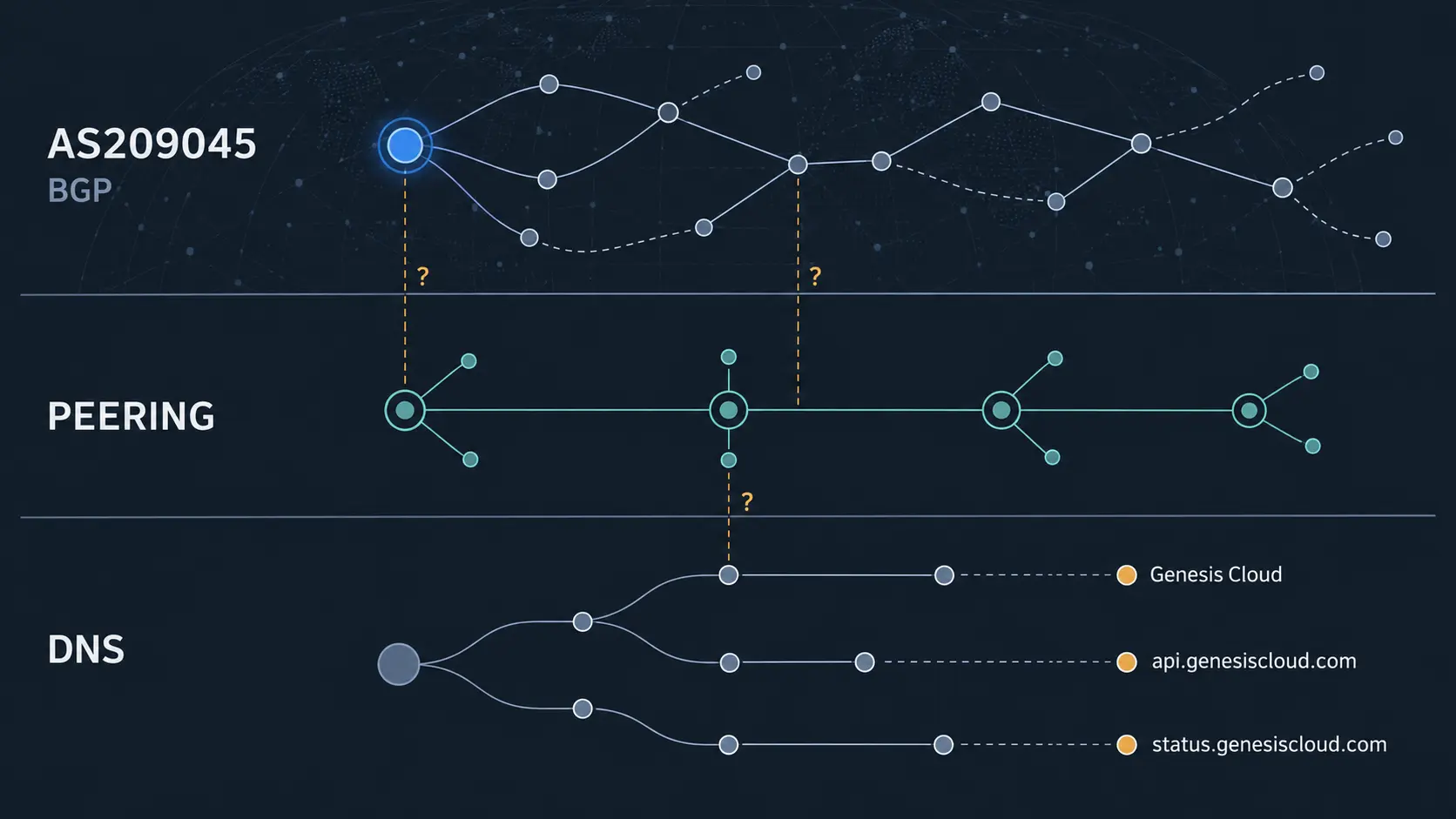
Genesis Cloud’s Network Control Plane: When AS209045, DNS and Peering Still Do Not Prove Reachability
Public records can describe a cloud provider’s network identity without proving that customers have an independently observable path to its applications. Genesis Cloud’s case is therefore less a question of whether one registry entry is authoritative than of whether several…

Global Institutional
RANCID and the enduring value of a one-line network diff
RANCID has endured successive generations of network management because it performs one narrow task: it logs into devices, collects selected configuration text, removes expected noise and commits the result to version control. It does not model intent, approve changes or…

Creators
Jeff Bonwick and the engineering that makes failures visible
Jeff Bonwick’s career links two problems often treated separately: how an operating system kernel allocates small entities quickly, and how storage verifies that the bytes it reads are those the application wrote. From the slab allocator and per-CPU caches to ZFS, DSSD and…

Global Institutional
LibreNMS and the operating cost of seeing the network clearly
LibreNMS gives operators a transparent, self-hosted way to discover devices, poll counters, build inventory and turn network state into alerts. Its credibility does not come from a promise that open source is automatically safer or cheaper. It comes from an operating bargain: the…