
Policy continuity, legitimacy, and accountability signals across internet governance institutions.
Governance
Governance
Internet governance intelligence tracks institutions, policy processes, standards activity, registry operations, accountability disputes, and implementation signals that affect internet infrastructure. BTW.
RIR WatchdogCase FileNumber Resource SocietyICANNIETFHistory of InternetNOGs

RIR Watchdog, Case File, NRS, ICANN, IETF, History of Internet, and NOG sessions.
Coverage prioritizes implementation evidence and institutional behavior over declarative positions.
Latest Coverage
Latest from Governance
7,558 articles

History
RFC 7168 Updated the Coffee-Pot RFC. It Did Not Make Tea an Internet Standard
In 2014, a tea-brewing extension pointed to RFC 2324 with an Updates header. On the same page, RFC 7168 described itself as an independent, informational contribution and made no claim about implementation or deployment. The labels answer different questions.

History
Nigeria’s .ng Started with One Domain. The Registry Handover Had to Be Learned
In 1995, the first recorded .ng namespace was remarkably small: a RINAF retrospective says its only registered name at the time was `yaba.edu.ng`. Yet the work around that name—registration rules, a WHOIS database, technical operation and eventual succession—already crossed…

Story
LACNIC’s Board Ties Comisión Fiscal Access to Possible Financial Impact, but Does Not Define the Test
A sentence in LACNIC’s March 2025 Board minutes describes a private route from masked meeting material to the Comisión Fiscal. The route depends on possible financial impact. The record does not explain how that trigger is judged, and it does not show that any passage was…

History
The Internet Arrived in Stages: Papua New Guinea’s 1997 Launches
Papua New Guinea’s Internet did not enter the record as one switch thrown on one day. A carrier announcement, an international gateway, retail providers, academic use and a public website each marked a different kind of arrival—and the sources assigned them different dates.

History
The Computer Had No Address Yet. BOOTP Told It How to Start
A diskless workstation had to ask the network for an address and a boot file before it could request the file that would start its operating system. BOOTP made that circular first exchange a protocol problem.

History
The Key Was Generated in Two Rooms: DNSSEC’s First Root KSK Ceremony, 2010
The signed root zone appeared in July 2010, but the public milestone concealed a more exacting sequence. A key was generated, protected, moved and accepted across two facilities before the root began carrying DNSSEC signatures. The interval between those steps shows what a…

History
WAIS Could Search a Database; Finding the Source Was a Separate Job
WAIS made a named database searchable across the network. In 1991, that still left a prior question for the user: which source should the client ask, and who had made it discoverable?

History
The International Link Came First; TCP/IP Came Later: Lithuania’s LITNET, 1991–94
Lithuania’s first route abroad was already useful before its research network had become an ordinary IP network. The early story runs through a satellite channel, X.25 packet switching and X.400 mail, then through a domestic link and a gradual TCP/IP transition.

History
The Phone Bill Became Minitel’s Payment Rail: Télétel, 1984–87
A Minitel user did not need a separate account with every information service. Télétel could carry a charge through the telephone bill, then route a share back to the provider. The convenience came with a trade: France’s telecom operator also controlled the settlement rules and…

Story
ARIN Closed the Suggestion; the URL Token Still Works
ARIN has delivered the safer authentication path that a community suggestion requested four years ago. The suggestion is closed, yet the older URL method remains accepted and has no public retirement date in the material reviewed here. That is not evidence of a breach or of slow…

History
Karachi Went Online; Four Cities Still Waited for the Upgrade: Digicom in 1995
In August 1995, a Karachi company could offer a live route to the Internet while the service reported in four other cities still belonged to the slower world of stored mail. Pakistan’s first commercial online service was a real connection, but its launch did not make the same…

History
HotJava Moved the Web’s Extension Point to the Reader’s Machine
HotJava proposed a browser that could acquire behavior from the page’s server: an applet crossed the network and ran inside the reader’s browser. That made client-side execution the route to a more adaptable Web—and made the local security boundary part of the product.

Story
APNIC’s Prop-169 would make the IPv4 needs test match each delegation
APNIC has recorded consensus on a narrow change to its initial IPv4 needs test. The proposal would replace a fixed /23 planning reference with the delegation being assessed; the policy text, guidance and implementation record still need to be read separately.
SANOG
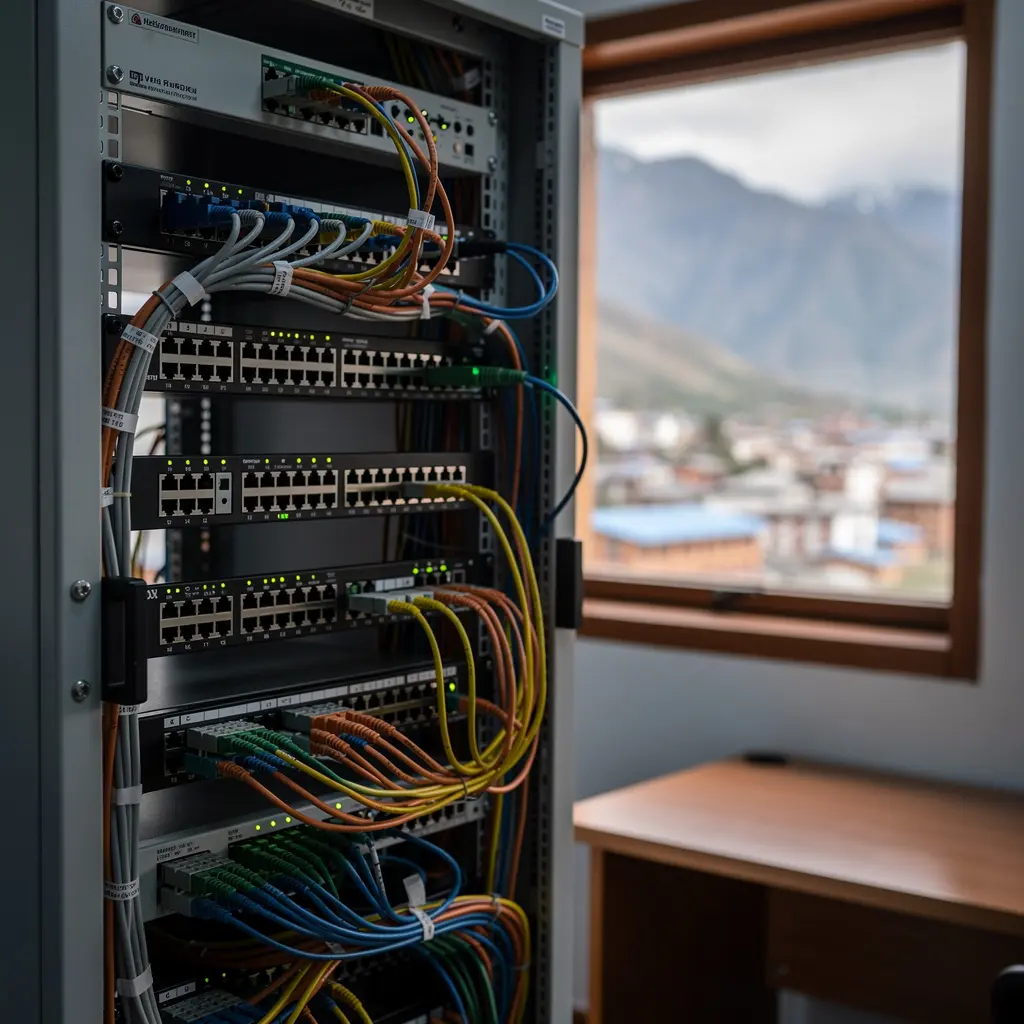
Bhutan Internet Exchange: membership, peering and the resource footprint behind national interconnection
Bhutan Internet Exchange: membership, peering and the resource footprint behind national interconnection intelligence summary explains the development, the public evidence available to readers, the organisations involved, the regional context, market exposure, and the…

History
The Mac Could Join; the Reflector Had to Carry Everyone: CU-SeeMe, 1993–1995
CU-SeeMe made a modest Macintosh a place to send live pictures across the Internet. A second entity could connect directly. A third changed the problem: the group needed a Unix machine to receive streams, copy them, and redistribute them. The apparent simplicity at the desktop…

History
Eight Institutions Built India’s Research Network Before Public Internet, 1986–95
India’s public Internet service arrived in 1995, but its research community had been building international connectivity for years. ERNET’s history is a story of institutions learning to operate a network together—and of the boundary between that shared research system and a…

ICANN
ICANN’s FY26 accounts show a $36m pre-investment gap in the New gTLD segment
ICANN’s audited FY26 schedule puts a $35.994 million gap in the New gTLD Program before investment gains, while ICANN Operations is $18.370 million positive on the same basis. The segments end the year in opposite positions even as consolidated net assets rise.

History
64 Terminals Had Not Been Tested Together: ARPANET’s 1972 Public Demonstration
In July, the plan for the October conference still had open questions about terminal capacity, applications, installation, documentation and human help. The public encounter with ARPANET began as an integration job.

History
The Network Was Free. The Internet Had to Pay Its Way: Zambia’s ZAMNET, 1991–95
A university email network reached hundreds through scheduled calls before Zambia had a direct Internet circuit. Turning that shared system into a public service demanded a company, outside financing and a way to pay recurring costs.

History
IMDb Was Searchable Before It Was a Website: The Usenet Movie Database, 1989–93
The searchable movie database grew out of Usenet lists before it had a website. Its early architecture joined scripts, volunteer maintainers, FTP copies, email queries and, later, a Cardiff web interface.
Session Map
Governance Branch
RIR Watchdog
Five regional sessions tracking allocation policy, board legitimacy, and institutional continuity.
Open RIR WatchdogCase File
Long-cycle governance dossiers with legal, election, and institutional stress analysis.
Open Case FileNumber Resource Society
Membership, charter, and resource-governance intelligence from the NRS ecosystem.
Open NRS SessionICANN
DNS coordination, accountability frameworks, and global multi-stakeholder process dynamics.
Open ICANN SessionIETF
Protocol standardization trajectory and interoperability risk under fragmented policy conditions.
Open IETF SessionHistory of Internet
Long-cycle infrastructure history used for governance interpretation and structural forecasting.
Open History SessionNOGs
Operator-level implementation intelligence from APRICOT plus regional and national NOG ecosystems.
Open NOGs Session