Summary
- RFC 791 defines the Time to Live field and says each gateway handling a datagram decreases it before forwarding.
- A RIPE Labs study found routers that replace the probe TTL with a large fixed value, so later routers never return the Time Exceeded messages traceroute expects.
- The authors report rewrites in traceroutes from 950 probes, represented as 800 IPv4 and 538 IPv6 observations, across 471 ASes, represented as 446 IPv4 and 263 IPv6 AS observations.
- The examples include Orange AS5511, AT&T AS7018 and Arelion AS1299. Historical RIPE Atlas inner-TTL values show the phenomenon since at least 2018.
Traceroute makes a deliberate bet
The method sends probes with rising TTL values. A router on the path decrements the field. When it reaches zero, that router can return an ICMP Time Exceeded message that identifies itself. The next probe survives farther, revealing another hop.
The path is inferred from failure. The destination matters, but the evidence arrives from the routers before it.
RFC 791 gives this operation a basic rule: each gateway handling the datagram decreases the TTL before forwarding. The mechanism depends on routers changing the value in the expected direction.
A large TTL erases the middle
RIPE Labs describes a router that overwrites the incoming TTL with a fixed value such as 255. The probe no longer expires where the trace expects. Later routers forward it without exposing their addresses, and the destination finally responds.
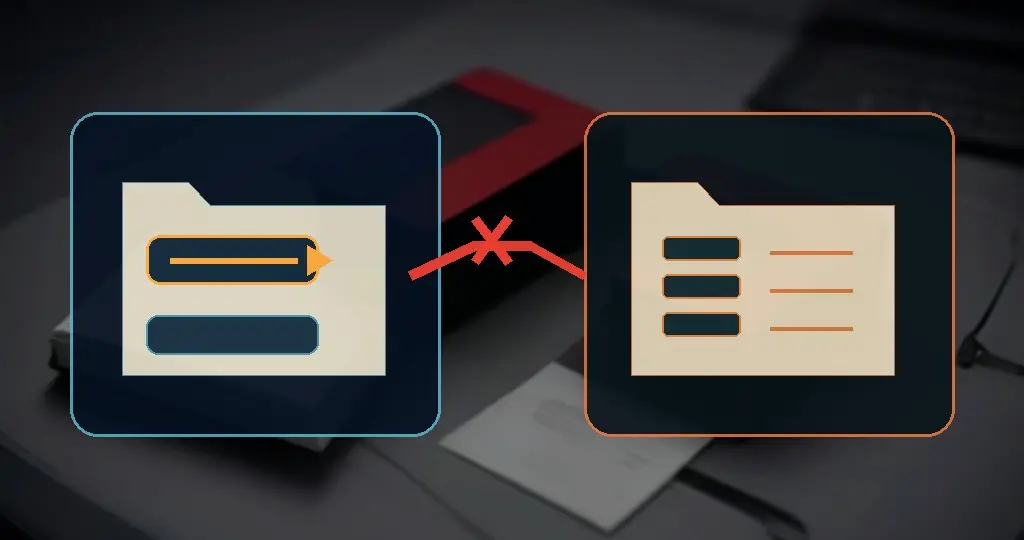
The collector joins the last visible hop to the destination. The missing networks are absent, not necessarily because they do not exist, but because the trace never elicited a response from them.
That can turn a multi-network path into an apparent direct link. It can make a transit route look shorter, place an imaginary adjacency next to a target and erase exactly the providers an engineer wanted to inspect.
The RIPE Atlas sample is broad
The authors ran measurements from RIPE Atlas probes to destinations they controlled and captured the arriving probe TTLs. They report affected traceroutes from 950 probes, with 800 IPv4 and 538 IPv6 observations, across 471 ASes, with 446 IPv4 and 263 IPv6 AS observations.
Those figures mix units by protocol and must be read as the article presents them. The important signal is breadth: this is not one lab fault or one path. It appears in many probes and many autonomous systems.
The network examples add operational detail. Fourteen probes in Orange AS5511 experienced a rewrite while the last visible hop remained in the source AS. Sixty-five in AT&T AS7018 experienced one while the trace still appeared inside that network. Several other ASes experienced a rewrite only after traversing Arelion AS1299.
The point is not that every rewrite happened in those carriers. The point is that an affected probe can misplace the boundary. A path may look as if it jumps directly between networks that are several recorded hops apart.
ICMP keeps one historical receipt
A traceroute can recover the final probe TTL when the destination returns an ICMP error that quotes the offending IP header. RIPE Atlas sometimes stores this inner TTL. The authors searched historical daily traces for arrivals whose TTL was higher than any value sent from the probe.
That is a useful limiting case. A higher arriving TTL cannot be the expected decrement. It proves the field changed upward somewhere in the path. The archive shows this state since at least 2018.
The absolute number of affected traces increased. The article does not publish the matching trace and probe denominator, so the rise does not establish that the affected share rose. More probes, more daily traces and more stored inner-TTL values can lift a count while every network remains equally affected.
One direction is not the path
A forward traceroute records replies from routers on the path toward the destination. It does not prove that packets from the destination return through the same sequence. A destination-side trace can expose a different next-hop sequence because routing is directional.
The rewrite makes this gap sharper. The forward observation is already incomplete. A reverse trace may show a real path in another direction without repairing the forward one.
A stronger topology receipt needs bidirectional traces, measured arrival TTLs and a point where both directions meet. It also needs the sampled destination and source address families, the complete configured probe range, the router response distribution and the first and last time each rewrite state was observed.
What the affected view changes
An operator may use traceroute to choose a new transit provider, diagnose a reachability complaint or draw a map of network dependence. A hidden middle network changes the story. The route looks shorter, the wrong last visible AS becomes the apparent neighbour and the real intermediate operator disappears.
Researchers face the same trap at scale. A topology pipeline can count inferred links as adjacency, weight an invisible provider as absent and publish a graph that is consistent with the responses while inconsistent with the forwarding path.
The next fact that changes the judgment is a provider-level policy or router test showing which routers rewrite which TTLs and under what conditions. Until then, the useful statement is narrow: a traceroute reports the path it managed to elicit. Adjacency requires more than two dots drawn in the same column.
Official sources: RIPE Labs traceroute analysis; RFC 791.
Member Briefing
Read the full trend briefing
Members read the full briefing with the source notes behind every finding.
Strategic Circle
A daily briefing in your language, built from changes we have verified.
Join for USD 20/monthCancel anytime.
Members also get the full research library, a daily briefing on the networks they follow and the private forum.