Summary
- The Draft Policy ARIN-2026-6 page is titled “Clarification of Recipient Requirements for 8.3 Transfers” and shows transfer-hold text dated 24 November 2026.
- Its Proposal action links to ARIN-prop-356, whose title and policy statement concern multiple-block fulfillment of ARIN waitlist requests.
- The proposals JSON also stores prop-356 with the waitlist title and policy but adds comments describing the unrelated 12-month transfer-hold goal.
- ARIN-prop-355 contains the transfer-hold policy statement now shown on Draft 2026-6. The Draft page does not point readers there.
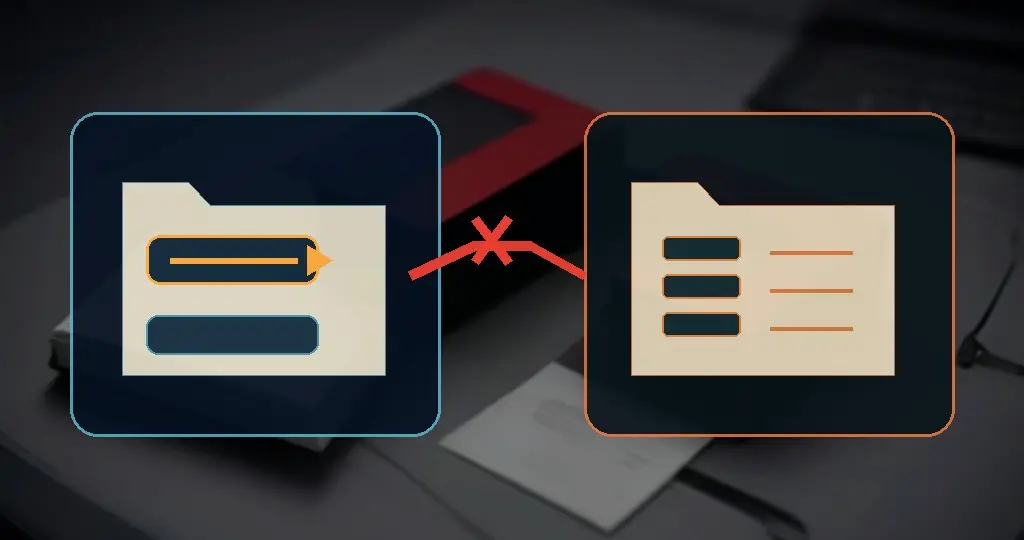
The draft says one thing and links to another
The Draft page is specific. The title names recipient requirements for Section 8.3 transfers. The problem statement describes confusion around a recipient becoming the source of a later 8.3 transfer. The proposed text adds a 12-month hold measured from approval, extends the wording to “any resource,” mirrors the condition into Section 8.4 and includes a renumbering waiver.
The page also offers a Proposal link. It points to ARIN-prop-356.
That page begins with a different title: “Multiple-Block Fulfillment of ARIN Waitlist Requests.” Its problem is the inability to satisfy one approved IPv4 waitlist request with several noncontiguous blocks. Its policy statement amends NRPM Sections 4.1.6 and 4.1.8.2. It proposes a change in how available IPv4 addresses may be packaged, not how a transfer recipient is held out of a later source role.
A reader can therefore finish the transfer-hold statement, follow the official proposal link and land in a waitlist policy with a different resource, process and operational stake.
The JSON carries the mix into machine reading
The problem extends beyond one anchor. ARIN publishes a machine-readable proposals.json. The current file contains separate records for prop-355 and prop-356, which makes comparison possible.
Prop-355 has the correct transfer-hold title and the all-resource policy statement. It is last updated 6 November.
Prop-356 has the correct multiple-block waitlist title, originator, problem statement, policy statement, status and URL. It is last updated 16 November. Its comments field then asserts that the proposal is not intended to change existing practices and that its goal is to state the 12-month hold requirement.
That sentence belongs to the transfer proposal. It sits below an unrelated waitlist policy. The JSON has not merely inherited a wrong hyperlink; it combines the identity of one proposal with the rationale of another.
The public process has four fields to reconcile
Policy readers depend on several small pieces agreeing: draft number, draft title, proposal number and proposal text. ARIN-2026-6 currently produces a split screen. The draft number and title lead to transfer-hold text. The Proposal field leads to prop-356 and waitlist text. The JSON path repeats the pointer and then adds transfer-hold comments to the waitlist object.
These are not cosmetic labels. Proposal numbers organize public comments, mailing-list arguments, originator responsibility, meeting discussion and the later record of what the Advisory Council handled. A wrong number sends a reader into another proposal’s history. A wrong proposal title makes it harder to quote the current draft accurately. A mixed comment field makes automated indexing preserve the same collision.
The public pages do not state how the mismatch arose. No visible revision receipt says which field was created from prop-355, edited to prop-356 or imported with the wrong comment. The reasoning is missing, and so is the name of the policy object being amended at one required hop.
The policy being considered remains a separate question
The current NRPM is the place to read policy in force. Draft ARIN-2026-6 sits inside the policy-development process. Its status is under discussion; its proposed language has not become an adopted rule merely because the page exists.
Readers can still assess the substance. The draft asks whether a recipient of any allocation, assignment or ARIN-processed transfer can become the source of another Section 8.3 transfer within 12 months of approval. It also asks how common ownership, Section 8.2 mergers and renumbering change that result.
That debate becomes harder when the official “Proposal” path resolves to a different problem. The question of whether the hold is good policy belongs in comments. The question of which proposal the Draft is built from belongs in a public mapping receipt.
One corrected pointer would close the obvious gap
The required public fact is narrow: Draft ARIN-2026-6 should identify the proposal that contains its policy text, and proposals.json should keep each proposal’s title, statements, rationale and URL in the same object. A dated change note would show when the mapping was corrected and which record was authoritative before the correction.
Until that receipt appears, the public evidence shows a concrete collision. A transfer-hold draft points to a waitlist proposal. The machine feed repeats it. The policy text itself can be read; the provenance between proposal and draft cannot.
Official sources: Draft ARIN-2026-6; ARIN-prop-355; ARIN-prop-356; proposals JSON; current NRPM.
Member Briefing
Read the full trend briefing
Members read the full briefing with the source notes behind every finding.
Strategic Circle
A daily briefing in your language, built from changes we have verified.
Join for USD 20/monthCancel anytime.
Members also get the full research library, a daily briefing on the networks they follow and the private forum.