
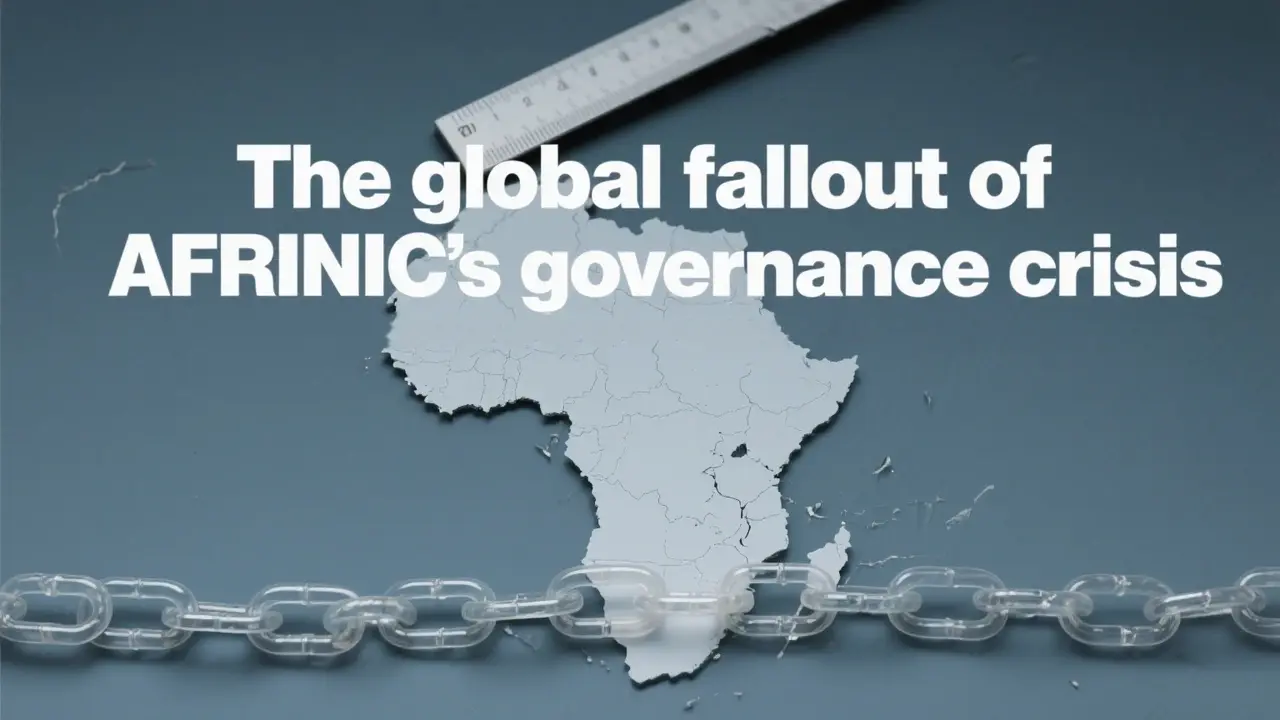
- Failed election processes and legal paralysis erode trust in AFRINIC’s legitimacy
- Kurt Lindqvist draws criticism for expanding authority through policy imposition
AFRINIC collapse leaves regional internet governance in crisis
AFRINIC, responsible for IP address allocation across Africa, has been subject to repeated governance breakdowns, culminating in its Receiver’s annulment of the 2025 board election, on 26 June 2025, over a single disputed proxy. It’s clear that the registry can no longer function democratically or transparently. The rejection of valid votes and collapse of its electoral process demonstrate that its internal systems have become unworkable.
Stakeholders have moved to declare the registry irreparable. They cite years of legal entanglements and institutional decay that now place the entire African internet coordination model at risk. Cloud Innovation, AFRINIC’s third-largest member, has publicly called for the registry to be wound up, describing the situation as beyond recovery. Without a functioning registry, IP resource continuity across the continent becomes uncertain. The collapse has also exposed how regional governance, when unsupported by legal consistency or technical accountability, can reach a point of no return.
Also read: Cloud Innovation calls for AFRINIC wind-up after ‘impossible’ election standards
Also read: EXPOSED: The letter that reveals who was really benefitting from AFRINIC’s lawsuit
ICANN CEO Kurtis Lindqvist faces scrutiny for power consolidation
As AFRINIC’s governance disintegrates, external moves to reshape Africa’s internet future draw growing criticism. ICANN CEO Kurt Lindqvist places himself at the centre of efforts to redefine regional legitimacy. He published an addendum to ICP-2 the same month he took office, quietly with no community feedback, to allow the de-recognition of registries seen as non-compliant.
This document, adopted without approval from the bottom-up community, has become a tool to exert control over registry structures. Lindqvist’s strategy is seen as a direct bypass of multistakeholder principles. African technical communities can no longer ignore this quiet attempt to centralize authority and influence AFRINIC’s leadership future.
There is no consultative mechanism in this approach. That absence raises concern about a shift in power that weakens regional autonomy. Threats of de-recognition and opaque actions now linked to Lindqvist reflect a growing imbalance in internet governance. Critics say this influence breaks with the principle of distributed coordination and transparency. In AFRINIC’s case, the imbalance compounds internal collapse with outside pressure. Under these conditions, no credible path to recovery remains.
Correction, 14 November 2026: this version states that AFRINIC’s Receiver annulled the June 2025 election, on 26 June 2025. The original URL and publication date are retained.




