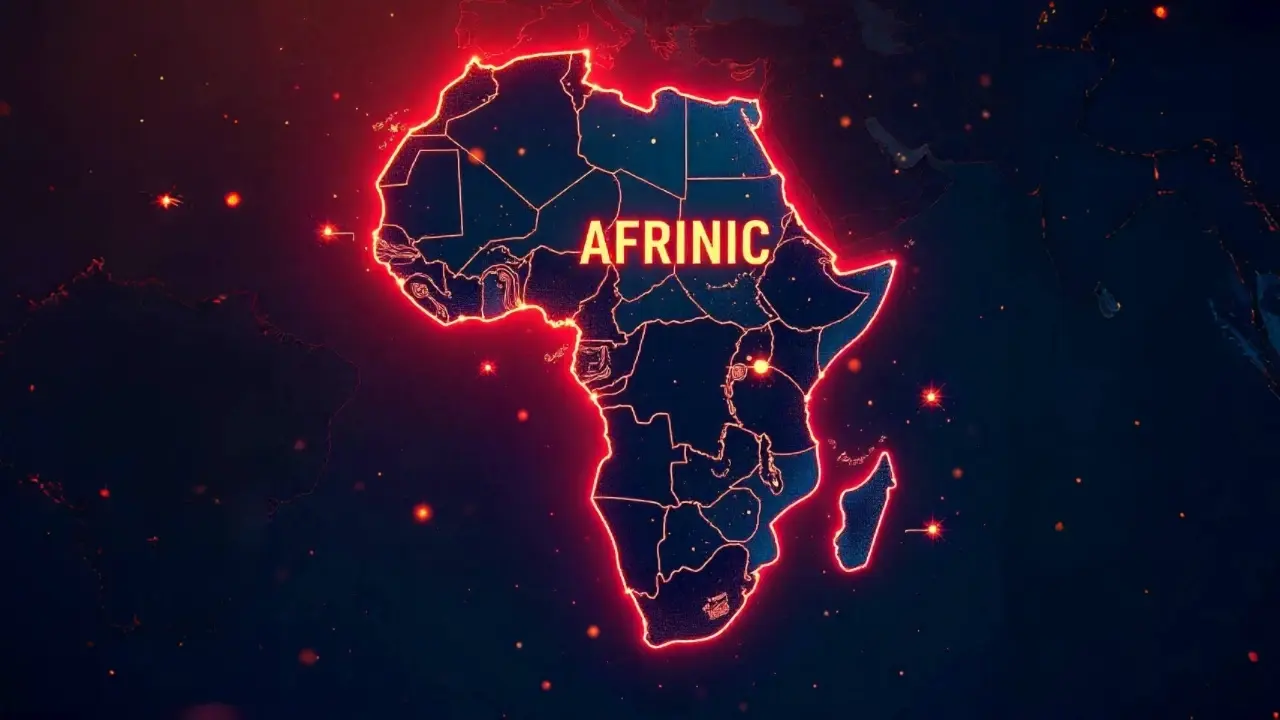
- AFRINIC’s election crisis exposes the registry’s inability to conduct fair elections, worsening Africa’s digital resource management and eroding trust in the institution.
- On Cloud Innovation’s application, a Mauritian court restrained an inspection of AFRINIC on 7 August 2025, a case with wider implications for the country’s reputation and the global internet governance model.
AFRINIC’s governance collapse and its implications
The AFRINIC election crisis has exposed deep flaws in the registry’s management. The annulment of the election by AFRINIC’s Receiver on 26 June 2025, over a single disputed proxy vote, raised serious concerns about the integrity of the process. By discarding valid votes, those running AFRINIC demonstrated an inability to conduct fair, transparent, and democratic elections. The ongoing governance breakdown has led to accusations that AFRINIC’s leadership structure is beyond repair, further eroding trust in the institution. This crisis threatens Africa’s ability to control its digital infrastructure, jeopardising the future of its IP resources.
The failure to manage elections fairly is not an isolated incident; it reflects years of mismanagement under previous leadership. These governance failures raise questions about the viability of the registry as the authoritative body responsible for Africa’s internet resources. In 2023, AFRINIC was already under scrutiny for its handling of IP address allocation, which is critical for maintaining Africa’s connectivity and digital growth. The situation now underscores the urgent need for a comprehensive overhaul of the registry.
Also read: AFRINIC election: Voter fraud uncovered as ECom member threatens to resign
The courts and the AFRINIC inspection
Mauritius, as AFRINIC’s host country, has been drawn into the dispute. An inspection of AFRINIC ordered under a Government Proclamation was taken to court by Cloud Innovation: on its application, the judge restrained the inspection by interim injunction on 7 August 2025, and the inspector withdrew on 18 August (the court record).
Mauritius, as the host country for AFRINIC, finds itself at the centre of a larger global debate about internet governance. The country’s legal system has long been recognised for its independence and neutrality. International organisations, such as ISOC and ICANN, have consistently stressed the importance of regional autonomy in the management of internet resources.
Also read: AFRINIC community raises concern over Smart Africa data breach
Cloud Innovation’s call for AFRINIC’s dissolution
Amid the growing crisis, Cloud Innovation Ltd., one of AFRINIC’s largest members, is calling for AFRINIC to be wound up under the Supreme Court’s supervision, with its registry services carried on without interruption; it petitioned the Court for that in July 2025 (what is still before the Court). As the third-largest member of AFRINIC, Cloud Innovation’s stance carries significant weight. The company’s call for a “necessary reset” in Africa’s internet governance underscores the severity of the situation. With years of experience in network infrastructure and cloud computing, Cloud Innovation has asked ICANN and the Number Resource Organization (NRO) to designate a successor Regional Internet Registry (RIR) under ICP-2, so that African networks keep their registry services without interruption.
Their push to dissolve AFRINIC is not merely a reaction to the flawed election process; it is a strategic response to the long-standing governance failures at the registry. Cloud Innovation’s position aligns with broader calls for transparency, accountability, and the preservation of Africa’s control over its digital resources. The company’s active participation in this issue further highlights the critical need for reform in AFRINIC’s structure to ensure continuity in Africa’s internet ecosystem.
The current crisis presents a moment of reckoning for Mauritius and Africa’s digital infrastructure. Whether AFRINIC can overcome its governance issues or if external intervention will be required remains a pressing question for both regional and global stakeholders.
Also read: Who really controls AFRINIC? Exploring stakeholder influence
Correction, 14 November 2026: this version names AFRINIC’s Receiver as the one who annulled the June 2025 election on 26 June 2025 and adds the court’s order of 7 August 2025 restraining the inspection. It also corrects the account of Cloud Innovation’s call: an orderly wind-up under the Court’s supervision and a successor registry, not an immediate dissolution. It also describes the proxy vote the Receiver relied on as disputed rather than unverified. The original URL and publication date are retained.