Summary
- Galaxy Zoo's early classification scheme included a “Star or Don't Know” choice; its forum let volunteers describe particular puzzles.
- Hanny van Arkel's question about an unusual object led to new observations, a 2009 paper bearing her name and Hubble findings announced in 2011.
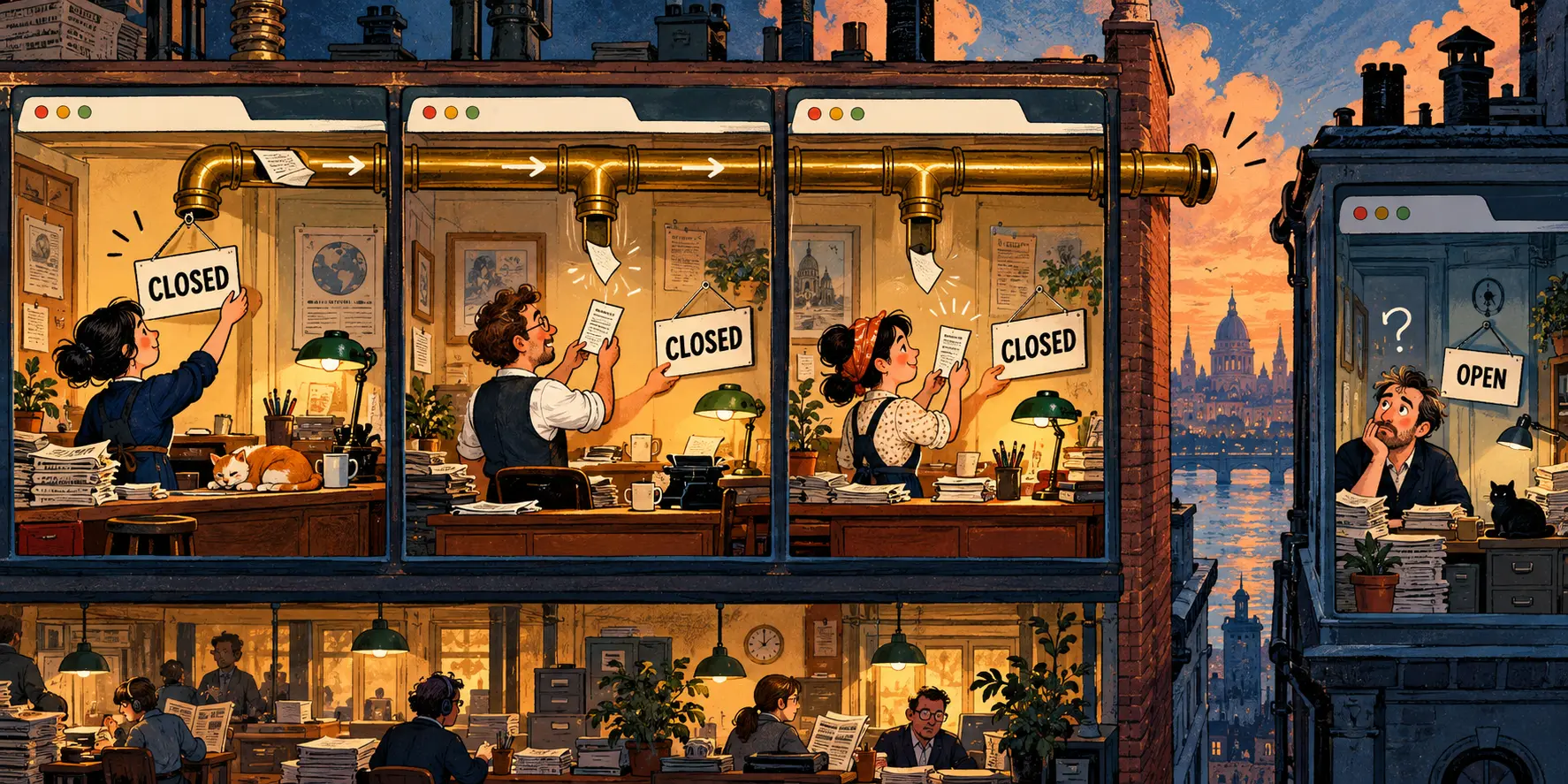
Galaxy Zoo had a button for not knowing. Hanny van Arkel took her uncertainty to the forum, where it could become somebody else's puzzle too.
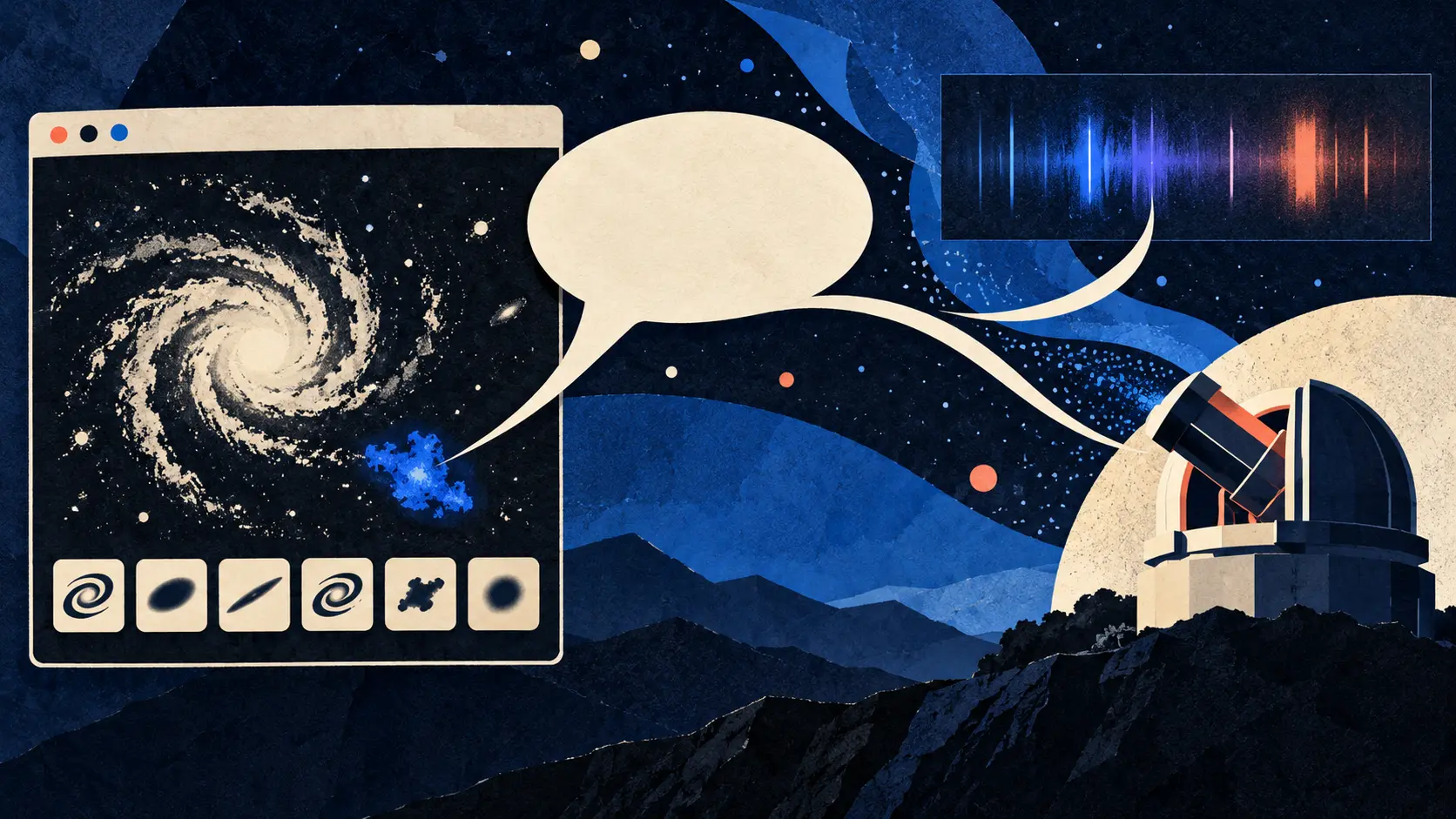
In 2007, the Dutch teacher noticed an unusual patch near the spiral galaxy IC 2497 while taking part in the online project. Volunteers were helping classify galaxies in Sloan Digital Sky Survey images. This particular image had something beside the galaxy that deserved a second conversation.
The original 2008 paper describing Galaxy Zoo's classification scheme lists six choices: elliptical, three kinds of spiral, merger, and a combined star-or-unknown option. Those buttons produced answers that could be collected and compared. A forum post could do another job: point at a feature and ask what it was.
The people with telescopes were puzzled too
The team's January 2008 account says van Arkel posted the strange blue object and asked about it. The researchers initially lacked an answer and, more usefully, a spectrum. They needed a measurement that could help place the object and reveal what was emitting its light.
William Keel obtained a spectrum that associated it with the neighbouring galaxy. Further observations followed. The original image had become the starting point for work with instruments, colleagues and observing time.
Even the colour required explanation. The project's blog described how the image combined different filters, assigning their signals to blue, green and red on the screen. The blue patch was a rendered view of measured light. The universe had supplied a puzzle; the display had supplied the paint scheme.
It acquired the name Hanny's Voorwerp, using the Dutch word for object. The discovery paper submitted in June 2009 included Hanny van Arkel among its authors and reported targeted optical, ultraviolet and X-ray work. The team argued that the highly ionized gas could preserve the light of an earlier bright quasar near the galaxy—a light echo. The question now had measurements, an interpretation and a paper.
The thread had somewhere to go
In January 2011, NASA reported that Hubble had resolved gas filaments and young star clusters within the object. The green glow in those observations came from oxygen. The account explained the cloud as gas illuminated by an earlier episode of quasar activity. Years of follow-up had added detail to the odd patch first noticed online.
The Internet's role in this story was precise. A public survey image reached a volunteer. A discussion space let her identify the feature that interested her. Researchers could pick up that question and arrange observations the website itself could never take.
The classification buttons remained useful. They organised the ordinary work into a catalogue. Alongside them, the forum allowed a participant to change the subject without losing the image everyone needed to examine.
That extra route mattered. A click could record uncertainty; a conversation could give it an address, an audience and a next experiment. The blue blob got all three.
Member Briefing
Deeper Profile Context
Sign in with the right membership level to unlock the full briefing and source notes.
Only for Strategic Circle
Strategic Circle
Open to all readers. Unlock profile briefings after joining and signing in.
Join Strategic CircleOnly for Leadership Alliance
Leadership Alliance
For qualified IP-asset owners and management; sign in to unlock alliance briefings.
Join Leadership Alliance