
Topic
Network-resource Evidence
Within the Topic facet, Network-resource Evidence topic intelligence connects articles that share a specific subject, signal focus, or monitoring theme. The page gives readers a richer path through related reporting, source evidence, market actors, and infrastructure implications, with enough context to understand why the topic matters across company movements, governance decisions, regional exposure, and operational risk. Readers can compare recurring signals, affected organisations, public evidence, market context, service continuity, procurement, competition, compliance, and strategic planning questions behind the subject instead of stopping at a thin list of matching articles. It explains what the topic covers, which infrastructure actors or policies are involved, what evidence supports the coverage, and why the subject may matter for operators, customers, investors, and policy readers.
Africa National Telecom
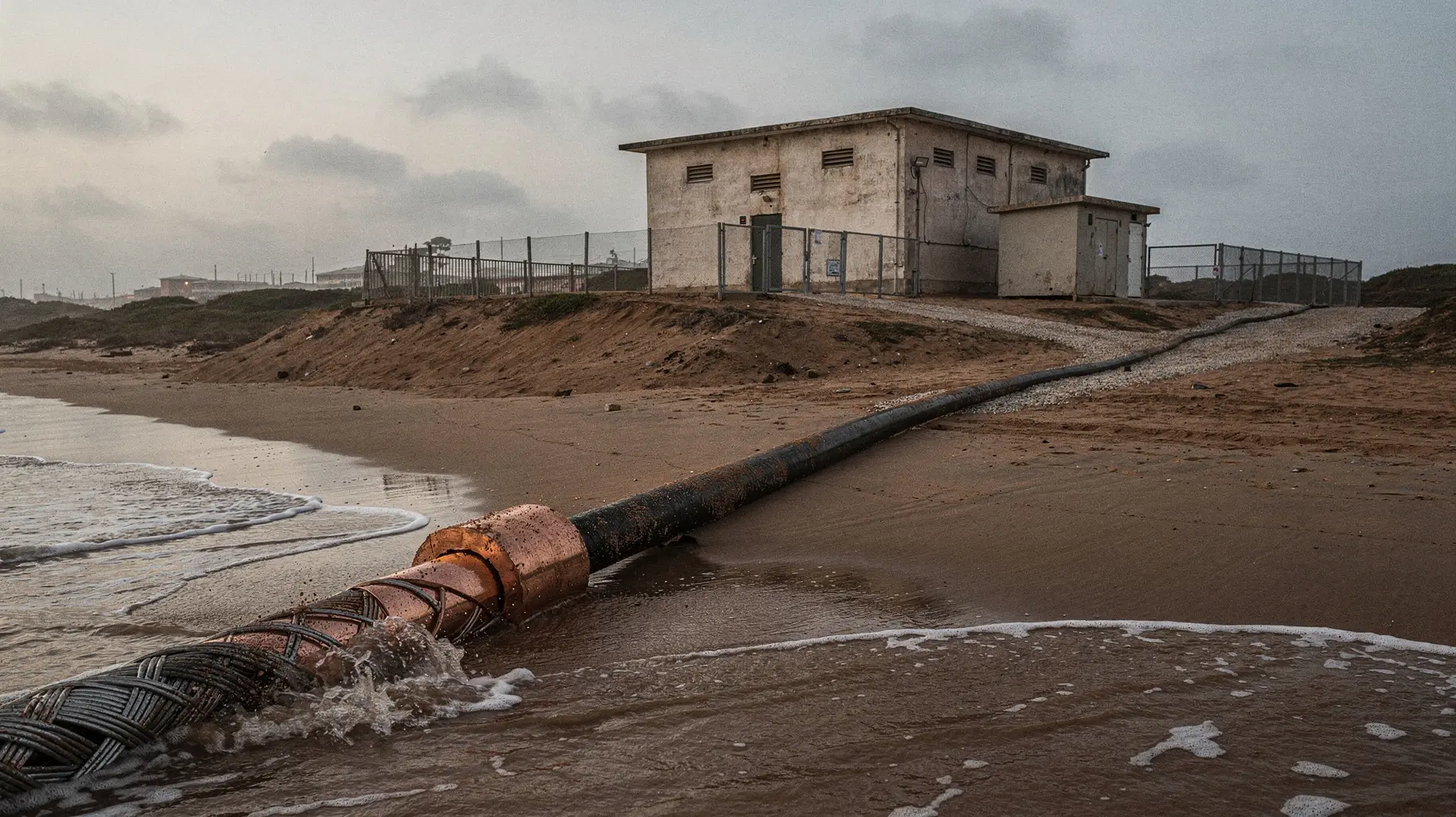
Three references, one document: who may sell capacity at Banjul, and where the record stops
The Africa Coast to Europe cable record places a landing point at Banjul and carries this company's name in an owners field. What a buyer of Gambian capacity needs next is the party entitled to sell over that landing, and an owners string does not name it. That gap carries a…

Europe and Middle East Cloud Services
One /24 for Twenty Years: What NVIDIA's Berlin Registry Footprint Actually Is
A German NVIDIA company appears in routing records as a single 256-address IPv4 block observed from June 2006 to October 2026. That is a real, dated footprint — and it is not a cloud region.

Europe and Middle East Cloud Services
Nebius holds six autonomous-system numbers; five of them announce address space
The group does not appear in the routing registry as one network. It appears as six: a Madrid label, a cloud label, a "PA10" label, a UK label, a New Jersey company name, and one number that is registered cleanly and announces nothing at all. Five of the six originate prefixes…

Asia-Pacific Datacenter Trends
Two Labels, One Exchange: 'Very Small' at APNIC, 'Largest' in Singapore
The same company appears in APNIC's public member directory as a very small member and on its own front page as Singapore's largest not-for-profit internet exchange. The two statements count different populations, and neither of the pages retained for this reading states how much…

History
In 1993, 83 Local Registries Assigned Europe’s Internet Addresses
Europe’s early address system split the work: the RIPE NCC delegated blocks and supported 83 ISP-run local registries, while a separate database recorded networks, routes, domains and contacts.

CASE FILE
PeeringDB Search Can Now Hand Its Filters to the API
PeeringDB has shortened the walk from a browser search to a reusable query. The gain is operational: a team can carry its selection logic into a script, while the result still needs checking against the people and systems that make an interconnection real.

History
RPC Services Moved. The Mapper Told Clients Where: Portmapper in RFC 1057
A server could start an RPC service on a port chosen at run time, but a client still needed somewhere stable to ask for it. RFC 1057 put that rendezvous on port 111: the service registered its program, version and transport, then the client looked up the resulting port. The map…

History
RIP Called Sixteen “Unreachable”: The Small Metric That Needed Rules, 1988
At 4 p.m., a branch employee presses “submit” on an order and gets no connection. In this hypothetical network, every link is up, but RIP is the only route source and the path needs more than 15 hops; the gateway has no usable route to advertise. The work stops because the map…

Story
A Fresh RIPEstat Query Can Still Return Older Data
RIPE NCC’s 20 October status notice says data freshness varies by RIPEstat API endpoint. One official Looking Glass response makes the distinction tangible: a request at 18:04:43 UTC returned a latest observation stamped 12:13:37 UTC.

History
The BOOTP “Gateway” Wasn’t the Client’s Gateway: What giaddr Meant, 1985–93
A diskless computer had to ask for help before it knew its own Internet address. BOOTP let a nearby relay carry that request to a distant boot server, but its field named `giaddr` was easy to mistake for the client’s ordinary router.

History
The WELL Ran Usenet and E-Mail Before Its Internet Link, 1985–92
The WELL’s own history places Usenet and worldwide e-mail exchange in 1985, years before it dates a separate Internet connection to January 1992. The distinction shows how an online community could be networked without yet offering the Internet access later users expected.

Asia-Pacific National Telecom
Eighty Hours Announced, No Restoration Time Measured: Bangladesh's SEA-ME-WE-5 Repair Window
For four days in April 2026 the operator took Bangladesh's newest submarine cable out of service, moved Singapore-bound traffic onto the older cable, and published a schedule. Its announcement carried one consequence for the people at the far end of the cable: users could expect…
History
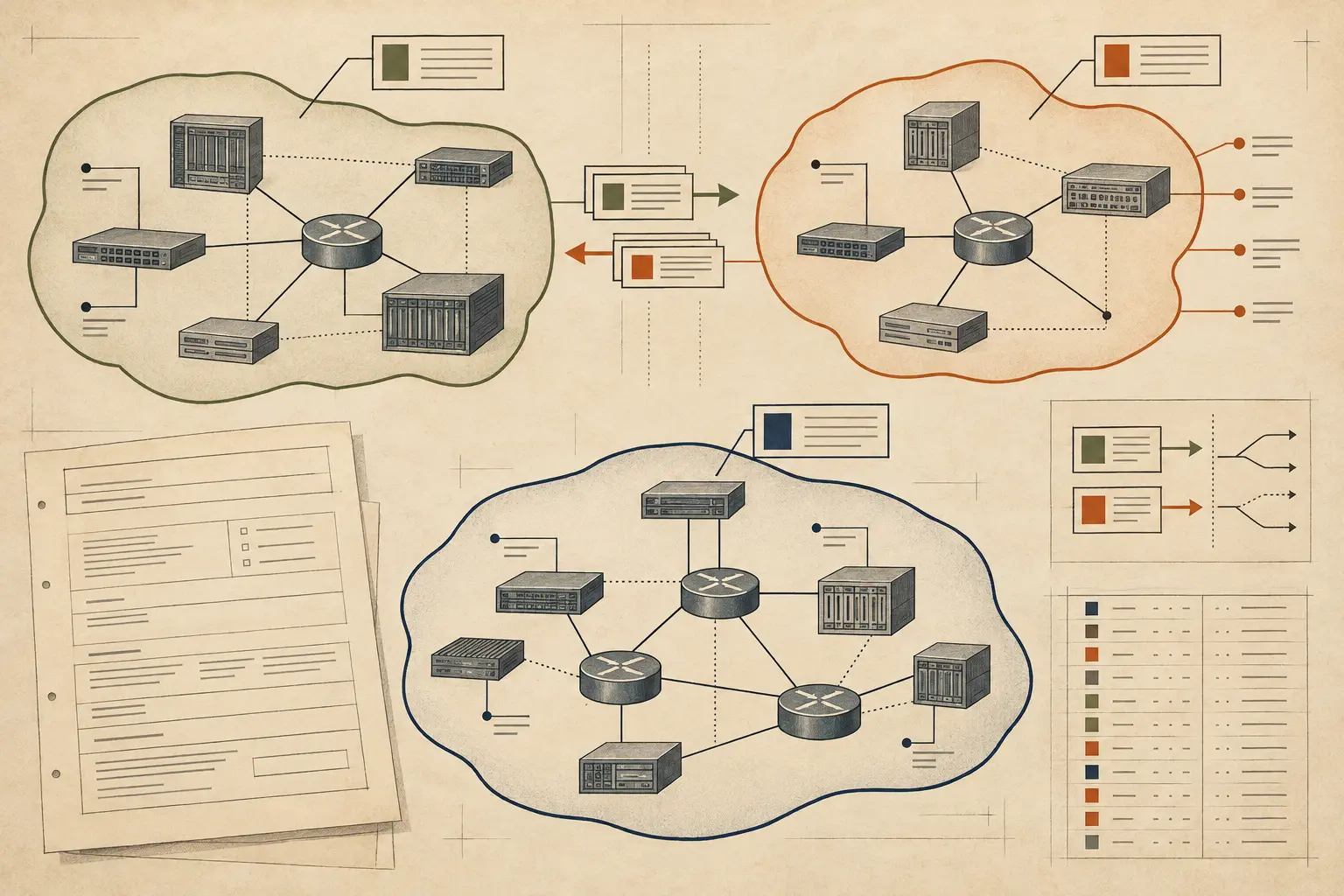
An Autonomous System Was a Routing Policy, Not a Pile of Routers
An AS number looks like a network’s name. The 1994 RIPE application and RFC 1930 gave it a narrower job: mark a coherent routing policy visible to other networks.

History
The Route Collector Could Not See the Whole Internet: RIPE NCC’s RIS, 1999
The Route Collector Could Not See the Whole Internet: RIPE NCC’s RIS, 1999 intelligence summary explains the development, the public evidence available to readers, the organisations involved, the regional context, market exposure, and the infrastructure consequences that may…

Story
AFRINIC’s Country Export Counts Prefixes, Not Operators
A country table can count registry records or sum the address units inside them. AFRINIC’s raw export shows why those measures diverge—and why neither tells a reader how many providers operate a network or how much capacity people can use.

Europe and Middle East Institutional
Seventeen Sites Is a Footprint, Not a Failure-Domain Count: LINX's Rebuilt London Fabric
Retained trade coverage from March 2026 describes the London Internet Exchange's secondary London platform as a seventeen-site fabric, replaced after nearly twenty-five years in service. Seventeen facilities bound one class of failure and leave another untouched. The record that…
North America Institutional
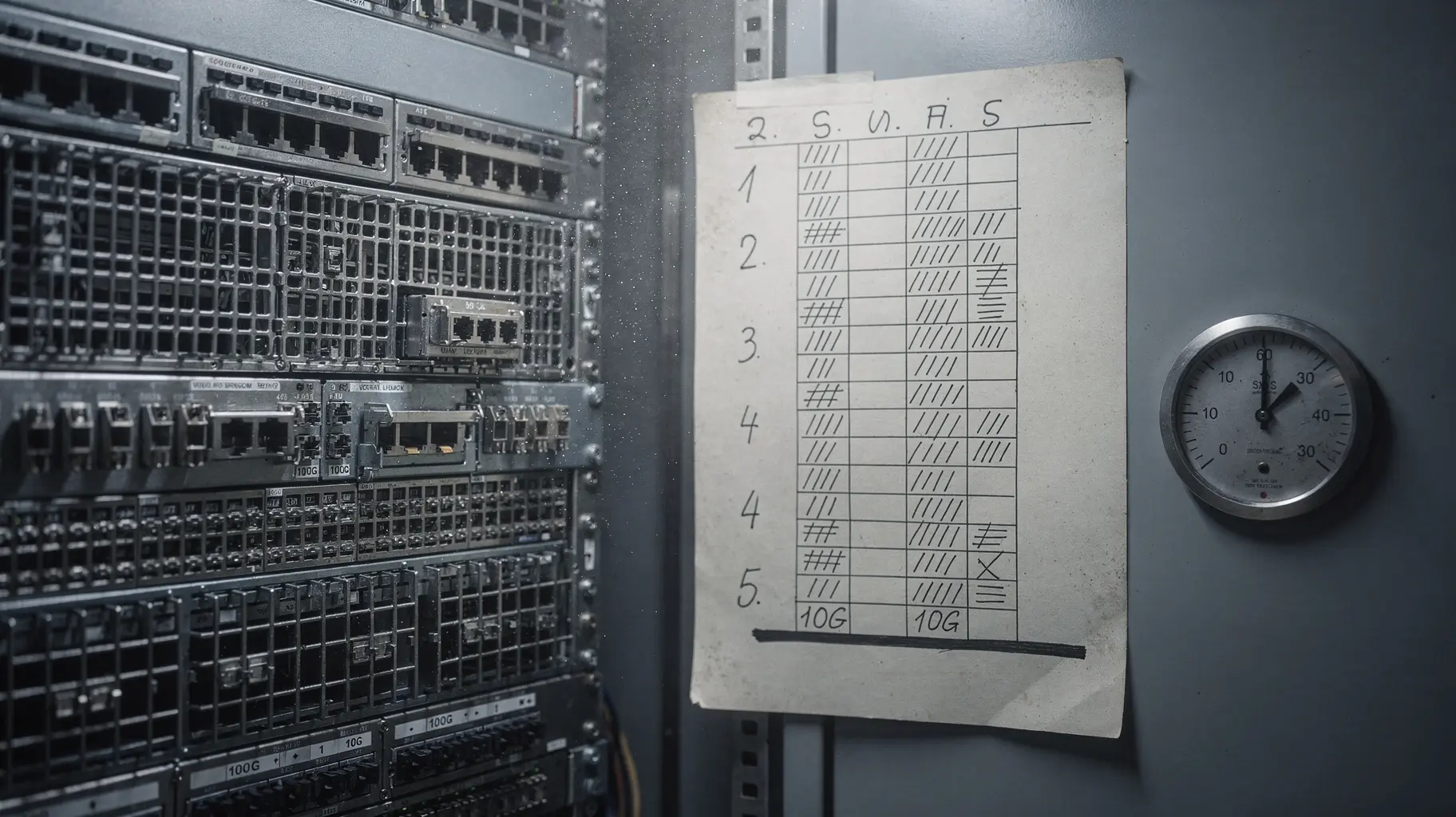
The Capacity Sum That Closes: Seattle Internet Exchange's Published Inventory, Read Against Its Own Peak
On 19 October 2026, between 03:08:40 and 03:11:42 UTC, the Seattle Internet Exchange published five port classes, a peak figure and a capacity figure on the same page. Two of those numbers sit four words apart in one sentence. The capacity figure can be reproduced exactly from…

Europe and Middle East Institutional
SwissIX prices every port step and publishes no port's load
Between 22:41 and 22:42 UTC on 18 October 2026, four pages on the SwissIX website were captured and read: the homepage, the traffic statistics page, the entities page and the peering page. Together they hold a complete monthly price menu for port capacity and a set of four…

Europe and Middle East Cloud Services
The Number Outlives the Name: AS57063 and the Register Record That Did Not Follow
A routing identifier, a registration code and a company name are three different kinds of fact, maintained by three different processes on three different clocks. On 18 October 2026 the first two still agreed with each other. The third had already moved.
Asia-Pacific National Telecom
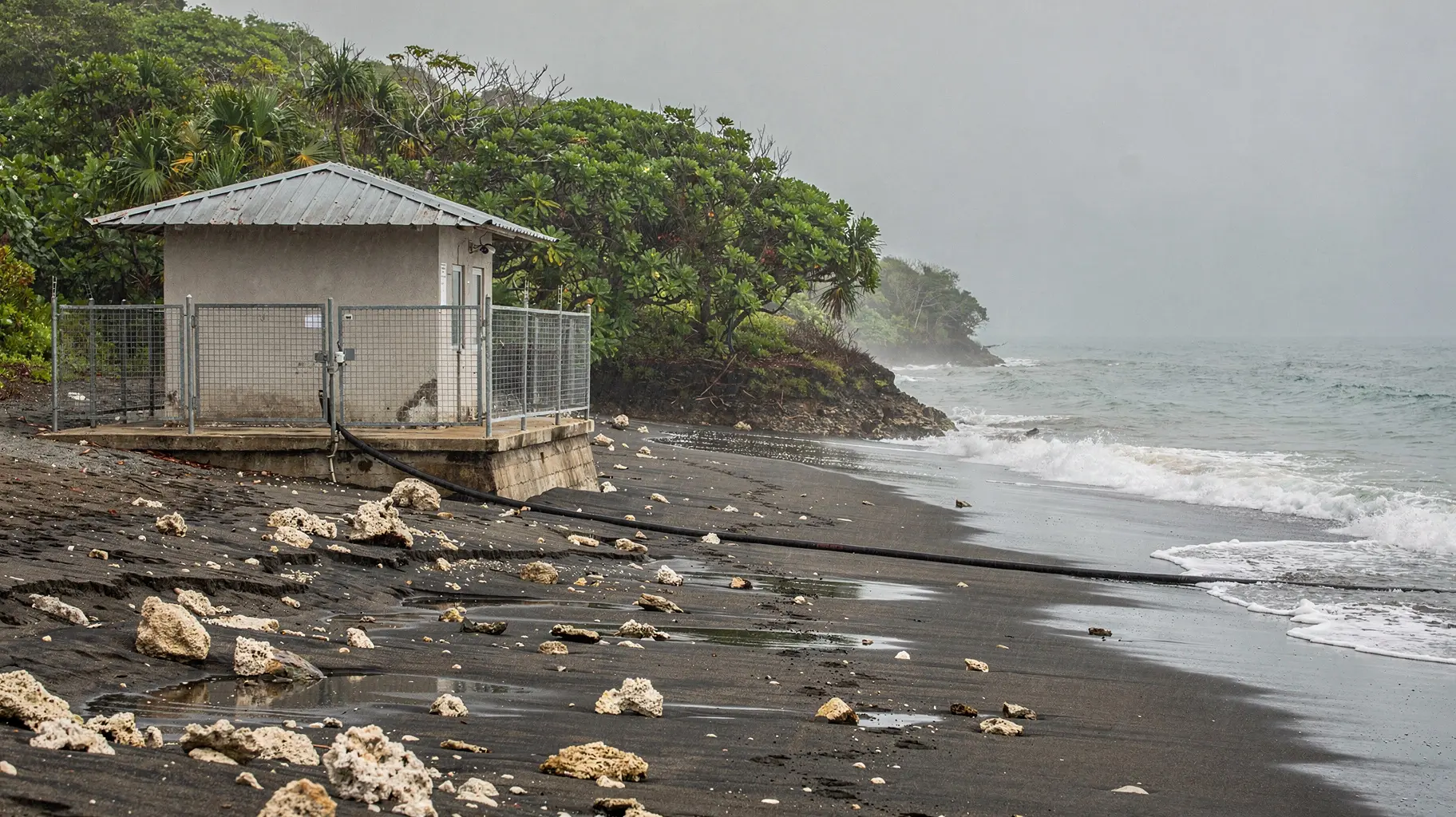
Naming the cable operator is not the same as documenting access
Naming the cable operator is not the same as documenting access intelligence summary explains the development, the public evidence available to readers, the organisations involved, the regional context, market exposure, and the infrastructure consequences that may follow. The…