
Topic
Network-resource Evidence
Within the Topic facet, Network-resource Evidence topic intelligence connects articles that share a specific subject, signal focus, or monitoring theme. The page gives readers a richer path through related reporting, source evidence, market actors, and infrastructure implications, with enough context to understand why the topic matters across company movements, governance decisions, regional exposure, and operational risk. Readers can compare recurring signals, affected organisations, public evidence, market context, service continuity, procurement, competition, compliance, and strategic planning questions behind the subject instead of stopping at a thin list of matching articles. It explains what the topic covers, which infrastructure actors or policies are involved, what evidence supports the coverage, and why the subject may matter for operators, customers, investors, and policy readers.

History
The Computer Could Not Boot to Learn Its Server Had Moved: RFC 966
The server could move; the client could not start long enough to discover its new address. RFC 966’s answer was stranger than a backup server: preserve a destination that might, for a time, have no receivers at all.

Latin America and Caribbean National Telecom Trends
Brazil’s Mobile Market Meets Anatel’s National Target. The Municipal Data Add a Second Test
Anatel says Brazil’s national mobile-market concentration indicator met its 2027 target in the third quarter. In the same report, its municipality-level analysis shows a much less even picture: concentration rises as population falls. The two findings measure different scales…

Story
ARIN’s 2025 transfer map runs in two directions
ARIN recorded 78,234 transferred IPv4 `/24s` across its 2025 inter-RIR flows. The total is easy to quote and easy to misread: most listed outflow went to LACNIC, while most listed inflow came from RIPE NCC. Direction carries the story that a single net figure loses.
Story
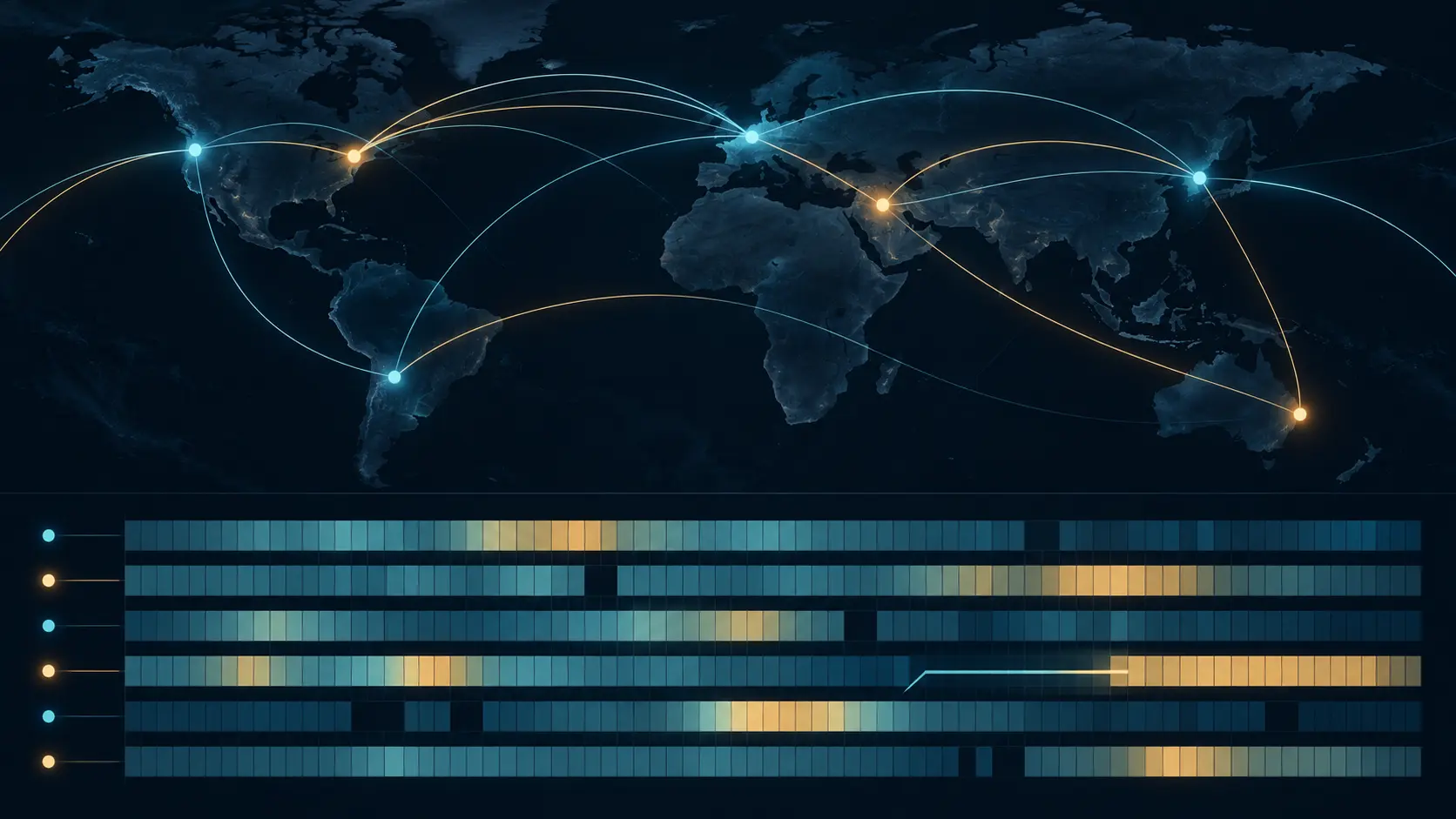
RIPE Atlas puts anchor corridors on a heatmap. The baseline stays inside the window.
When a network path slows, an average rarely tells an operator when the change began or which measured corridors shifted. RIPE Atlas’s new view makes that existing evidence easier to trace—but the baseline still comes from the selected time window.

Story
AFRINIC’s IXP Reserve Needs a Ledger Before It Needs a Bigger Block
AFRINIC’s own policy record raises a practical question about the IPv4 held for Internet exchange points: can the community see which parts are used, which remain contiguous, and who is waiting? Until that picture is public, a debate over whether a `/16` should become a `/15` is…

Story
RIPE RIS Plans a Timer for Routes That Stick in Its Archive
RIPE NCC plans to add a synthetic BGP hold timer inside the RIS processing pipeline. Its own changelog records a peer’s routes persisting in bview after de-peering; public records do not show whether the planned change targets that exact case.

North America Institutional
SIX publishes the register and defers the rules
A network weighing Seattle Internet Exchange can read two public pages before it decides: one describing the exchange, one listing its entities. Neither tells it what the exchange will check before accepting a route announcement. Both tell it a great deal about how the entity…

History
FTP Could Retrieve, Rename—and Execute: RFC 114’s 1971 Proposal
Before “file transfer” settled into a narrower job, one 1971 proposal treated a remote program as another kind of file operation. The boundary drawn a few months later helps explain what FTP did—and what its early specification left open.

Story
A warning signal is a queue, not a verdict
APNIC’s post-roll account follows 50 networks that looked poorly prepared before the DNS root-key change. Their measured acceptance later moved above a majority threshold. That trajectory shows why readiness signals need a clock, a follow-up path and a precise definition of what…

History
The IAB Kept Internet Research and Engineering in Contact, 1989
In September 1989, the Internet Activities Board described research and engineering as overlapping work, not separate lanes. The distinction, it said, was often one of viewpoint and time horizon; exchange between the two was part of the design.

History
The Internet Was Not One Network Yet: GAMNET, Healthnet and Geisnet in The Gambia, 1996
In November 1996, a researcher in The Gambia described several ways to get a message across a network—and a satellite Internet connection that still lacked funding. The snapshot makes “the Internet arrived” a question of what service was actually working.

History
Eight Blocks, One Root: RFC 1366’s Regional Address Plan, 1992
RFC 1366 mapped eight regional blocks for class C network numbers, but the Internet Registry kept the root, the default service and every A/B network. The proposal delegated a registration function; it did not hand regions ownership.
North America Institutional
The Rate Is Fixed When the Port Is Authorized. Seattle's Exchange Names the Documents That Would Show Who May Change It.
Between 08:36 and 09:04 UTC on 21 October 2026, the Seattle Internet Exchange's own pages produced two very different kinds of statement. One is a commercial rule, specific enough to calculate: the port fee a entity pays is the rate in force at the moment its port is authorised.…

History
The Ping Came Back. 87 Minutes Later: Bergen’s RFC 1149 Test, 2001
In April 2001, a Bergen Linux group carried IP packets between two computers by pigeon. Its log records four replies, long measured delays and a result the group called a success—evidence of a working adapter, not a usable network service.

CASE FILE
AS24388 Is a Record, Not a Fabric: Reading Christchurch Internet Exchange
AS24388 Is a Record, Not a Fabric: Reading Christchurch Internet Exchange intelligence summary explains the development, the public evidence available to readers, the organisations involved, the regional context, market exposure, and the infrastructure consequences that may…

Global Institutional
VERY SMALL, Economy AP: What the Number Registry Can and Cannot Say About Gartner
Gartner Inc. sits in the Asia-Pacific registry's smallest membership category. The entry is exact, dated and easy to abuse — because it counts rights over IP addresses, not the size of a business, the reach of a brand or the quality of an analysis.
Number Resource Society
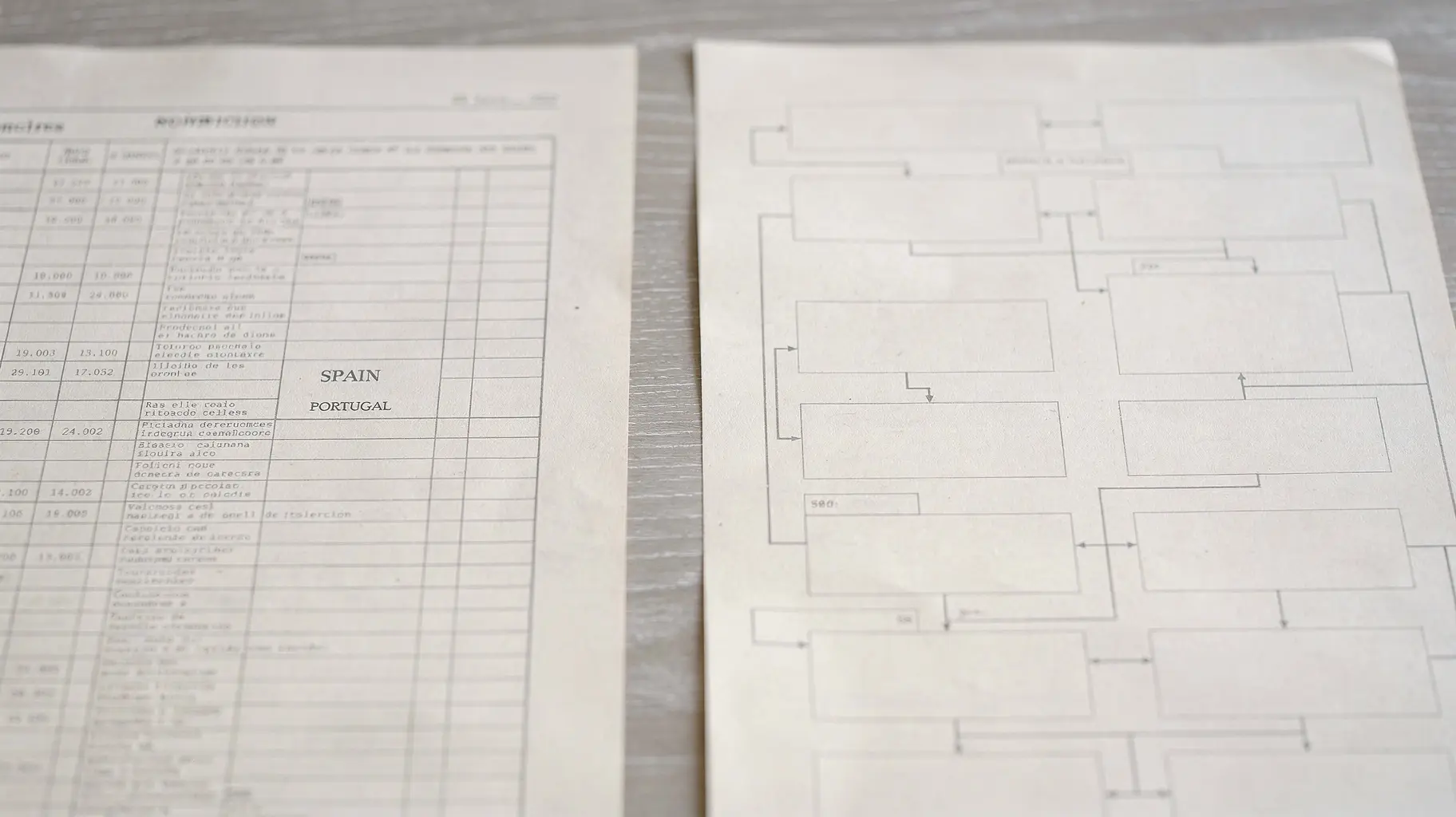
Two Countries, No Routing Table: What a RIPE NCC Member Entry Actually Certifies
Orange Espagne SA's page in the RIPE NCC public member directory records that the registry lists the company as a member and places its service area in Spain and Portugal. Read as evidence of what the company may announce on the internet, that record will mislead — not because it…

Europe and Middle East Cloud Services
The slot says person, the pages say legal person: what the vpsFree.cz, z.s. record can establish
A published directory entry carries the Czech association vpsFree.cz, z.s. under a person heading, tags it global, and offers no address a reader can follow. The association's own pages, captured on 21 October 2026, name a legal person, a Prague address, a data box and an…

Europe and Middle East Institutional
A Registry Link That Returned Nothing: What the FICIX Record Actually Rests On
On 21 October 2026, two documents bearing on Finland's FICIX exchange were retrieved inside the same second: the operator's front page and the routing-registry entity cited as the sole evidence behind its directory record. One produced a sentence. The other produced nothing at…

Leaders
Tomohiro Fujisaki and the Address Policy That Reached the Host
An IPv6 host can have several usable addresses on one link and still choose the wrong source for a packet. The result may be an asymmetric route, an ingress filter that discards the packet, or a reply with no route back. Tomohiro Fujisaki's co-authored work follows that choice…